
SOPTOP DMS Series 3D Extended Depth-of-Field Digital Microscope
| Brand | SOPTOP |
|---|---|
| Origin | Zhejiang, China |
| Manufacturer Type | Original Equipment Manufacturer (OEM/ODM) |
| Country of Origin | China |
| Model | DMS |
| 3D Image Comparison Function | Yes |
| Imaging Sensor | 4K CMOS |
| Objective Type | Telecentric APO Lens |
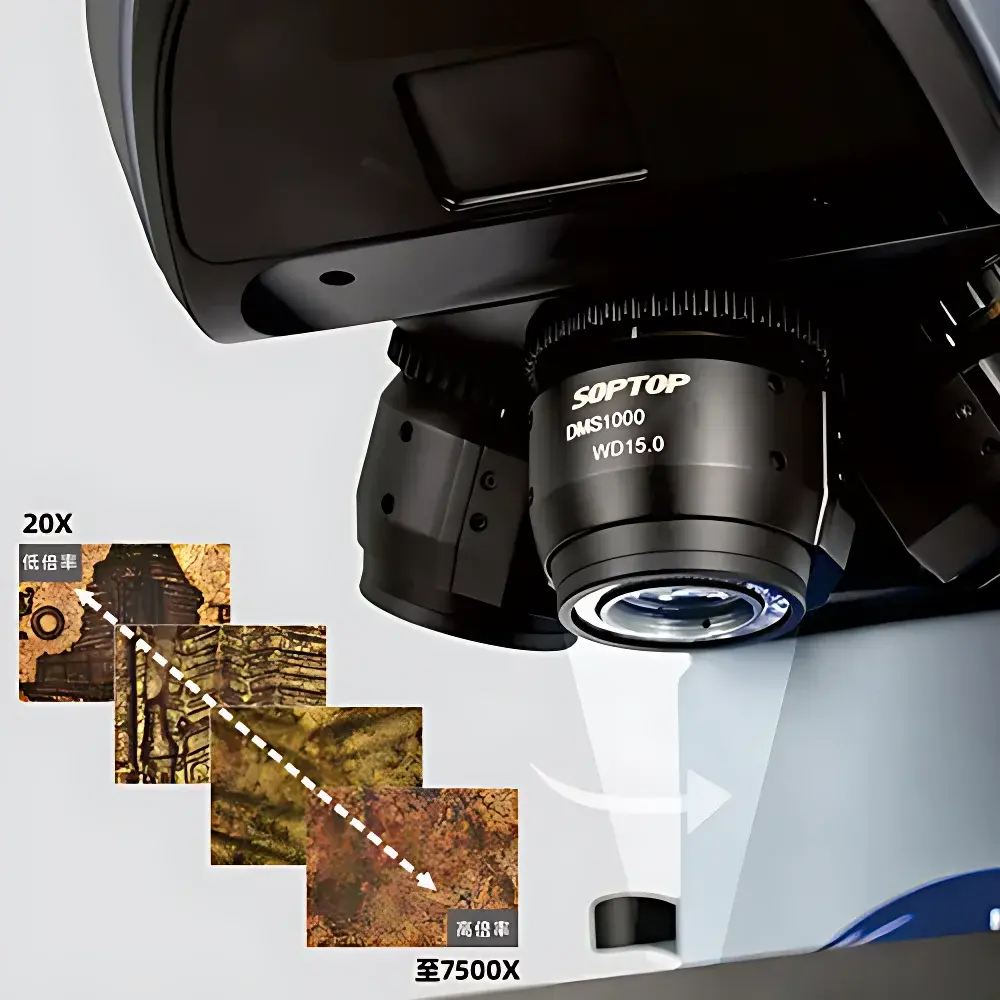
| Magnification Range | 20× to 7500× (continuous, lens-free zoom) |
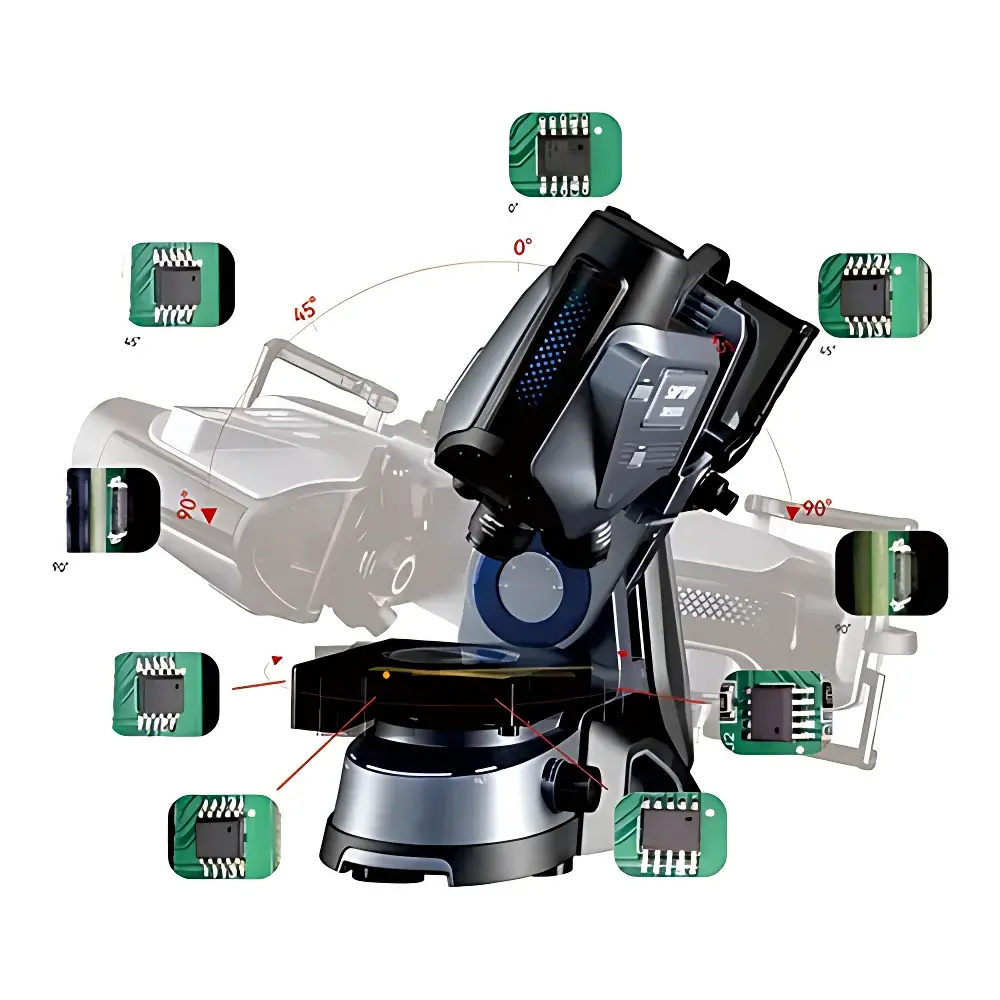
| Tilt Range | −90° to +90° (motorized, clutch-controlled articulation) |
| Software Features | Auto-focus stacking, 2D/3D image stitching, multi-angle illumination fusion, particle segmentation & metrology, tilt-compensated 3D profiling |
| Compliance | Designed for ISO/IEC 17025-aligned lab environments |
Overview
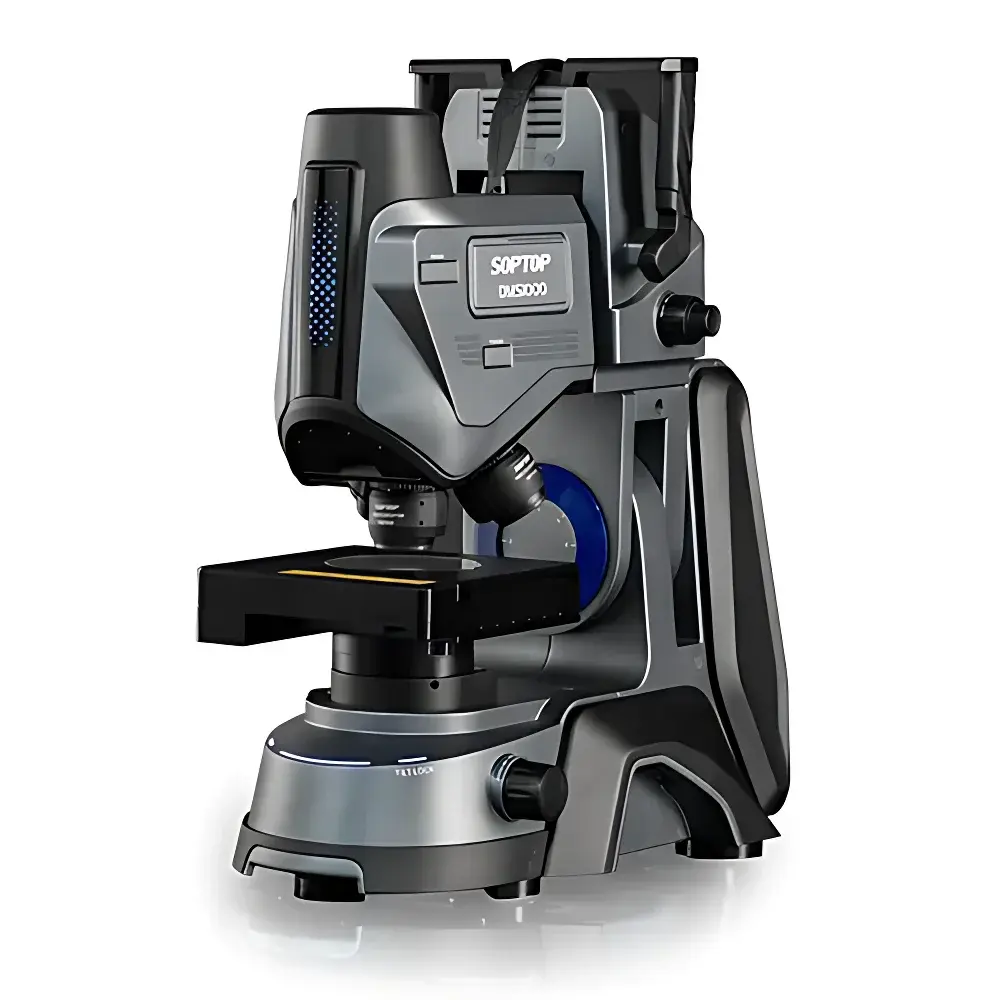
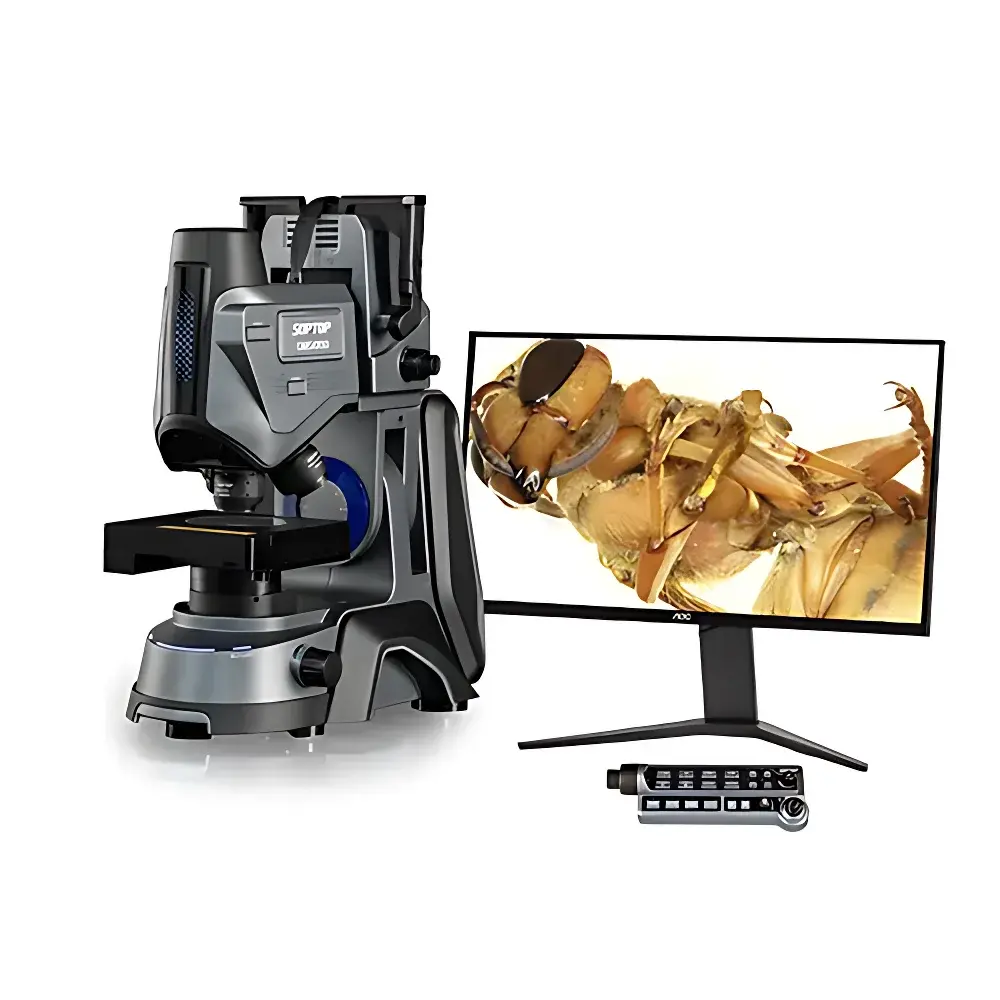
The SOPTOP DMS Series 3D Extended Depth-of-Field Digital Microscope is an engineered optical metrology platform designed for non-contact surface topography analysis in industrial quality control and R&D laboratories. It operates on the principle of focus-stacking combined with telecentric optical path design and multi-angle structured illumination—enabling true 3D reconstruction of microscale surface features without mechanical scanning or sample tilting. Unlike conventional stereo or compound microscopes limited by shallow depth of field at high magnifications, the DMS integrates a proprietary telecentric APO objective system with a 4K CMOS sensor and real-time computational imaging algorithms to deliver simultaneously high lateral resolution and extended axial depth coverage—up to several millimeters at low magnification and sub-micron axial precision at 7500× equivalent magnification. This architecture eliminates parallax error during multi-angle observation and ensures geometric fidelity across the full working distance range.
Key Features
- Telecentric APO objective system with chromatic aberration correction across visible spectrum (400–700 nm), supporting diffraction-limited resolution at all magnifications from 20× to 7500×
- Motorized, clutch-actuated articulating stand with ±90° continuous tilt range and integrated angular encoders for real-time coordinate mapping and perspective synchronization
- Multi-modal illumination suite including coaxial LED, ring light, side-diffused, and oblique-angle sources—software-selectable and intensity-tunable without hardware reconfiguration
- Real-time focus stacking engine with adaptive Z-step optimization, enabling automatic acquisition of fully focused 3D volumetric datasets in under 60 seconds per field of view
- Embedded GPU-accelerated image processing firmware supporting on-device 2D/3D stitching, height map generation, and surface normal vector computation
- Calibration-traceable metrology module compliant with ISO 10360-8 (coordinate measuring systems) for 2D length, area, angle, radius, and 3D step height, roughness (Sa, Sq), and volume measurements
Sample Compatibility & Compliance
The DMS accommodates samples up to 300 mm × 200 mm × 150 mm (W × D × H) on its motorized XYZ stage with 100 mm travel range and 0.1 µm encoder resolution. It supports reflective, translucent, and moderately scattering surfaces—including silicon wafers, battery electrode coatings, solder joints, machined metal parts, and polymer films—without conductive coating or vacuum requirements. All measurement workflows are compatible with ISO 9001, IATF 16949, and IPC-A-610 verification protocols. Data export formats (TIFF, OBJ, STL, CSV) support integration into LIMS and MES platforms. Audit trails, user authentication, and electronic signature capability align with FDA 21 CFR Part 11 requirements when deployed with optional validated software configuration.
Software & Data Management
SOPTOP VisionMaster™ v5.2 software provides a unified interface for acquisition, analysis, reporting, and data archival. It includes version-controlled calibration databases, configurable measurement templates, and role-based access control (RBAC). Measurement logs embed timestamp, operator ID, environmental metadata (ambient temperature/humidity), and instrument calibration status. Exported datasets retain EXIF-like headers containing objective magnification, illumination mode, Z-stack parameters, and traceable reference to NIST-traceable stage and focus calibration certificates. Batch processing scripts enable automated analysis of production lot images against pass/fail thresholds defined per ASTM E2922-22 (standard guide for digital microscopy in materials characterization).
Applications
- Semiconductor packaging inspection: bond wire geometry, die attach void detection, underfill fillet analysis
- Lithium-ion battery QA: cathode/anode coating uniformity, separator pore structure assessment, tab weld integrity evaluation
- Automotive precision components: gear tooth profile deviation, bearing raceway roughness, valve seat surface finish
- Electronics manufacturing: solder paste volume estimation, BGA coplanarity verification, flex PCB trace width/spacing validation
- Advanced materials R&D: additive manufacturing layer adhesion analysis, composite fiber orientation mapping, thin-film delamination quantification
FAQ
Does the DMS require external PC hardware for full functionality?
No—the system includes an embedded industrial-grade computing module running VisionMaster™ OS. A host PC is optional for advanced scripting, networked data archiving, or integration with enterprise systems.
Can measurement data be exported in formats compatible with statistical process control (SPC) software?
Yes—CSV exports include column headers aligned with Minitab, JMP, and SPC XL conventions, with metadata fields for subgroup identification, timestamp, and operator ID.
Is the telecentric APO objective calibrated per ISO 10110-5, and are calibration certificates provided?
Each objective is factory-calibrated per ISO 10110-5 Annex B, with individual serial-numbered certificates issued. Recalibration services are available through SOPTOP’s ISO/IEC 17025-accredited service centers.
How is focus stacking accuracy maintained across thermal drift during extended acquisition sessions?
The system incorporates a dual-sensor thermal compensation algorithm that monitors objective housing temperature and dynamically adjusts Z-step intervals in real time, maintaining axial repeatability within ±0.3 µm over 8-hour operation at 23±2°C ambient.
Are software updates delivered with regulatory documentation for GxP environments?
Yes—validated release packages include Installation Qualification (IQ), Operational Qualification (OQ), and Change Control Records (CCR), supporting compliance with EU Annex 11 and FDA guidance on computerized system validation.



