
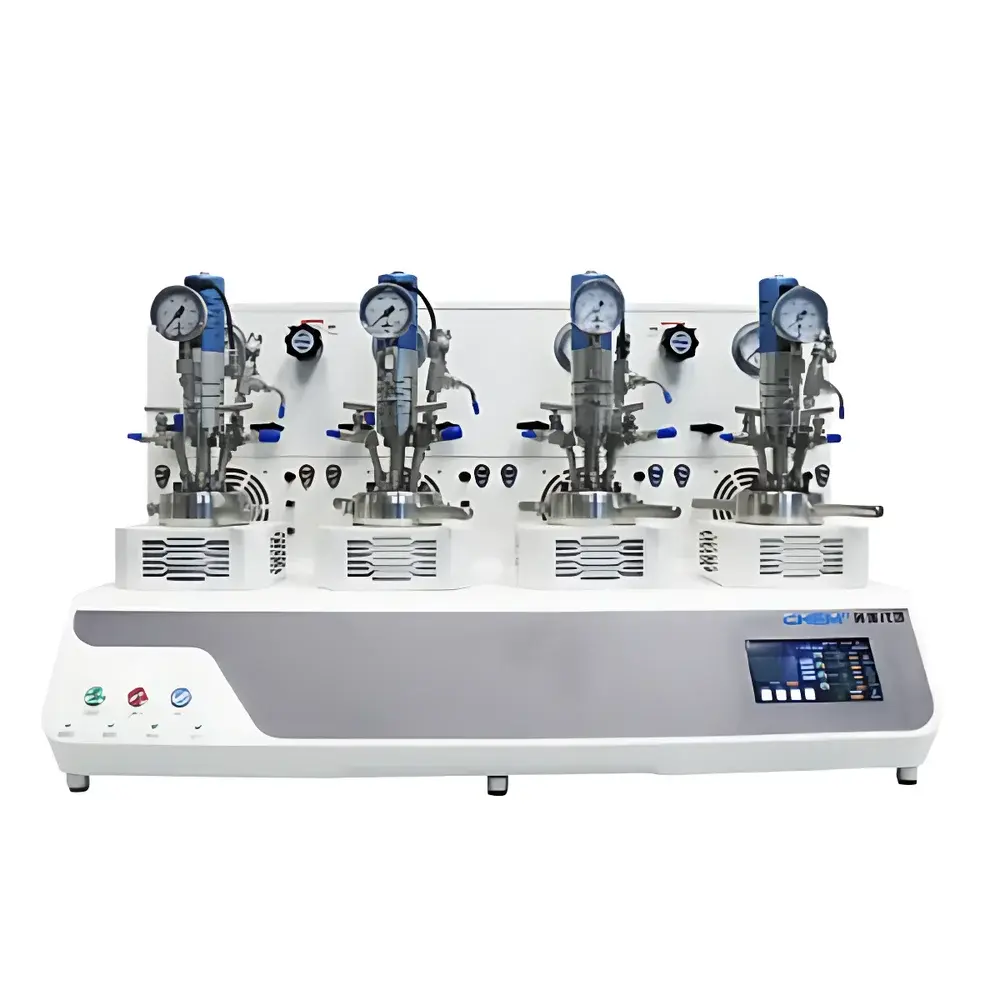
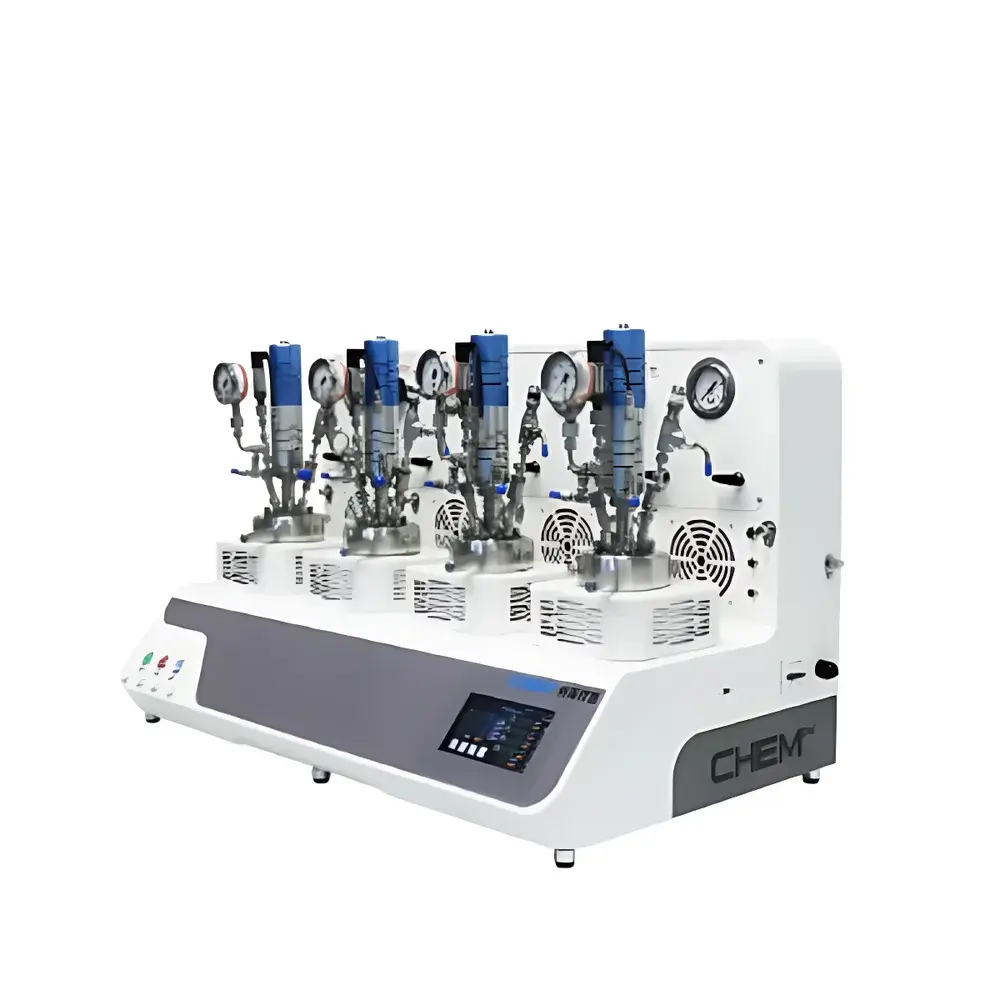
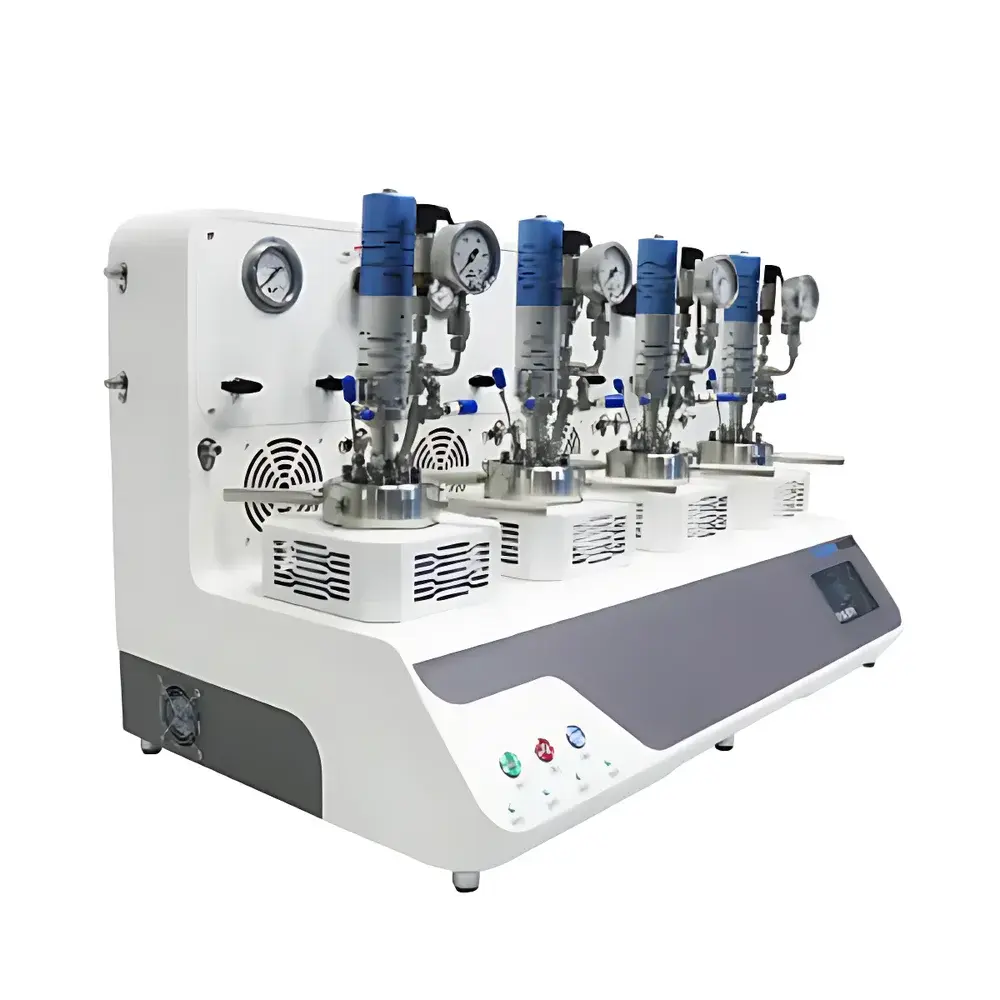
Chemn MSI-16 Six-Station Parallel High-Pressure Reactor System
| Brand | Chemn |
|---|---|
| Origin | Anhui, China |
| Manufacturer Type | Authorized Distributor |
| Origin Category | Domestic (China) |
| Model | MSI-16 |
| Instrument Category | High-Pressure Reaction Vessel |
| Vessel Material | 316L Stainless Steel (standard), Hastelloy C-276 (optional) |
| Working Pressure | Up to 35 MPa (optional), 20 MPa (standard for 25–100 mL), 10 MPa (standard for 300–500 mL) |
| Volume Options | 25 mL, 50 mL, 100 mL, 300 mL, 500 mL |
| Operating Temperature Range | Ambient to 550 °C (standard configuration: up to 300 °C) |
| Stirring Speed | 100–1200 rpm (100–600 rpm above 350 °C) |
| Heating Method | Embedded stainless-steel heating module |
| Stirring Mechanism | High-torque magnetic coupling or internal magnetic stir bar |
| Pressure Sensing | MEAS or ISE pressure transducers |
| Control Interface | 10-inch high-resolution capacitive touchscreen with real-time display of temperature, pressure, stirring speed, and elapsed time |
| Data Export | USB port for CSV log export (temperature, pressure, rpm, timestamp) |
| Safety Features | Over-temperature automatic power cutoff, over-pressure audible alarm, tongue-and-groove sealing structure, monolithic machined body |
| Dimensions (W×D×H) | 1050 × 600 × 650 mm |
| Compliance | Designed per ASME BPVC Section VIII Div. 1 guidelines for pressure containment |
Overview
The Chemn MSI-16 Six-Station Parallel High-Pressure Reactor System is an engineered platform for combinatorial catalysis screening, reaction condition optimization, and small-scale parallel synthesis under controlled elevated temperature and pressure. Based on the principle of simultaneous, independent batch reaction control within sealed, mechanically robust vessels, the system enables statistically significant experimental throughput without cross-contamination or operational interference between units. Each of the six reactors operates autonomously—supporting identical or divergent process parameters—including individual setpoints for temperature (ambient to 550 °C), pressure (up to 35 MPa), and agitation (100–1200 rpm). The system integrates precision thermal management via embedded stainless-steel heating modules, high-fidelity pressure monitoring using calibrated MEAS or ISE transducers, and torque-stable magnetic coupling drive systems. Its monolithic, CNC-machined 316L stainless-steel construction—optionally available in Hastelloy C-276 for aggressive media—ensures long-term structural integrity and corrosion resistance under repeated thermal cycling and pressurization.
Key Features
- Independent six-channel control architecture with fully decoupled thermal, pressure, and rotational actuation per reactor station
- Tongue-and-groove primary sealing design ensuring leak-tight performance at rated pressure and temperature extremes
- 10-inch industrial-grade capacitive touchscreen HMI with intuitive, menu-driven interface supporting multi-language operation (English default)
- Real-time parameter logging (temperature, pressure, rpm, time) with timestamped CSV export via USB mass storage mode
- Integrated safety subsystems: over-temperature cut-off relay, dual-stage pressure alarm (visual + audible), certified Fitok safety valve, and user-configurable rupture disc
- Space-optimized two-row, three-column layout (1050 × 600 × 650 mm) enabling full system installation inside standard laboratory fume hoods
- Modular vessel configuration supporting five standard volumes (25, 50, 100, 300, 500 mL) and material upgrades for halogenated, acidic, or hydrogenation environments
Sample Compatibility & Compliance
The MSI-16 accommodates heterogeneous and homogeneous catalytic reactions involving gaseous reagents (e.g., H₂, CO, NH₃, O₂), volatile solvents, and thermally sensitive organometallic precursors. Vessels are rated per ASME Boiler and Pressure Vessel Code Section VIII Division 1 for design, fabrication, and testing—providing traceable mechanical certification for pressure containment. Standard configurations meet ISO 14001 and ISO 9001 manufacturing quality requirements. When operated with optional audit-trail software (sold separately), the system supports FDA 21 CFR Part 11 compliance for electronic records and signatures, including user authentication, immutable event logs, and role-based access control—making it suitable for regulated R&D environments governed by GLP or GMP frameworks.
Software & Data Management
The onboard controller stores up to 30 days of continuous parameter history per channel (1-second sampling resolution). Raw data exports as UTF-8 encoded CSV files containing absolute timestamps, calibrated sensor values, and system status flags (e.g., “heating active”, “pressure stable”, “alarm triggered”). No proprietary file formats or vendor-locked readers are used. For advanced analysis, exported datasets integrate natively with MATLAB, Python (pandas/numpy), and commercial statistical platforms such as JMP or Minitab. Optional Chemn DataLink software provides remote monitoring via Ethernet, automated report generation (PDF/Excel), and integration with LIMS through RESTful API endpoints—enabling traceability from raw measurement to final analytical result.
Applications
- Catalyst discovery and ranking across metal-ligand combinations in hydrogenation, hydroformylation, and C–C coupling reactions
- Thermokinetic profiling of exothermic polymerizations under isothermal or ramped conditions
- Solvent effect mapping for asymmetric epoxidation and enantioselective reduction
- High-throughput evaluation of MOF stability and gas adsorption capacity under variable P/T
- Accelerated aging studies of battery electrolyte formulations under inert atmosphere and elevated pressure
- Process intensification trials for continuous-flow precursor synthesis followed by batch crystallization
FAQ
Can the six reactors run at different temperatures simultaneously?
Yes—each reactor has an independent PID-controlled heating zone with dedicated thermocouple feedback and adjustable ramp/soak profiles.
Is pressure calibration traceable to NIST standards?
Standard pressure transducers are supplied with factory calibration certificates; optional NIST-traceable recalibration services are available upon request.
What maintenance intervals are recommended for the magnetic drive system?
No scheduled maintenance is required under normal operation; the hermetically sealed coupling eliminates bearing wear and lubrication needs.
Can I integrate external cooling or reflux condensers?
Yes—the system includes standardized 1/4″ Swagelok ports on each vessel head for auxiliary lines; optional jacketed vessels and cryo-cooling kits are available.
Does the system support automated liquid dosing or gas blending?
Not natively—but third-party syringe pumps and mass flow controllers can be synchronized via TTL or 4–20 mA analog I/O interfaces (available as add-on modules).
Related Products



