
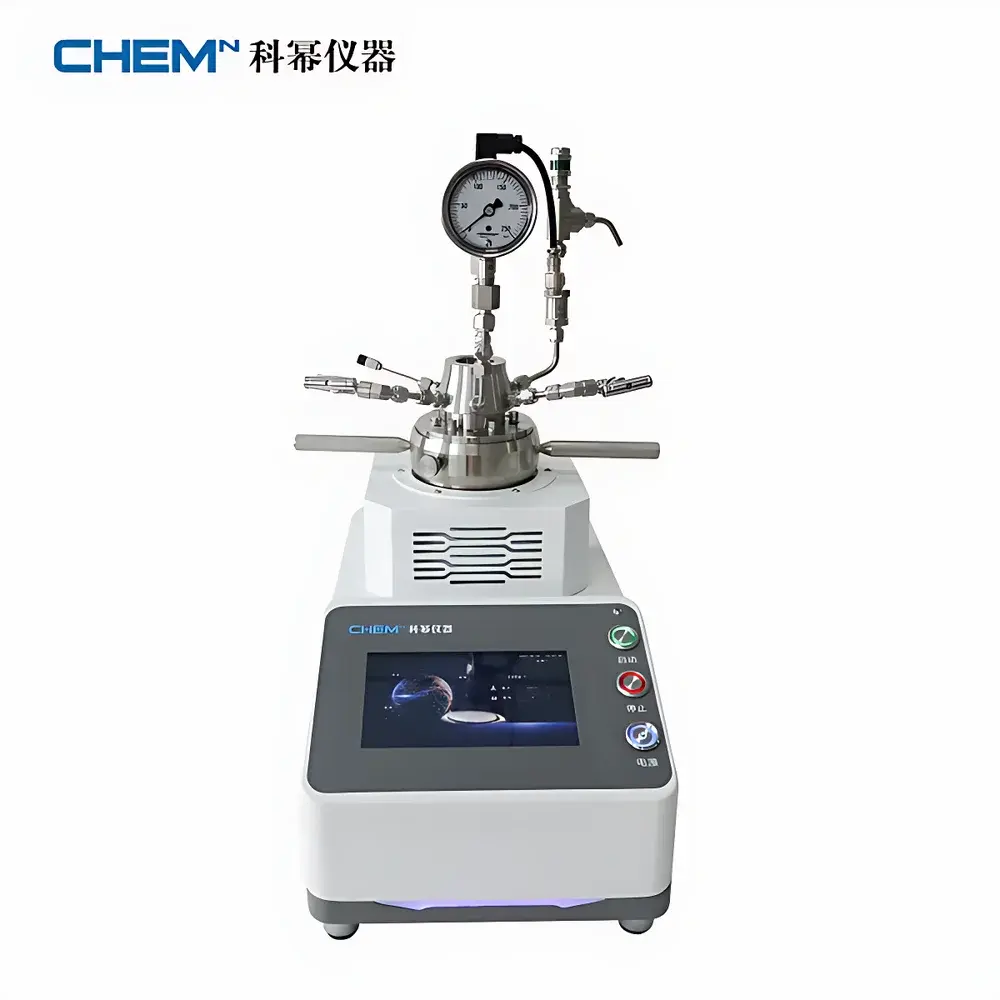
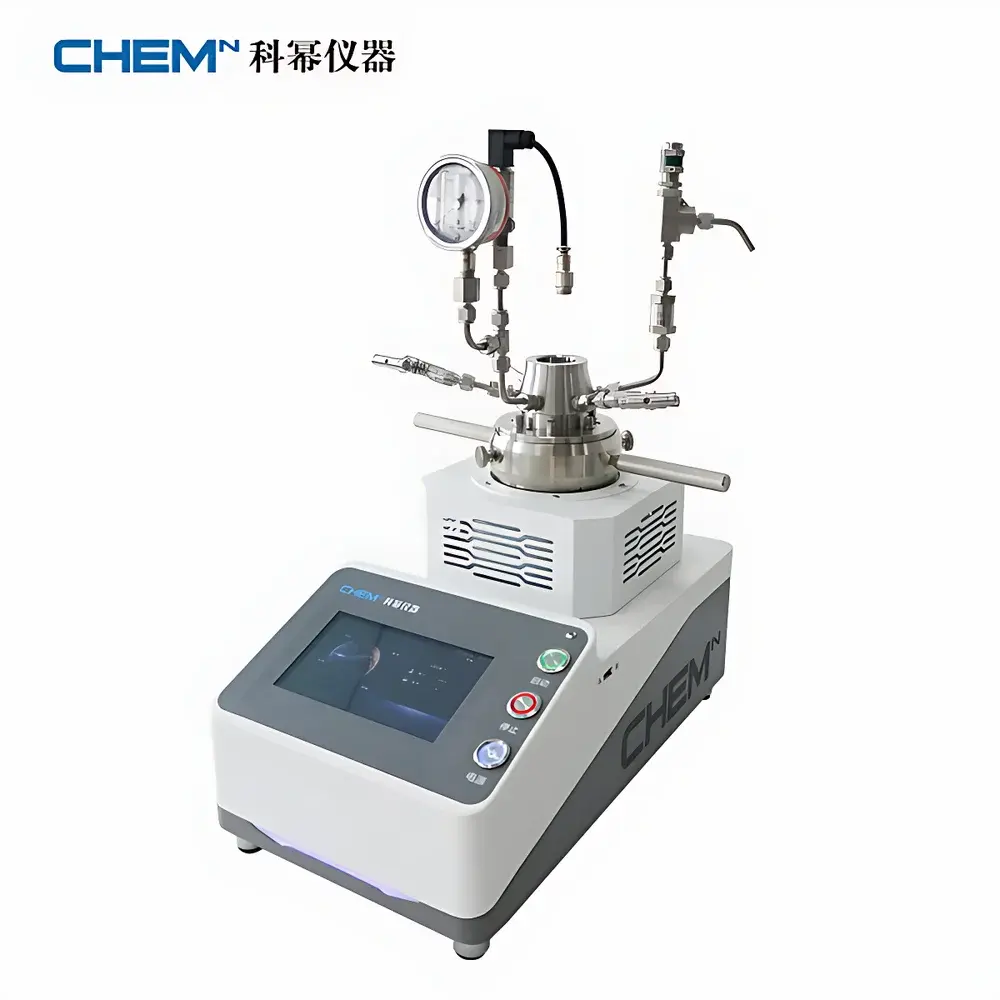
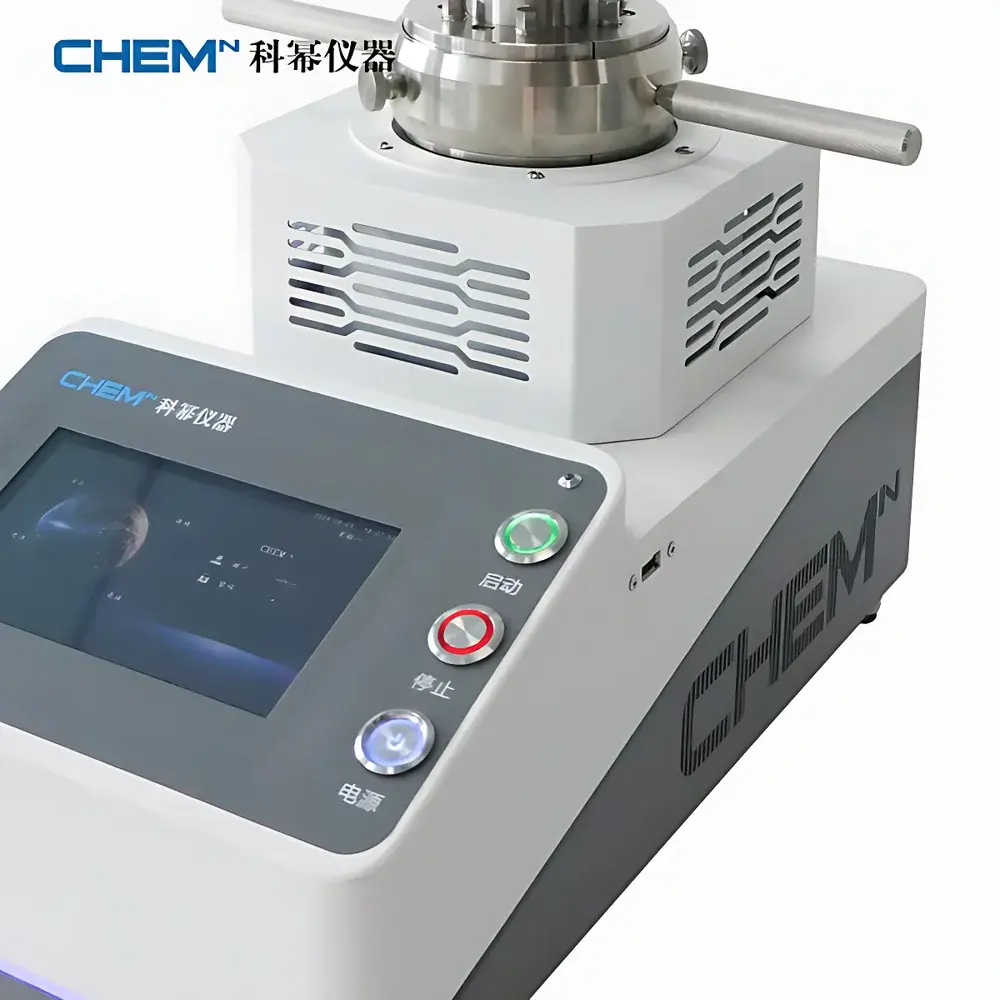
Ahkemi NV Series Photocatalytic Stirred Reactor
| Brand | Ahkemi |
|---|---|
| Origin | Anhui, China |
| Model | NVG (General), NVI (Intelligent), NVP (Remote-Controlled) |
| Vessel Capacity | 25–500 mL |
| Maximum Operating Pressure | 10 MPa |
| Maximum Operating Temperature | 300 °C |
| Construction Material | SS316L (standard), optional Hastelloy C-276, TA2, Zr702 |
| Stirring Speed Range | 100–1200 rpm |
| Heating Method | Integrated stainless steel heating module (1 kW) |
| Optical Window | Sapphire crystal (26 mm dia. for 25–50 mL |
| Sealing System | Radial + axial dual-seal with Kalrez® perfluoroelastomer O-rings |
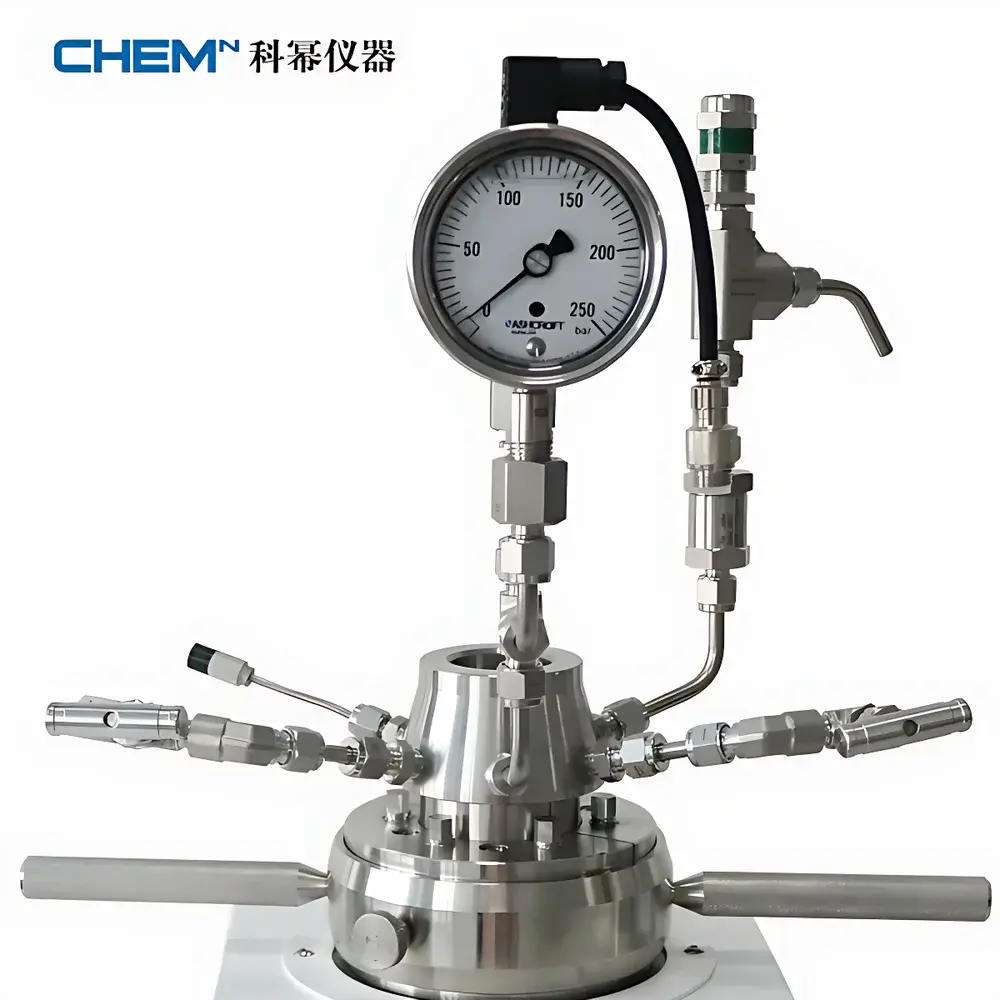
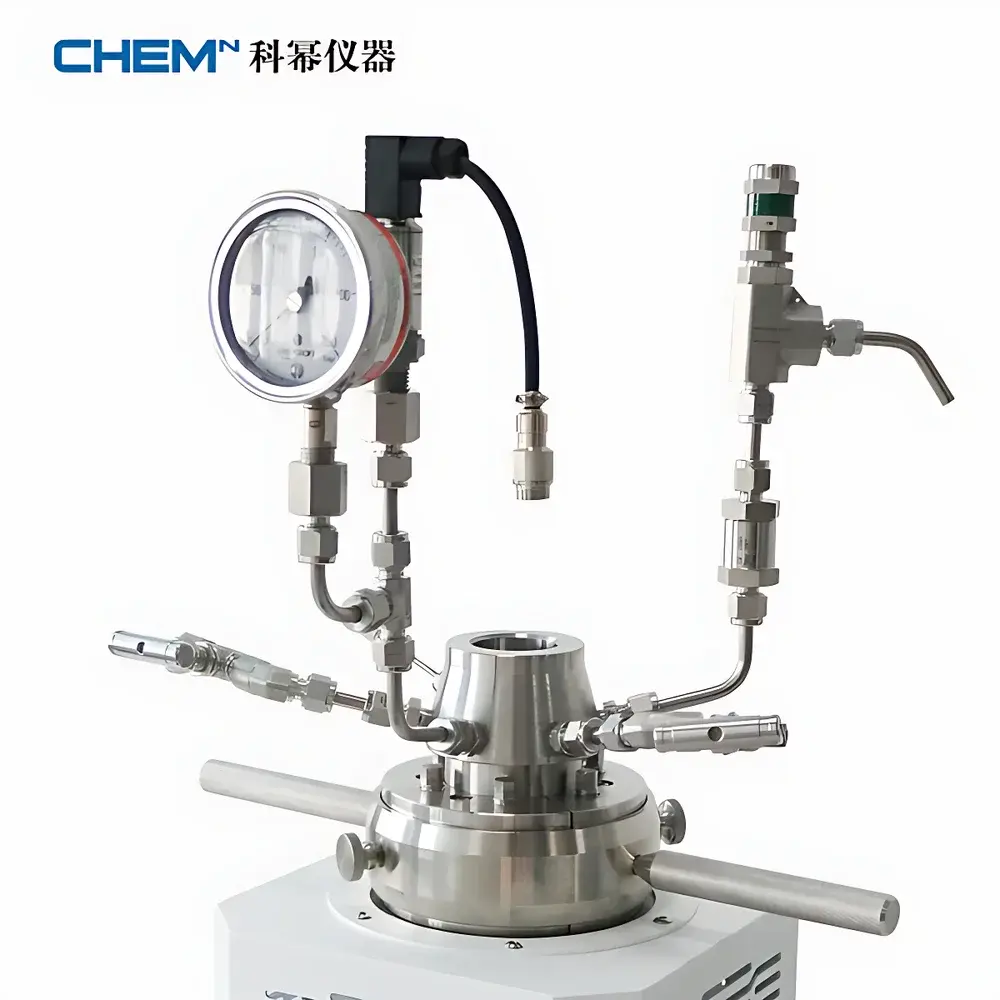
| Pressure Monitoring | MEAS sensor (NVI/NVP), digital pressure gauge (ASHCROFT/Fitok) |
| Safety Features | Rupture disc, safety valve (Fitok), overpressure audible alarm (NVI/NVP) |
| Remote Interface | NVP supports local touchscreen, PC-based control, and mobile app via secure IoT protocol |
| Compliance | Designed for GLP-compliant photochemical synthesis workflows |
Overview
The Ahkemi NV Series Photocatalytic Stirred Reactor is an engineered solution for controlled, reproducible photochemical reaction studies under elevated temperature and pressure conditions. Based on the Couette-type stirred reactor architecture, it integrates high-integrity mechanical sealing, optically transparent sapphire viewing windows, and precise thermal–pressure–stirring coordination to enable quantitative photocatalysis research—including hydrogen evolution, CO₂ reduction, organic photoredox transformations, and semiconductor photocatalyst screening. Its modular design supports both batch-mode kinetic experiments and long-duration stability testing under inert or reactive atmospheres (e.g., H₂, O₂, Ar, CO₂). The reactor’s pressure-rated construction (up to 10 MPa) and temperature capability (up to 300 °C) align with demanding heterogeneous catalysis protocols while maintaining optical access for in situ UV-Vis irradiation (254–450 nm) and real-time monitoring.
Key Features
- Optical-grade sapphire viewport (26 mm or 35 mm diameter, depending on volume) enabling uniform photon penetration and minimizing spectral distortion across UV–visible range
- Dual-axis sealing system—radial compression combined with axial preload—ensures leak-tight integrity at full rated pressure and temperature, validated per ASME BPVC Section VIII Div. 1
- Kalrez® 6375 perfluoroelastomer O-rings provide chemical resistance to strong acids, oxidants, and organic solvents, extending service life in aggressive photocatalytic media
- Integrated magnetic drive stirring (100–1200 rpm, ±5 rpm repeatability) eliminates shaft leakage paths and maintains vacuum/pressure integrity during extended operation
- NVI variant includes a calibrated MEAS piezoresistive pressure transducer with real-time digital readout and programmable overpressure threshold triggering audible alarm
- NVP model adds industrial-grade IoT connectivity: TLS-secured MQTT communication enables remote parameter adjustment, data logging, and event-triggered notifications via web dashboard or native iOS/Android application
- Standardized G1/4″ and 1/4″ Swagelok®/Fitok® ports allow seamless integration with gas manifolds, condensers, sampling loops, and online GC/HPLC interfaces
Sample Compatibility & Compliance
The NV Series accommodates heterogeneous slurries (e.g., TiO₂, g-C₃N₄, MOFs), homogeneous molecular catalysts (e.g., Ru(bpy)₃²⁺, Ir(ppy)₃), and volatile substrates (e.g., methanol/water mixtures, acetonitrile, THF) without compromising seal performance or optical clarity. All wetted parts meet ASTM A240/A479 standards for corrosion-resistant alloys. SS316L vessels comply with FDA 21 CFR 178.3570 for incidental food contact applications. Optional Hastelloy C-276 and TA2 configurations support highly corrosive halogenated or acidic environments per NACE MR0175/ISO 15156. The system supports audit-ready electronic records per 21 CFR Part 11 when used with validated third-party SCADA software (e.g., LabVIEW™ with NI DAQ or DeltaV™ DCS integration).
Software & Data Management
While the NVG operates via manual local controls, the NVI and NVP models embed firmware supporting timestamped CSV export of pressure, temperature, and stir speed at user-defined intervals (1–60 s resolution). NVP firmware includes built-in data buffering (≥72 h at 1 Hz) and automatic cloud sync to encrypted AWS S3 buckets. All variants support external trigger inputs for synchronizing irradiation pulses (TTL-compatible) and analytical instrument start commands. Calibration certificates for pressure and temperature sensors are traceable to NIST standards and include uncertainty budgets compliant with ISO/IEC 17025:2017.
Applications
- Quantitative quantum yield determination of photocatalysts under simulated solar irradiation
- High-pressure photohydrogenation of unsaturated organics (e.g., alkenes, nitroarenes)
- In situ FTIR or Raman spectroscopy coupling via side-arm optical ports
- Long-term photocorrosion stability assessment of metal oxide semiconductors
- Multi-phase photocatalytic oxidation of recalcitrant pollutants (e.g., pharmaceuticals, dyes) in aqueous matrices
- Development and optimization of flow-through photo-reactor modules using batch-to-continuous translation datasets
FAQ
What light sources are compatible with the sapphire viewport?
The sapphire window transmits >85% from 190 nm to 5.5 µm; it is suitable for mercury-xenon arc lamps, LED arrays (365/405/450 nm), and tunable monochromator-coupled systems.
Can the reactor be operated under vacuum prior to pressurization?
Yes—rated vacuum performance is ≤1 × 10⁻³ mbar, verified by helium leak testing; all standard configurations include vacuum-rated Kalrez® seals and Fitok vacuum isolation valves.
Is third-party calibration support available?
Ahkemi provides factory calibration services accredited to ISO/IEC 17025, including as-found/as-left reports and uncertainty analysis for pressure, temperature, and rotational speed sensors.
How is temperature measured and controlled?
A Pt100 RTD embedded in the vessel wall provides direct wall-temperature feedback; PID-controlled heating maintains ±1.0 °C stability over full operating range (ambient to 300 °C).
Are custom port configurations or material substitutions supported?
Yes—custom flange layouts, additional thermocouple wells, internal cooling coils (IC), and alloy substitutions (e.g., Inconel 625, Monel 400) are available under engineering review and formal change control documentation.



