
Hanson PHOENIX RDS Automated Transdermal Diffusion Testing System
| Brand | Hanson |
|---|---|
| Origin | USA |
| Manufacturer Type | Authorized Distributor |
| Origin Category | Imported |
| Model | PHOENIX RDS |
| Pricing | Upon Request |
Overview
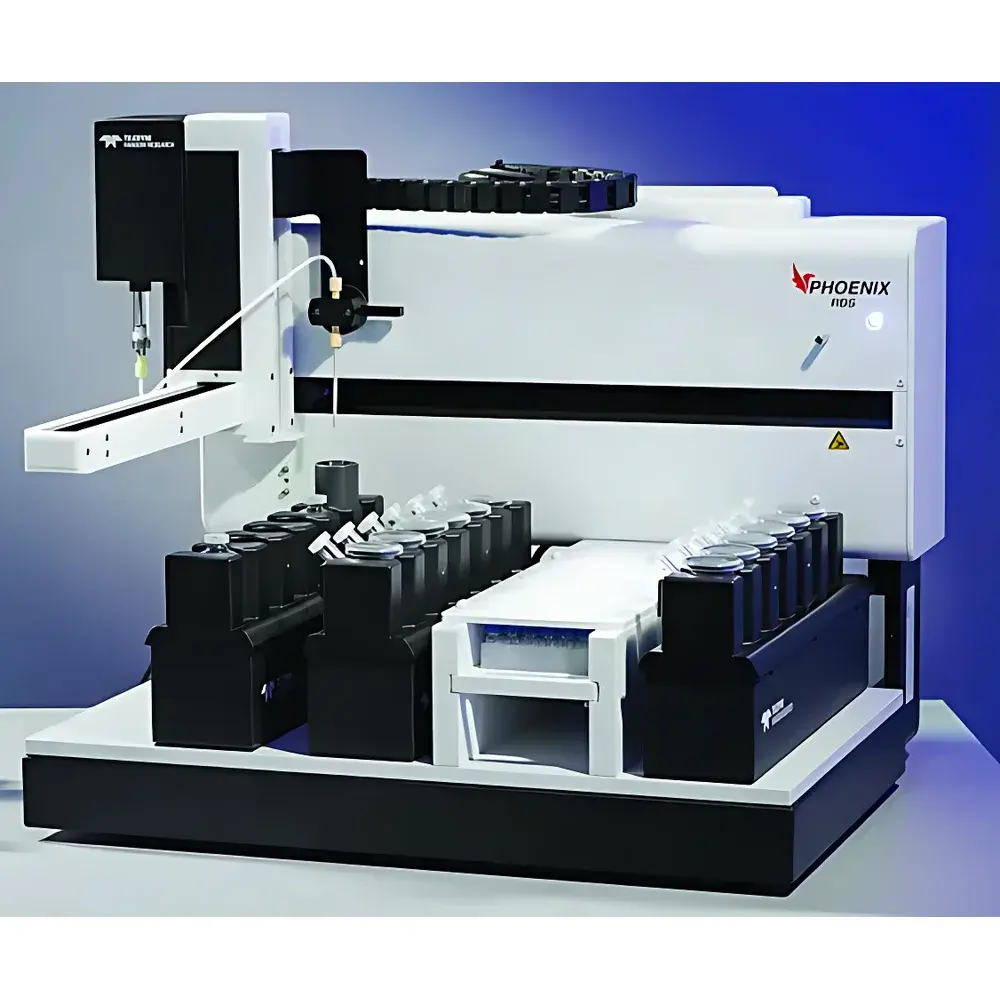
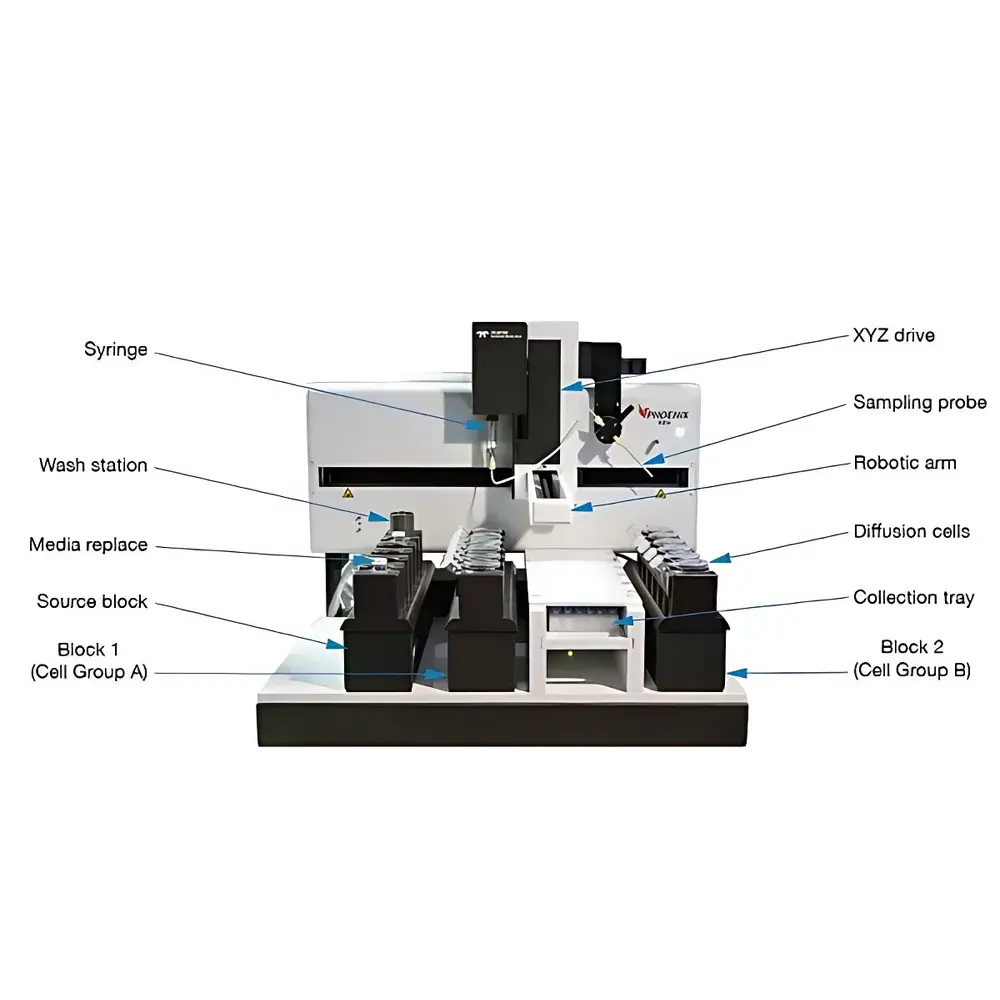
The Hanson PHOENIX RDS Automated Transdermal Diffusion Testing System is a fully integrated, GMP-aligned platform engineered for precise, reproducible, and auditable in vitro permeation and diffusion studies—primarily supporting transdermal drug delivery system (TDDS) development, generic bioequivalence assessment, and topical formulation optimization. Based on the standardized vertical diffusion cell (VDC) principle per USP and ASTM E2580, the system employs Franz-type diffusion cells operating under controlled temperature, agitation, and sampling dynamics. Its architecture centers on three independently controlled heating modules: two dedicated to simultaneous conditioning of 6 or 12 diffusion cells (configurable), and a third modular station usable either as a dedicated cleaning module or as an auxiliary media reservoir bank accommodating up to five additional solvent sources. The system’s core mechanical design eliminates water-jacket dependency by utilizing dry-heated borosilicate glass diffusion cells—enhancing thermal stability, dimensional repeatability, and long-term durability while reducing maintenance overhead.
Key Features
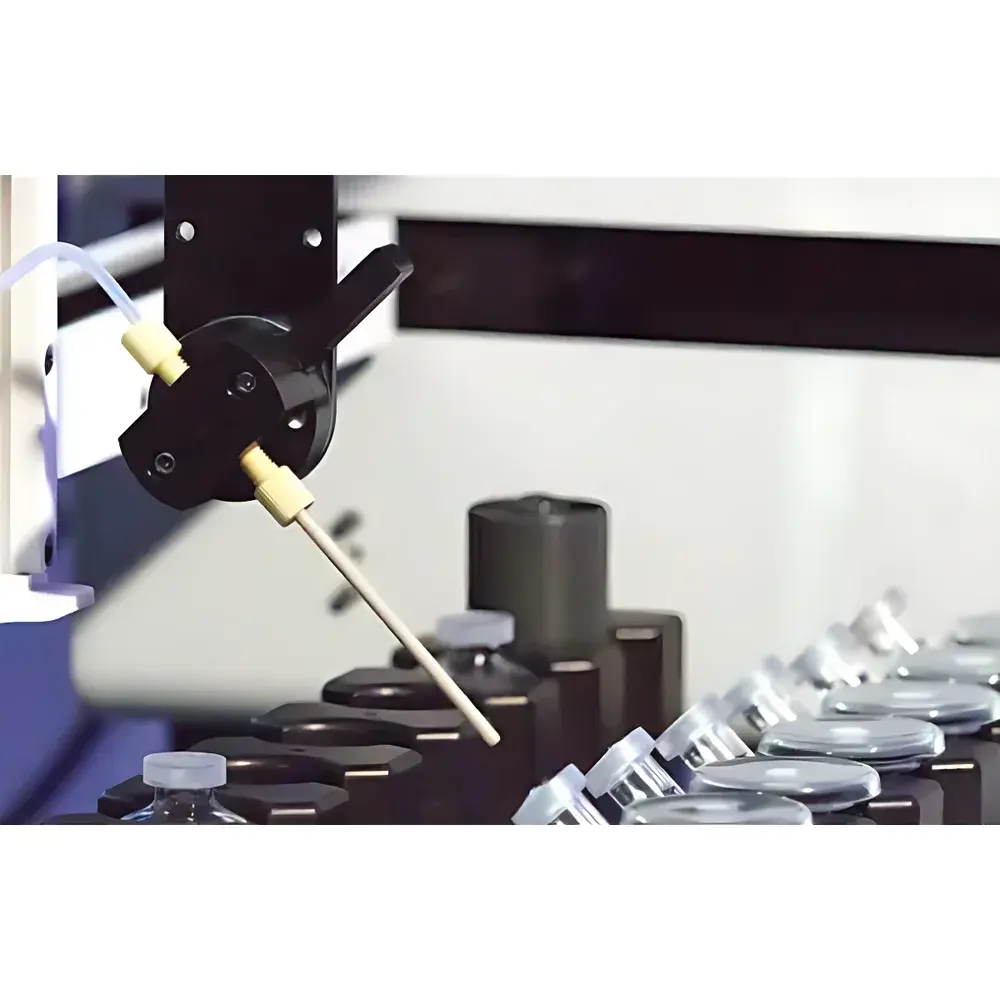
- Automated dual-phase sampling: Angled probe geometry replicates manual aspiration technique—first withdrawing sample volume, then immediately replenishing with fresh receptor medium—ensuring sink condition maintenance and minimizing concentration gradient perturbation.
- Volumetric accuracy: ±1% or ±25 µL (whichever is greater) across full operational range, validated per ISO/IEC 17025 traceable protocols.
- High-throughput capability: Supports up to 12 vertical diffusion cells per unit; dual-system control enables concurrent operation of 24 cells via one workstation running Diffusion Master™ software.
- Contamination mitigation: Probe rinsing requires only 200 µL per cycle using user-defined solvent(s) or compressed air; optional multi-solvent sequential wash routines minimize carryover between dissimilar analytes.
- Dynamic parameter adjustment: Real-time modification of stirrer speed (0–800 rpm), bath temperature (25–45 °C), and media replenishment volume during active runs—critical for evaporation compensation and kinetic profiling.
- Modular media handling: Third heating zone supports programmable media switching, pre-warmed reservoirs, or automated cleaning cycles without interrupting primary diffusion assays.
Sample Compatibility & Compliance
The PHOENIX RDS accommodates standard 12×32 mm vials with pre-pierced septa for direct autosampler integration with HPLC/UHPLC systems from Agilent, Waters, Shimadzu, and Thermo Fisher Scientific. Each vial tray holds up to 108 samples (dual-tray configuration). Diffusion cells are constructed from high-tolerance borosilicate glass (ISO 3585-compliant), enabling consistent membrane surface area (typically 1.77 cm² or 3.14 cm²), donor/receptor volume ratios, and thermal mass uniformity. The system conforms to regulatory expectations for method validation under ICH Q5C, Q2(R2), and FDA Guidance for Industry on “In Vitro Release Testing of Transdermal and Topical Dosage Forms.” All hardware and firmware components meet CE marking requirements for laboratory equipment (2014/30/EU EMC Directive and 2014/35/EU LVD).
Software & Data Management
Diffusion Master™ software serves as the validated, 21 CFR Part 11-compliant control and data acquisition engine. It provides role-based access control (RBAC) with unlimited user/group creation, password complexity enforcement, session timeout, electronic signatures, and immutable audit trails—including timestamped records of all parameter changes, sampling events, error conditions, and report generation. All test logs are stored in encrypted SQLite databases with SHA-256 hashing; archived reports support digital signing and PDF/A-1b long-term preservation. Search functionality allows filtering by batch ID, analyst name, cell number, date range, or custom metadata tags. Real-time dashboards display elapsed time per sampling interval, remaining vial capacity, temperature deviation alerts, and probe position status—enabling remote monitoring without compromising data integrity.
Applications
- Comparative in vitro release testing (IVRT) of generic transdermal patches per FDA draft guidance.
- Kinetic modeling of drug permeation across synthetic membranes (e.g., Strat-M®, cellulose acetate) and excised human/porcine skin.
- Excipient screening and formulation robustness evaluation under varying pH, viscosity, and surfactant conditions.
- Stability-indicating dissolution profiling for semi-solid topical products (gels, creams, ointments).
- Method transfer between manual and automated platforms during analytical development lifecycle.
- Support for GLP-compliant toxicokinetic and dermal absorption studies requiring full traceability and reprocessing capability.
FAQ
Is the PHOENIX RDS compatible with non-Franz diffusion cell geometries?
No—the system is optimized exclusively for vertical diffusion cells conforming to USP dimensions and operational parameters. Custom cell adapters are not supported.
Can Diffusion Master™ export raw data to LIMS or statistical analysis packages?
Yes—CSV and XML exports are natively supported; API endpoints allow bidirectional integration with enterprise LIMS platforms meeting HL7 or ASTM E1467 standards.
What validation documentation is supplied with the system?
Each shipment includes Factory Acceptance Test (FAT) report, IQ/OQ protocol templates aligned with ASTM E2500, and a traceable calibration certificate for temperature, volume, and timing subsystems.
Does the system support overnight unattended operation?
Yes—fully autonomous 72-hour runtime is verified; low-voltage alarm, probe stall detection, and emergency stop circuitry ensure safe extended operation.
Are Phoenix™ diffusion cells reusable?
Yes—borosilicate glass construction enables repeated cleaning via ultrasonication and autoclaving (up to 121°C); O-rings and gaskets are replaceable per maintenance schedule.





