
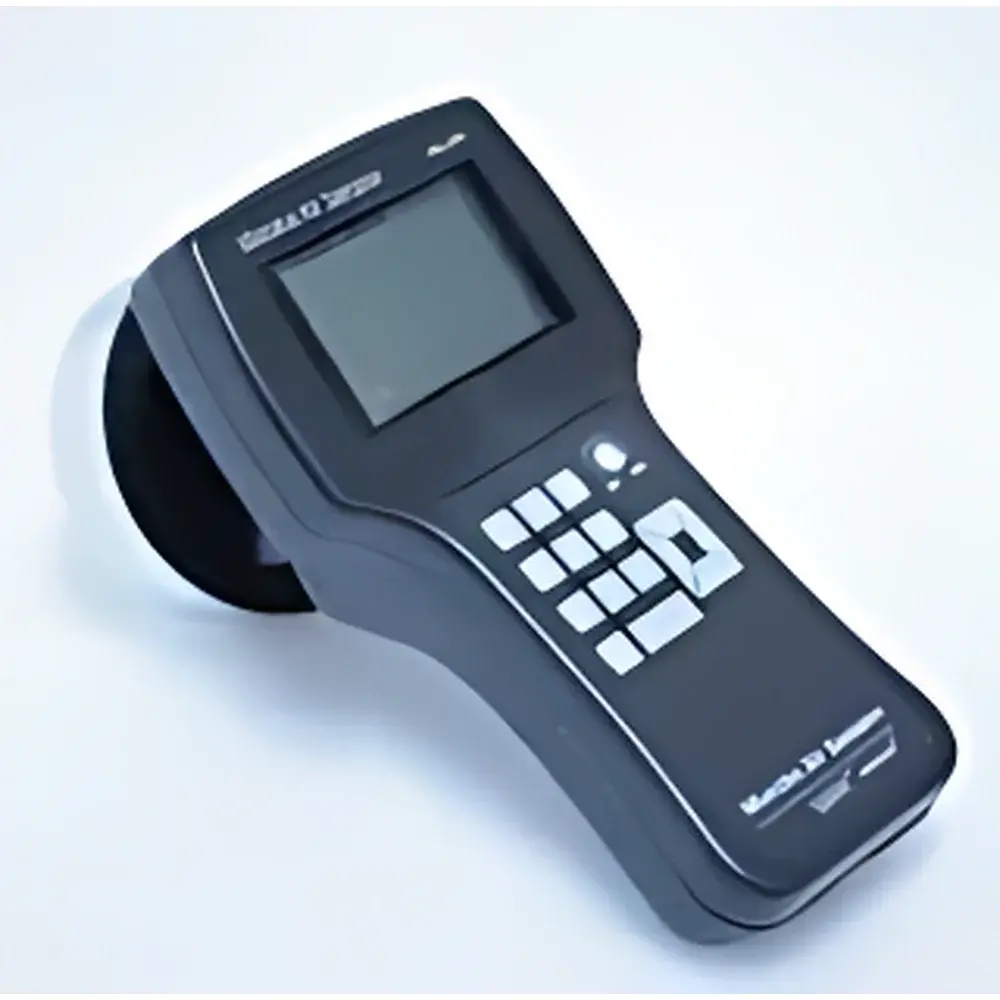
SW1 Handheld Air Microbial Sampler
| Origin | Beijing |
|---|---|
| Manufacturer Type | Distributor |
| Origin Category | Domestic |
| Model | SW1 |
| Pricing | Upon Request |
Overview
The SW1 Handheld Air Microbial Sampler is a portable, impactor-based aerosol collection instrument engineered for quantitative recovery of viable airborne microorganisms—including bacteria, fungi, and yeasts—in diverse environmental and occupational settings. It operates on the principle of inertial impaction: aerosol-laden air is drawn at a controlled flow rate (65 L/min) through a precision-engineered perforated aluminum or stainless-steel sampling head, where particles with sufficient aerodynamic diameter (>0.65 µm) impact onto nutrient agar surfaces in Petri dishes. This method provides superior collection efficiency over passive settle plate techniques—particularly for low-concentration or transient bioaerosol events—by actively concentrating microbes within defined volumetric samples (50–6000 L). Designed for field-deployable use, the SW1 replaces traditional sedimentation methods in compliance with ISO 14698-1 (Biocontamination control), EU GMP Annex 1 (2022), and CDC/NIOSH recommended practices for indoor air quality assessment.
Key Features
- Optimized vortex-pattern nozzle array: Centralized pore density increases particle impaction probability while reducing edge loss; aerodynamic arc design enhances jet velocity consistency across the sampling surface.
- Ultra-low acoustic emission (<45 dB(A) at 1 m): Enables unobtrusive sampling in clinical wards, cleanrooms, and public spaces without disturbing operational protocols.
- Full-graphic LCD display (128 × 96 pixels): Real-time visualization of flow rate, elapsed time, remaining volume, battery status, and operator/site ID.
- Onboard memory storage: Logs up to 99 complete sampling sessions with timestamps, volume, operator code (1–99), and location code (1–999); data retained during power cycling.
- Ergonomic handheld chassis (254 × 84 × 133 mm; 500 g net weight): Balanced center-of-gravity design minimizes operator fatigue during extended surveys; integrated tripod mount (¼”-20 thread) supports stationary or angled positioning.
- Rechargeable lithium-ion battery: Delivers ≥45 minutes continuous operation at nominal 65 L/min flow; fast-charge capability (0–100% in <3 h) with intelligent thermal management.
- Auto-shutdown & programmable timer: Configurable sampling duration (1–120 min) with automatic termination upon volume completion or battery depletion.
- Dual environmental resilience: Rated for operation between −10°C and +45°C ambient temperature, ≤85% RH (non-condensing), and altitudes up to 3500 m above sea level (standard atmospheric pressure range: 65–106 kPa).
- Electrical safety certification: Dielectric strength test passed at DC 1500 V for 1 minute per IEC 61010-1.
Sample Compatibility & Compliance
The SW1 accepts standard 90-mm Petri dishes filled with TSA, SDA, or other microbiologically validated media. Its impactor geometry ensures consistent deposition patterns compatible with ISO 8573-7 (compressed air purity) and EN 13098 (airborne microbial monitoring in healthcare facilities). Device firmware and hardware architecture support GLP-compliant workflows: all sampling metadata—including date/time stamps, user authentication codes, and volumetric calibration logs—are stored internally and exportable via optional PC software. While not intrinsically certified for ATEX or IECEx zones, it meets CE marking requirements under the Low Voltage Directive (2014/35/EU) and EMC Directive (2014/30/EU).
Software & Data Management
An optional Windows-compatible desktop application enables secure data extraction, report generation (PDF/CSV), and audit trail review. The software enforces role-based access control (RBAC) for operator accounts and supports batch export of sampling records aligned with 21 CFR Part 11 principles—though electronic signatures and full Part 11 validation require site-specific configuration and IQ/OQ documentation. Calibration history, battery cycle logs, and firmware version tracking are embedded in each exported dataset.
Applications
- Hospital infection control: Routine monitoring of operating theaters, isolation rooms, and HVAC supply ducts.
- Pharmaceutical manufacturing: Environmental monitoring (EM) in Grade A/B cleanrooms per EU GMP Annex 1.
- Food processing facilities: Verification of air hygiene in packaging and preparation zones.
- Public health investigations: Rapid response to suspected airborne pathogen exposure in schools, transport hubs, or elderly care centers.
- Research laboratories: Method development for bioaerosol transport modeling and filtration efficiency testing.
FAQ
What is the recommended calibration frequency for the SW1?
Annual flow verification using a NIST-traceable primary standard (e.g., dry gas meter or critical orifice) is advised; field checks with a calibrated rotameter or thermal mass flowmeter should be performed before each sampling campaign.
Can the SW1 be used with selective media for mold enumeration?
Yes—Sabouraud Dextrose Agar (SDA) and Dichloran Rose Bengal Chloramphenicol (DRBC) agar are routinely deployed; ensure agar depth does not exceed 4 mm to prevent desiccation during extended runs.
Is the device suitable for outdoor ambient air sampling?
It is validated for indoor and sheltered semi-outdoor environments; direct exposure to rain, high wind (>3 m/s), or particulate-laden dust storms may compromise sampling integrity and require post-use nozzle cleaning.
Does the SW1 meet ISO 14698-1 requirements for biocontamination monitoring?
Yes—the impactor design, volumetric accuracy, and traceable operational parameters satisfy Clause 6.3 (Sampling equipment selection) and Annex B (Impactors) of ISO 14698-1:2003.
How is operator identity authenticated during sampling?
Users input a pre-assigned 1–2 digit operator code from a managed list of 99 authorized personnel; codes are logged alongside each sample record and cross-referenced in the PC software database.
Related Products







