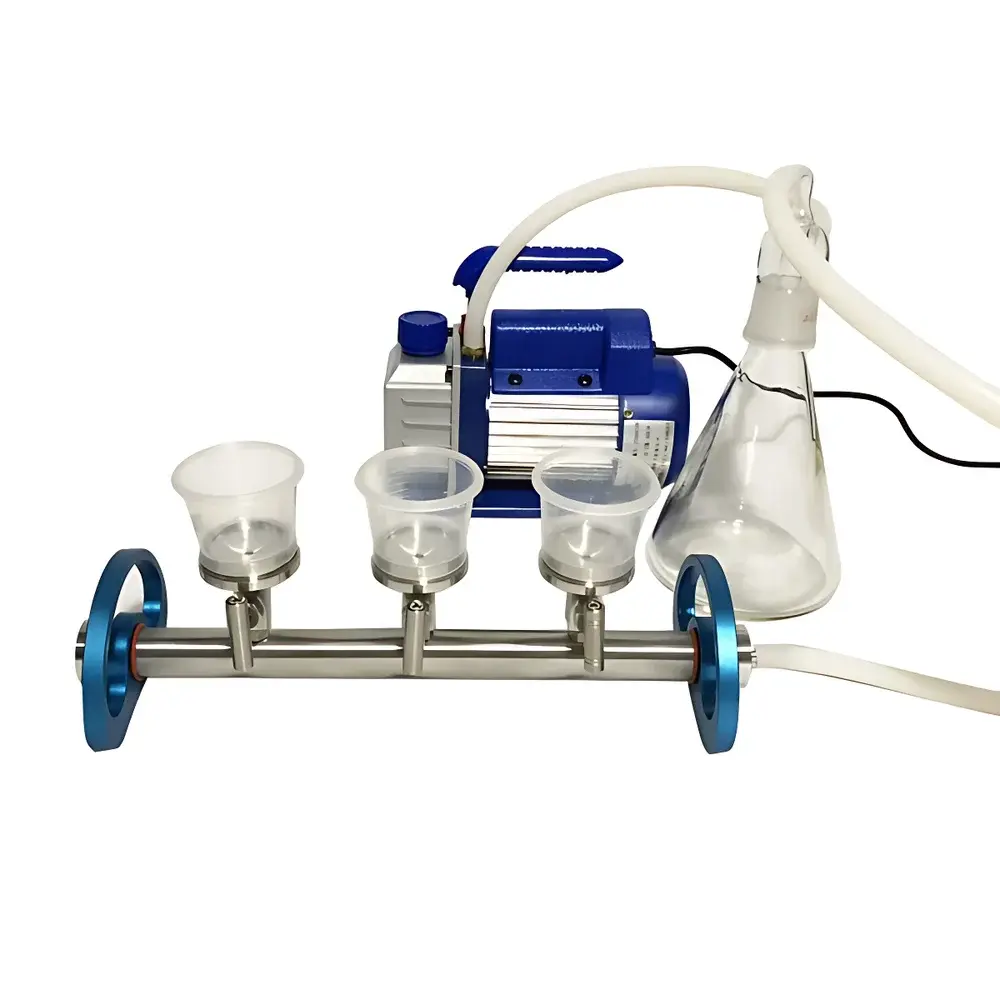
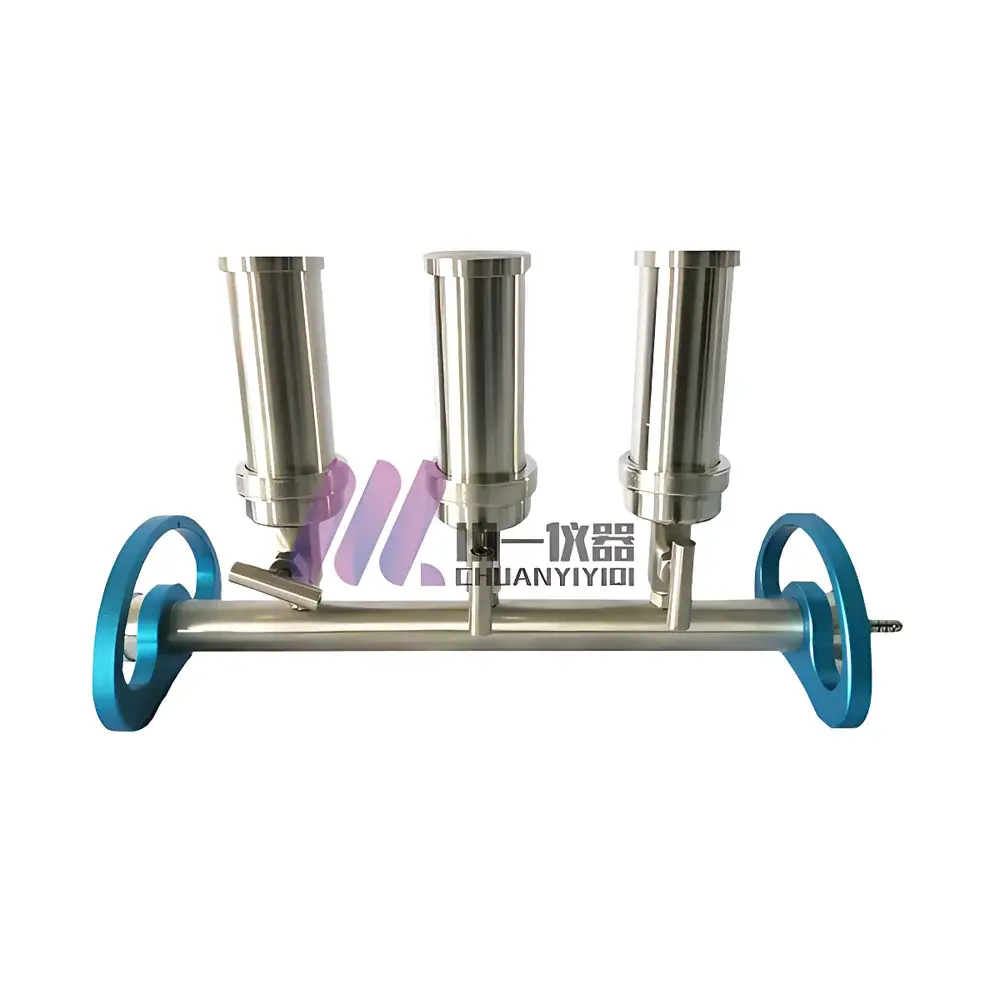
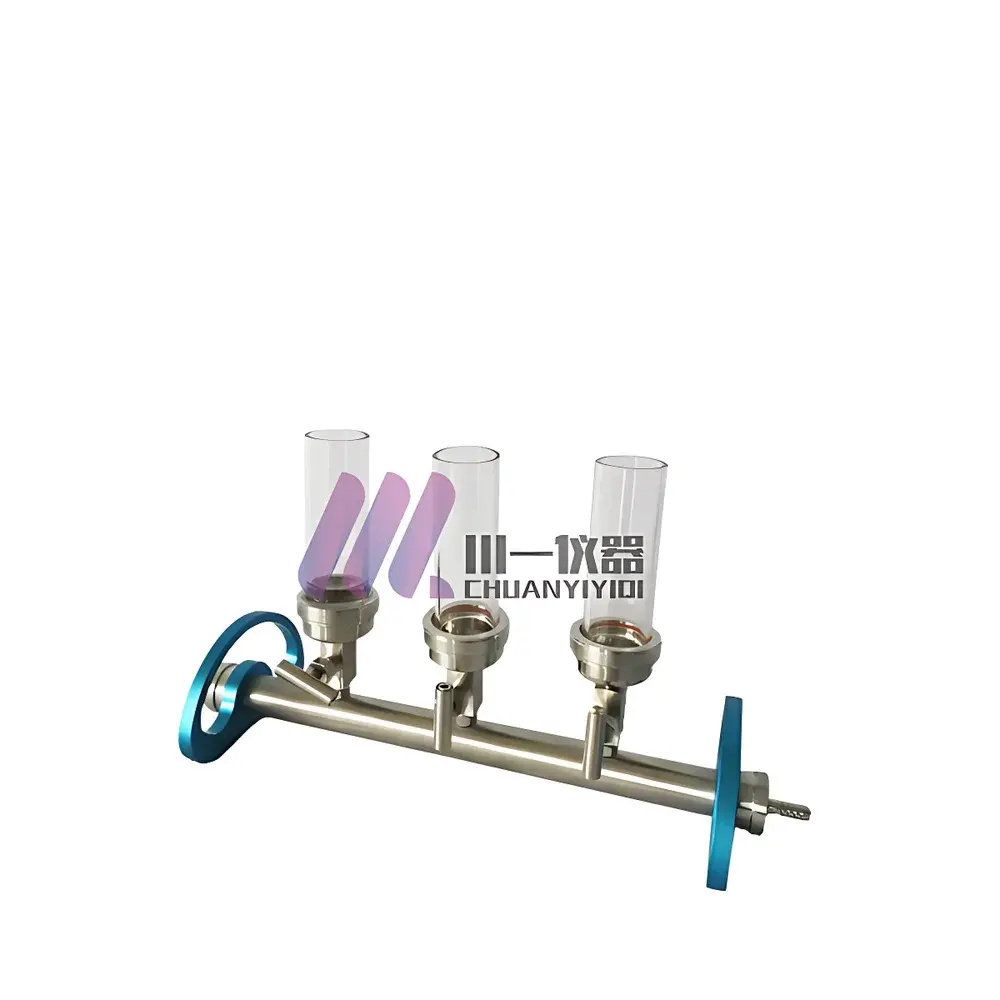
CYW-300S Triple-Head Membrane Filtration Unit for Microbial Limit Testing
| Origin | Zhejiang, China |
|---|---|
| Manufacturer Type | Authorized Distributor |
| Model | CYW-300S |
| Price | USD 1,700 (FOB) |
| Filter Diameter | Φ47 mm / Φ50 mm |
| Effective Filtration Area | 40 mm |
| Cup Capacity | 100 mL |
| Number of Filtration Heads | 3 |
| Filtration Method | Vacuum-Driven Membrane Filtration |
| Filtration Rate | 100 mL per 15 s |
| Sterilization Options | Autoclave (121 °C, 15–20 min), Flame Sterilization (for filtration heads only) |
| Filtration Head Design | Removable, Lip-Seal Integrated, Clamp-Free, O-Ring-Free |
| Pump Interface | External Oil-Free Vacuum Pump (not included) |
| Material | Electropolished 316L Stainless Steel Base & Filtration Heads |
| Surface Finish | Mirror-Polished AISI 316L SS |
| Compliance | Designed in accordance with ISO 8573-1 (compressed air purity), USP <61> & <62>, Ph. Eur. 2.6.12, and Chinese Pharmacopoeia 2020 Edition IV.1107 |
Overview
The CYW-300S Triple-Head Membrane Filtration Unit is a precision-engineered instrument for quantitative microbial limit testing in pharmaceutical, biotechnology, cosmetics, and food-grade water quality laboratories. It implements the standardized membrane filtration method—defined in USP <61>, EP 2.6.12, and ChP IV.1107—to isolate viable microorganisms from liquid samples onto sterile, low-protein-binding membranes (Φ47 mm or Φ50 mm). Unlike sterility testing systems, this unit is optimized for enumeration—not absolute sterility assurance—and supports both total aerobic microbial count (TAMC) and total combined yeast and mold count (TYMC) workflows. The device operates via external vacuum-driven aspiration through three independent, lip-sealed filtration heads, eliminating mechanical clamps and elastomeric O-rings that may introduce variability in seal integrity or leachables. Its compact footprint (280 × 220 × 260 mm) enables seamless integration into ISO Class 5 laminar flow hoods without compromising operator ergonomics or airflow uniformity.
Key Features
- Triple-head architecture with fully independent valve control—enabling parallel processing of up to three samples or sequential validation runs without cross-contamination risk.
- Lip-seal filtration cup design: Achieves leak-tight sealing against the stainless steel support grid via geometric interference fit—no O-rings, no torque-dependent clamps, ensuring consistent pressure distribution and ≥95% microbial recovery reproducibility across repeated trials.
- Electropolished 316L stainless steel construction: Mirror-finished surfaces minimize microbial adhesion and facilitate rapid, residue-free cleaning between batches; compatible with autoclaving (121 °C, 15–20 min) and flame sterilization of filtration heads using handheld butane torches (≤5 s exposure).
- Modular, reusable filtration cups: Each cup rated for ≥500 autoclave cycles; validated for compatibility with cellulose ester (CA), polyethersulfone (PES), and nylon membranes—ensuring material compatibility with diverse sample matrices including buffered saline, purified water, and low-viscosity injectables.
- Integrated vacuum interface: Designed exclusively for oil-free diaphragm vacuum pumps (recommended ultimate vacuum ≤80 kPa); eliminates hydrocarbon contamination risk in sensitive microbiological assays.
- Low-center-of-gravity base with dual ergonomic anodized aluminum handles: Prevents tipping during full-load operation (3 × 100 mL); surface geometry conforms to ISO 14644-1 cleanroom handling guidelines.
Sample Compatibility & Compliance
The CYW-300S supports aqueous and low-surface-tension liquids meeting pharmacopeial criteria for microbial limit testing—including purified water, water for injection (WFI), ophthalmic solutions, non-sterile topical formulations, and herbal extracts. It is not suitable for strong oxidizers (e.g., hypochlorite >50 ppm), concentrated acids/bases (pH <2 or >12), or viscous suspensions (>10 cP) without prior centrifugation or dilution. All wetted parts comply with USP Class VI biocompatibility requirements and are certified free of detectable endotoxins (<0.03 EU/mL) post-autoclaving. The system meets functional verification criteria outlined in ISO/IEC 17025:2017 Annex A.2 for equipment qualification and supports GLP-compliant audit trails when paired with validated electronic lab notebooks (ELNs) for raw data capture.
Software & Data Management
The CYW-300S is a hardware-only platform with no embedded firmware or digital interface—intentionally designed to eliminate software validation burden under FDA 21 CFR Part 11. All operational parameters (filtration time, vacuum level, sample volume) are recorded manually or via external calibrated timers and pressure gauges. This analog architecture ensures compliance with GMP Annex 11 (2022) Clause 5.12, which permits non-computerized systems where data integrity is maintained through procedural controls, operator training, and documented SOPs. Users may integrate the unit into LIMS environments via manual entry of filtration logs, colony counts, and media lot traceability—all aligned with ALCOA+ principles (Attributable, Legible, Contemporaneous, Original, Accurate, Complete, Consistent, Enduring, Available).
Applications
- Routine microbial enumeration of purified water systems per USP <1231> and EU GMP Annex 1.
- Release testing of non-sterile pharmaceutical dosage forms (creams, ointments, syrups) per ICH Q5C and Ph. Eur. 5.1.2.
- Environmental monitoring filter validation in Grade C/D cleanrooms.
- Raw material bioburden assessment for excipients and active pharmaceutical ingredients (APIs).
- Educational use in university microbiology labs for teaching membrane filtration methodology and colony isolation techniques.
FAQ
What vacuum pump specifications are required for optimal performance?
A diaphragm-type oil-free vacuum pump delivering ≥60 kPa vacuum at ≥25 L/min free-air displacement is recommended. Ultimate vacuum should reach ≤80 kPa to ensure consistent 100 mL/15 s throughput across all three heads.
Can the filtration heads be sterilized in an autoclave with the base assembly attached?
No. Only the removable filtration heads (cups + support grids) are autoclavable. The base housing contains sealed valves and must be cleaned via wipe-down with 70% ethanol or vapor-phase hydrogen peroxide (VPHP) after each use.
Is the unit compliant with FDA 21 CFR Part 11 for electronic records?
Yes—by design. As a non-computerized instrument, it requires no electronic signature or audit trail functionality. Compliance is achieved through paper-based batch records, operator initials, and dated filtration logs retained per 21 CFR Part 211.188.
How is microbial recovery validated on this system?
Recovery validation follows USP <61> Section 3.2: inoculation of test organisms (e.g., Bacillus subtilis, Candida albicans) into representative sample matrices at 50–100 CFU/100 mL, followed by filtration and plating. Acceptance criterion: ≥70% recovery relative to positive control plates.
What maintenance intervals are recommended for long-term reliability?
Valve seals and silicone tubing should be replaced every 6 months or after 200 filtration cycles. Stainless steel components require passivation annually per ASTM A967 when used in high-chloride environments.