TONiC™ Ultra-Compact Linear and Rotary Optical Encoders by Renishaw
| Brand | Renishaw |
|---|---|
| Origin | United Kingdom |
| Model | TONiC™ |
| Maximum Speed | 10 m/s |
| Resolution | down to 5 nm |
| Subdivision Error | < ±30 nm |
| Operating Temperature | up to 70 °C |
| Compliance | RoHS, WEEE |
| Output Options | 1 Vpp analog, digital via 15-pin D-sub connector with diagnostics |
| IN-TRAC™ Reference Mark | Integrated bidirectional optical zero mark |
| Signal Stability | Enhanced by AGC and optical filtering |
| Installation | Tool-less, self-aligning readhead with dual diagnostic LEDs |
Overview
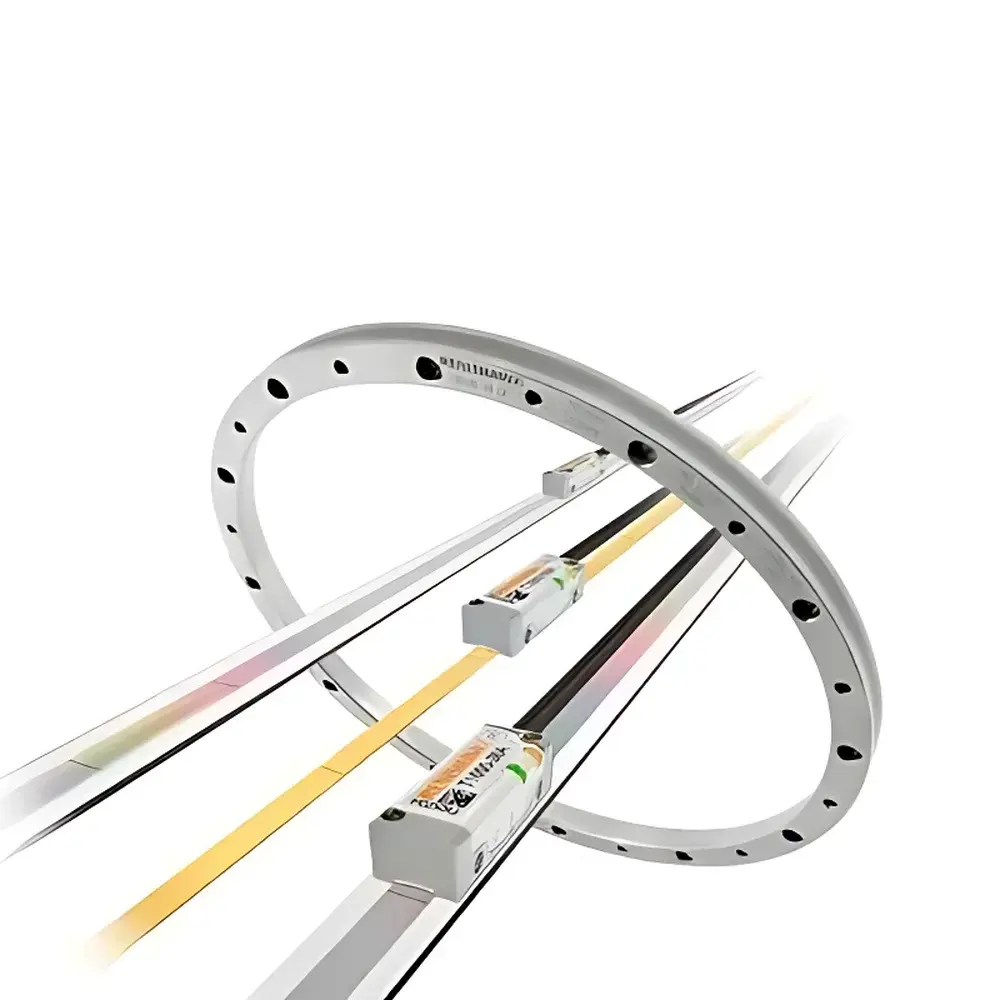
The TONiC™ ultra-compact optical encoder system, engineered by Renishaw (UK), is a high-performance, non-contact position feedback solution designed for demanding linear and rotary motion control applications. Based on advanced interferometric optical encoding principles, TONiC™ employs a patented diffraction-based readhead architecture that interrogates precision-ruled scales—either flexible gold-plated steel tape for linear axes or rigid ring or disc substrates for rotary axes. Its core innovation lies in the integration of IN-TRAC™ bidirectional reference marking directly within the incremental signal tracks, eliminating mechanical zero-mark alignment and minimizing phase shift under torsional load or thermal drift. This design enables stable, repeatable position measurement across wide operational envelopes—from standstill to 10 m/s—and from ambient conditions to sustained 70 °C environments—without sacrificing resolution or signal integrity.
Key Features
- Ultra-compact readhead form factor (35 mm × 13.5 mm × 10 mm) optimized for space-constrained motion platforms and miniature stages.
- Sub-nanometer interpolation capability: supports resolutions down to 5 nm with subdivision error consistently below ±30 nm across full speed range.
- IN-TRAC™ integrated reference mark: optically encoded, self-centering, and bidirectional—enabling true absolute homing without external sensors or manual indexing.
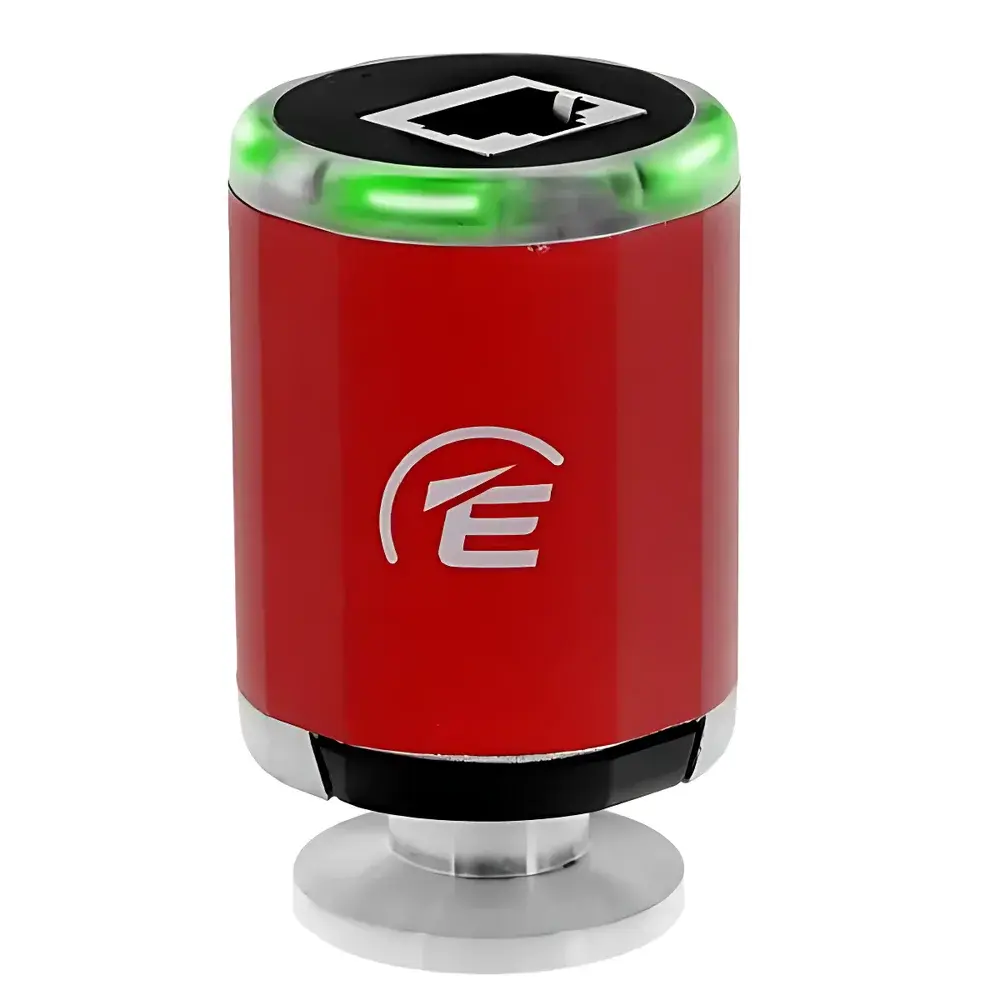
- Dual-color diagnostic LEDs embedded in the readhead provide real-time visual feedback on power status, signal strength, and reference mark acquisition—reducing commissioning time and field troubleshooting effort.
- Automatic Gain Control (AGC) coupled with Renishaw’s proprietary optical filtering ensures robust signal stability against common contaminants including dust, light oil mist, and surface micro-scratches on the scale.
- Flexible scale options: stainless steel tape with adhesive backing for linear applications; precision-machined metal rings or discs for rotary encoders—both compatible with standard mounting practices and thermal expansion compensation protocols.
Sample Compatibility & Compliance
TONiC™ is compatible with a broad spectrum of motion system architectures, including air-bearing stages, direct-drive rotary tables, semiconductor wafer handlers, precision metrology frames, and medical robotics. The system operates reliably in cleanroom Class 1000 environments and meets stringent environmental directives: RoHS Directive 2011/65/EU (Restriction of Hazardous Substances) and WEEE Directive 2012/19/EU (Waste Electrical and Electronic Equipment). While not intrinsically rated for explosive atmospheres, its sealed optical path and absence of sliding contacts make it suitable for use in ISO 14644-1 certified cleanrooms and controlled manufacturing settings governed by ISO 9001 and ISO 13849-1 functional safety frameworks. No calibration certificate is supplied as standard; however, traceable calibration reports per ISO/IEC 17025 are available upon request through Renishaw’s accredited metrology services.
Software & Data Management
TONiC™ does not require proprietary host software for basic operation—it delivers industry-standard analog (1 Vpp sine/cosine) or digital (RS422, quadrature, or index pulse) outputs compatible with all major motion controllers (e.g., Parker, Delta Tau, Galil, Beckhoff). For configuration and diagnostics, Renishaw provides the free-to-download Renishaw Encoder Setup Utility (ESU), which supports firmware updates, signal optimization, and real-time oscilloscope-style waveform visualization. All diagnostic data—including LED status logs, signal amplitude history, and reference mark detection events—are timestamped and exportable in CSV format. While TONiC™ itself does not implement FDA 21 CFR Part 11 audit trails or electronic signatures, its deterministic output behavior and hardware-level diagnostics support integration into GMP-compliant automation systems where position traceability is enforced at the PLC or SCADA layer.
Applications
- Semiconductor lithography stages requiring sub-10 nm repeatability and >5 m/s scanning velocity.
- Precision coordinate measuring machines (CMMs) and laser trackers utilizing high-bandwidth angular feedback for real-time kinematic correction.
- Medical imaging gantries and robotic surgery arms where compact footprint, EMI immunity, and long-term signal fidelity are critical.
- Aerospace component inspection systems operating in temperature-variable hangar environments.
- High-throughput automated optical inspection (AOI) platforms integrating multi-axis synchronized motion with vision-triggered capture.
FAQ
What is the maximum recommended cable length between the TONiC™ readhead and controller?
For analog 1 Vpp output, maximum recommended cable length is 30 m using shielded twisted-pair cable (e.g., Belden 8761); for digital RS422 output, up to 50 m is supported with proper termination.
Can TONiC™ be used in vacuum environments?
Standard TONiC™ components are not vacuum-rated; however, Renishaw offers custom variants with outgassing-tested materials and modified sealing for UHV-compatible deployment (consult technical sales for part-number-specific specifications).
Is IN-TRAC™ compatible with third-party controllers that do not support Renishaw’s proprietary serial protocol?
Yes—IN-TRAC™ generates a standard index pulse (Z-signal) synchronized to the incremental channels, fully compatible with any controller accepting TTL or RS422 index inputs.
Does TONiC™ require periodic recalibration?
No—its optical encoding principle and thermally stable scale substrate eliminate the need for routine recalibration; long-term drift is typically <±0.5 µm/m/°C, well within specification limits for most industrial applications.
How does TONiC™ compare to RESOLUTE™ in terms of resolution and application scope?
TONiC™ prioritizes ultra-compact size and cost-effective high-speed feedback; RESOLUTE™ delivers higher resolution (down to 1 nm) and absolute position reporting per scan, targeting ultra-precision metrology and synchrotron beamline applications where single-turn absolute position is mandatory.