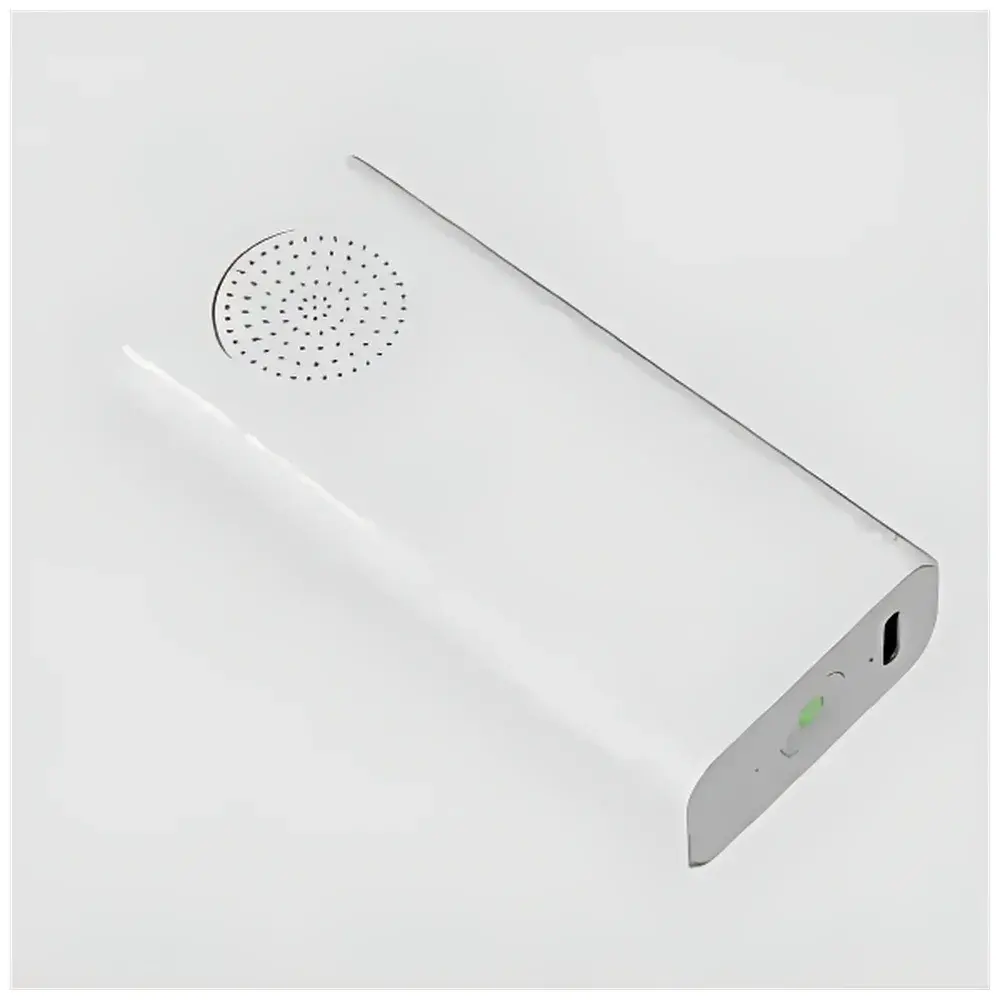
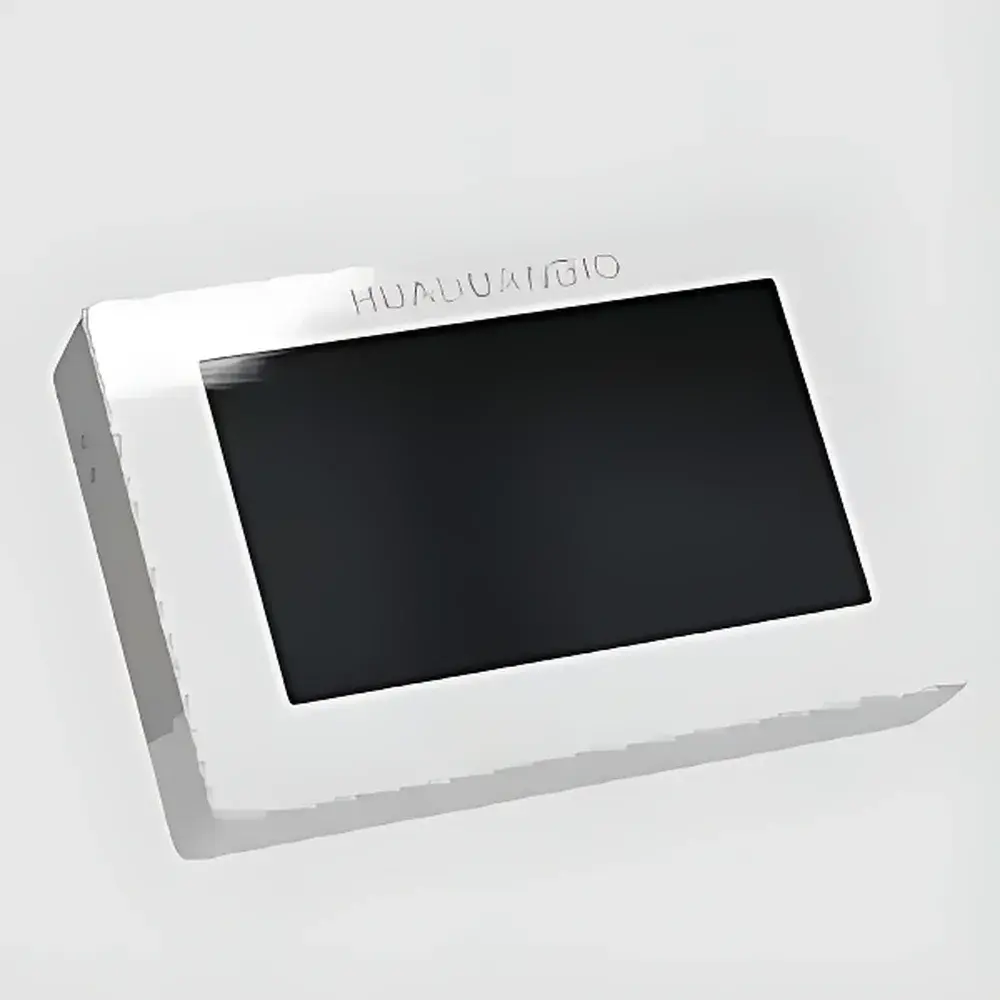
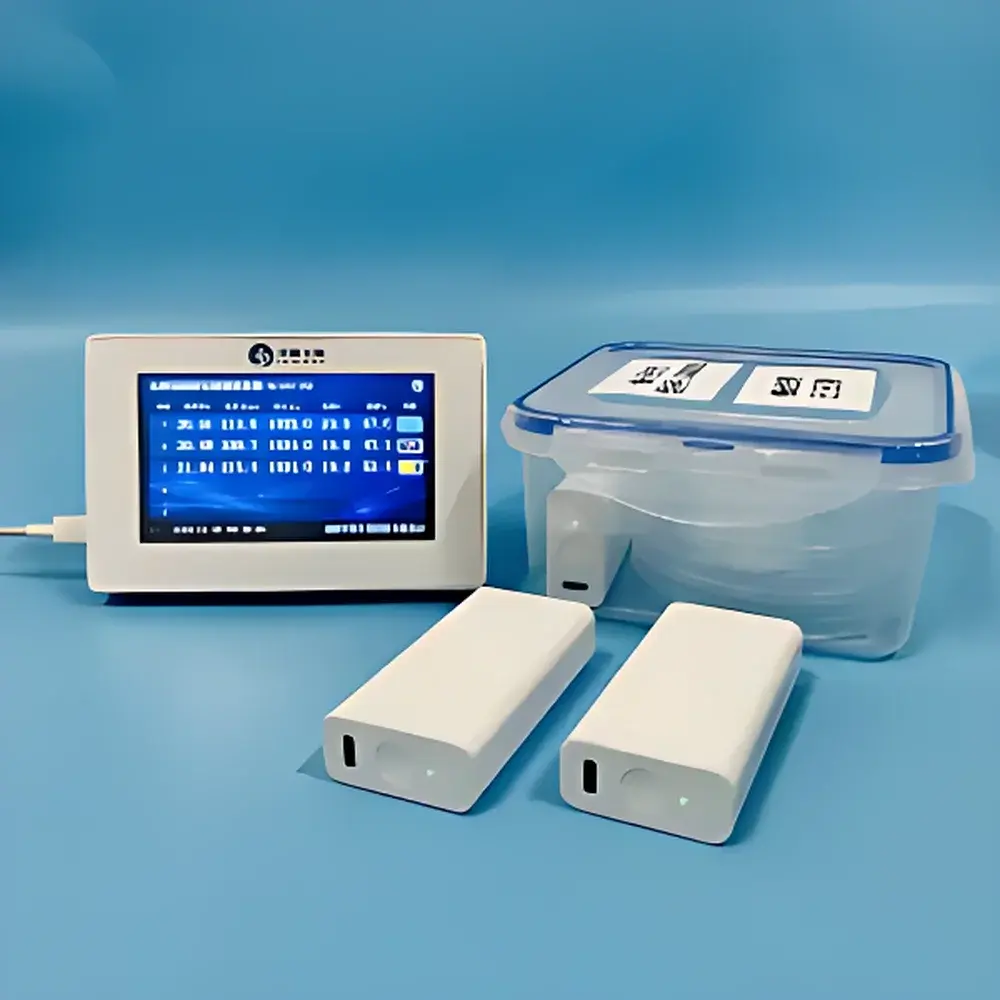
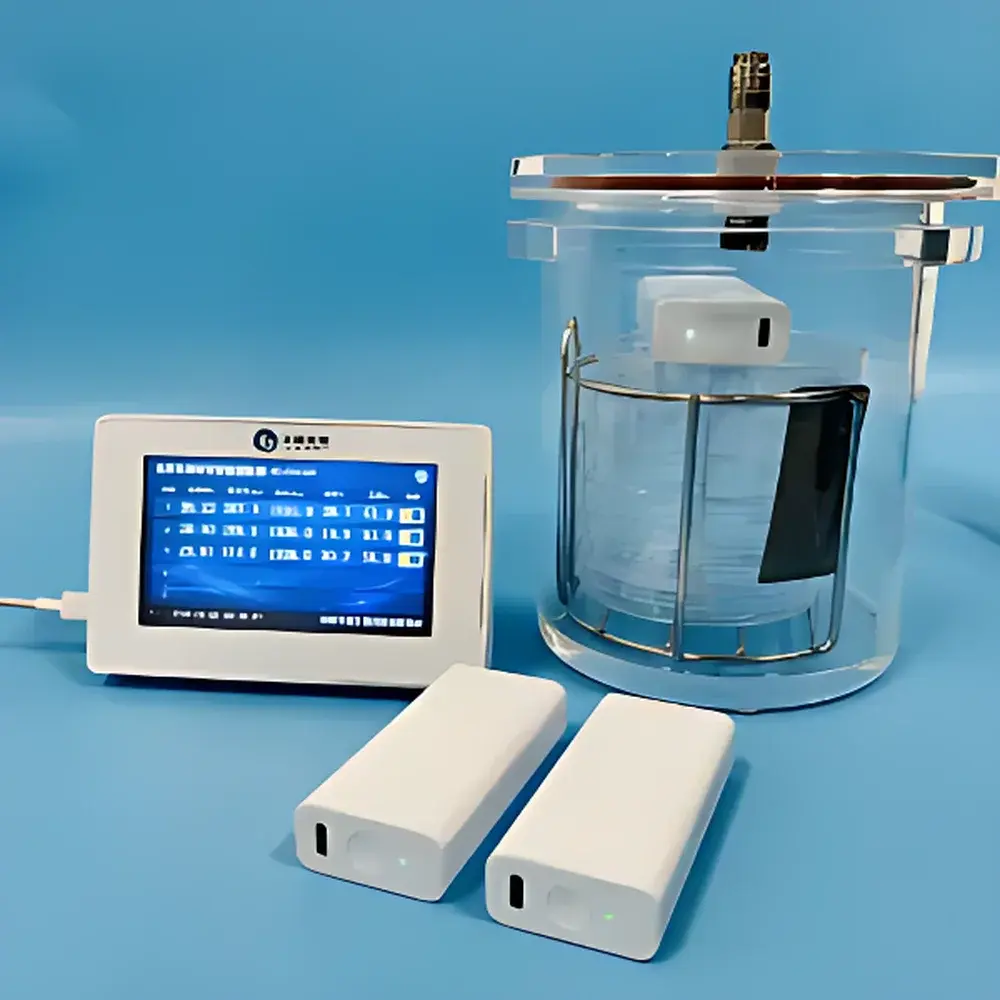
HuaDuanBio HD-AO10 Wireless Real-Time Dissolved Oxygen & Gaseous Oxygen Concentration Monitoring System
| Brand | HuaDuanBio |
|---|---|
| Origin | Zhejiang, China |
| Manufacturer Type | OEM Manufacturer |
| Region of Origin | Domestic (China) |
| Model | HD-AO10 |
| Pricing | Upon Request |
| Measurement Principle | Fluorescence Quenching (Non-Consumptive, Optical) |
| Oxygen Range | 0–25% O₂ (v/v) |
| Accuracy | ≤ ±2% FS |
| Temperature & Humidity Sensing | Integrated |
| Channel Scalability | Multi-channel expandable (up to 5 concurrent sensor inputs) |
| Power | Rechargeable Li-ion battery |
| Sensor Lifetime | ≥2 years (typical operational service life) |
| Display | ≥4-inch capacitive touchscreen |
| Processor | Dual-core architecture (ARM Cortex-M3 + high-speed FPGA) |
| Data Storage | Internal flash + microSD card (user-replaceable) |
| Communication | Modbus RTU over RS-485 |
| Calibration | Automatic on-power-up oxygen zero/span calibration support |
| Alarm Function | User-configurable high/low O₂ thresholds with timestamped event logging |
| Data Visualization | Real-time trend curves (O₂%, temperature, humidity) with exportable CSV format |
| Compliance | Designed for GLP-compliant laboratory workflows |
Overview
The HuaDuanBio HD-AO10 Wireless Real-Time Dissolved Oxygen & Gaseous Oxygen Concentration Monitoring System is an optical, non-invasive sensing platform engineered for precise, continuous monitoring of oxygen partial pressure in controlled microbial and cell culture environments. Unlike electrochemical sensors—whose operation consumes O₂ and introduces drift, polarization, or electrolyte leakage—the HD-AO10 employs solid-state fluorescence quenching technology. This principle relies on the dynamic collisional quenching of a ruthenium-based luminophore immobilized on an optically transparent sensing film. When excited by pulsed blue LED light (λ ≈ 470 nm), the luminophore emits phosphorescence at ~600 nm; the lifetime and intensity of this emission are inversely proportional to local O₂ concentration. Because no chemical reaction occurs and no oxygen is consumed during measurement, the HD-AO10 preserves sample integrity and enables true real-time, disturbance-free environmental tracking—critical for strict anaerobic (e.g., <0.1% O₂), microaerophilic (e.g., 2–10% O₂), and facultative culture protocols.
Key Features
- Non-Consumptive Optical Sensing: Eliminates sensor fouling, electrolyte depletion, and oxygen drawdown artifacts common in Clark-type electrodes—ensuring long-term signal stability and reproducibility across repeated sterilization cycles.
- Multi-Parameter Simultaneous Acquisition: Integrates O₂ (0–25% v/v), ambient temperature (±0.5°C), and relative humidity (±3% RH) on a single compact probe head—reducing spatial footprint and cross-sensor calibration complexity.
- Modular & Scalable Architecture: Supports up to five independent wireless or wired sensor nodes per base station, enabling parallel monitoring of multiple bioreactors, anaerobic chambers, glove boxes, or incubators without hardware duplication.
- Dual-Core Embedded Processing: ARM Cortex-M3 microcontroller handles protocol stack, user interface, and calibration logic; dedicated FPGA accelerates real-time lifetime decay analysis (phase-modulation method), delivering sub-second response time and noise-immune quantification.
- GLP-Ready Data Integrity: All measurements are timestamped with millisecond precision; alarm events, calibration actions, and configuration changes are logged immutably to internal flash and microSD card—supporting 21 CFR Part 11–aligned audit trails when paired with validated software.
- Field-Adaptable Calibration: On-device zero/span calibration using ambient air (20.9% O₂) and nitrogen-purged reference gas eliminates geographic or altitude-related offset errors—essential for global deployment across R&D labs and QC facilities.
Sample Compatibility & Compliance
The HD-AO10 is compatible with standard microbiological containment systems including Whitley A35 Anaerobic Workstations, Coy Labs anaerobic chambers, New Brunswick BioFlo bioreactors, and custom-built glove boxes. Its IP65-rated sensor housing resists condensation, ethanol wipe-downs, and low-level ethylene oxide exposure. While not certified to IEC 61000-4-x EMC standards out-of-box, the system meets essential electromagnetic compatibility requirements for laboratory use under EN 61326-1:2013. For regulated environments, it supports integration into validated processes per ISO/IEC 17025 and USP <1058> Analytical Instrument Qualification frameworks. Sensor films comply with ISO 10993-5 cytotoxicity testing—ensuring biocompatibility for direct contact with cell culture media or fermentation broth when used with optional sterile-sheath accessories.
Software & Data Management
Data acquisition and visualization are managed via the embedded touchscreen UI or optional PC-based HuaDuanBio LabLink Suite (Windows/macOS). The suite provides FDA 21 CFR Part 11–compliant user role management (administrator, operator, reviewer), electronic signature capability, and automated report generation (PDF/CSV). All raw lifetime decay waveforms, processed O₂ values, and metadata (sensor ID, firmware version, calibration date) are stored with SHA-256 checksums to prevent tampering. Historical datasets can be exported with full traceability—including instrument configuration snapshots and alarm acknowledgment logs—facilitating root-cause analysis during process deviations or regulatory inspections.
Applications
- Real-time validation of anaerobic chamber purge efficiency (e.g., Bacteroides fragilis, Clostridium difficile cultivation)
- Microaerophilic culture optimization for Campylobacter jejuni or Helicobacter pylori
- O₂ gradient mapping inside multi-layered biofilm reactors or tissue-engineered scaffolds
- Process analytical technology (PAT) implementation for aerobic/anaerobic fermentation batch monitoring
- Environmental stability testing of lyophilized probiotic formulations under controlled O₂ headspace conditions
- QC release testing of modified-atmosphere packaging (MAP) for live biotherapeutic products
FAQ
Does the HD-AO10 require routine electrolyte replacement or membrane cleaning?
No—fluorescence-based sensing eliminates liquid electrolytes, cathodes, anodes, and permeable membranes. Maintenance is limited to periodic optical window inspection and optional ethanol wipe-down.
Can the system operate inside a CO₂ incubator with 95% humidity?
Yes—the sensor housing and cable assembly are rated IP65 and thermally stable from 5°C to 50°C. Condensation resistance is achieved via hydrophobic coating and sealed optical path design.
Is Modbus RTU the only communication protocol supported?
Standard configuration uses RS-485 Modbus RTU for industrial integration. Optional Bluetooth 5.0 or IEEE 802.11n WiFi modules enable direct connection to LIMS or SCADA systems without gateway hardware.
How is sensor drift corrected over extended deployments?
The system performs automatic baseline correction using factory-characterized photobleaching compensation algorithms. Field recalibration is recommended every 6 months or after 500 hours of cumulative operation.
Are calibration gases required for daily use?
Not routinely—on-power-up air calibration suffices for most applications. Certified N₂ (0% O₂) and synthetic air (20.9% O₂) standards are recommended for initial qualification and periodic verification per ISO/IEC 17025.