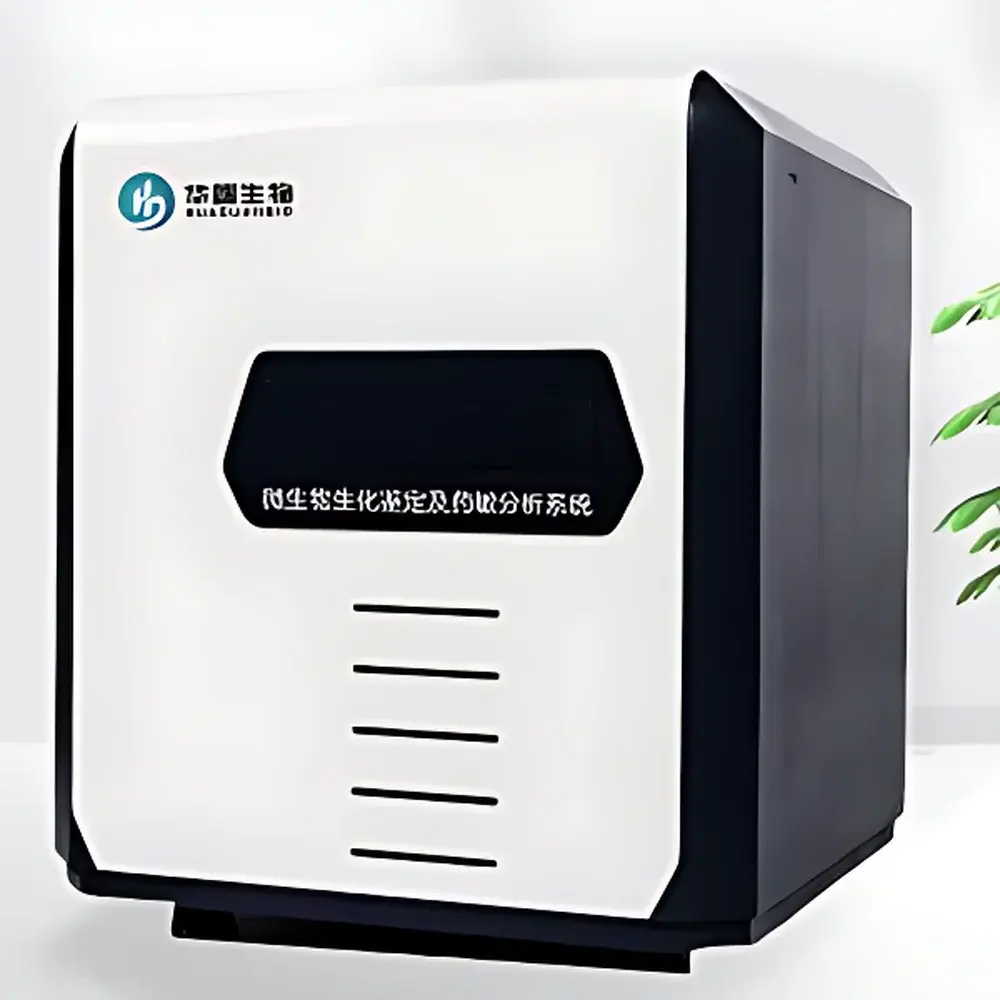
HuaDuanBio HD-MA100 Automated Microbial Identification and Antimicrobial Susceptibility Testing System
| Brand | HuaDuanBio |
|---|---|
| Origin | Zhejiang, China |
| Manufacturer Type | OEM/ODM Manufacturer |
| Product Origin | Domestic (China) |
| Model | HD-MA100 |
| Pricing | Upon Request |
Overview
The HuaDuanBio HD-MA100 Automated Microbial Identification and Antimicrobial Susceptibility Testing (ID/AST) System is an integrated benchtop platform engineered for high-throughput, standardized microbial characterization in clinical, pharmaceutical, food safety, veterinary, and public health laboratories. It operates on the principle of phenotypic biochemical profiling—detecting enzymatic activities, carbohydrate fermentation, substrate utilization, and metabolic end-products via chromogenic or turbidimetric reactions in multi-well test panels. The system combines automated sample inoculation, controlled incubation with real-time environmental monitoring, optical density-based endpoint detection, and algorithm-driven taxonomic assignment using probabilistic and matrix-based classification engines. Designed to align with global regulatory frameworks, the HD-MA100 supports compliance-driven workflows required by GB 4789 (China National Food Safety Standards), Chinese Pharmacopoeia (ChP), CLSI M100 and M45 guidelines, WHONET data submission protocols, and CARSS (China Antimicrobial Resistance Surveillance System) reporting structures.
Key Features
- High-capacity panel format: ≥120-well microtiter strips—comprising ≥24 wells for biochemical identification and ≥96 wells for antimicrobial susceptibility testing (AST), enabling simultaneous ID/AST in a single run.
- Real-time anaerobic environment monitoring: Integrated non-invasive oxygen concentration sensing during incubation, plus concurrent logging of temperature and humidity; all sensor data auto-generated into time-series plots and exportable in CSV/PDF formats.
- Automated quantitative dispensing: Precision liquid handling module with 50–200 µL range, ±10 µL accuracy at 100 µL, ≤1% coefficient of variation (CV), and full tip ejection post-dispense for contamination control.
- Comprehensive reference database: Curated library covering >1,000 microbial species, with validated identification capability for >500 Gram-positive, Gram-negative, and yeast isolates, and MIC determination across >300 antimicrobial agents.
- Regulatory-grade traceability: Every report includes version-stamped CLSI/ChP standard references, raw plate image archiving, audit-ready calibration logs, and built-in self-validation using certified McFarland standard solutions.
- Modular GUI with visual status coding: Intuitive dashboard displaying specimen metadata, real-time reaction kinetics, and color-coded well states—neutral (unprocessed), cyan (sterile control), red (positive growth)—with filterable navigation and guided workflow prompts.
Sample Compatibility & Compliance
The HD-MA100 accepts pure bacterial colonies isolated from blood agar, MacConkey, chocolate, or selective media—including fastidious organisms such as Streptococcus pneumoniae, Haemophilus influenzae, and Neisseria gonorrhoeae—following standardized suspension preparation via integrated McFarland turbidimeter. It supports identification of Enterobacterales, non-fermenters (e.g., Pseudomonas aeruginosa, Acinetobacter baumannii), Staphylococci, Enterococci, Streptococci, and yeasts including Candida albicans and C. glabrata. All assay interpretations conform to CLSI M100 (antimicrobial breakpoints), M45 (microbial ID performance standards), ISO 20776-1 (quantitative AST), and FDA 21 CFR Part 11 requirements for electronic records and signatures when deployed with validated software configurations. Raw data retention, user access logs, and version-controlled decision algorithms satisfy GLP/GMP audit expectations.
Software & Data Management
The embedded HD-MA100 Analysis Suite provides dual-mode operation: routine mode for daily diagnostics and research mode for method validation and database expansion. It delivers 12 preconfigured statistical reports—including isolate distribution by genus/species, resistance pattern heatmaps, temporal trend analysis, and cumulative antibiogram generation—as well as over 100 customizable query templates supporting Boolean logic, date-range filtering, and multi-parameter cross-tabulation. Data export supports HL7 v2.x messaging for LIS/HIS integration, WHONET-compatible .txt uploads, and encrypted local storage compliant with ISO/IEC 27001 information security benchmarks. All user actions—including result overrides, reanalysis events, and QC interventions—are timestamped and attributed with role-based permissions.
Applications
- Clinical microbiology labs performing routine pathogen ID/AST per ISO 15189 accreditation requirements.
- Pharmaceutical quality control units verifying absence of objectionable microorganisms (USP <61>, ChP General Chapter 1105).
- Food and beverage testing facilities conducting GB 4789.10 (Staphylococcus aureus), GB 4789.4 (Salmonella), and GB 4789.30 (Listeria monocytogenes) analyses.
- National reference laboratories contributing to CARSS surveillance and AMR national action plans.
- Veterinary diagnostic centers screening for zoonotic pathogens including Escherichia coli O157:H7 and Brucella spp.
- Research institutions conducting strain typing correlation studies between phenotypic profiles and WGS-derived phylogenies.
FAQ
What regulatory standards does the HD-MA100 natively support for reporting?
The system generates reports aligned with CLSI M100, WHONET 7.0+ data schema, CARSS mandatory fields, and GB 4789 series specifications—including automatic inclusion of applicable standard version numbers and revision dates.
Can the HD-MA100 perform rapid identification for fast-growing organisms?
Yes—selected Gram-negative rods and staphylococci yield definitive ID results within 4–8 hours under optimized incubation conditions, while full-panel AST requires 18–24 hours per batch.
Is the database updatable, and how are updates delivered?
Database updates are distributed quarterly via secure firmware patches validated against NCBI Taxonomy and LPSN taxonomy sources; each update includes version-controlled change logs and impact assessments.
Does the system meet cybersecurity requirements for networked deployment in hospital IT environments?
It supports TLS 1.2+ encryption, Active Directory integration, configurable password policies, and session timeout enforcement—all documented in the vendor’s ISO/IEC 27001-aligned Security Policy Manual.
How is instrument performance verified prior to daily use?
The built-in self-check routine executes optical calibration, fluidic integrity verification, and reference strip scanning using NIST-traceable McFarland standards—generating a printable QC certificate with pass/fail status and deviation metrics.