
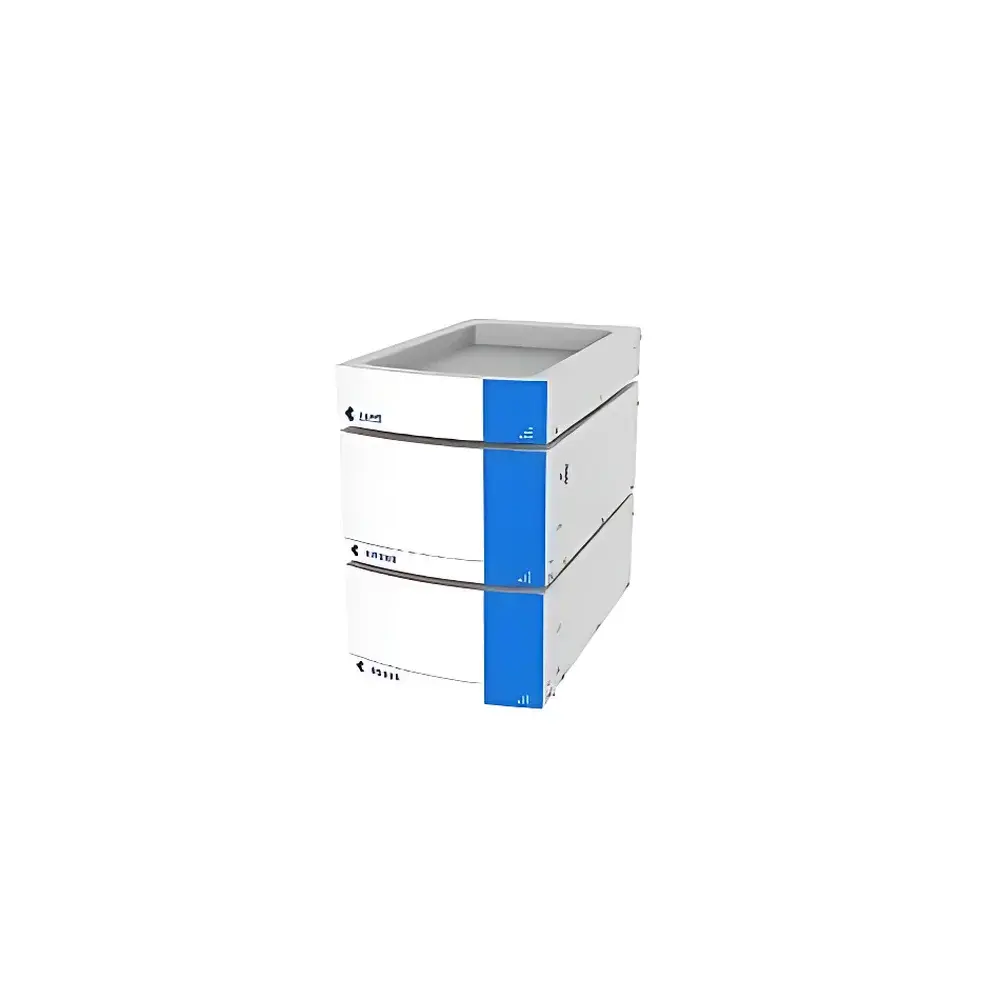
GelMaster-1000 Gel Permeation Chromatography (GPC) Cleanup System
| Brand | KEZHE SHANGHAI |
|---|---|
| Origin | Shanghai, China |
| Manufacturer Type | Direct Manufacturer |
| Model | GelMaster-1000 |
| Flow Rate Range | 0–10 mL/min |
| UV Detection Wavelength | 254 nm |
| Column Dimensions | 25 × 400 mm |
| Packing Material | Bio-Beads S-X3, 200–400 mesh |
| Solvent System | Ethyl Acetate–Cyclohexane (1:1 v/v) |
| Standard Loop Volume | 5 mL |
| Pump Type | Precision Plunger Pump |
| Detector Type | Single-Wavelength UV Detector |
| Sample Introduction | Manual Injection Valve with Solvent Recovery Three-Way Valve |
| Compliance | AOAC 984.21, EPA SW-846 Method 3640A, FDA 2905A, EN 12393, EN 1528, S-19, S35L00.00-34 |
Overview
The GelMaster-1000 is a dedicated gel permeation chromatography (GPC) cleanup system engineered for high-reproducibility sample purification prior to quantitative analysis of trace contaminants in complex biological and environmental matrices. Unlike general-purpose HPLC systems, the GelMaster-1000 employs size-exclusion separation principles—where analytes are fractionated based on hydrodynamic volume rather than polarity or charge—to selectively remove lipids, proteins, pigments, and other high-molecular-weight interferences while retaining low-MW target compounds such as pesticides, veterinary drug residues, polycyclic aromatic hydrocarbons (PAHs), polychlorinated biphenyls (PCBs), mycotoxins, and antibiotics. Its compact, integrated architecture minimizes footprint and enhances mechanical stability during extended operation—critical for laboratories performing routine regulatory compliance testing under GLP or ISO/IEC 17025 frameworks.
Key Features
- Monolithic stainless-steel GPC column housing with Bio-Beads S-X3 packing (200–400 mesh), optimized for reproducible retention time and minimal backpressure drift across >500 injections
- Precision plunger pump delivering flow rates from 0 to 10 mL/min with ≤0.5% RSD over 24-hour continuous operation—engineered for solvent compatibility with ethyl acetate/cyclohexane (1:1) and alternative GPC mobile phases
- Single-wavelength UV detector operating at 254 nm, featuring long-life deuterium lamp and thermally stabilized optical path for baseline stability <0.5 mAU/h
- Manual six-port injection valve with integrated solvent recovery three-way valve—enabling direct diversion of column eluent to waste or solvent recycling loop without hardware modification
- Standard 5 mL fixed-volume loop compliant with USP , EP 2.2.46, and AOAC 984.21 volumetric accuracy requirements; optional loops (1–20 mL) available for method scalability
- Fully integrated control software with English-language GUI supporting sequence-based batch processing, real-time pressure monitoring, and event-triggered valve switching
- Rugged benchtop chassis with vibration-dampening feet and sealed electronics compartment—designed for stable performance in shared lab environments with variable ambient temperature (15–30 °C) and humidity (30–70% RH)
Sample Compatibility & Compliance
The GelMaster-1000 is validated for extraction cleanup of solid and semi-solid samples—including animal tissues, dairy products, soil extracts, and plant homogenates—following standardized preparation protocols per AOAC 984.21 (pesticide residue cleanup), EPA SW-846 Method 3640A (organochlorine pesticide cleanup), FDA Chemistry Laboratory Manual (CLM) Chapter 2905A, and European standards EN 12393 (pesticide residue in food) and EN 1528 (veterinary drug residues). The system supports full audit trail generation in accordance with FDA 21 CFR Part 11 when operated with optional electronic signature-enabled software modules. All wetted components—including pump heads, tubing, and column frits—are chemically resistant to chlorinated solvents, esters, and aliphatic hydrocarbons, ensuring long-term integrity under repeated use.
Software & Data Management
Control and data acquisition are managed via GelMaster Control Suite v3.x—a Windows-based application supporting method storage, run scheduling, real-time chromatogram display, and peak integration using tangent skim baseline correction. Raw data files (.gmc) are stored in vendor-neutral ASCII format with embedded metadata (date/time stamp, operator ID, method name, instrument serial number). Export options include CSV, PDF reports, and direct import into third-party LIMS platforms via ODBC drivers. Software validation documentation—including IQ/OQ protocols and electronic record retention logs—is provided to support laboratory accreditation under ISO/IEC 17025:2017 and regulatory audits.
Applications
- Cleanup of QuEChERS and ASE extracts prior to GC-MS/MS or LC-MS/MS analysis of multi-residue pesticide panels
- Removal of triglycerides and sterols from meat, fish, and egg samples prior to analysis of veterinary drugs (e.g., sulfonamides, tetracyclines, fluoroquinolones)
- Isolation of PAHs and PCBs from sediment and sludge extracts in environmental monitoring programs
- De-lipidation of infant formula and dairy products for accurate quantification of aflatoxin M1 and ochratoxin A
- Preparative-scale pigment removal from fruit juice and vegetable extracts for natural colorant profiling
FAQ
What column dimensions and packing material are supplied with the GelMaster-1000?
The system ships with a 25 mm × 400 mm stainless-steel GPC column packed with Bio-Beads S-X3 resin (200–400 mesh), pre-equilibrated in ethyl acetate–cyclohexane (1:1 v/v).
Is the system compatible with regulatory-compliant electronic records and signatures?
Yes—when configured with the optional 21 CFR Part 11 Compliance Module, the GelMaster Control Suite provides role-based access control, audit trail logging, and electronic signature capture meeting FDA and EMA requirements.
Can the 5 mL loop be replaced with alternative volumes?
Yes—standardized loop adapters support 1 mL, 2 mL, 10 mL, and 20 mL loops; all maintain volumetric accuracy within ±1% as verified by gravimetric calibration per ISO 8655-6.
Does the system require external gas supply or cooling units?
No—the GelMaster-1000 operates exclusively with liquid-phase solvents and does not incorporate detectors requiring nitrogen purge or Peltier cooling.
What maintenance intervals are recommended for routine operation?
Plunger seals should be inspected every 500 hours; UV lamp replacement is recommended after 2,000 hours of cumulative operation; column regeneration is advised after 200 sample injections using the manufacturer’s solvent gradient protocol.



