
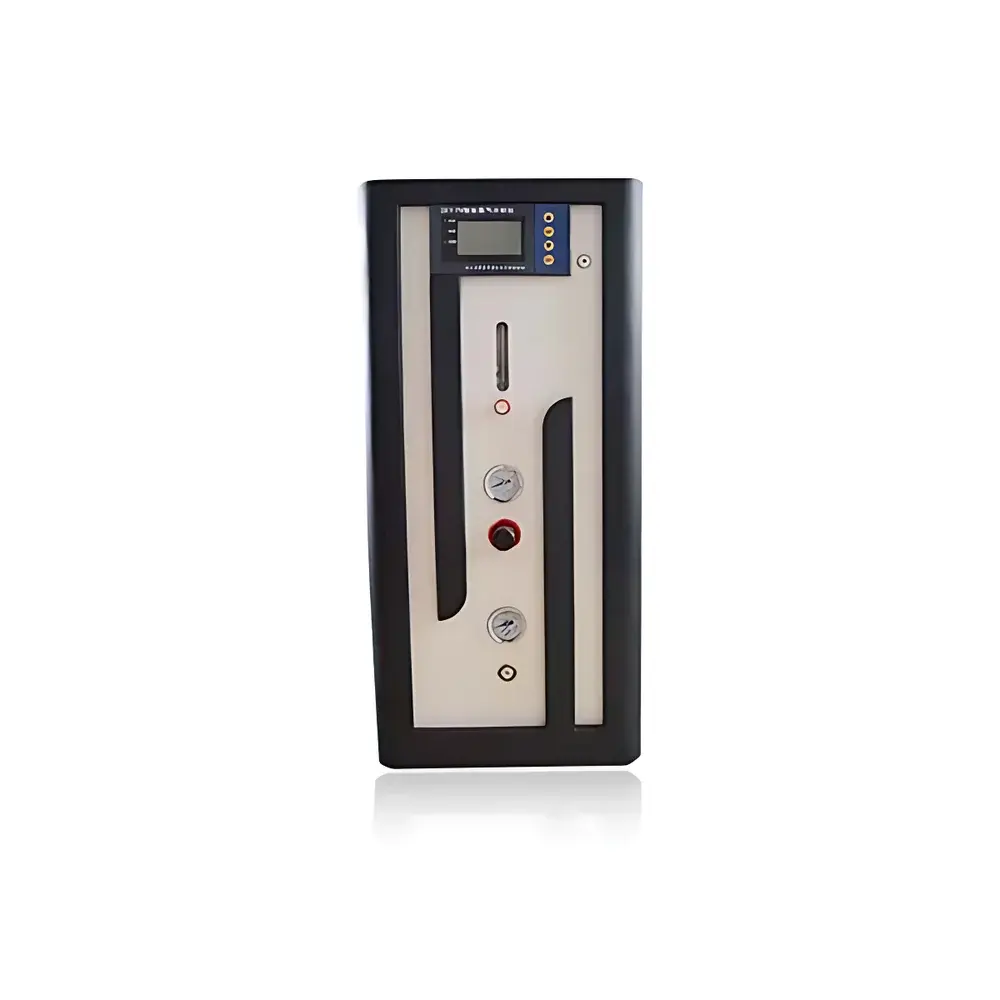
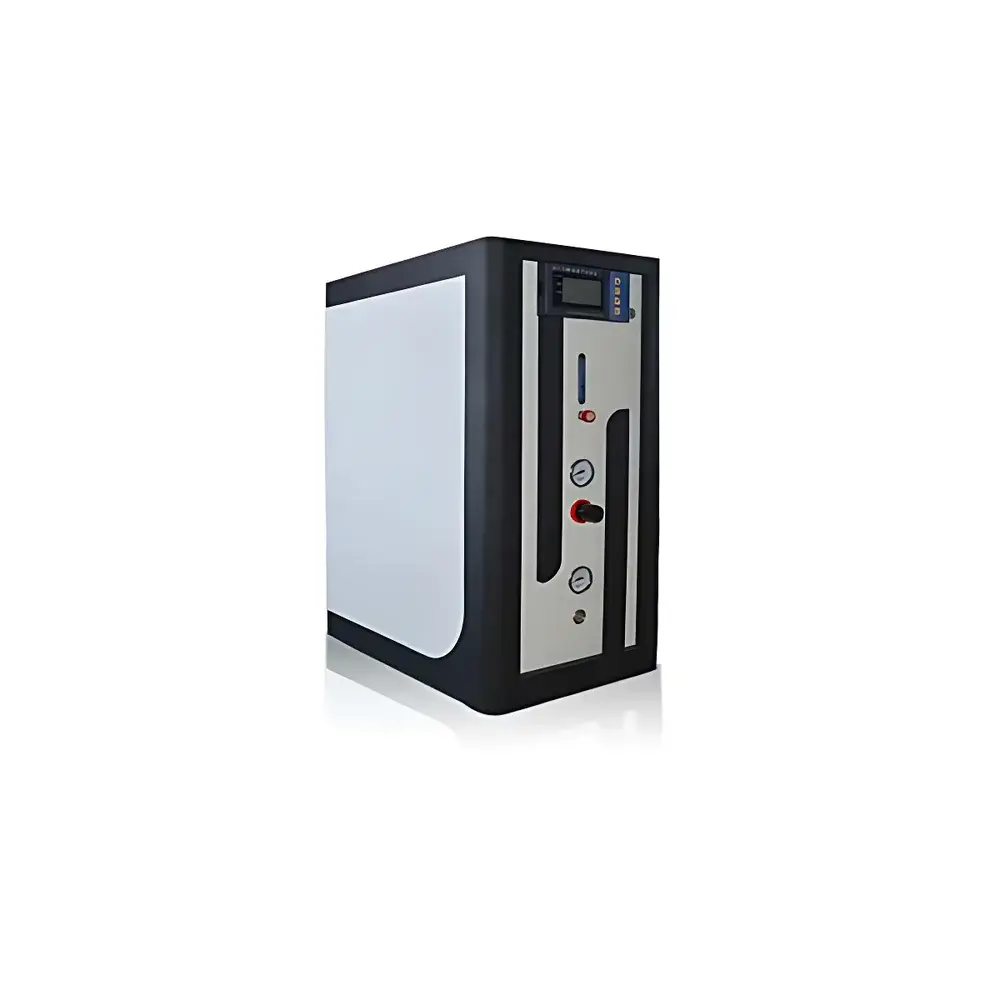
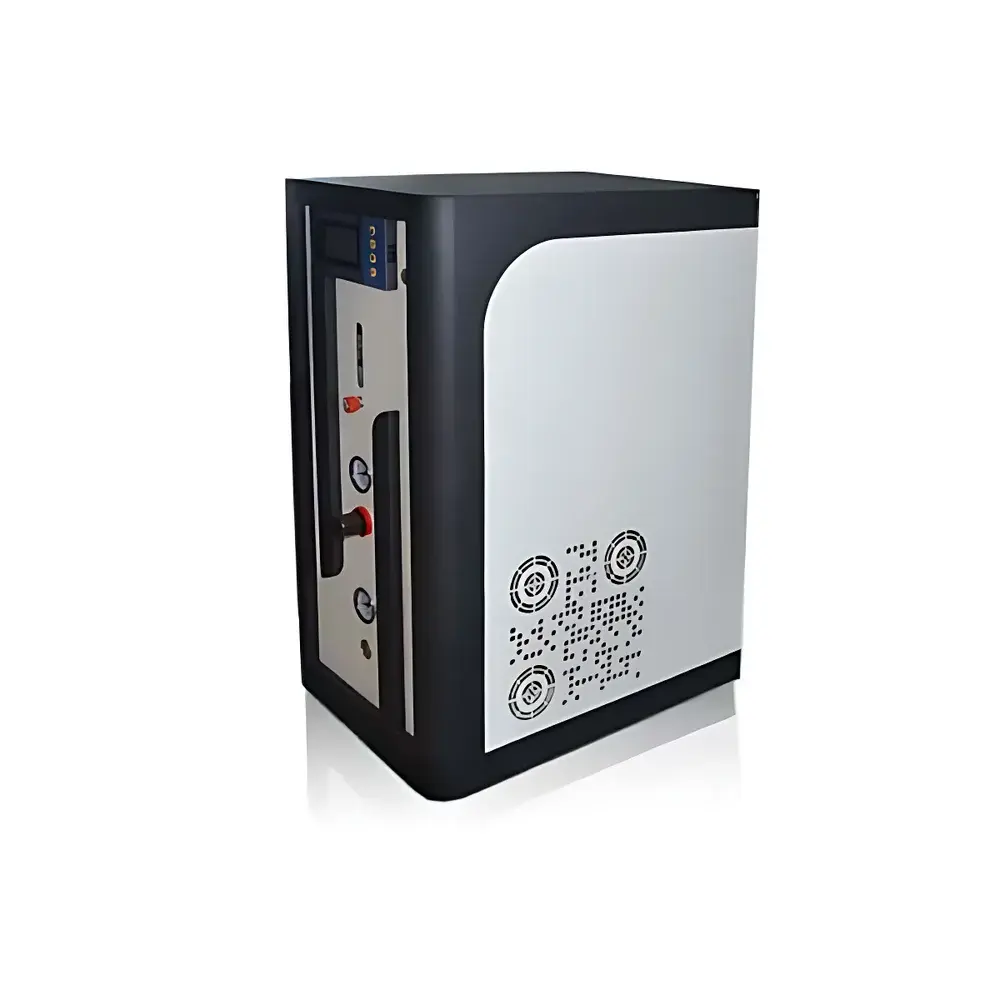
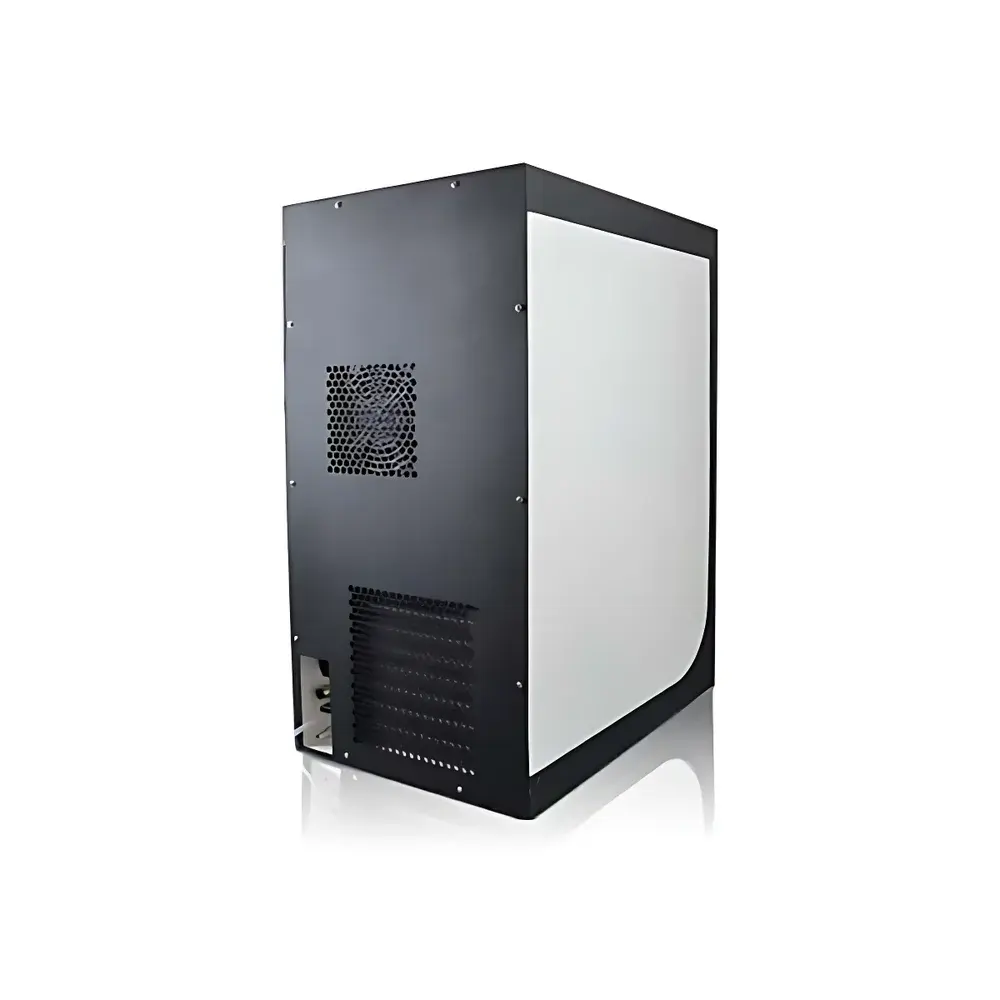
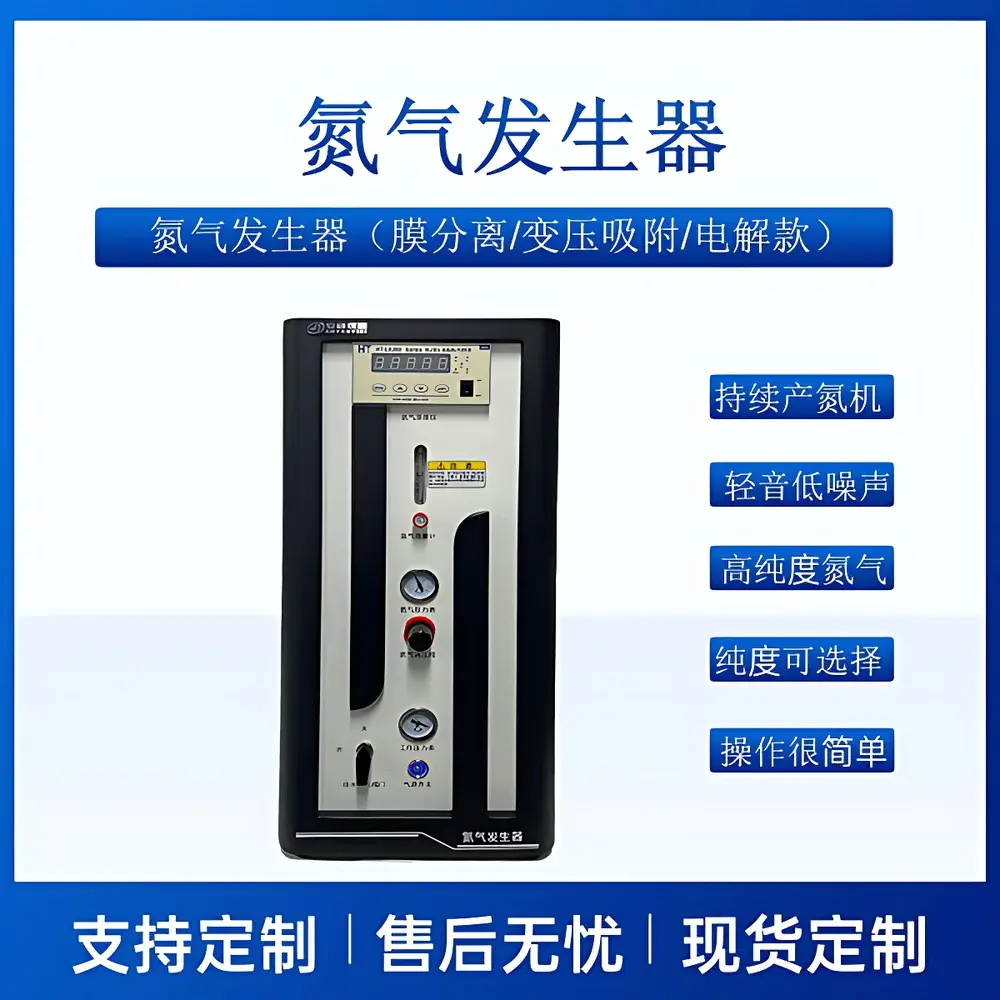
ANYAN AYAN-35L1 Nitrogen Generator for Shimadzu LC-MS Systems
| [Brand | ANYAN (Hangzhou Anyan Instrument Co., Ltd.) |
|---|---|
| Origin | Zhejiang, China |
| Model | AYAN-35L1 |
| Nitrogen Generation Principle | Membrane Separation |
| Nitrogen Purity | 99.0–99.9% |
| Dew Point | -40°C |
| Output Flow Rate | Configurable per system demand (standard range: 0–35 L/min) |
| Output Pressure | Adjustable, up to 0.7 MPa (g) |
| Integrated Air Compressor | Yes |
| Noise Level | ≤55 dB(A) |
| Safety Compliance | Integrated pressure relief valve per ISO 4414 |
| Design | All-in-one modular architecture with built-in air drying, filtration, and nitrogen stabilization] |
Overview
The ANYAN AYAN-35L1 Nitrogen Generator is an integrated, laboratory-grade gas supply system engineered specifically to support Shimadzu liquid chromatography–mass spectrometry (LC-MS) platforms requiring continuous, high-reliability nitrogen gas. It employs hollow-fiber membrane separation technology—where compressed ambient air is passed across semi-permeable polymeric membranes that selectively permeate oxygen, water vapor, CO₂, and other trace gases—leaving a purified nitrogen stream with consistent composition. Unlike PSA-based systems, membrane generators deliver stable output without cyclic adsorption/desorption, eliminating pressure pulsation and enabling uninterrupted operation over extended duty cycles. This makes the AYAN-35L1 particularly suitable for electrospray ionization (ESI) and atmospheric pressure chemical ionization (APCI) sources, where flow stability and dew point control directly impact signal-to-noise ratio and instrument uptime.
Key Features
- Imported Korean hollow-fiber membrane modules ensure long service life (>15,000 operating hours) and zero consumable replacement—no activated carbon, molecular sieves, or desiccants required.
- Multi-stage compressed air purification: coalescing pre-filter, refrigerated dryer, ultra-fine particulate filter (0.01 µm), and catalytic deoxygenation stage—all monitored via real-time failure alert logic.
- Digital nitrogen purity display (0.1% resolution) with continuous in-line monitoring using thermal conductivity detection (TCD), calibrated per ISO 8573-1 Class 2:2:2 for compressed air quality.
- Integrated oil-free scroll compressor with acoustic suspension mounting, achieving ≤55 dB(A) at 1 m distance—compliant with ISO 7779 for laboratory noise environments.
- Dual independent pressure regulation: one for internal system stabilization (0.4–0.6 MPa), another for user-facing outlet (0–0.7 MPa), both adjustable via front-panel rotary dials with mechanical lock.
- All-in-one monoblock architecture integrates air compression, cooling, filtration, membrane separation, buffer storage, and pressure regulation—reducing footprint by >40% versus rack-mounted alternatives.
- Embedded microcontroller with self-diagnostic firmware: monitors inlet pressure, filter saturation, membrane differential pressure, and dew point deviation; logs events with timestamped service prompts.
- Stainless steel buffer tank (6 L capacity) with ASME-certified safety relief valve (set at 0.83 MPa) and integrated pressure-hold logic to maintain ±0.02 MPa stability during transient demand spikes.
- Mobile chassis with industrial-grade casters and locking brakes enables repositioning within shared lab spaces without tool-assisted disassembly.
Sample Compatibility & Compliance
The AYAN-35L1 delivers nitrogen meeting ASTM D6866-22 requirements for instrumental analysis-grade carrier and auxiliary gas. Its -40°C pressure dew point satisfies ISO 8573-1:2010 Class 2 moisture specification—critical for preventing condensation in LC-MS transfer lines and source housings. While not certified to FDA 21 CFR Part 11 out-of-the-box, its event log and parameter history are exportable in CSV format for GLP/GMP audit trails. The unit conforms to CE machinery directive 2006/42/EC, EMC directive 2014/30/EU, and RoHS 2011/65/EU. It is compatible with Shimadzu Nexera UHPLC and LCMS-8040/8050/8060 series interfaces via standard 1/4″ Swagelok fittings and meets the gas supply specifications outlined in Shimadzu Application Note LCMS-AN007.
Software & Data Management
No proprietary software is required for basic operation; all controls and status indicators are accessible via the front-panel OLED interface. For integration into centralized lab infrastructure, the generator supports Modbus RTU (RS-485) communication protocol, enabling remote readout of purity %, outlet pressure, total runtime, and filter service intervals. Logged data—including time-stamped alarms and calibration events—is retained for ≥12 months and exportable via USB-C port. Audit-ready reports can be generated externally using third-party SCADA or LIMS platforms compliant with ISO/IEC 17025:2017 clause 7.7 on data integrity.
Applications
- LC-MS nebulizer and drying gas supply for Shimadzu and other OEM platforms requiring continuous N₂ at 25–35 L/min and 0.3–0.6 MPa.
- Gas chromatography (GC) make-up and detector purge gas where dew point sensitivity exceeds -30°C.
- Inert atmosphere maintenance for sample preparation stations handling oxidation-sensitive analytes (e.g., catecholamines, unsaturated lipids).
- Blank solvent purging and mobile phase sparging in regulated QC labs adhering to USP and EP 2.2.42.
- Non-GMP research environments requiring ISO 8573-1 Class 2 air-derived nitrogen without reliance on bulk cylinders or dewar systems.
FAQ
Is this generator compatible with non-Shimadzu LC-MS systems?
Yes—the AYAN-35L1 meets general LC-MS nitrogen specifications (flow, pressure, purity, dew point) and interfaces via standard 1/4″ tubing; compatibility verification with specific OEM gas inlet schematics is recommended.
Does the unit require periodic calibration of the purity sensor?
The TCD sensor is factory-calibrated and drift-compensated; annual verification against a traceable N₂ reference standard (e.g., NIST SRM 1620) is advised for GLP-compliant workflows.
Can the generator operate unattended for 7×24 applications?
Yes—designed for continuous duty with thermal overload protection, automatic restart after power recovery, and low-flow sleep mode to extend membrane life.
What maintenance is required beyond filter replacement?
Only scheduled replacement of the coalescing and particulate filters every 6,000 hours or 12 months (whichever occurs first); no membrane servicing or lubrication is needed.
Is the nitrogen output suitable for use as a carrier gas in GC?
While technically feasible, membrane-generated nitrogen is not recommended as primary GC carrier gas due to residual argon content (~0.9%) affecting retention time reproducibility; it is optimal for auxiliary functions only.



