
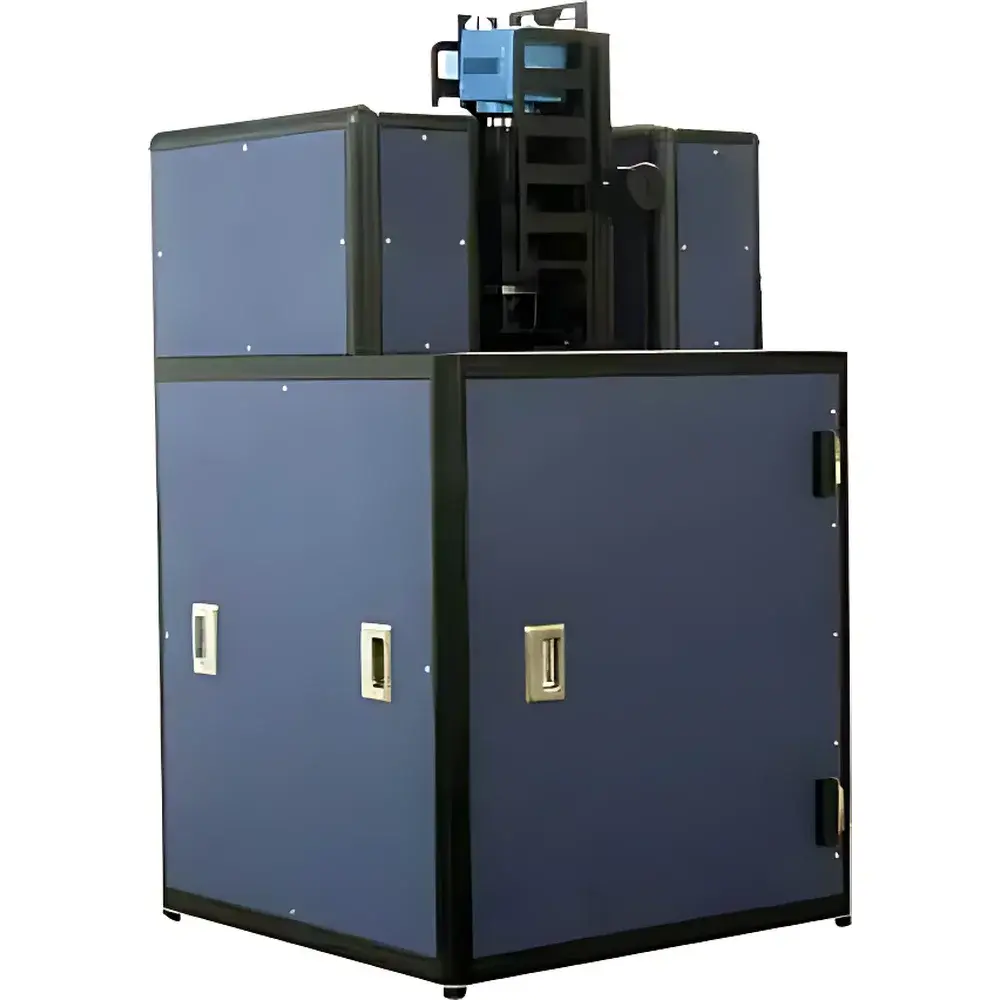
ZOLIX HyperSIS Series Hyperspectral Imaging System
| Brand | ZOLIX |
|---|---|
| Origin | Beijing, China |
| Manufacturer Type | Original Equipment Manufacturer (OEM) |
| Product Origin | Domestic (China) |
| Model | HyperSIS |
| Pricing | Available Upon Request |
| Spectral Range Options | 400–1000 nm (VNIR), 900–1700 nm (NIR), 1000–2500 nm (SWIR) |
| Max Frame Rate | Up to 100 images/s |
| Sample Dimension Limit | ≤200 mm × 200 mm × 100 mm |
| Scanning Mechanism | Push-broom (line-scan) with motorized X-stage |
Overview
The ZOLIX HyperSIS Series Hyperspectral Imaging System is a laboratory-grade, push-broom (line-scan) hyperspectral imaging platform engineered for non-destructive, spatially resolved spectral analysis across visible–near-infrared (VNIR), near-infrared (NIR), and short-wave infrared (SWIR) spectral domains. Unlike snapshot or tunable-filter-based systems, the HyperSIS employs a fixed-line illumination geometry coupled with synchronized motion of the sample stage and spectral dispersion along the spatial axis. In this configuration, a collimated line source uniformly illuminates a narrow strip of the sample; light reflected or transmitted from that strip is imaged onto the entrance slit of an imaging spectrometer. The spectrometer disperses light orthogonally to the spatial dimension—yielding one spatial axis (Y) directly imaged on the detector array and the orthogonal spectral axis (λ) resolved across the other detector dimension (X). As the sample translates continuously under computer-controlled X-stage motion, a full two-dimensional hypercube (x, y, λ) is reconstructed voxel-by-voxel with precise geometric registration. This architecture ensures high radiometric stability, minimal motion-induced spectral distortion, and intrinsic pixel-to-pixel spectral calibration traceability—critical for quantitative chemometric modeling and regulatory-compliant spectral data acquisition.
Key Features
- Modular push-broom architecture supporting interchangeable spectral modules: VNIR (400–1000 nm), NIR (900–1700 nm), and SWIR (1000–2500 nm)
- High-speed scanning capability: up to 100 calibrated hyperspectral frames per second (HyperSIS-SWIR variant), enabling rapid throughput for industrial QA/QC environments
- Precision motorized X-axis translation stage with sub-micron repeatability and programmable velocity profiles for optimized signal-to-noise ratio (SNR) and spatial sampling fidelity
- Integrated hardware synchronization between illumination pulse timing, camera exposure, and stage position feedback—ensuring temporal coherence across all acquired hypercubes
- Optimized optical train with diffraction-limited imaging spectrograph, high-throughput transmission gratings, and thermoelectrically stabilized detectors (CCD for VNIR; InGaAs for NIR/SWIR)
- Factory-calibrated radiometric response and wavelength calibration certificates traceable to NIST standards
Sample Compatibility & Compliance
The HyperSIS system accommodates solid, planar, or low-relief samples with maximum dimensions of 200 mm (L) × 200 mm (W) × 100 mm (H), suitable for intact agricultural produce (e.g., apples, wheat kernels), pharmaceutical tablets, meat cuts, and packaged food items. Optional dark enclosures with controlled LED illumination ensure reproducible reflectance measurements compliant with ASTM E308 and ISO/CIE 11664-3 for colorimetric and spectral reflectance characterization. All software-acquired metadata—including exposure time, stage position, lamp intensity, and ambient temperature—is embedded in HDF5-formatted hypercubes, supporting audit trails required under GLP and FDA 21 CFR Part 11 for regulated analytical workflows. System design adheres to IEC 61000-6-3 (EMC) and IEC 61010-1 (safety) standards.
Software & Data Management
ZOLIX HyperStudio™—the native acquisition and analysis suite—provides real-time preview, spectral cube reconstruction, and batch processing pipelines. It supports ENVI-compatible BIL/BIP/BSQ file export, ROI-based spectral averaging, PCA, PLS-DA, and SVM classification models. Raw data is stored in self-describing HDF5 containers containing embedded calibration matrices, stage trajectory logs, and instrument configuration snapshots—enabling full experimental reproducibility. The software includes built-in tools for spectral library generation (e.g., USDA spectral database alignment), moisture/fat/protein regression model deployment, and automated defect detection via anomaly scoring algorithms. All user actions, parameter modifications, and analysis steps are logged with timestamps and operator IDs, satisfying ALCOA+ (Attributable, Legible, Contemporaneous, Original, Accurate, Complete, Consistent, Enduring, Available) data integrity principles.
Applications
- Non-invasive quality grading of fruits and vegetables: sugar content (Brix), firmness, bruise detection, and ripeness staging via spectral indices (e.g., NDVI, PRI)
- Pharmaceutical tablet assay uniformity testing and coating thickness mapping using NIR absorption bands (e.g., C–H, O–H stretches)
- Meat species authentication and adulteration screening through protein secondary structure signatures in the 1600–1700 cm⁻¹ region (via SWIR derivative spectra)
- Food safety monitoring: detection of mycotoxin contamination (e.g., aflatoxin B₁ at 365 nm excitation + fluorescence emission profiling), pesticide residues, and foreign material identification
- Agricultural soil nutrient mapping (organic carbon, nitrogen, clay content) using VNIR-SWIR continuum removal and partial least squares regression
FAQ
What spectral resolution can be achieved with the HyperSIS-VNIR-QE model?
Spectral resolution is determined by the imaging spectrometer’s groove density and focal length; typical FWHM values range from 2.5 nm to 5 nm across the 400–1000 nm band, depending on slit width and binning configuration.
Is external calibration required before each measurement session?
No—each system ships with factory-applied wavelength and radiometric calibration. Users may perform optional daily verification using NIST-traceable reflectance standards (e.g., Spectralon®) via the included calibration module.
Can HyperStudio export data compatible with MATLAB or Python-based chemometrics toolboxes?
Yes—raw hypercubes are exported in HDF5 or ENVI format, both natively readable in MATLAB (h5read), Python (h5py, spectral), and R (rhdf5). Metadata follows CF-1.8 conventions for interoperability.
Does the system support real-time classification during acquisition?
Yes—pre-trained models (e.g., SVM, Random Forest) can be deployed in inference mode within HyperStudio, generating pixel-wise classification maps with latency <50 ms per frame on standard workstation hardware.
What maintenance is recommended for long-term spectral stability?
Annual recalibration is recommended; optical components require no routine alignment. Detector dark current drift is automatically compensated via on-chip reference pixels and thermal stabilization circuitry.






