
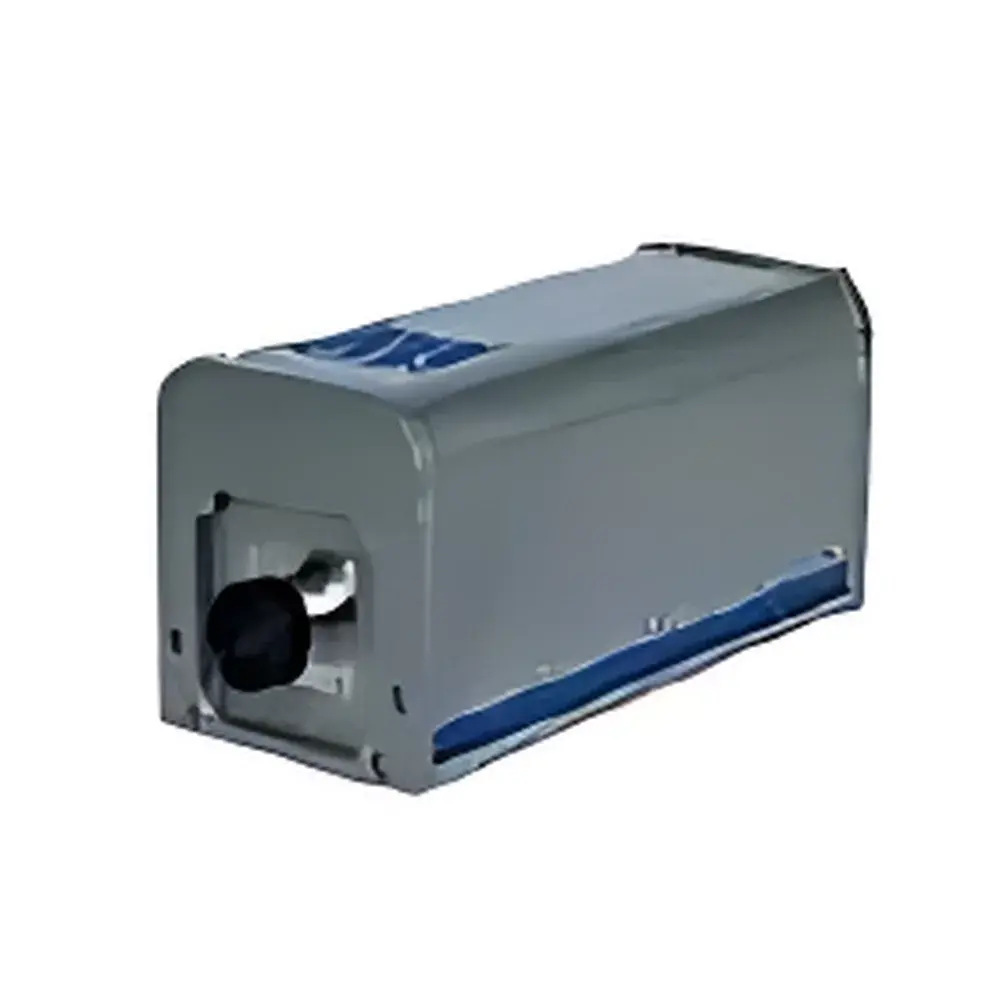
AISA Eagle & Hawk Airborne Hyperspectral Imaging System
| Origin | Finland |
|---|---|
| Manufacturer Type | Authorized Distributor |
| Origin Category | Imported |
| Model Series | AISA Eagle, AISA Hawk, AISA Dual |
| Spectral Range | 400–970 nm (Eagle), 970–2450 nm (Hawk), 400–2450 nm (Dual) |
| Spatial Pixels | 512 or 1024 (Eagle), 320 (Hawk and Dual) |
| Spectral Bands | 488 (Eagle), 256 (Hawk), 500 (Dual) |
| Frame Rate | 160 Hz (Eagle), 100 Hz (Hawk and Dual) |
| Weight | < 12 kg (system total) |
| Integration | GPS/INS-aided georeferencing module included |
| Data Acquisition | Real-time onboard storage with lossless compression |
Overview
The AISA Eagle and AISA Hawk airborne hyperspectral imaging systems represent a mature, field-proven platform for quantitative remote sensing from manned aircraft and UAVs. Engineered for operational robustness and scientific fidelity, these push-broom spectrometers operate on the principle of spatial-spectral scanning—capturing contiguous, narrowband spectral data across hundreds of channels while maintaining precise geometric registration per flight line. The AISA Eagle covers the visible to near-infrared (VNIR) domain (400–970 nm) with high spatial sampling (up to 1024 pixels cross-track) and 488 spectral bands at ~2.3 nm resolution, optimized for pigment analysis, vegetation health assessment, and water quality mapping. The AISA Hawk operates in the shortwave infrared (SWIR) range (970–2450 nm), resolving diagnostic absorption features of minerals, hydrocarbons, cellulose, and moisture content with 256 bands at ~5.8 nm resolution. The AISA Dual integrates both modules into a synchronized, co-boresighted configuration, delivering seamless 500-band coverage from 400 to 2450 nm—enabling full-spectrum material identification without spectral gap interpolation.
Key Features
- Modular, lightweight architecture: Total system mass < 12 kg, compatible with light aircraft and medium-class UAVs (e.g., Wingcopter, ScanEagle, Cessna 172).
- Real-time georeferencing: Integrated GPS/INS unit provides sub-meter positional accuracy and attitude stabilization (< 0.05° roll/pitch/yaw), enabling direct orthorectification without ground control points.
- High-speed acquisition: Frame rates up to 160 Hz (Eagle) support flight speeds > 120 kt at 1000 m AGL while maintaining < 10 cm GSD at optimal altitudes.
- Onboard data handling: Solid-state recorder with lossless compression (CCSDS 122.0-B-1 compliant), supporting sustained acquisition over > 2 hours per mission.
- Thermal-stable optical bench: Aluminum-carbon fiber hybrid construction minimizes focus drift across −20°C to +45°C ambient operating range.
- Calibration traceability: Factory radiometric calibration (NIST-traceable integrating sphere), plus optional in-flight dark current and solar reference measurements.
Sample Compatibility & Compliance
The AISA systems are designed for non-contact, wide-area surface characterization—requiring no sample preparation or physical interaction. They comply with international airborne remote sensing standards including ASTM E2798-21 (Standard Practice for Airborne Hyperspectral Imaging System Performance Verification) and ISO 19130-2:2018 (Geographic information — Imagery sensor models for mapping). Radiometric outputs meet Level 1B processing requirements for NASA’s ARSET program and ESA’s Copernicus Sentinel-2 validation protocols. All firmware and data formats adhere to GDAL-compatible ENVI .hdr/.bil conventions and support ingestion into ENVI, PCI Geomatica, QGIS, and custom Python-based workflows (e.g., scikit-image, rasterio, Py6S). For regulated environmental monitoring applications, raw metadata includes timestamps, GPS/INS logs, and instrument temperature telemetry—enabling full audit trail compliance under GLP and ISO/IEC 17025 laboratory accreditation frameworks.
Software & Data Management
Data acquisition and preprocessing are managed via SPECIM’s proprietary AISA Database software (Windows-based), which supports real-time preview, band selection, gain adjustment, and automatic geotagging. Post-mission processing leverages the AISA Processing Suite (APS), offering atmospheric correction (using MODTRAN or 6S engines), spectral unmixing (FCLS, MCR-ALS), endmember extraction (N-FINDR, VCA), and classification (SVM, Random Forest). Export options include GeoTIFF, Cloud Optimized GeoTIFF (COG), and HDF5 containers with embedded CF-1.7 metadata. The system supports API-driven automation via Python SDK for integration into enterprise GIS pipelines or automated change-detection dashboards. All software binaries and calibration files are version-controlled and archived with SHA-256 checksums to satisfy FDA 21 CFR Part 11 electronic record integrity requirements where applicable.
Applications
- Ecological monitoring: Quantitative estimation of chlorophyll-a, carotenoids, and anthocyanins in forest canopies; detection of invasive species via spectral signature divergence.
- Marine and coastal science: Discrimination of coral bleaching states, benthic habitat mapping, and phytoplankton functional type classification using absorption features at 675 nm and 700 nm.
- Mineral exploration: Identification of kaolinite, illite, smectite, and hydroxides through SWIR absorption minima at 2200 nm and 2300 nm.
- Oil spill response: Detection of weathered petroleum hydrocarbons via C–H stretch harmonics (1700–1750 nm) and aromatic C=C bands (2300–2350 nm).
- Wetland hydrology: Mapping inundation dynamics and soil moisture gradients using SWIR water absorption depth at 1900 nm and 1400 nm.
- Agricultural precision management: Nitrogen status mapping, yield prediction modeling, and early stress detection prior to visible symptom onset.
FAQ
What is the minimum required altitude for optimal signal-to-noise ratio (SNR) in VNIR mode?
For AISA Eagle, an operational altitude of 1000–3000 m AGL is recommended to balance spatial resolution (GSD ≈ 15–45 cm) and photon flux; SNR > 500:1 is achievable at 2000 m with clear-sky illumination and solar zenith angle < 45°.
Can the AISA Dual system acquire Eagle and Hawk data simultaneously with pixel-level co-registration?
Yes—the Dual configuration uses a beam-splitter and dual focal planes with hardware-synchronized triggering and sub-pixel (< 0.3 px RMS) geometric alignment verified during factory calibration.
Is radiometric recalibration required after transport or temperature cycling?
No routine recalibration is needed; however, a full dark-current and lamp-based radiometric verification is recommended annually or after any mechanical shock event exceeding 10 g.
Does the system support real-time onboard spectral analysis?
Basic threshold-based anomaly detection (e.g., oil presence, chlorophyll exceedance) is supported via FPGA-accelerated onboard processing; full spectral unmixing requires post-mission desktop computation.
Are export licenses required for shipment outside the EU?
Yes—AISA systems incorporating SWIR detectors (AISA Hawk and Dual) fall under EU Dual-Use Regulation (EC No. 428/2009) Annex I, requiring individual export authorization for destinations outside OECD countries.





