
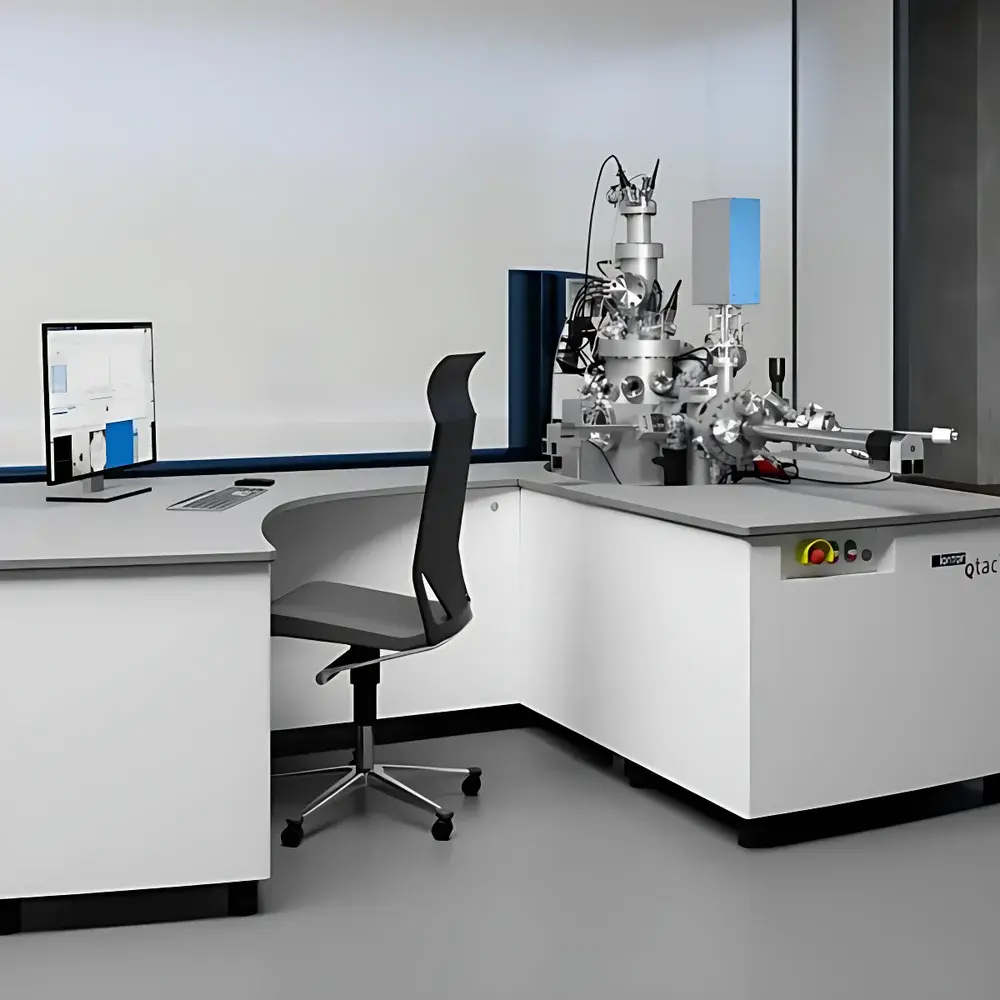
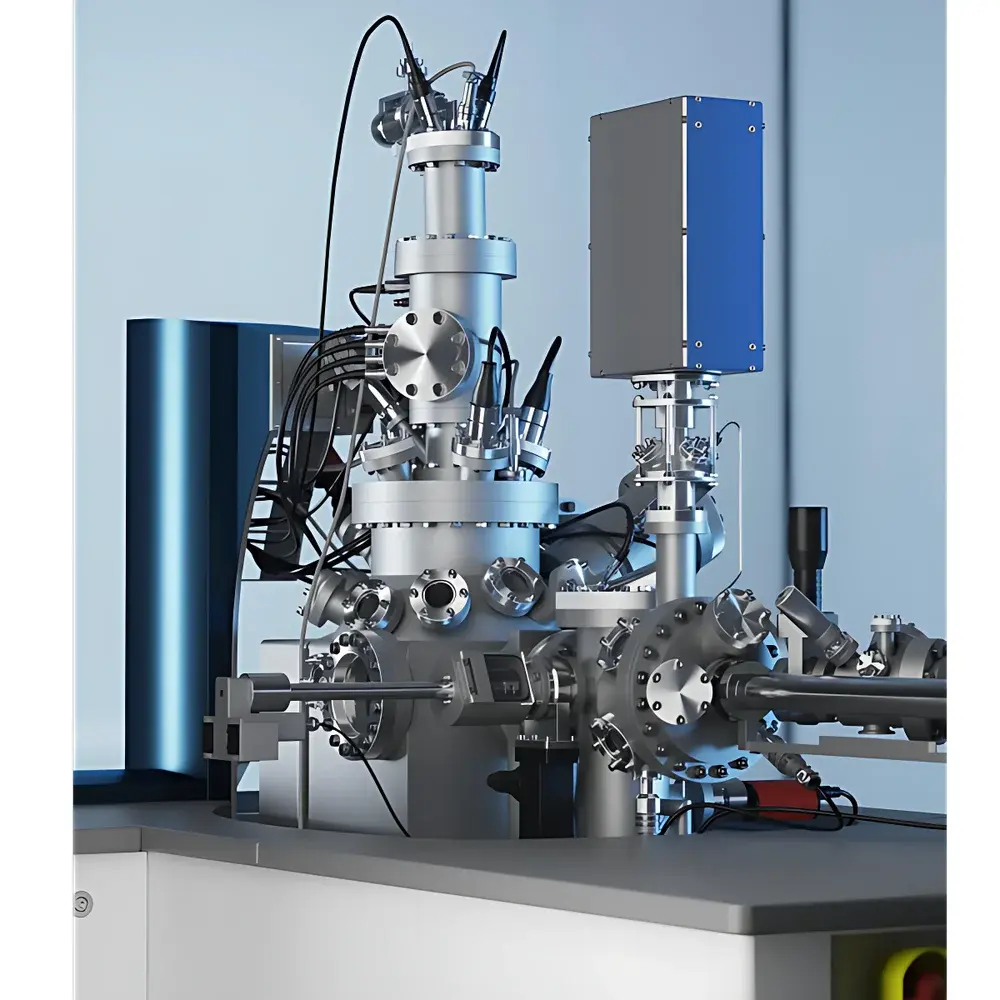
IONTOF Qtac Low-Energy Ion Scattering (LEIS) Spectrometer
| Brand | IONTOF |
|---|---|
| Origin | Germany |
| Manufacturer Type | Authorized Distributor |
| Origin Category | Imported |
| Model | Qtac |
| Quotation | Upon Request |
| Ion Species | 3He⁺, 4He⁺, 20Ne⁺, 40Ar⁺, 84Kr⁺ |
| Ion Gun Energy Range | 1,000–8,000 eV |
| Ion Beam Current | 1 pA–100 nA |
| Maximum Ion Beam Scan Area | 4 × 4 mm² |
| Minimum Beam Spot Size (Standard Source) | < 15 µm (< 20 µm for He⁺) |
| Minimum Beam Spot Size (High-Brightness Source) | < 5 µm |
| Sensitivity | > 75,000 counts/nC (measured using 5 keV 20Ne⁺ scattering from pure Cu) |
| Mass Resolution (m/Δm) | > 35 (FWHM) on Cu |
| Detection Limit (for Au) | < 100 ppm |
Overview
The IONTOF Qtac Low-Energy Ion Scattering (LEIS) Spectrometer is a high-performance surface analysis instrument engineered for atomic-layer-resolved elemental characterization of solid materials. LEIS operates on the principle of elastic binary collision between low-energy noble gas ions (e.g., He⁺, Ne⁺, Ar⁺) and atoms in the outermost atomic layer(s) of a sample. Due to the kinematic energy transfer dependence on target atom mass, the energy spectrum of backscattered or forward-scattered ions provides direct, quantitative information about surface elemental composition — with exceptional sensitivity confined to the top 1–3 atomic layers. Unlike XPS or AES, which probe depths of ~0.5–3 nm, LEIS achieves true single-atomic-layer resolution, making it indispensable for catalysis research, thin-film growth monitoring, interface science, and surface oxidation studies. The Qtac integrates IONTOF’s proprietary time-of-flight (TOF) detection architecture with a novel omnidirectional ion collector, enabling unprecedented signal collection efficiency and surface-specific quantification.
Key Features
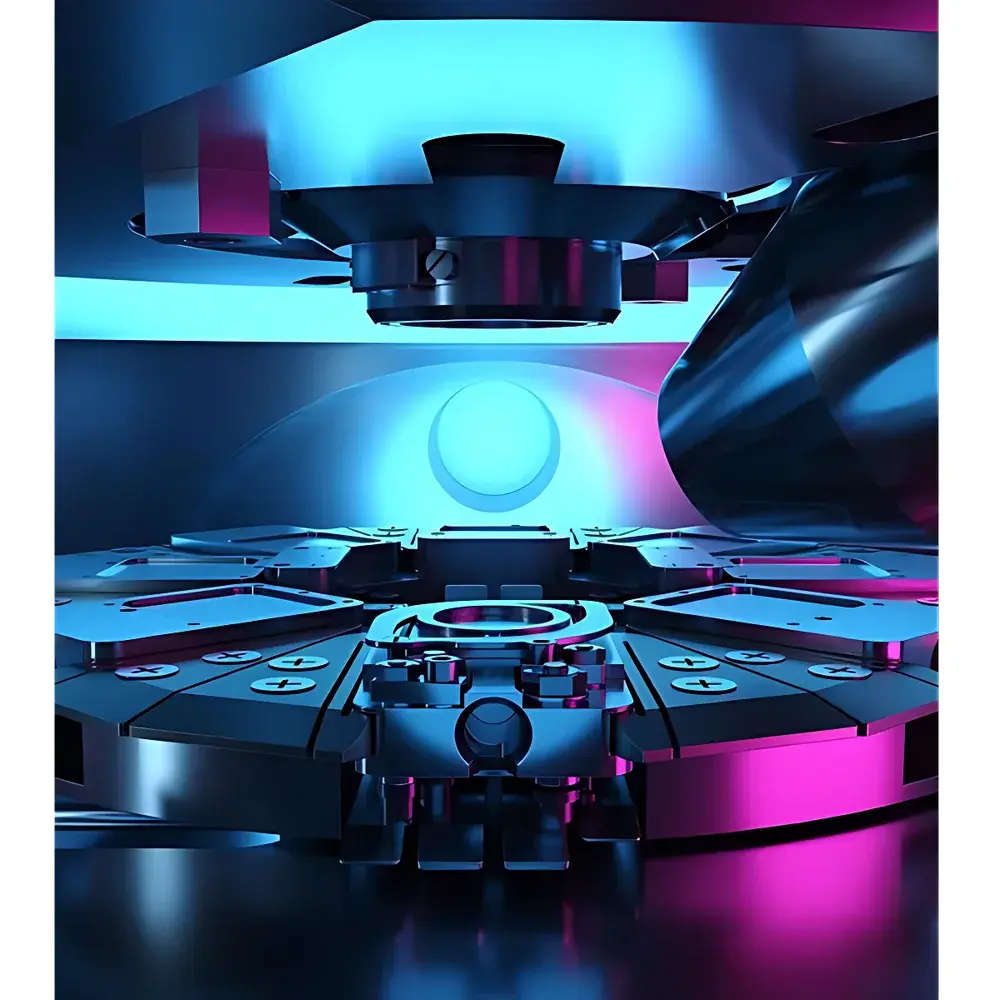
- Omnidirectional ion collector design captures >90% of scattered ions from a defined surface region, increasing effective sensitivity by up to 3,000× over conventional LEIS systems.
- Multi-ion-source compatibility: switch seamlessly between 3He⁺, 4He⁺, 20Ne⁺, 40Ar⁺, and 84Kr⁺ to optimize mass separation, sputter yield, or surface damage control.
- High-brightness ion optics deliver sub-5 µm beam spots (with optional high-brightness source), enabling spatially resolved surface mapping and localized analysis of heterogeneous catalysts or patterned substrates.
- Dual-mode ion gun operation: supports high-current mode (up to 100 nA) for in situ surface cleaning or depth profiling via controlled sputtering, and low-current analytical mode (down to 1 pA) for non-destructive, high-sensitivity surface interrogation.
- Integrated ultra-high vacuum (UHV) system with automated pressure interlocks, bake-out capability, and real-time vacuum diagnostics ensures stable operation at ≤1×10⁻¹⁰ mbar — critical for minimizing surface contamination during measurement.
- Robust mechanical design with precision XYZ stage, tilt/rotation capabilities, and cryo-cooling option (optional) for temperature-dependent surface reaction studies.
Sample Compatibility & Compliance
The Qtac accommodates conductive, semiconductive, and insulating samples—including oxides, polymers, biological coatings, and catalytic nanoparticles—without mandatory charge neutralization, thanks to its low primary ion energy range (1–8 keV) and optimized charge compensation protocols. Sample holders support standard 25 mm diameter wafers, TEM grids, and custom mounts. The system complies with ISO/IEC 17025 requirements for analytical instrument validation and supports GLP/GMP-aligned workflows through audit-trail-enabled software logging. All vacuum components meet ASTM F2627-18 standards for UHV compatibility, and electrical safety conforms to IEC 61010-1:2010. Optional integration with load-lock chambers enables air-sensitive sample transfer under inert atmosphere.
Software & Data Management
Control and data acquisition are managed via IONTOF’s TOF-BASE™ platform, a modular, Windows-based software suite compliant with FDA 21 CFR Part 11 for electronic records and signatures. It provides real-time spectral visualization, multi-channel coincidence filtering, automatic peak identification using reference libraries (NIST SRM-compliant), and quantitative analysis based on relative sensitivity factors (RSFs) derived from first-principles scattering cross-sections. Batch processing, scripting (Python API), and export to common formats (CSV, CDF, VMS) facilitate integration into laboratory information management systems (LIMS). Raw TOF spectra retain full digitized transient data, enabling post-acquisition reprocessing for improved mass resolution or background subtraction.
Applications
- Catalysis & Surface Reactivity: Quantify active-site composition changes during CO oxidation, ammonia synthesis, or Fischer–Tropsch reactions — directly correlating surface stoichiometry with turnover frequency.
- Atomic Layer Deposition (ALD) & MBE Monitoring: Track monolayer-by-monolayer elemental incorporation kinetics in real time, detecting incomplete ligand exchange or interfacial segregation.
- Corrosion & Oxidation Science: Resolve initial oxide nucleation sequences on Al, Mg, or Ni alloys with sub-monolayer sensitivity, distinguishing chemisorbed O from lattice oxygen.
- Energy Materials: Characterize cathode/electrolyte interphases in solid-state batteries, identifying Li-loss, transition-metal migration, or SEI heterogeneity at true surface interfaces.
- Functionalized Biomaterials: Analyze protein adsorption orientation, peptide grafting density, or antifouling polymer coverage on implant surfaces without matrix interference.
FAQ
What is the typical information depth probed by Qtac LEIS?
The effective sampling depth is limited to the top 1–3 atomic layers (~0.3–0.9 nm), depending on ion species, energy, and scattering geometry — significantly shallower than XPS (~1 nm) or AES (~3 nm).
Can Qtac perform depth profiling?
Yes — using sequential low-energy ion sputtering (e.g., 1–2 keV Ar⁺) combined with LEIS analysis, enabling atomic-layer-resolved compositional depth profiles with sub-nanometer vertical resolution.
Is charge neutralization required for insulating samples?
Not routinely — the low kinetic energy of incident ions minimizes charging effects; however, a flood electron gun is available as an optional accessory for highly resistive or thick dielectric films.
How is quantification achieved in LEIS?
Quantitative analysis uses experimentally validated relative sensitivity factors (RSFs) derived from fundamental scattering theory and calibrated against certified reference materials (e.g., NIST SRM 2136), achieving ±5–10% accuracy for major and minor elements.
Does Qtac support integration with other UHV systems?
Yes — standard CF-150 and CF-200 flanges enable direct coupling to molecular beam epitaxy (MBE), sputter deposition, or scanning probe microscopy (SPM) chambers via UHV transfer lines.
Related Products





