
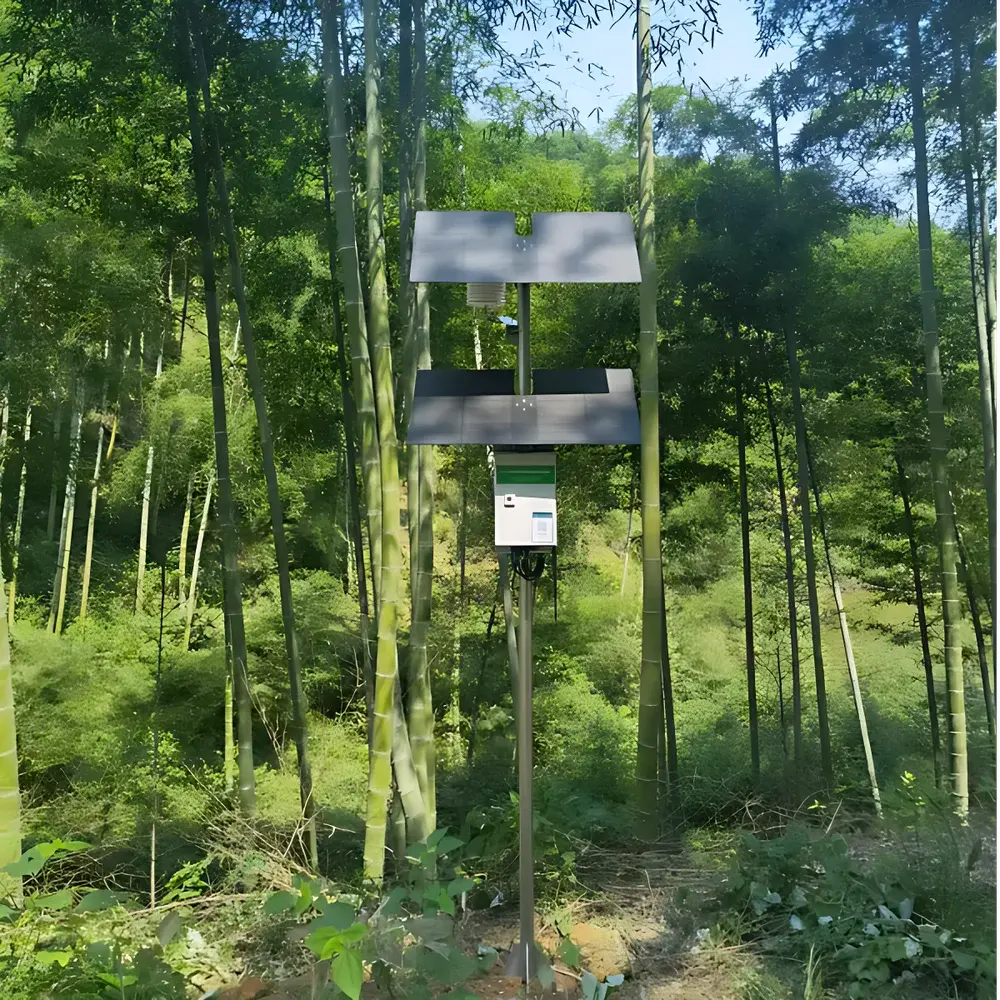
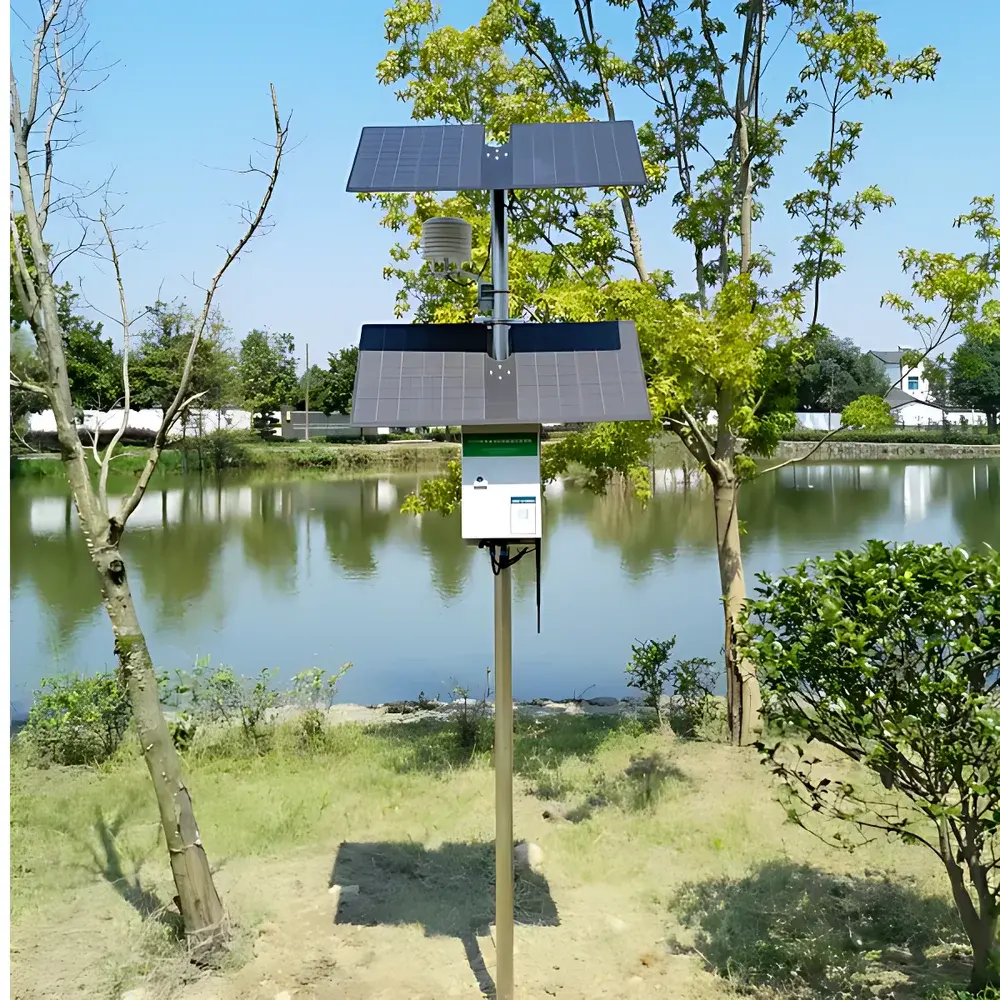
TIANHANG CREATE ZC51 Air Negative Ion Monitoring Station
| Brand | TIANHANG CREATE |
|---|---|
| Origin | Tianjin, China |
| Manufacturer Type | Authorized Distributor |
| Country of Origin | China |
| Model | ZC51 |
| Pricing | Available Upon Request |
| Power Supply | 30W Solar Panel + 7Ah Low-Temperature Lead-Crystal Battery |
| Enclosure Rating | IP68 |
| Structural Material | Aerospace-Grade Aluminum Alloy (Anodized & Sandblasted) + 304 Stainless Steel Mounting Mast (2.4 m) |
| Data Logger | Ultra-Low-Power Unit with 4× Analog Inputs, 4× RS485 Ports, 4× Image Interfaces, 8GB RAM, 64GB Local Storage, GPS/Beidou Positioning, Remote Firmware Update,断点续传 (Resume-on-Interruption), Multi-Retry Transmission, Voltage & Log Telemetry |
| Negative Ion Sensor | Detection Range: 0–500,000 ions/cm³ |
| Resolution | 10 ions/cm³ |
| Sampling Rate | 50 samples/sec |
| Accuracy | ±15% of reading |
| Ion Mobility | 1 cm²/(V·s) |
| Avg. Power | 1.7 W |
| Ambient Temp Sensor | -40–85°C, ±0.3°C @25°C (typ.), 0.01°C res. |
| RH Sensor | 0–100% RH, ±3% RH (10–80% RH, non-condensing), 0.01% RH res. |
| Optional Add-ons | 8-MP All-Weather Phenology Camera (IP68), Barometric Pressure Sensor (300–1100 hPa, ±0.5 hPa), Anemometer (0–60 m/s, ±(0.3+0.03v) m/s), Wind Vane (0–360°, ±3°) |
Overview
The TIANHANG CREATE ZC51 Air Negative Ion Monitoring Station is a fully autonomous, field-deployable environmental observation system engineered for continuous, unattended measurement of atmospheric negative air ions (NAIs) alongside co-located meteorological parameters. It operates on the principle of Gerdien-tube-based aspiration ion collection, where ambient air is drawn through a cylindrical capacitor under controlled voltage and airflow, enabling quantitative determination of ion concentration via electrometer-coupled current measurement. This method complies with foundational electrostatic aerosol science standards referenced in ISO 16000-29 (Indoor air — Part 29: Determination of airborne negative and positive ions) and aligns with methodology used in long-term ecological research networks requiring trace-level ion flux characterization. Designed for permanent installation in forests, mountain resorts, coastal zones, urban parks, and ecological reserves, the ZC51 delivers scientifically defensible NAI data under real-world environmental stressors—including temperature extremes, high humidity, solar UV exposure, and particulate-laden airflow—without routine human intervention.
Key Features
- Fully autonomous operation enabled by integrated 30W monocrystalline solar panel and 7Ah low-temperature lead-crystal battery, supporting >12 months of continuous deployment in temperate climates without maintenance.
- IP68-rated aerospace aluminum enclosure with sandblasted anodized surface finish ensures structural integrity, UV resistance, and corrosion immunity in outdoor environments; 2.4 m 304 stainless steel mounting mast includes ground anchor hardware and electrolytic matte polishing for marine-grade durability.
- Dual-mode communication architecture: simultaneous support for LTE Cat-1 / 4G, Wi-Fi 802.11n, and Ethernet, with automatic failover and configurable transmission intervals (1 min to 24 h).
- Industrial-grade data logger featuring 64GB embedded flash storage, timestamped audit log retention, GPS/Beidou geolocation tagging, and firmware-over-the-air (FOTA) capability compliant with IEC 62443-3-3 cybersecurity guidelines for remote field devices.
- Real-time data integrity safeguards: breakpoint resume transmission, multi-attempt retransmission upon network loss, and voltage telemetry for early power degradation detection.
Sample Compatibility & Compliance
The ZC51 is validated for ambient air sampling across diverse biogeographic zones—from subtropical evergreen forests to alpine meadows and coastal scrublands. Its negative ion sensor meets minimum detectability thresholds required for WHO-referenced air quality benchmarking and national forest health monitoring programs (e.g., China’s National Forest Ecosystem Observation Network, CERN). All sensors undergo factory calibration traceable to NIM (National Institute of Metrology, China) standards. The system architecture supports GLP-aligned data provenance: each transmitted record carries embedded UTC timestamps, sensor serial identifiers, calibration expiration dates, and digital signature metadata. Optional barometric pressure, wind speed/direction, and phenology camera modules extend compliance readiness for ISO 24555 (Environmental monitoring — Requirements for automated weather stations) and ASTM D6245 (Standard Guide for Using Indoor Air Quality Measurements).
Software & Data Management
Data acquisition and configuration are managed via a secure web-based portal accessible through TLS 1.2+ encrypted sessions. Raw sensor outputs (including ion count histograms, temperature/RH time series, and image thumbnails from optional phenology cameras) are encoded in IEEE 754-compliant binary format and packaged into compressed ZIP archives for archival. The platform generates daily QC reports highlighting signal stability, battery voltage trends, and transmission success rates. For integration into institutional LIMS or GIS platforms, RESTful API endpoints support JSON-formatted data export with OAuth 2.0 authentication. Audit trails—including user login history, parameter modification logs, and firmware update records—are retained for ≥18 months and exportable as CSV for regulatory review per ISO/IEC 17025 Clause 7.9.
Applications
- Long-term ecological monitoring of negative ion dynamics in response to vegetation density, rainfall events, and diurnal ozone cycles.
- Evaluation of therapeutic microclimate quality in wellness tourism infrastructure—e.g., forest therapy bases, hot spring resorts, and sanatoriums.
- Urban air quality assessment correlating NAI concentrations with PM₂.₅, NO₂, and VOC levels to refine atmospheric chemistry models.
- Validation of indoor air purification systems via comparative baseline-to-intervention measurements in hospitals, schools, and office buildings.
- Climate resilience studies examining ion generation efficiency under elevated CO₂ and drought-stressed canopy conditions.
FAQ
What is the recommended calibration interval for the negative ion sensor?
Annual recalibration is advised under continuous operation; field verification using certified reference ion generators (e.g., NIST-traceable corona discharge sources) may be performed semi-annually.
Does the system support NTP time synchronization?
Yes—GPS/Beidou positioning provides primary time source; secondary NTP fallback is configurable via Ethernet or Wi-Fi interface.
Can historical data be retrieved if cellular connectivity is lost for extended periods?
Yes—64GB local storage retains ≥18 months of 1-minute resolution data; all buffered records transmit automatically upon connection restoration.
Is the phenology camera compatible with time-lapse scheduling and motion-triggered capture?
Yes—firmware v2.3+ supports programmable capture intervals (1 min to 24 h), PIR-triggered snapshots, and scheduled image compression to conserve bandwidth.
How is sensor drift compensated during prolonged exposure to high-humidity environments?
The ion sensor incorporates active electrode cleaning cycles and temperature-compensated gain adjustment algorithms; humidity-induced offset is corrected using concurrent RH sensor feedback per IEC 60751 Annex D protocols.







