
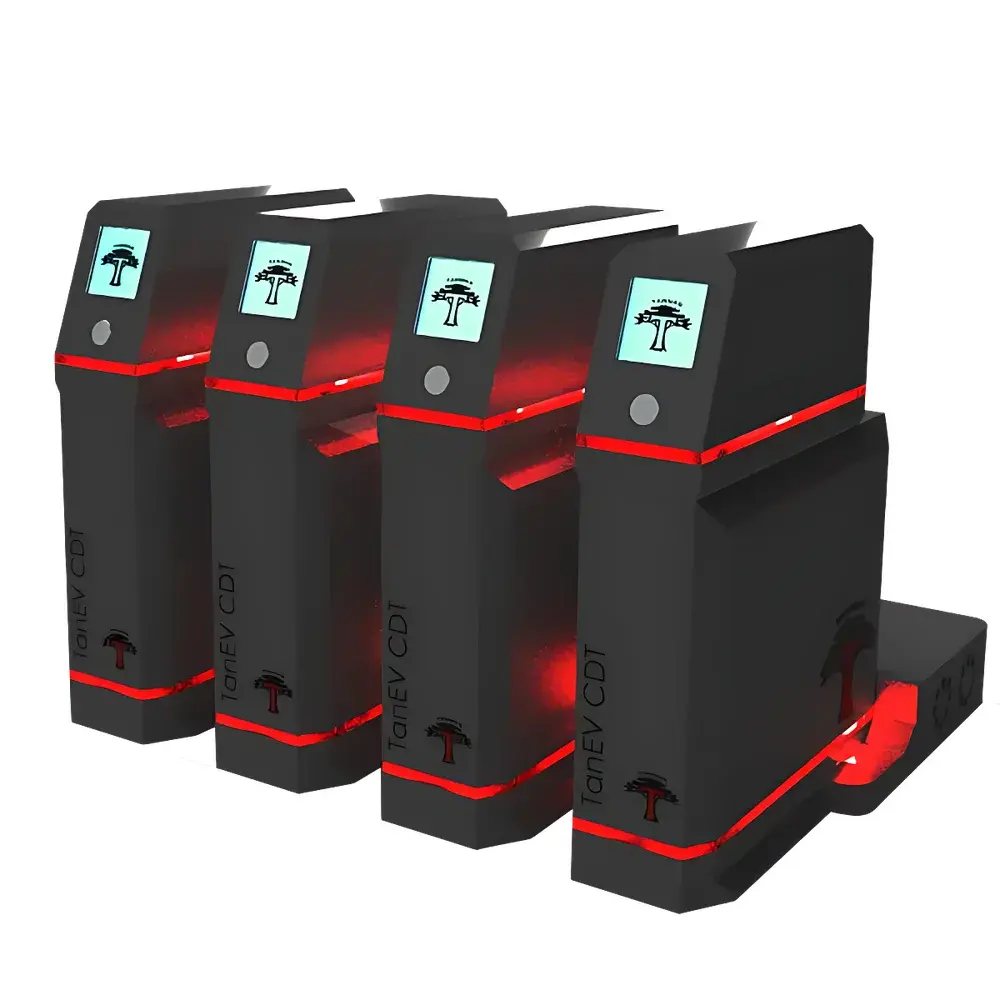
Tannas TanEV WCT Wire Corrosion Tester
| Brand | Tannas&King |
|---|---|
| Origin | USA |
| Manufacturer Status | Authorized Distributor |
| Origin Category | Imported |
| Model | TanEV WCT |
| Product Type | Laboratory Instrument |
| Compliance | SAE J3200 (in development), ASTM method under preparation |
Overview
The Tannas TanEV WCT Wire Corrosion Tester is a purpose-built laboratory instrument engineered to quantify the dynamic corrosion kinetics of copper conductors exposed to electric vehicle (EV) transmission fluids under thermally accelerated, dual-phase (liquid + vapor) conditions. Unlike conventional copper strip corrosion tests (e.g., ASTM D130), which assess only static surface discoloration after fixed-duration immersion, the TanEV WCT employs real-time electrical resistance monitoring to derive quantitative, time-resolved corrosion rates—enabling predictive assessment of conductor integrity degradation in high-voltage EV drivetrain systems. The system operates on the fundamental principle that uniform corrosion of a cylindrical copper wire induces a monotonic increase in its electrical resistance, governed by the relationship R ∝ 1/d², where R is resistance and d is instantaneous wire diameter. By maintaining precise thermal control (80–180 °C) and applying a low-voltage, non-polarizing DC current across the test specimen, the instrument captures resistance drift over 72-hour test cycles with micro-ohm resolution—directly correlating to dimensional loss (Δd) and enabling derivation of linear or parabolic corrosion rate constants (mm/year or µm/h).
Key Features
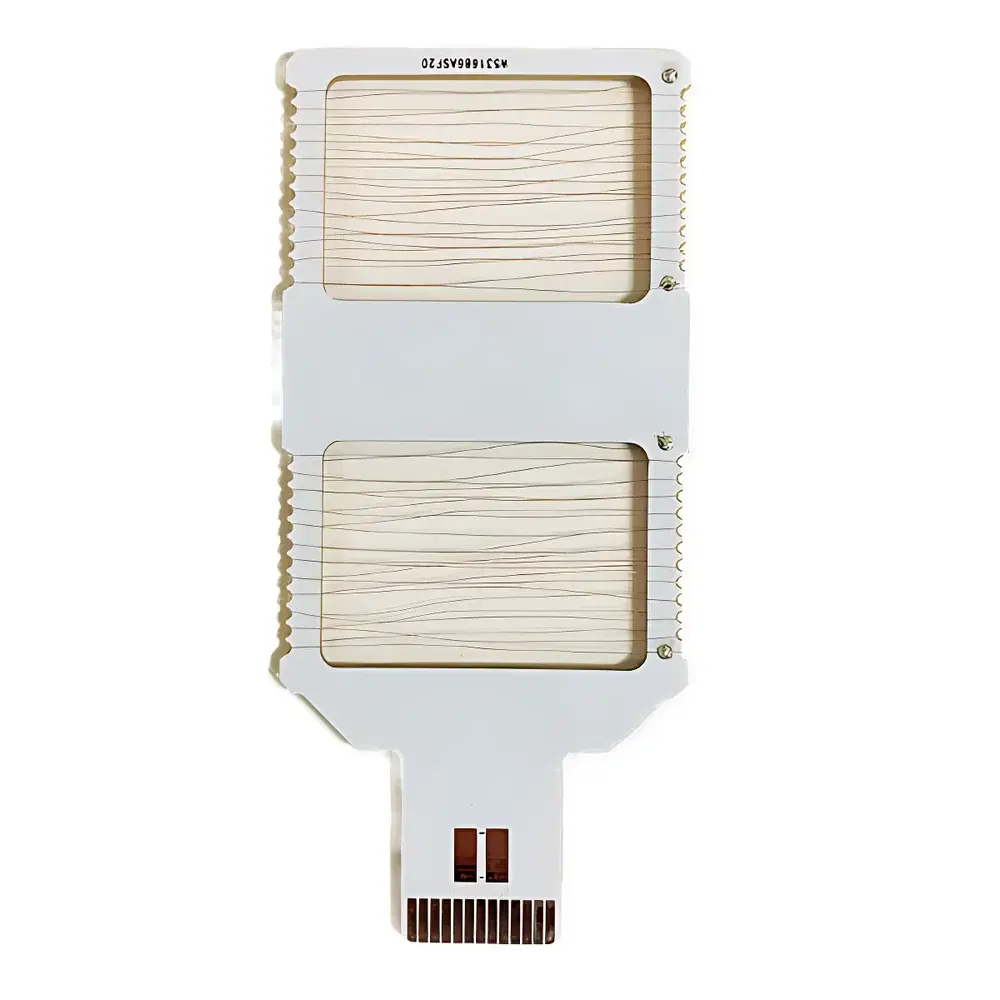
- Dual-zone test board architecture: segregated upper vapor-phase and lower liquid-phase exposure zones, replicating simultaneous oil–vapor interface conditions encountered in EV gearboxes and motor housings.
- Programmable temperature control: PID-regulated heating block with ±0.5 °C stability across 80–180 °C range, validated per ASTM E77 and ISO/IEC 17025 traceable calibration protocols.
- Real-time resistance acquisition: 6-wire Kelvin sensing circuitry with 0.1 µΩ resolution and 100 Hz sampling rate, minimizing lead resistance error and contact potential interference.
- Low-current excitation: 1–10 mA DC source compliant with IEC 61000-4-5 surge immunity requirements, ensuring electrochemical neutrality during measurement.
- Modular test fixture design: standardized 1.0 mm diameter OFE (oxygen-free electrolytic) copper wire holders with gold-plated contacts and vacuum-tight sealing for vapor containment.
- Robust mechanical housing: stainless-steel chassis with integrated fume extraction port and Class II biosafety-rated ventilation compatibility.
Sample Compatibility & Compliance
The TanEV WCT accommodates standard 1.0 mm diameter copper wires (ASTM B187, UNS C10100) and accepts transmission fluids, e-fluids, and dielectric coolants in volumes of 15–30 mL. It supports both neat oils and formulated blends containing sulfur-containing additives, organic acids, and metal deactivators. The system is explicitly designed to meet the emerging performance validation requirements outlined in SAE J3200, “Test Method for Copper Corrosion of Electric Vehicle Transmission Fluids,” currently under ballot review by SAE International. While the formal ASTM standard is under development, the TanEV WCT’s measurement methodology aligns with ASTM E29 (significant digits), ASTM E691 (interlaboratory precision), and ISO 5725-2 (repeatability and reproducibility). Data output conforms to GLP-compliant audit trails, including timestamped resistance logs, thermal profiles, and operator metadata—supporting 21 CFR Part 11 readiness when integrated with validated LIMS environments.
Software & Data Management
Bundled TanEV Control Suite v3.2 provides native Windows-based operation with intuitive test setup wizards, real-time resistance vs. time plotting, and automated corrosion rate calculation using least-squares fitting of R(t) curves. All raw data are stored in HDF5 format with embedded metadata (temperature setpoint, ambient RH, oil batch ID, operator signature), ensuring FAIR (Findable, Accessible, Interoperable, Reusable) data principles. Export options include CSV, PDF reports (with NIST-traceable calibration certificates), and direct integration with LabArchives ELN and Thermo Fisher SampleManager LIMS via RESTful API. Audit trail functionality records all user actions—including parameter edits, data deletions, and report generation—with immutable timestamps and role-based access controls (RBAC) compliant with ISO/IEC 17025:2017 Clause 7.10.
Applications
- Corrosion mechanism studies: differentiating vapor-phase sulfidation from liquid-phase acid attack through comparative kinetic modeling of resistance evolution under controlled phase partitioning.
- Formulation screening: high-throughput evaluation of corrosion inhibitors (e.g., benzotriazole derivatives, mercaptobenzothiazole) in next-generation EV e-fluids.
- Material compatibility testing: qualification of copper alloys (C11000, C18200), enameled magnet wire insulation, and printed circuit board (PCB) trace substrates.
- Lifetime projection modeling: inputting experimentally derived corrosion rates into Weibull-based failure probability models for traction motor windings per ISO 16750-4 (road vehicles—environmental conditions).
- Regulatory submission support: generating technically defensible datasets for OEM fluid approval packages and EPA Safer Choice certification dossiers.
FAQ
What copper wire specifications are required for TanEV WCT testing?
Standard OFE copper wire per ASTM B187, 1.000 ± 0.005 mm diameter, minimum length 120 mm, surface roughness Ra ≤ 0.4 µm.
Can the system test fluids containing volatile organic compounds (VOCs)?
Yes—vapor-phase containment is achieved via sealed test chamber with optional cold trap integration; VOC handling requires external fume hood connection per OSHA 1910.1200.
Is calibration traceable to national standards?
Resistance calibration is performed using Fluke 752A DC resistance calibrator (NIST-traceable to SRM 1702); temperature verification uses Fluke 724 RTD calibrator with ITS-90 reference.
How does TanEV WCT differ from traditional ASTM D130 testing?
ASTM D130 evaluates qualitative color change on copper strips after 3-hour immersion; TanEV WCT delivers quantitative, time-resolved corrosion kinetics under realistic dual-phase thermal stress—enabling mechanistic insight and lifetime prediction.
Does the instrument support automated pass/fail decision logic?
Yes—user-defined corrosion rate thresholds (e.g., <0.8 µm/h at 150 °C) trigger configurable alerts and auto-generate compliance statements in final reports.



