Dolomite Polymer Nanoparticle Generation System
| Brand | Dolomite |
|---|---|
| Origin | United Kingdom |
| Manufacturer Type | Authorized Distributor |
| Origin Category | Imported |
| Model | Polymer Nanoparticle Generation System |
| Carrier Type | Polymer |
| Flow Rate Range | 5 nL/min to >100 mL/min |
| Sample Volume Capacity | 0.5 mL to several liters |
| Maximum Operating Pressure | 0–10 bar |
Overview
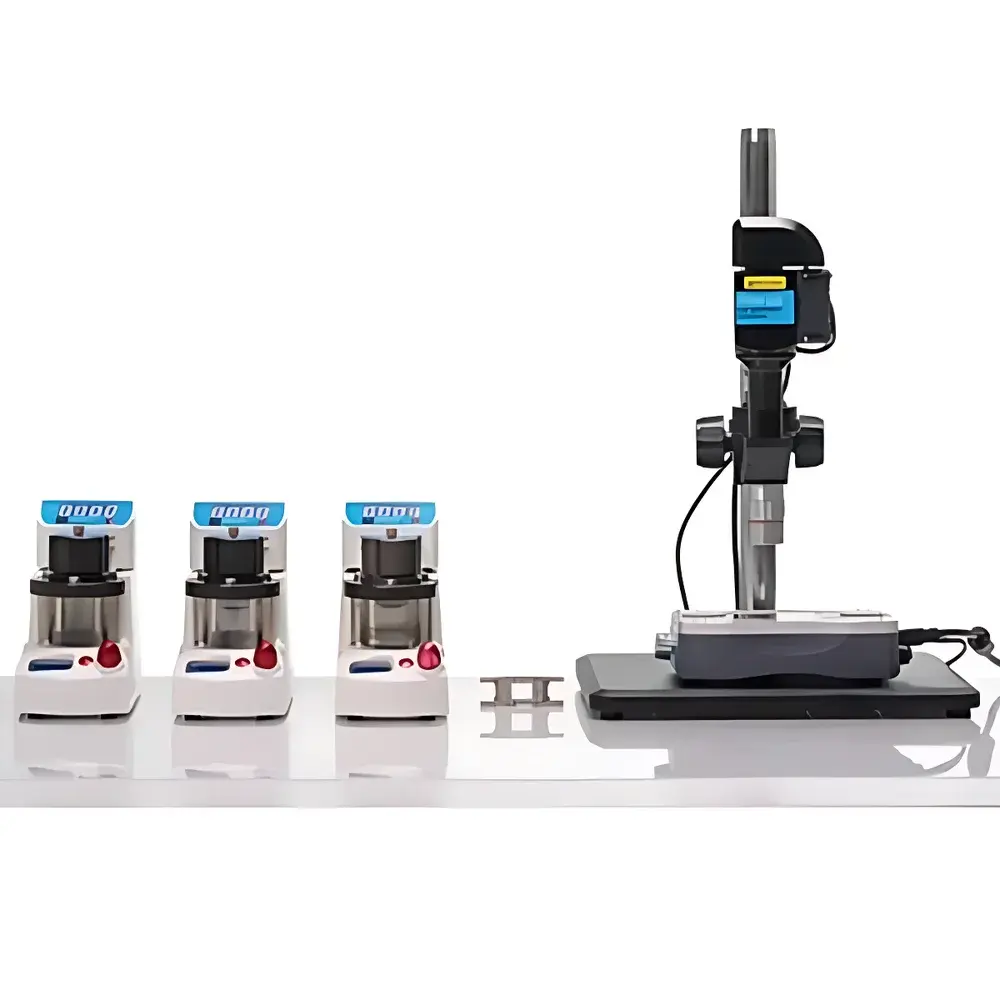
The Dolomite Polymer Nanoparticle Generation System is a precision-engineered microfluidic platform designed for the continuous, reproducible synthesis of monodisperse polymeric nanoparticles—primarily based on biodegradable and functional polymers such as PLGA, PEG, PEGDA, polystyrene, and PVC. It operates on two complementary microfluidic principles: hydrodynamic focusing and high-shear micromixing. These mechanisms enable controlled nucleation and growth kinetics under laminar flow conditions, yielding nanoparticles with tightly regulated size, morphology, and surface functionality. Unlike conventional batch emulsification or nanoprecipitation methods—which suffer from poor inter-batch consistency, broad polydispersity (PDI > 0.3), and limited scalability—the Dolomite system delivers deterministic particle formation through precisely defined fluidic residence times, mixing Reynolds numbers, and interfacial energy modulation. The system is engineered for laboratory-scale process development and seamless transition to pilot-scale production, supporting both research-grade formulation screening and GMP-aligned nanomedicine process validation.
Key Features
- Monodisperse particle generation with coefficient of variation (CV) between 20% and 30%, corresponding to PDI values typically <0.25 under optimized conditions
- Controllable particle diameter range: 50 nm to 500 nm, tunable via flow rate ratios, capillary geometry, and solvent/non-solvent selection
- Ultra-broad operational flow range: 5 nL/min (for low-volume screening) to >100 mL/min (for scalable production), adaptable across viscosities and interfacial tensions
- Chemically inert wetted materials: PEEK, PTFE, and borosilicate glass—compatible with organic solvents (e.g., DCM, acetone, THF), aqueous buffers, and acidic/basic formulations
- Stable, pulseless pressure-driven flow delivery with maximum operating pressure up to 10 bar, ensuring consistent shear profiles across extended run times
- Fully modular architecture: interchangeable chips (e.g., T-junction, flow-focusing, vortex mixers), pump modules, and collection interfaces support rapid reconfiguration for diverse chemistries
- Scalable throughput: From sub-milligram daily yields in R&D mode to gram-per-day output using Telos large-droplet platforms, without reformulation
Sample Compatibility & Compliance
The system accommodates a wide spectrum of polymer-solvent systems—including PLGA dissolved in ethyl acetate, PEG-PLA copolymers in acetonitrile, and polystyrene in toluene—as well as aqueous-phase stabilizers (e.g., PVA, polysorbate 80). Its design supports ISO 13485-aligned workflows and is compatible with GLP/GMP documentation requirements when integrated with audit-trail-capable controllers and electronic lab notebooks. While not pre-certified as a medical device, the platform meets material compatibility criteria outlined in USP <661.1>, ASTM F2150 (standard guide for characterization of polymeric nanoparticles), and ISO/IEC 17025 for method validation. All fluidic components comply with EU REACH and RoHS directives.
Software & Data Management
Operation is coordinated via Dolomite’s proprietary control software, which provides real-time monitoring of pressure, flow rates, temperature (where integrated), and system status. The software logs timestamped metadata—including syringe volume depletion, pressure transients, and user-defined protocol steps—for full traceability. Export formats include CSV and HDF5 for integration with MATLAB, Python-based analysis pipelines, or LIMS systems. Optional FDA 21 CFR Part 11 compliance packages are available, including role-based access control, electronic signatures, and immutable audit trails—enabling use in regulated nanopharmaceutical development environments.
Applications
- Controlled-release and targeted drug delivery: Encapsulation of small molecules (e.g., paclitaxel), peptides, siRNA, and mRNA into biodegradable PLGA or PEGylated nanoparticles
- In vitro diagnostics: Synthesis of uniform polymer beads for lateral flow assay calibration standards and multiplexed immunoassay carriers
- Industrial catalysis: Fabrication of polymer-stabilized metal nanoparticle composites for heterogeneous catalysis and green chemistry applications
- Enhanced oil recovery (EOR): Formulation of stimuli-responsive nanocarriers for controlled release of scale inhibitors or surfactants in reservoir conditions
- Functional coatings: Production of nanostructured binders for high-gloss automotive clearcoats and anti-fouling marine paints
- Nuclear waste management: Development of radiation-resistant polymeric matrices for immobilization and selective sequestration of radionuclides
FAQ
What polymers are most commonly processed using this system?
PLGA, PEG-PLA, poly(ε-caprolactone), polystyrene, and poly(vinyl chloride) are routinely synthesized; compatibility with custom synthetic or natural polymers (e.g., chitosan, dextran derivatives) is verified case-by-case based on solubility and interfacial behavior.
Can the system produce particles below 50 nm?
Standard configurations target 50–500 nm; sub-50 nm synthesis requires specialized chip geometries and ultra-low flow stability—feasible under collaborative application development with Dolomite engineering support.
Is sterilization of microfluidic chips possible?
PEEK and glass chips tolerate autoclaving (121°C, 20 min); PTFE components are not autoclavable but may be sterilized via ethylene oxide or gamma irradiation (validated per ISO 11135/ISO 11137).
How is batch-to-batch reproducibility validated?
Reproducibility is assessed via DLS size distribution tracking, TEM imaging, and encapsulation efficiency assays across ≥3 consecutive runs under identical parameters—typically achieving CV <5% for mean diameter and <10% for drug loading.
Does the system support in-line characterization?
Yes—integrated ports allow coupling with dynamic light scattering (DLS), UV-Vis spectrophotometry, or fluorescence correlation spectroscopy (FCS) modules for real-time particle sizing and concentration monitoring.