
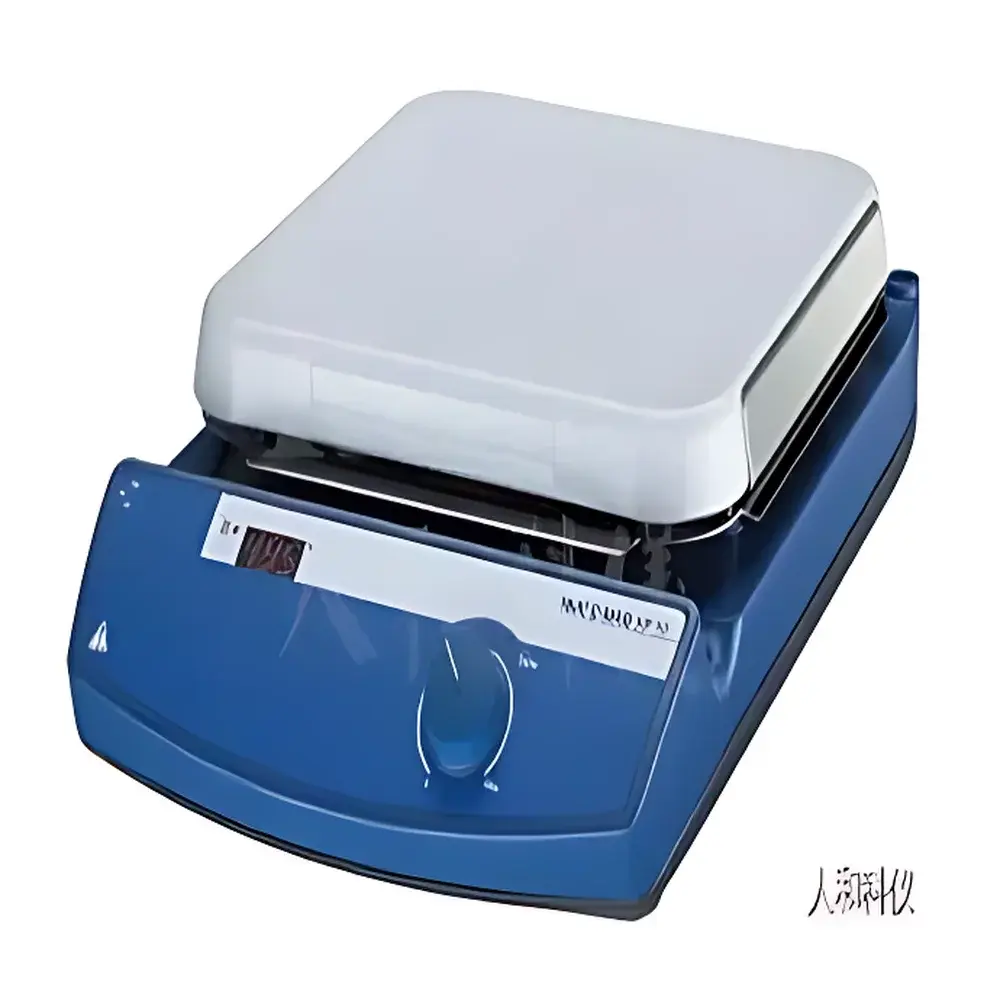
IKA C-MAG HP 10 Electric Heating Plate
| Brand | IKA |
|---|---|
| Origin | Germany |
| Model | C-MAG HP 10 |
| Heating Power | 1500 W |
| Max. Heating Temperature | 500 °C |
| Temperature Uniformity | Compatible with ETS-D5 Contact Electronic Thermometer |
| Plate Dimensions | 260 × 260 mm |
| Display Type | LED |
| Temperature Control Accuracy | ±10 K |
| External Temperature Sensor Interface | ETS-D5 |
| Max. Vessel Capacity | 15 L |
| Heating Rate | 5 K/min |
| Work Surface Material | Ceramic |
| Housing Protection Rating | IP21 |
| Operating Ambient Temperature | 5–40 °C |
| Relative Humidity Limit | 80 % |
| Voltage | 230 / 120 / 100 V |
| Frequency | 50/60 Hz |
| Net Weight | 6 kg |
| Overall Dimensions (W × H × D) | 300 × 105 × 415 mm |
Overview
The IKA C-MAG HP 10 is a high-performance electric heating plate engineered for precision temperature control in demanding laboratory sample preparation and digestion workflows. Designed around a robust ceramic heating surface and microprocessor-based thermal regulation, it operates on the principle of resistive Joule heating combined with closed-loop feedback via optional external temperature sensing. Unlike basic hotplates, the C-MAG HP 10 integrates real-time thermal monitoring capability—when paired with the ETS-D5 contact electronic thermometer—to actively regulate solution temperature rather than just surface temperature. This architecture supports method reproducibility in applications governed by standardized protocols such as EPA Method 3050B (acid digestion of sediments and soils) or ISO 11466 (extraction of trace metals from soils). Its 1500 W power output delivers rapid thermal response (5 K/min ramp rate), while the 260 × 260 mm uniform heating zone ensures consistent thermal distribution across large-volume vessels up to 15 L.
Key Features
- Ceramic work surface: Monolithic, seamless, chemically inert plate resistant to strong acids, alkalis, and organic solvents—ideal for aggressive digestion media including HNO₃/HF/HClO₄ mixtures.
- Dual-mode temperature control: Independent LED-displayed setpoint adjustment for plate temperature (50–500 °C), with optional ETS-D5 sensor input enabling direct solution temperature feedback and regulation.
- Safety-engineered thermal cutoff: Automatic shutdown at 550 °C prevents overheating beyond operational limits; visual thermal warning indicator flashes during active heating to alert users of surface hazard.
- Elevated control panel: Tilted interface minimizes liquid ingress risk from splashes and improves ergonomics for digital readout visibility and parameter adjustment.
- IP21-rated enclosure: Provides protection against vertically falling drips and solid objects >12.5 mm, meeting DIN EN 60529 requirements for general laboratory environments.
- Universal voltage compatibility: Operates at 230 V (Europe), 120 V (North America), or 100 V (Japan) with automatic frequency detection (50/60 Hz), ensuring global deployment readiness.
Sample Compatibility & Compliance
The C-MAG HP 10 accommodates standard laboratory glassware and PTFE-coated vessels ranging from 50 mL beakers to 15 L digestion jars. Its flat, non-porous ceramic surface eliminates crevices where residues can accumulate—critical for trace-metal analysis where cross-contamination must be minimized. The unit complies with IEC 61010-1 for electrical safety in laboratory equipment and meets CE marking requirements under the EU Low Voltage Directive (2014/35/EU) and EMC Directive (2014/30/EU). When used with ETS-D5 and documented SOPs, it supports GLP-compliant temperature validation per ISO/IEC 17025:2017 clause 7.8.2, particularly for digestion steps requiring defined thermal profiles.
Software & Data Management
While the C-MAG HP 10 operates as a standalone analog-digital hybrid instrument without embedded data logging, its ETS-D5 interface enables integration into validated temperature-monitoring systems. Users may connect the ETS-D5’s analog output (0–10 V or 4–20 mA) to third-party data acquisition hardware compliant with FDA 21 CFR Part 11—enabling audit-trail-capable recording of solution temperature history. IKA’s labworldsoft® platform (optional add-on) supports remote configuration and event logging when deployed alongside compatible IKA controllers, facilitating alignment with QMS documentation requirements for QC laboratories operating under ISO 9001 or pharmaceutical GMP frameworks.
Applications
- Acid digestion of environmental samples (soils, sludges, sediments) prior to ICP-MS or AAS analysis.
- Controlled evaporation and concentration of aqueous extracts in food safety testing (e.g., pesticide residue workflows).
- Pre-heating and temperature stabilization of reagent solutions in wet chemistry titrations and colorimetric assays.
- Supporting ASTM D5291 (determination of carbon black content in rubber) and USP (melting point determination using capillary methods) auxiliary heating stages.
- Long-duration thermal conditioning of polymer blends and catalyst precursors in materials R&D labs.
FAQ
Can the C-MAG HP 10 maintain temperature stability within ±1 K?
No—the specified temperature control accuracy is ±10 K relative to setpoint when using plate-sensor mode. For tighter tolerances (±0.5–1 K), use the ETS-D5 probe immersed directly in the solution and enable external feedback control.
Is the ceramic surface resistant to hydrofluoric acid (HF)?
Yes—the Al₂O₃-based ceramic exhibits excellent resistance to HF below 40 % concentration at temperatures ≤150 °C; prolonged exposure above this threshold requires evaluation per IKA’s chemical compatibility chart.
Does the unit support RS232 or USB communication?
No—C-MAG HP 10 lacks built-in digital communication ports. Remote monitoring requires analog signal interfacing via ETS-D5 outputs.
What is the maximum recommended vessel weight?
IKA specifies a mechanical load limit of 20 kg on the heating plate; ensure even weight distribution to avoid localized stress on the ceramic surface.
Can it be used inside a fume hood?
Yes—its IP21 rating and absence of moving parts make it suitable for fume hood installation, provided adequate ventilation prevents ambient temperature exceeding 40 °C.
Related Products



