
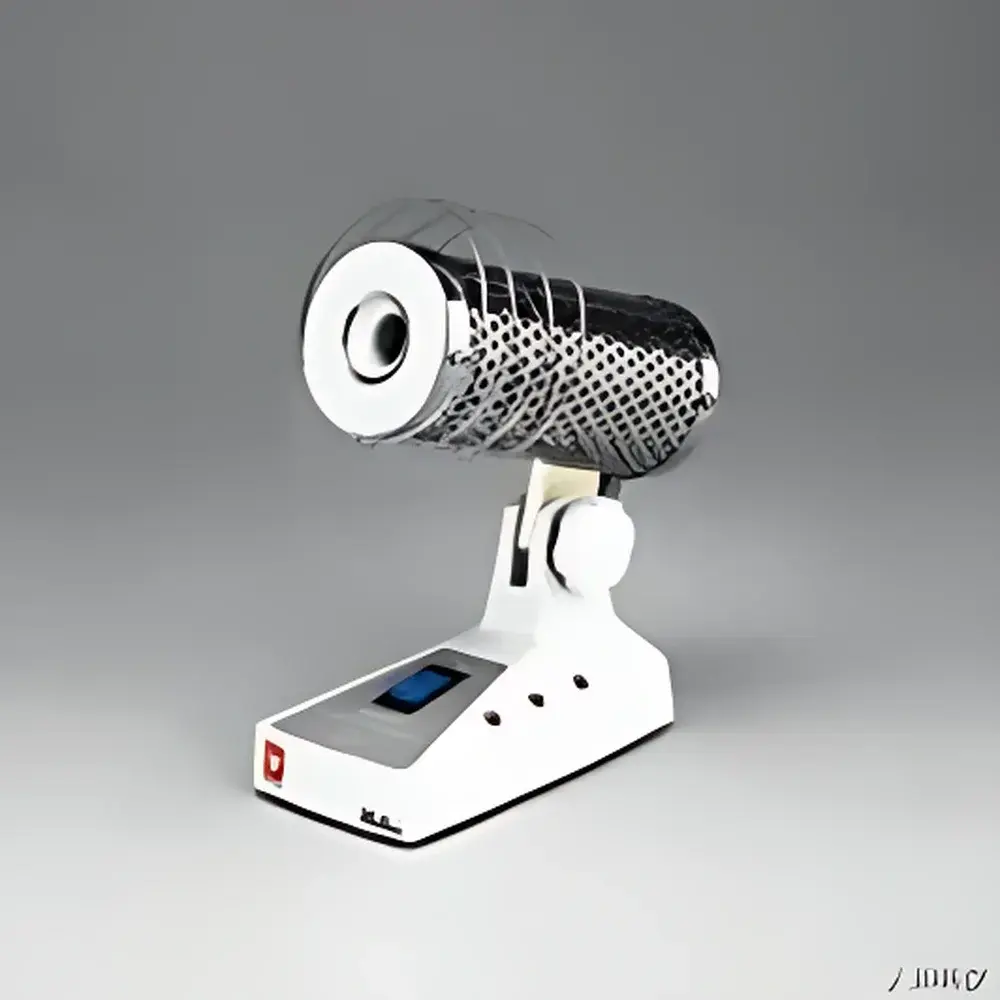
YAMATO SL-21 Needle Sterilizer
| Brand | YAMATO |
|---|---|
| Origin | Japan |
| Model | SL-21 |
| Operating Temperature Range | 800–850 °C |
| Temperature Attainment Time | ≤10 min |
| Heating Power | 130 W |
| Internal Chamber Dimensions (W×D×H) | 95 × 170 × 200 mm |
| Aperture Diameter | 15 mm |
| Power Supply | AC 100 V, 1.5 A |
Overview
The YAMATO SL-21 Needle Sterilizer is a compact, benchtop dry heat sterilization device engineered for rapid, reliable, and contained thermal decontamination of fine metallic instruments—primarily hypodermic needles, wire loops, inoculating needles, and other small laboratory tools with diameters compatible with its 15 mm aperture. Unlike open-flame sterilization using Bunsen or gas burners, the SL-21 confines the sterilization process within a thermally insulated ceramic combustion tube, eliminating aerosolized microbial dispersal and minimizing operator exposure to radiant heat and combustion byproducts. Its operation relies on resistive heating elements that achieve and maintain a precisely controlled high-temperature environment (800–850 °C) within the sterilization chamber, enabling rapid microbial inactivation through protein denaturation and oxidative degradation—mechanisms validated for dry heat sterilization per ISO 17665-1 and USP . The unit reaches operational temperature in under 10 minutes, supporting high-throughput workflows in microbiology, cell culture, and quality control laboratories where frequent, on-demand instrument sterilization is required.
Key Features
- Compact footprint (95 × 170 × 200 mm) designed for integration into biosafety cabinets, laminar flow hoods, or crowded benchtop environments without compromising accessibility.
- Ceramic-lined sterilization chamber with 15 mm internal aperture ensures uniform radial heat distribution and mechanical stability at sustained temperatures up to 850 °C.
- Resistive heating system rated at 130 W delivers rapid thermal ramp-up and stable setpoint maintenance with minimal power draw—compatible with standard AC 100 V, 1.5 A circuits.
- No consumables, gases, or external fuel sources required; eliminates risks associated with flame-based sterilization including accidental ignition, CO₂ buildup, or inconsistent thermal profiles.
- Passive cooling design with thermally isolated housing surface temperature maintained below 60 °C during operation—compliant with IEC 61010-1 safety requirements for laboratory equipment.
Sample Compatibility & Compliance
The SL-21 is intended exclusively for sterilizing solid, non-porous, heat-stable metallic implements with maximum cross-sectional dimensions ≤14 mm (to ensure full insertion and thermal equilibration). It is not suitable for plastic, coated, or temperature-sensitive materials. While not a Class B autoclave or ISO 13485-certified medical device, the SL-21 supports Good Laboratory Practice (GLP) and Good Manufacturing Practice (GMP) workflows when used as part of documented sterilization protocols for ancillary lab tools. Its consistent thermal performance aligns with ASTM E530-22 guidelines for verification of dry heat sterilizers and facilitates traceable, repeatable endpoint validation via biological indicators (e.g., Geobacillus stearothermophilus spores placed on stainless steel carriers).
Software & Data Management
The SL-21 operates as a standalone analog device with no embedded microprocessor, display, or digital interface. Temperature regulation is achieved via calibrated bimetallic thermostatic control—ensuring long-term reliability, electromagnetic immunity, and zero software-related failure modes. As such, it does not generate electronic records, nor does it support FDA 21 CFR Part 11-compliant audit trails. Users are advised to document sterilization cycles manually (e.g., time/date, operator ID, load description) in accordance with institutional SOPs. For laboratories requiring automated data capture, the SL-21 may be paired with external temperature dataloggers (e.g., compliant with ISO/IEC 17025-accredited calibration) inserted proximal to the chamber inlet.
Applications
- Routine sterilization of inoculating loops, needles, and microtools in microbiological isolation and subculturing procedures.
- Aseptic technique support in cell culture suites where flame use is prohibited due to solvent vapors or HEPA filter integrity concerns.
- Decontamination of surgical suture needles and biopsy forceps in preclinical research settings prior to reuse under validated conditions.
- Teaching laboratories requiring a safe, low-maintenance alternative to open-flame sterilization for student training in sterile technique.
- Field-deployable sterilization in mobile labs or resource-limited environments where electrical infrastructure supports only 100 V AC supply.
FAQ
What types of instruments can be safely sterilized in the SL-21?
Only solid, uncoated stainless steel or nickel-alloy tools with maximum diameter ≤14 mm and length sufficient to fully insert into the 15 mm aperture—such as bacteriological loops, straight/curved needles, and microspatulas.
Does the SL-21 require periodic calibration or certification?
While no formal recalibration is mandated, users should verify chamber temperature accuracy annually using a NIST-traceable handheld thermocouple probe inserted at the geometric center of the chamber during steady-state operation.
Can the SL-21 be used inside a biosafety cabinet?
Yes—its zero-emission, flameless operation and low surface temperature make it compatible with Class II A2 and B2 biosafety cabinets, provided adequate rear clearance (≥50 mm) is maintained for convection cooling.
Is the SL-21 compliant with ISO 13485 or FDA registration requirements?
No—it is classified as general-purpose laboratory equipment, not a medical device; however, it may be included in quality system documentation as an auxiliary sterilization tool under ISO 9001 or ISO/IEC 17025 frameworks.
How often should the ceramic combustion tube be replaced?
Under normal use (≤20 cycles/day), the tube exhibits no measurable degradation over 5+ years; visual inspection for cracks or glaze erosion is recommended quarterly.



