
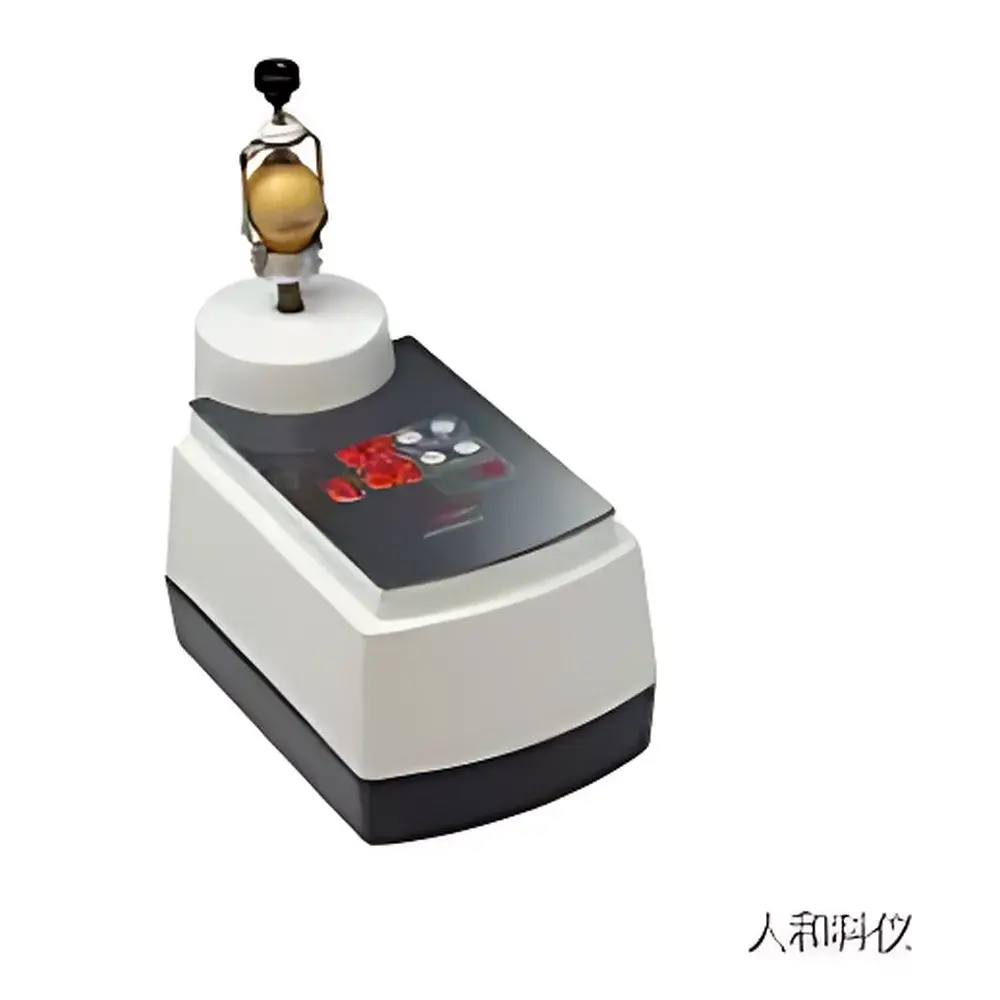
Fritsch Pulverisette 23 Micro Ball Mill
| Brand | Fritsch |
|---|---|
| Origin | Germany |
| Model | Pulverisette 23 |
| Instrument Type | Vibratory Micro Ball Mill |
| Sample Type | Dry or Suspended Solids (including Emulsions) |
| Max. Feed Size | < 6 mm |
| Final Particle Size | ≤ 10 µm |
| Batch Capacity | 5 mL |
| Vibration Frequency | 3000 min⁻¹ |
| Amplitude | 9 mm |
| Power Supply | 100–240 V, 50–60 Hz, 100 W |
| Net Weight | 15 kg |
| Dimensions (L×W×H) | 20 × 30 × 30 cm |
| Safety Certification | CE |
Overview
The Fritsch Pulverisette 23 is a high-precision vibratory micro ball mill engineered for reproducible, contamination-controlled size reduction of minute sample quantities—ideal for laboratories requiring rigorous analytical pre-treatment with minimal material consumption. Unlike conventional planetary or horizontal ball mills, the Pulverisette 23 operates on vertical high-frequency oscillation (3000 cycles per minute) with a peak-to-peak amplitude of 9 mm. This motion imparts kinetic energy via impact and shear forces between grinding balls and the inner wall of the grinding bowl, enabling efficient comminution of hard, brittle, or fibrous materials down to ≤10 µm in a single batch. Its compact footprint (20 × 30 × 30 cm), low power draw (100 W), and sealed design make it suitable for fume hood integration and routine use in QC labs, pharmaceutical R&D, geochemical sample preparation, and forensic trace analysis—where sample integrity, throughput consistency, and regulatory traceability are critical.
Key Features
- Vertical vibratory drive mechanism delivering precise, repeatable energy input—no rotational imbalance or torque-related drift
- Adjustable grinding time (digital timer, 0.01–99.99 min) with automatic shutdown and audible end-of-cycle signal
- Quick-lock grinding bowl system enabling tool-free assembly/disassembly in under 10 seconds
- Low-contact grinding geometry: small-diameter grinding balls (5–20 mm) minimize surface area exposure, reducing cross-contamination risk and wear-induced elemental leaching
- Sealed, membrane-protected keypad resistant to solvent vapors and particulate ingress
- Integrated safety interlock: motor halts instantly if lid is opened during operation; CE-certified per EN 61000-6-2/6-4 and EN 61000-3-2
- Robust brushless motor with thermal overload protection and long service life (>20,000 h MTBF)
Sample Compatibility & Compliance
The Pulverisette 23 accepts dry solids, suspended particles in aqueous or organic media, and viscous emulsions—enabling homogenization concurrent with size reduction. It accommodates feed particles up to 6 mm and delivers final particle distributions consistently below 10 µm (D₉₀), verified by laser diffraction or SEM-based validation protocols. Four bowl/ball material options—agate, zirconium oxide, stainless steel, and hardened steel—allow selection based on chemical inertness, hardness requirements, and elemental purity constraints (e.g., agate for trace-metal analysis per ISO 17025; zirconia for high-wear applications). Bowl volumes (10 mL and 15 mL) and ball diameters (5, 10, 15, 20 mm) are optimized for 5 mL nominal batch loads, ensuring optimal ball-to-sample ratio and energy transfer efficiency. The system complies with ISO 13320 (laser diffraction particle sizing), ASTM E11 (specifications for test sieves), and supports GLP/GMP workflows through documented parameter logging and operator ID tracking when paired with optional Fritsch LabSuite software.
Software & Data Management
While the base Pulverisette 23 operates via standalone digital controls, it is fully compatible with Fritsch LabSuite v3.2+—a validated PC-based platform supporting 21 CFR Part 11-compliant audit trails, electronic signatures, method versioning, and raw parameter export (grinding time, frequency, amplitude, cycle count) in CSV or XML format. All settings are stored in non-volatile memory, eliminating configuration loss during power interruption. Optional USB interface enables direct data transfer to LIMS or ELN systems. Calibration records—including vibration amplitude verification using certified accelerometer probes—and maintenance logs can be archived within the same secure environment, fulfilling documentation requirements for ISO/IEC 17025 accreditation and FDA inspection readiness.
Applications
- Preparation of homogeneous sub-10 µm powders for X-ray diffraction (XRD) phase analysis and quantitative Rietveld refinement
- Homogenization and cell lysis of biological tissues for genomic DNA extraction prior to qPCR or NGS library prep
- Reduction of catalyst pellets, mineral ores, or ceramic precursors for ICP-MS/OES digestion and elemental mapping
- Dispersion stabilization of pigment suspensions for rheological profiling and coating formulation development
- Forensic evidence processing: controlled fragmentation of trace drug residues, gunshot residue particles, or synthetic fibers without thermal degradation
- Pharmaceutical solid-state characterization: generation of representative batches for polymorph screening, dissolution testing, and stability studies under ICH Q5A guidelines
FAQ
What is the minimum sample volume required for reliable results?
The system is optimized for 1–5 mL batch loads; reproducibility is highest at ≥3 mL for dry samples and ≥2 mL for slurries, as confirmed by intra-batch CV ≤3.2% (n=6) across ten independent validation runs.
Can the Pulverisette 23 be used for cryogenic grinding?
No—this model lacks integrated cooling ports or liquid nitrogen compatibility. For cryo-applications, Fritsch recommends the Pulverisette 9 or 16 series with optional cryo-adapters.
How often does the grinding bowl require recalibration?
Amplitude calibration is recommended annually or after 500 operating hours, using a traceable piezoelectric accelerometer and Fritsch’s certified calibration kit (Order No. 08.0201.00).
Is method transfer possible between different Fritsch mills?
Yes—grinding energy input (kWh/kg) and specific impact energy (J/g) can be mathematically scaled from Pulverisette 23 parameters to larger models (e.g., Pulverisette 7) using Fritsch’s proprietary scale-up algorithm, documented in Application Note AN-23-07.
Does the instrument support remote monitoring or IoT integration?
Via optional Ethernet module (Fritsch LAN-Adapter v2.1), real-time status (motor temp, vibration load, elapsed time) and fault codes can be streamed to SCADA or lab-wide asset management platforms using Modbus TCP protocol.



