
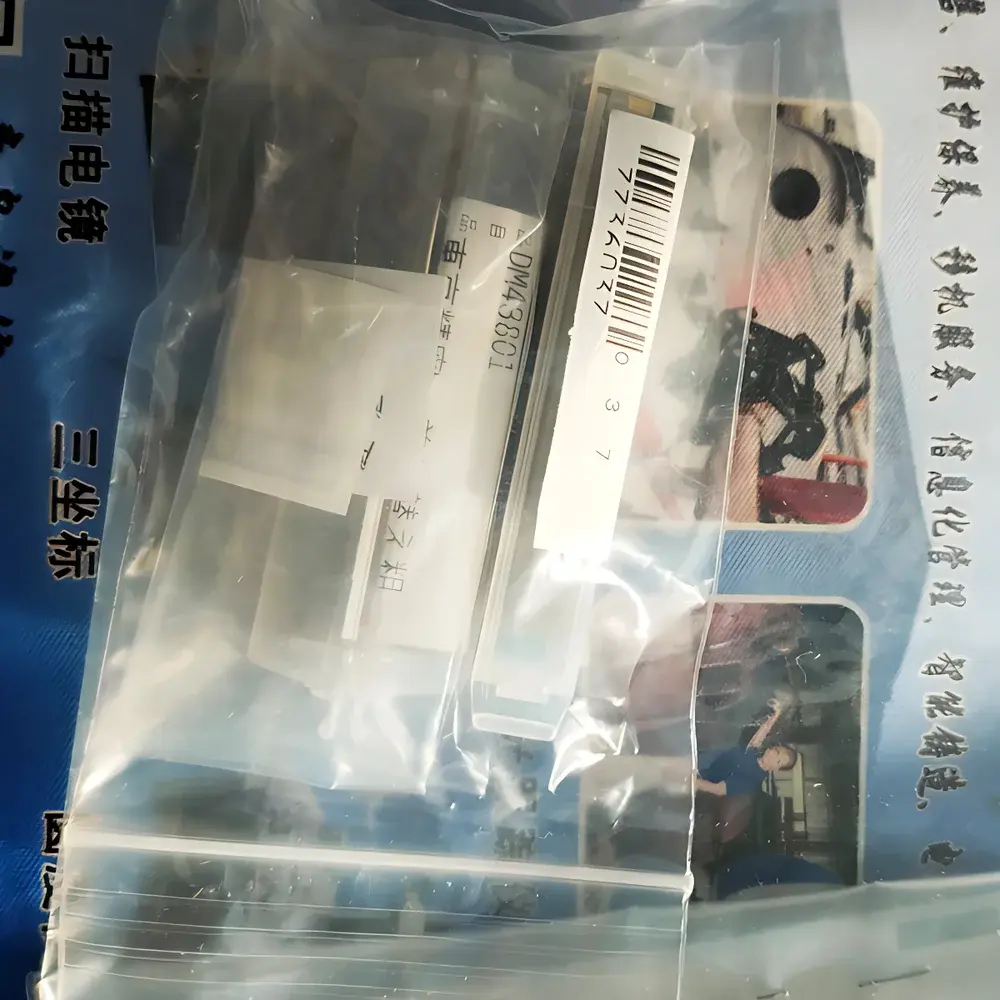
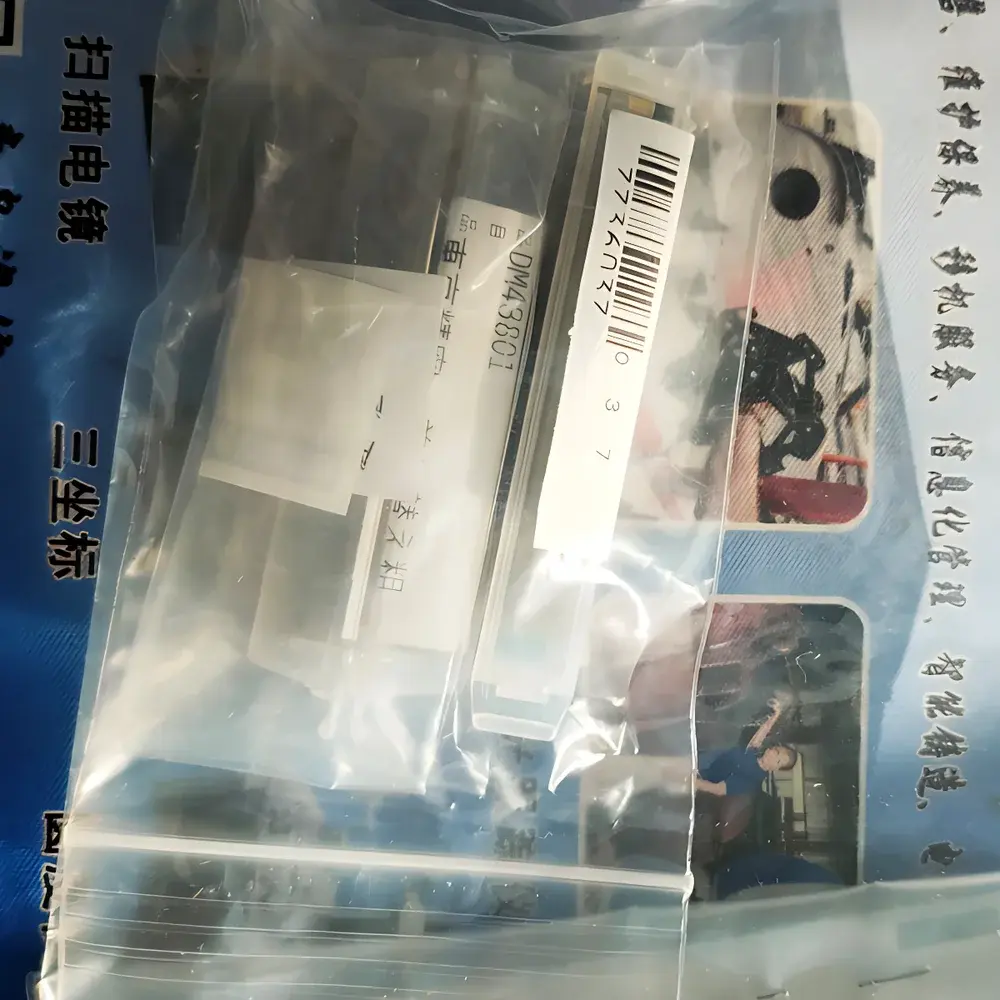
ACCRETECH DM43801 Coordinate Measuring Machine (CMM) Probe Styli
| Brand | ACCRETECH (Tokyo Seimitsu) |
|---|---|
| Origin | Japan |
| Model | DM43801 |
| Type | Standard CMM Probe Styli |
| Compliance | ISO 10360-5, VDI/VDE 2617 Part 5 |
| Mounting Interface | M3 thread (standard for most tactile CMM probe heads) |
| Ball Material | Ruby (Al₂O₃) |
| Stem Material | Stainless Steel or Carbon Fiber (configurable) |
| Total Length Definition | From rear mounting face to center of stylus ball |
| Effective Working Length (EWL) | Distance from stylus ball center to first interference point along surface normal direction |
Overview
The ACCRETECH DM43801 is a precision-engineered coordinate measuring machine (CMM) probe stylus designed for high-accuracy tactile metrology applications in dimensional inspection, GD&T verification, and quality assurance workflows. As part of Tokyo Seimitsu’s globally recognized ACCRETECH product line, the DM43801 adheres to rigorous Japanese manufacturing standards and is optimized for compatibility with industry-standard CMM probe heads—including those from Zeiss, Hexagon, Mitutoyo, and Nikon—via its M3 threaded mounting interface. Its metrological definition follows ISO 10360-5 and VDI/VDE 2617 Part 5: the total stylus length is measured from the rear mounting face to the geometric center of the ruby sphere, while the Effective Working Length (EWL) is defined as the axial distance from the sphere center to the first point of mechanical interference between the stylus stem and the workpiece surface, measured along the local surface normal. This precise geometric definition ensures traceable, repeatable probing behavior under calibrated measurement conditions.
Key Features
- High-purity synthetic ruby ball (99.9% Al₂O₃) offering exceptional wear resistance, thermal stability, and low coefficient of friction against common engineering materials including steel, aluminum, and cast iron.
- Stem options include 304 stainless steel for general-purpose robustness or lightweight carbon fiber for reduced inertial loading and improved dynamic response during high-speed scanning routines.
- Consistent sphericity tolerance ≤ 0.1 µm and surface roughness Ra < 0.02 µm on the ruby ball ensure minimal form error contribution to overall measurement uncertainty.
- Threaded M3–0.5 mm pitch interface complies with ISO 10360-5 mechanical interchangeability requirements, enabling plug-and-play integration across multiple probe head platforms without adapter dependency.
- Manufactured and certified in Japan under strict cleanroom-controlled conditions, with full batch traceability and individual calibration documentation available upon request.
Sample Compatibility & Compliance
The DM43801 stylus is suitable for contact-based measurement of machined metallic components, molded plastics, ceramics, and composite surfaces where tactile probing remains the reference method for feature localization, profile assessment, and true position validation. It supports standard GD&T callouts per ASME Y14.5 and ISO 1101, including flatness, cylindricity, concentricity, and profile of a surface. All production units comply with ISO/IEC 17025-accredited dimensional calibration practices and are compatible with CMM systems operating under GLP/GMP audit environments. Traceable calibration certificates (including EWL verification and ball center deviation data) can be supplied to meet FDA 21 CFR Part 11 and ISO 9001 documentation requirements.
Software & Data Management
While the DM43801 is a passive mechanical component, its geometric parameters—including total length, EWL, ball diameter, and stem offset—are directly integrated into CMM software platforms such as PC-DMIS, QUINDOS, Calypso, and Metrolog X4 via standardized stylus definition libraries. These values feed into kinematic correction algorithms that compensate for probe bending, thermal drift, and pre-travel hysteresis during multi-axis vector probing. When used with ACCRETECH’s proprietary CMM controller firmware (e.g., on FORMTRACE series or ROUNDTEST systems), the DM43801 enables automatic stylus qualification routines compliant with ISO 10360-5 Annex B, generating audit-ready reports with repeatability statistics (σ ≤ 0.15 µm at 95% confidence) and traceable uncertainty budgets.
Applications
- First-article inspection of aerospace turbine blades, where EWL consistency ensures accurate root-to-tip profile capture without stem collision.
- Automotive powertrain component verification—including crankshaft journals, cam lobe profiles, and gear tooth geometry—under ISO 1328 and DIN 3960 compliance protocols.
- Medical device metrology, including orthopedic implant curvature validation and dental CAD/CAM fixture alignment, requiring sub-micron form fidelity.
- Calibration laboratory use as a reference stylus in inter-laboratory comparison studies aligned with EURAMET cg-18 guidelines.
- Tooling and mold shop applications involving hardened steel cavity inspection, where ruby-on-steel interaction minimizes galling and preserves long-term ball integrity.
FAQ
What is the recommended maximum EWL for optimal accuracy with the DM43801?
For best practice, maintain EWL ≤ 3× the stylus ball diameter (e.g., ≤ 15 mm for a 5 mm ball) to limit elastic deflection-induced errors below 0.3 µm under typical probing forces (0.5–1.5 N).
Can the DM43801 be used with scanning probe heads?
Yes—when configured with carbon fiber stems and calibrated for dynamic compensation, it supports continuous scanning up to 10 mm/s on compatible analog or digital scanning heads.
Is individual stylus certification included with purchase?
Standard delivery includes batch-level conformity documentation; individual stylus calibration certificates with EWL verification and ball center deviation maps are available as an optional service.
Does ACCRETECH provide stylus modeling files for simulation?
Yes—STEP AP214 and IGES format 3D models, along with kinematic parameter tables (ball radius, stem offset, mass moment of inertia), are provided for integration into CMM path planning and virtual metrology environments.
How does thermal expansion affect DM43801 measurement stability?
Ruby exhibits a CTE of ~8 × 10⁻⁶ /°C and stainless steel ~17 × 10⁻⁶ /°C; therefore, ambient temperature control within ±1°C and thermal soak time ≥ 4 hours prior to qualification are recommended for sub-micron repeatability.
Related Products



