
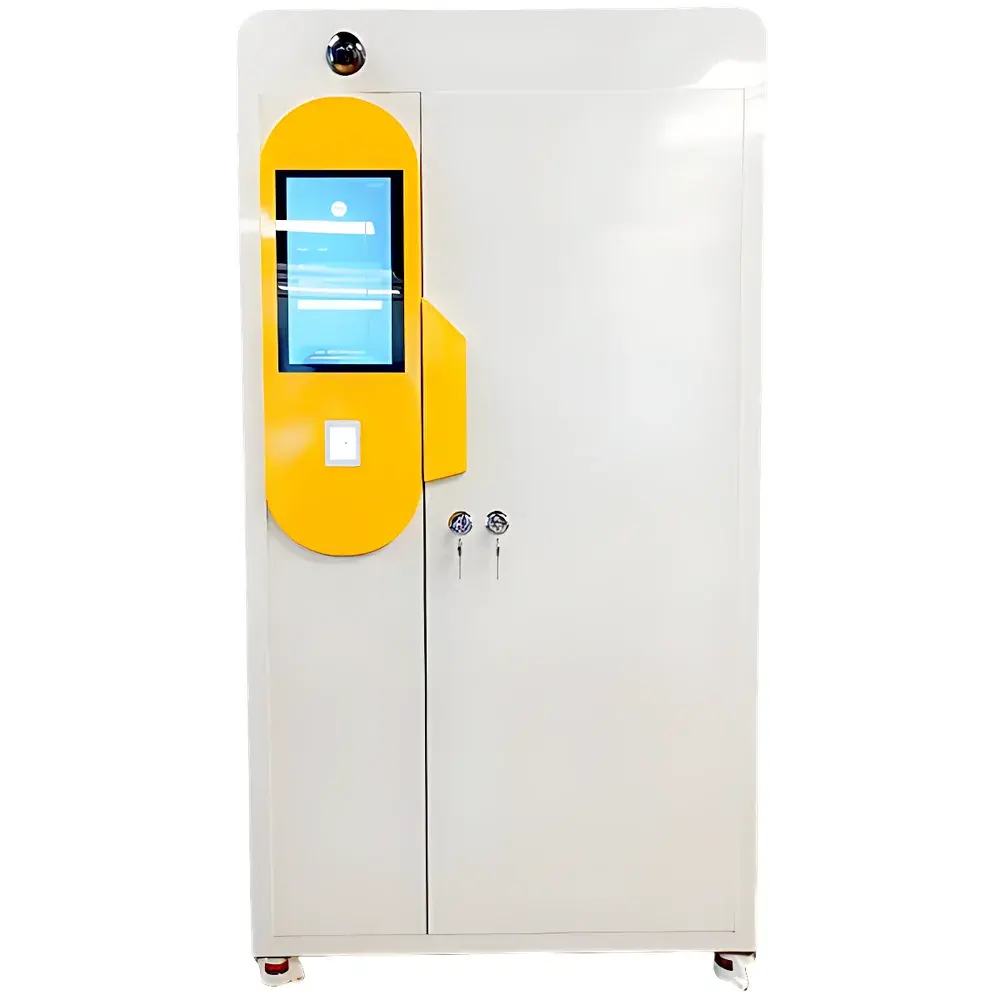
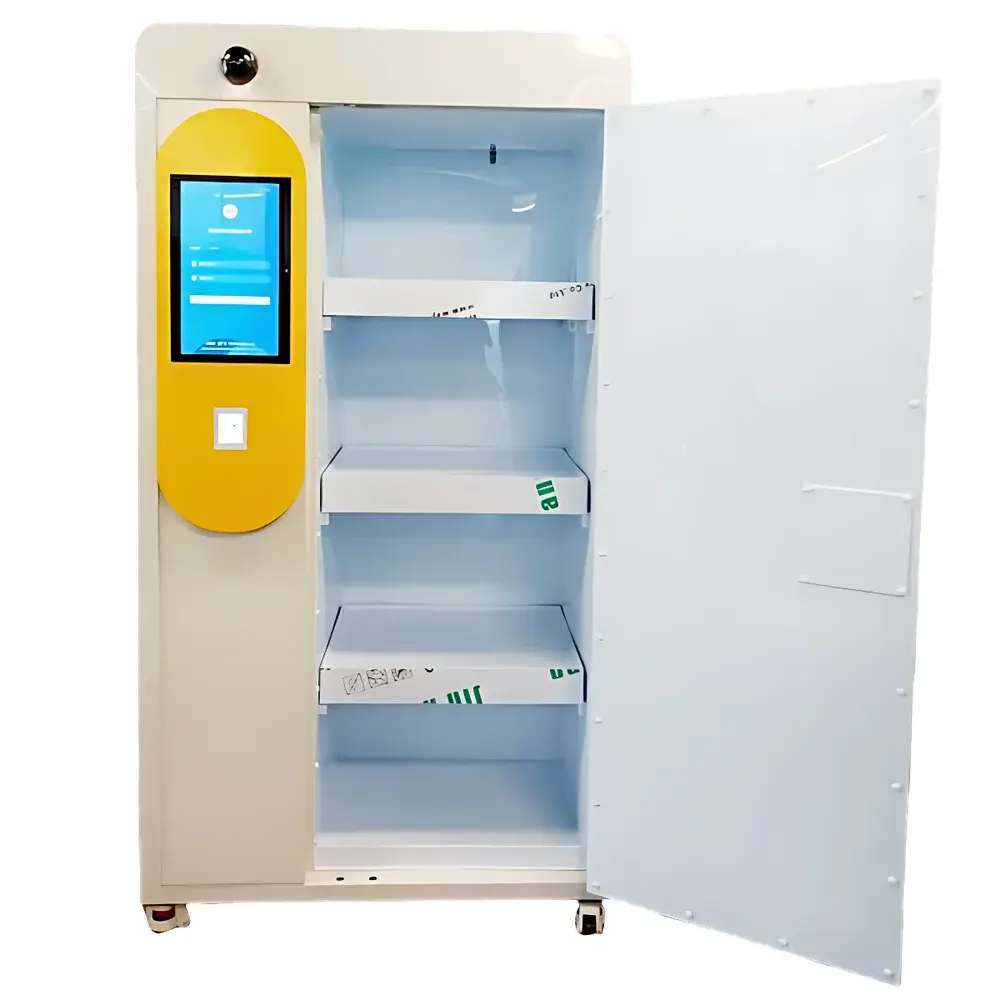
TIMIYI T0910-OLYSI Smart Hazardous Chemical Storage Cabinet
| Brand | TIMIYI |
|---|---|
| Origin | Fujian, China |
| Manufacturer Type | Direct Manufacturer |
| Product Category | Domestic |
| Model | T0910-OLYSI |
| Quotation | Available Upon Request |
| Operating System | Android Industrial Control Platform (RK3288, 4GB RAM + 16GB Storage) |
| RFID Standard | ISO 18000-6C (EPC Class 1 Gen 2) |
| RFID Chipset | Impinj R2000 |
| RFID Read Time per Reagent | 1–10 s |
| External Dimensions (L×W×H) | 1000 × 635 × 1900 mm |
| Internal Dimensions (L×W×H) | 600 × 500 × 1600 mm |
| Approx. Capacity | 100 × 500 mL standard reagent bottles |
| Construction | Cold-rolled steel housing with integrally molded polypropylene (PP) interior liner |
| Communication Interface | Ethernet (RJ45) |
| Mobility | Adjustable leveling feet and optional casters |
| Access Authentication | Built-in facial recognition + PIN code |
| Surveillance | Integrated HD camera (default), NVR support (optional) |
| Environmental Monitoring | Real-time temperature & humidity sensors (range: 0–60 °C, 10–90 %RH) |
| Weighing Module | Optional precision balance integration (4 × PP anti-spill trays included) |
| MSDS Database | Embedded library of 2,800+ hazardous chemical Safety Data Sheets |
| Compliance Support | Designed to align with China’s “Five Duals” (Dual Custody, Dual Receipt, Dual Use, Dual Transport, Dual Storage) regulatory framework for hazardous chemicals |
Overview
The TIMIYI T0910-OLYSI Smart Hazardous Chemical Storage Cabinet is an industrial-grade, networked laboratory safety cabinet engineered for secure, auditable, and traceable management of hazardous reagents in regulated research and quality control environments. Unlike conventional ventilated or fire-rated storage cabinets, the T0910-OLYSI integrates a purpose-built Android-based industrial control system (RK3288 SoC, 4GB RAM/16GB eMMC) with multi-modal identity verification, real-time environmental monitoring, and automated inventory tracking via UHF RFID (ISO 18000-6C/EPC C1G2) or barcode scanning. Its architecture adheres to the operational logic of GLP-compliant material handling—ensuring chain-of-custody integrity from receipt through dispensing, consumption, and disposal. The cabinet is not a passive containment unit but an active node within a digital laboratory infrastructure, enabling centralized oversight of chemical usage patterns, personnel accountability, and environmental stability—all critical for compliance with national hazardous substance management mandates.
Key Features
- Automated Inventory Tracking: UHF RFID readers (Impinj R2000 chipset) enable contactless, bulk identification of tagged reagent containers within 1–10 seconds; barcode scanning provides fallback compatibility with legacy labeling systems.
- Dual-Layer Access Control: Facial recognition and PIN authentication are enforced at point-of-access; dual mechanical key override satisfies emergency egress requirements and supports China’s “Five Duals” policy for high-risk chemical handling.
- Real-Time Environmental Surveillance: Integrated temperature and humidity sensors continuously log ambient conditions (0–60 °C, 10–90 %RH) with configurable alert thresholds—critical for stabilizing hygroscopic, thermolabile, or volatile compounds.
- Visual Audit Trail: Built-in HD surveillance camera records all interactions; optional NVR integration enables synchronized timestamped video with transaction logs for forensic review and internal audit readiness.
- Chemical-Specific Safety Integration: Preloaded MSDS database (2,800+ entries) delivers instant access to hazard classifications, first-aid measures, and storage compatibility guidance directly on the cabinet’s touchscreen interface.
- Corrosion-Resistant Architecture: Cold-rolled steel enclosure with electrostatically applied anti-corrosive coating; interior lined with seamless, chemically inert polypropylene (PP) to withstand exposure to acids, bases, and organic solvents.
Sample Compatibility & Compliance
The T0910-OLYSI accommodates standard laboratory reagent containers up to 500 mL (e.g., HDPE, glass, or PET bottles), with four custom-molded PP spill-containment trays designed to prevent cross-contamination and leakage during handling. Its physical design meets GB 15603–2022 (General Rules for Storage of Chemical Hazards in China) and aligns functionally with international best practices for secondary containment and access-controlled storage. While not certified to UL 1275 or EN 14470-1 as a fire-rated cabinet, its operational logic supports compliance with institutional GLP/GMP documentation requirements—including audit-trail generation, user-specific transaction logging, and tamper-evident event reporting—making it suitable for academic laboratories, hospital core labs, pharmaceutical QC facilities, and public health institutes operating under stringent internal safety governance frameworks.
Software & Data Management
The embedded TIMIYI Smart Material Management System runs natively on Android, supporting role-based user permissions, customizable workflow templates, and exportable CSV/Excel reports for inventory reconciliation, usage analytics, and regulatory submissions. All transactions—including user ID, timestamp, reagent ID, quantity dispensed (when paired with optional weighing modules), environmental readings, and associated video frames—are time-stamped and cryptographically signed to ensure data integrity. The system supports remote firmware updates and API-driven integration with LIMS or ERP platforms via Ethernet. Audit logs retain full history for ≥18 months by default and comply with principles of ALCOA+ (Attributable, Legible, Contemporaneous, Original, Accurate, Complete, Consistent, Enduring, Available) for data governance.
Applications
The T0910-OLYSI is deployed across environments where traceability, personnel accountability, and environmental stability are non-negotiable: university teaching labs managing student-accessible reagent stocks; clinical diagnostics centers controlling controlled substances and calibration standards; pharmaceutical R&D labs enforcing SOP-driven reagent issuance; and municipal environmental testing facilities requiring chain-of-custody documentation for EPA-method reagents. Its modular design allows expansion via optional satellite cabinets (T0910-series auxiliary units), enabling distributed yet centrally managed chemical inventories across multi-room laboratory complexes.
FAQ
Does the T0910-OLYSI meet fire-resistance certification standards such as UL 1275 or EN 14470-1?
No—it is not rated as a fire-resistant cabinet. It is a smart access-controlled storage system optimized for inventory traceability and environmental monitoring, not structural fire containment.
Can the RFID system read tags embedded inside metal or aluminum-laminated reagent bottles?
UHF RFID performance is attenuated by metallic shielding; TIMIYI recommends external tag placement on non-metallic label surfaces or use of specialized on-metal RFID tags compatible with ISO 18000-6C.
Is the facial recognition module compliant with GDPR or China’s PIPL for biometric data handling?
Biometric templates are stored locally on-device only, encrypted at rest, and never transmitted to cloud servers; processing occurs entirely within the cabinet’s isolated Android runtime environment.
What level of network security does the cabinet support?
It supports WPA2/WPA3 Wi-Fi encryption, static/dynamic IP assignment, VLAN tagging, and HTTPS-enabled remote configuration—enabling deployment within segmented lab networks meeting ISO/IEC 27001-aligned infrastructure policies.
How frequently are environmental sensor readings logged, and can intervals be adjusted?
Default logging interval is 5 minutes; administrators may configure intervals from 1 minute to 60 minutes via the system settings menu without requiring firmware modification.



