
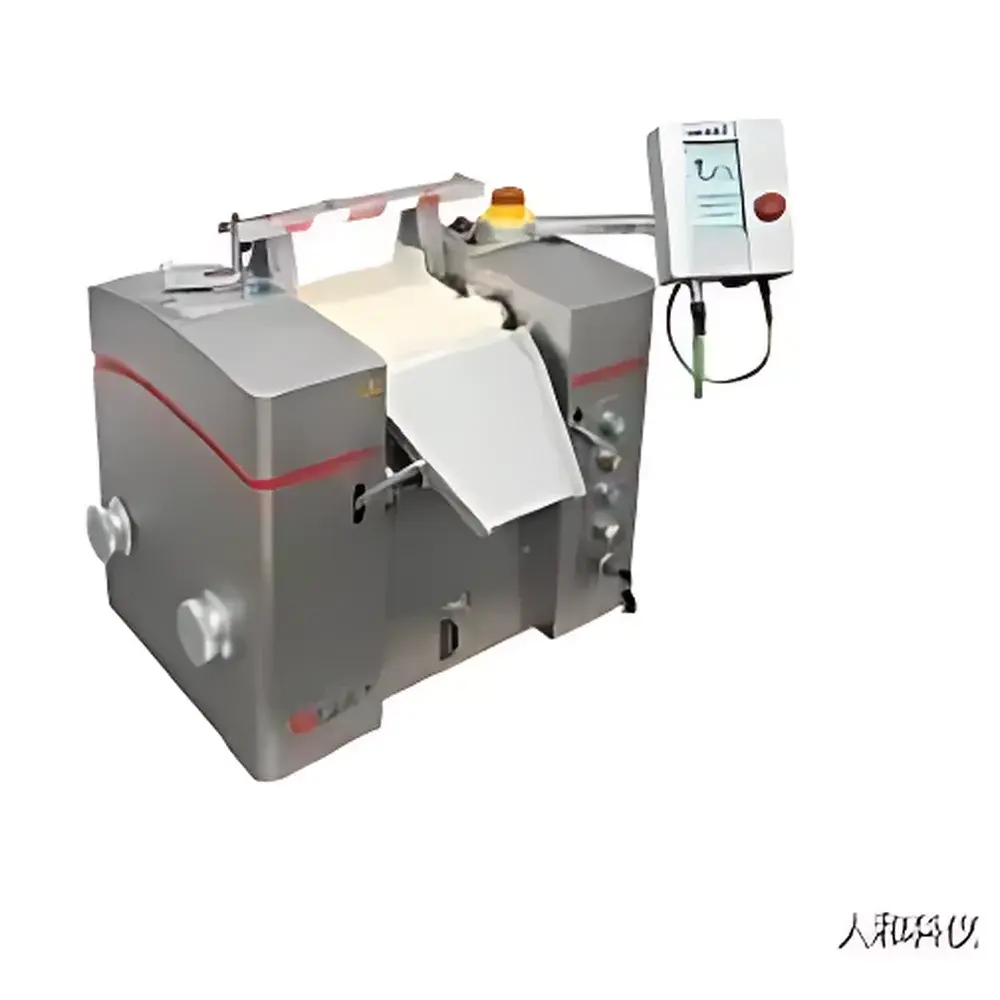
EXAKT 80Splus Electronic Control Three-Roll Mill
| Brand | EXAKT |
|---|---|
| Origin | Germany |
| Model | 80Splus |
| Instrument Type | Three-Roll Mill |
| Sample Applicability | Hard and Brittle Materials |
| Feed Particle Size | 5–180 µm |
| Final Output Particle Size | ≤1 µm |
| Throughput Capacity | 10 mL–18 L/hr |
| Adjustable Roll Gap Range | 5–230 µm |
| Roll Material Options | Chromium-Plated Stainless Steel, Tungsten Carbide, Aluminum Oxide (Al₂O₃), Silicon Carbide (SiC) |
| Housing Material Options | Stainless Steel, Sandblasted Finish, Electropolished Finish |
| Safety Compliance | CE, Exceeds ANSI B11.19 Requirements |
| Dimensions (W × D × H) | 512 × 621 × 603 mm |
| Recommended Installation Footprint | 1200 × 700 mm |
| Weight | 112–125 kg |
| Cooling System | External Circulating Water (Inlet Ø10 mm, Outlet Ø13 mm |
| Max Inlet Temp | 55 °C |
| Operating Ambient | 10–30 °C) |
| Electrical Supply | 3 × 200–240 V / 50–60 Hz |
| Power Consumption | 1300 W |
Overview
The EXAKT 80Splus Electronic Control Three-Roll Mill is a precision-engineered dispersion and size-reduction system designed for laboratory-scale formulation development and small-batch production of high-performance pastes, inks, pigments, ceramics, battery slurries, and advanced composites. Based on the classical three-roll mill principle—where material is subjected to intense shear, compressive, and extensional forces between counter-rotating rolls—the 80Splus implements precise electronic gap control, real-time process monitoring, and modular roll material selection to achieve sub-micron particle dispersion with exceptional reproducibility. Unlike conventional mills relying on mechanical micrometer adjustment, the 80Splus employs servo-driven axial positioning with digital feedback, enabling repeatable gap settings down to ±1 µm resolution across its full 5–230 µm operational range. Its robust cast-iron frame, thermally stabilized roll housing, and integrated cooling interface ensure dimensional stability during extended operation—critical for maintaining consistent rheological behavior and avoiding thermal degradation in heat-sensitive formulations.
Key Features
- Electronically controlled roll gap adjustment with digital display and memory presets for rapid method recall
- High-torque motor optimized for processing high-viscosity, abrasive, or shear-thinning materials without speed drop-off
- Real-time on-screen monitoring of roll speed (rpm), coolant inlet/outlet temperature, elapsed operation time, and instantaneous power draw (kW)
- Modular roll configuration: interchangeable roll sleeves made from chromium-plated stainless steel, tungsten carbide, aluminum oxide, or silicon carbide—selected based on wear resistance, chemical inertness, and surface hardness requirements
- CE-compliant enclosure with dual-channel safety interlocks, emergency stop circuitry, and physical barrier design exceeding ANSI B11.19 functional safety standards for roll-type machinery
- Optional integrated temperature sensor kit for direct roll-surface thermal profiling (compatible with external DAQ systems)
- Compact footprint (512 × 621 mm) with configurable housing finishes: standard stainless steel, matte sandblasted, or electropolished for pharmaceutical or ultra-clean applications
Sample Compatibility & Compliance
The 80Splus is validated for processing hard, brittle, and highly filled suspensions—including metal oxides, graphite, LiCoO₂ cathode precursors, TiO₂ pigments, and epoxy-based conductive pastes—without compromising structural integrity of sensitive additives. Its ≤1 µm final particle size output is achieved under optimized residence time and shear history, verified per ISO 13320:2020 (laser diffraction) and ASTM D2196 (viscosity and dispersion quality). The system complies with EU Machinery Directive 2006/42/EC and carries full CE marking. All electrical components meet IEC 61800-5-1 for adjustable speed drive safety. For regulated environments, the mill supports integration into GLP/GMP workflows via external logging of operational parameters (gap setting, duration, temperature, power), satisfying traceability requirements under FDA 21 CFR Part 11 when paired with compliant data acquisition software.
Software & Data Management
While the 80Splus operates as a standalone instrument with embedded microcontroller-based UI, it provides analog and digital I/O ports (0–10 V, RS-485 Modbus RTU) for seamless integration into centralized lab automation platforms. Process parameters—including gap position, roll speed, coolant delta-T, and cumulative energy input—are exportable as timestamped CSV files for post-run analysis. Optional EXAKT LabLink software enables remote parameter configuration, multi-method recipe storage, and automated calibration logging—supporting audit-ready documentation for quality assurance departments. No proprietary cloud service or mandatory subscription is required; all firmware updates are delivered via secure USB firmware loader.
Applications
- Development and scale-down validation of electrode slurry dispersion protocols for lithium-ion battery manufacturing
- Rheological conditioning of ceramic green tapes and LTCC pastes prior to tape casting
- Stabilization of quantum dot inks and perovskite precursor dispersions for printed electronics
- Particle de-agglomeration in high-refractive-index optical coatings and UV-curable flexo inks
- Preparation of nanocomposite masterbatches for additive manufacturing feedstocks
- Quality control testing of pigment grinding efficiency in automotive and industrial paint R&D
FAQ
What roll materials are recommended for processing highly abrasive battery cathode materials?
Tungsten carbide or silicon carbide roll sleeves are strongly recommended for LiNiMnCoO₂ (NMC) or LiFePO₄ slurries due to their Vickers hardness (>2200 HV) and resistance to mechanical wear under high-shear, high-solid-loading conditions.
Can the 80Splus be integrated into an automated production line?
Yes—via its RS-485 Modbus interface and programmable digital I/O, the mill supports synchronized start/stop, gap modulation, and status reporting within PLC-controlled environments.
Is operator training provided with installation?
EXAKT-certified field engineers conduct on-site commissioning, including safety verification, gap calibration, and SOP development tailored to the user’s typical material matrix.
Does the system support continuous feed mode?
The 80Splus is configured for batch or semi-continuous operation; for true continuous throughput >18 L/hr, EXAKT recommends pairing with the 110S series or integrating with volumetric dosing pumps and inline viscometry.
What maintenance intervals are specified for roll alignment and bearing inspection?
Roll parallelism verification is recommended every 500 operating hours; main drive bearings are rated for 20,000 hr MTBF and require lubrication only at 5-year intervals under normal ambient conditions.



