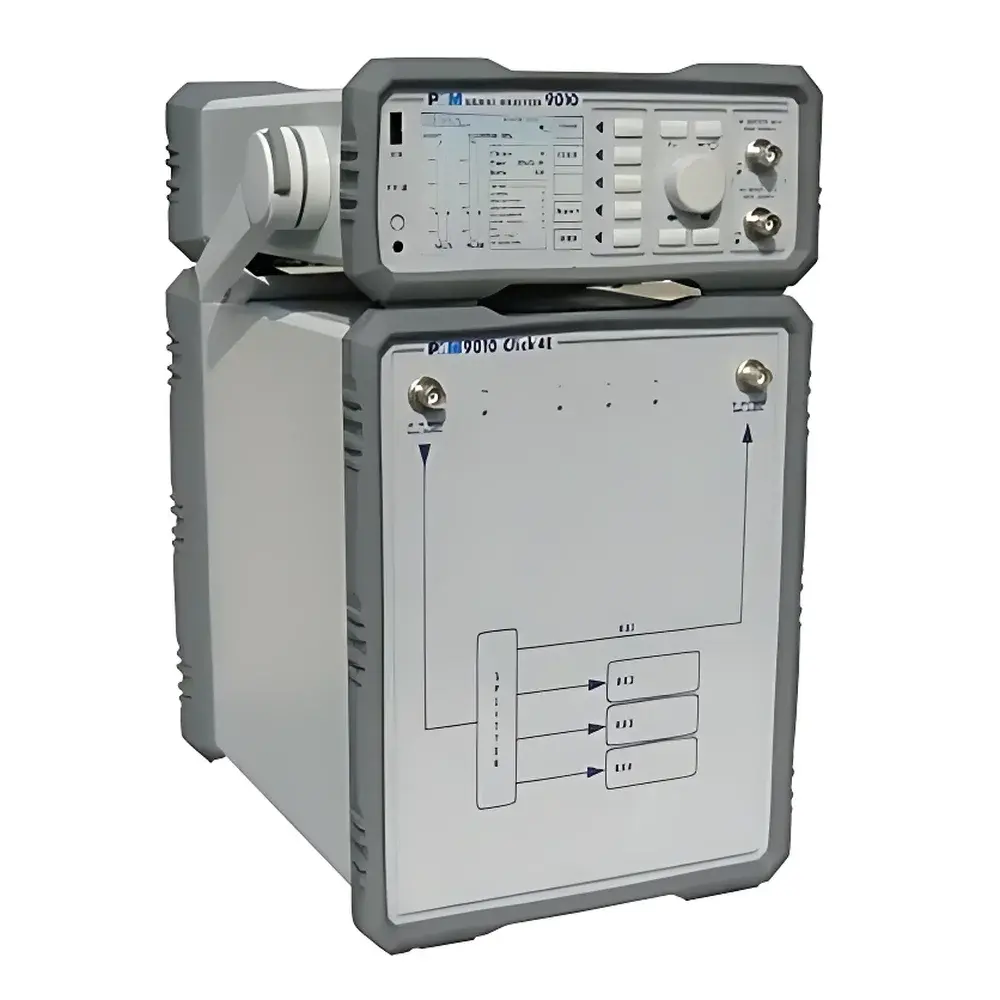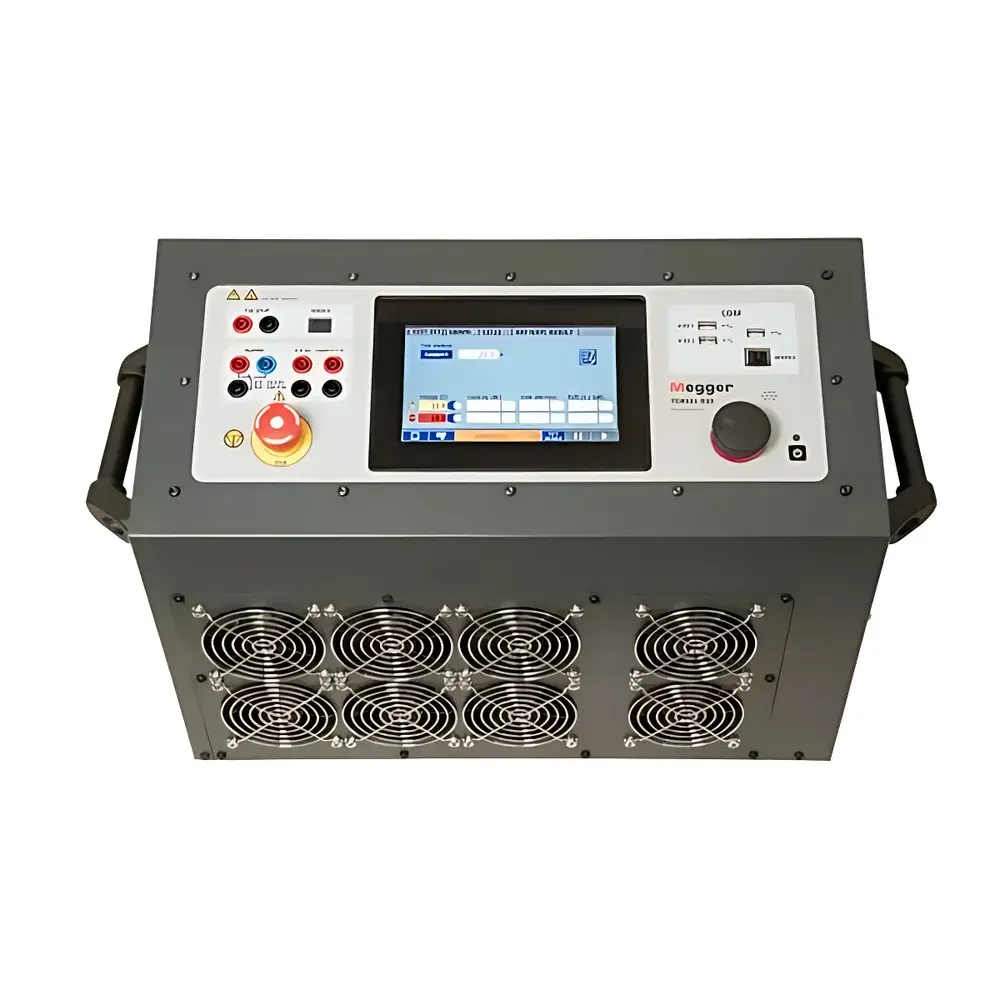
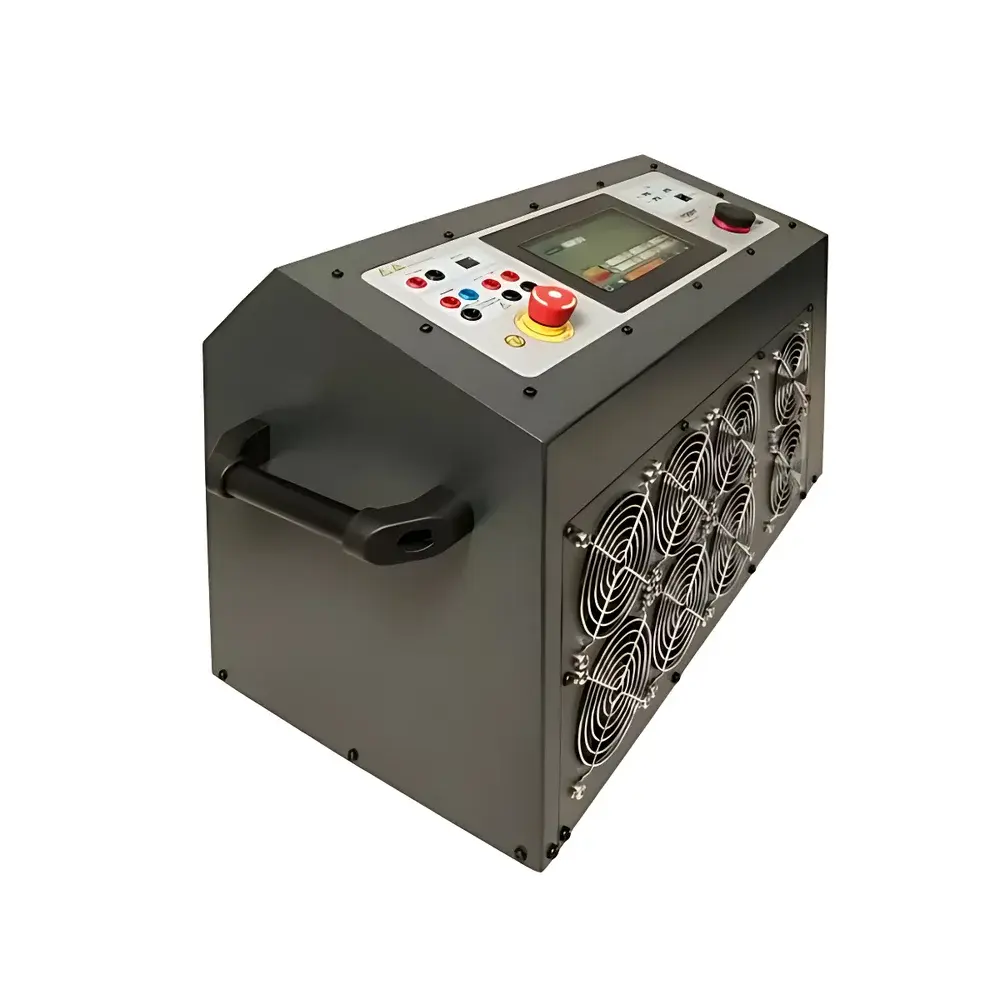
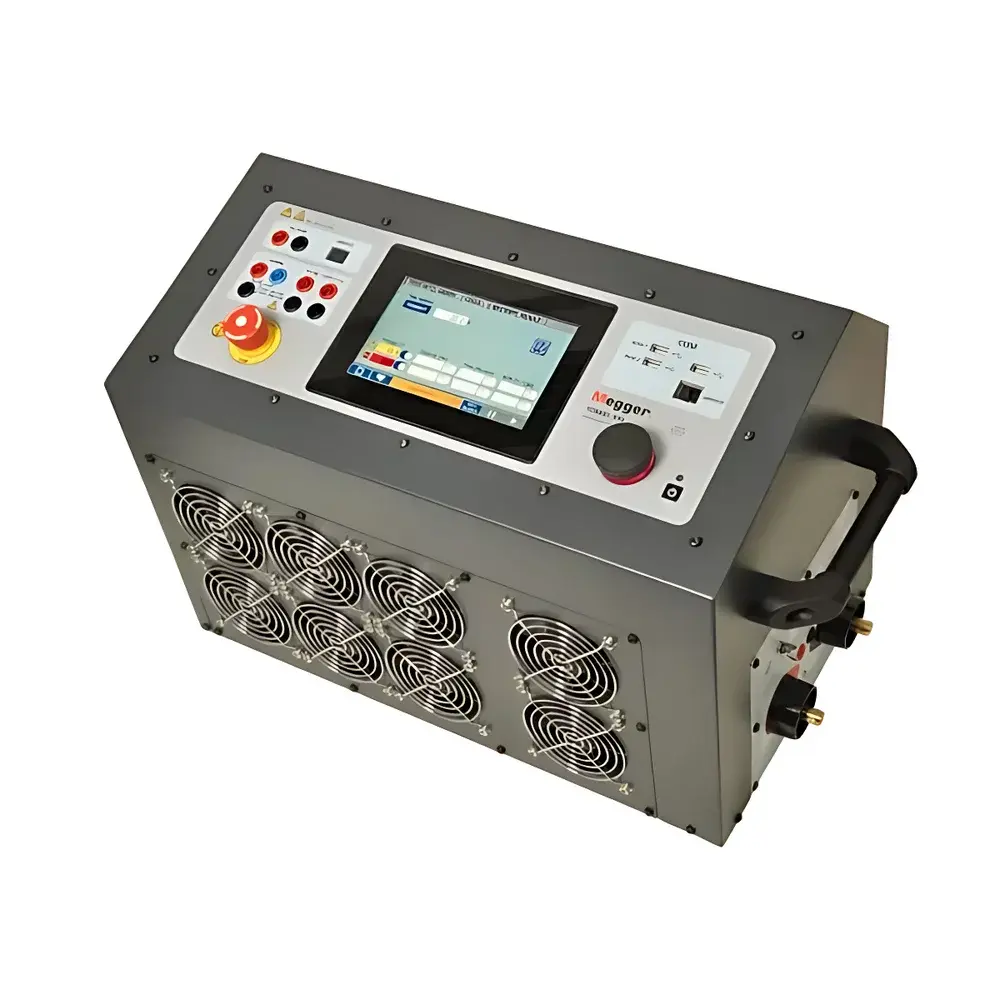
Megger TORKEL900/TORKEL910 Battery Discharge Test System
| Brand | Megger |
|---|---|
| Origin | United Kingdom |
| Model | TORKEL900/TORKEL910 |
| Maximum Discharge Current | 220 A |
| Operating Modes | Constant Current, Constant Power, Constant Resistance, Programmable Load Profile |
| Integrated Data Logging | Voltage, Capacity, Time |
| Safety Features | Spark-Free Connection, Emergency Fuse, Auto-Discharge Termination, Hardware Emergency Stop |
| Interface | 7" Touchscreen Display, USB Storage Port, Ethernet (Service Only), Isolated TXL Stop Output, Relay Alarm Output, DC 9 V Auxiliary Supply, I_EXT ≤ 1 V External Current Input |
| Compliance | Designed for IEC 61000-4 Immunity, EN 61010-1 Safety, and Compatible with IEEE 450 / IEEE 1188 Maintenance Standards |
| Software Export | CSV via USB flash drive |
Overview
The Megger TORKEL900 and TORKEL910 Battery Discharge Test Systems are fourth-generation, microprocessor-controlled instruments engineered for precision, safety, and operational continuity in stationary battery maintenance. Based on the fundamental principle of controlled resistive load discharge, these systems quantify actual battery capacity by applying a calibrated electrical load while continuously monitoring terminal voltage, elapsed time, and cumulative ampere-hours delivered. Unlike impedance-based estimations, discharge testing remains the only method recognized by IEEE 450 and IEEE 1188 as definitive for determining true state-of-health (SOH) and end-of-life thresholds in valve-regulated lead-acid (VRLA), flooded lead-acid, and nickel-cadmium (NiCd) battery strings. The TORKEL900/910 is specifically designed for in-situ testing—meaning batteries remain connected to their associated DC power systems (e.g., UPS, telecom rectifiers, substation control panels) during evaluation. This capability eliminates operational downtime and avoids the risks associated with isolation and reconnection, while enabling real-time assessment of system-level current contribution via optional DC clamp meters interfaced through the I_EXT input.
Key Features
- Multi-mode discharge control: user-selectable constant current (CC), constant power (CP), constant resistance (CR), or programmable load profile—enabling simulation of dynamic load conditions such as those seen in data center or utility grid applications.
- Integrated safety architecture: spark-free connection detection, dual-stage voltage-based termination (warning alarm at pre-set threshold; automatic shutdown at critical low-voltage limit), redundant emergency stop circuit with mechanical reset, and thermally protected internal fusing.
- High-current scalability: single-unit maximum discharge current of 220 A; parallel operation support for TORKEL units or external TXL load banks extends total capacity without compromising synchronization or data integrity.
- Self-contained test execution: all parameters—including discharge setpoints, termination criteria, and real-time measurements—are stored internally and require no external PC during operation.
- 7-inch industrial-grade capacitive touchscreen interface with intuitive menu navigation, contextual help prompts, and on-screen graphing of voltage vs. time during active discharge.
- Dedicated hardware interfaces: isolated TXL stop output (galvanically separated relay contact), alarm relay output (SPDT, 250 VAC/2 A), 9 V DC auxiliary supply for clamp meter powering, and low-impedance I_EXT input (≤1 V full-scale) compatible with industry-standard shunts and Hall-effect clamps.
Sample Compatibility & Compliance
The TORKEL900/910 supports nominal DC system voltages from 20 V to 600 V, accommodating single-cell through multi-string configurations across telecommunications, uninterruptible power supply (UPS), railway signaling, and electrical utility protection systems. It complies with EN 61010-1:2010 for measurement category CAT III 600 V and pollution degree 2, ensuring safe operation in industrial control environments. Electromagnetic compatibility meets IEC/EN 61000-4-2 (ESD), -4-3 (Radiated RF), -4-4 (EFT), and -4-5 (Surge) standards. While not certified to FDA 21 CFR Part 11, its data export workflow (CSV via USB) supports GLP/GMP-aligned documentation practices when paired with validated laboratory information management systems (LIMS). All firmware and calibration procedures adhere to Megger’s ISO 9001-certified quality management system.
Software & Data Management
No proprietary software installation is required for basic operation or data retrieval. All test records—including start/stop timestamps, setpoint definitions, real-time voltage/capacity curves, and termination events—are timestamped and stored in non-volatile memory. Data export occurs exclusively via standard USB 2.0 flash drives in comma-separated value (CSV) format, enabling direct import into Excel, MATLAB, or enterprise asset management (EAM) platforms. The Ethernet port is reserved exclusively for remote diagnostics and firmware updates by authorized Megger service personnel—no network-based control or data streaming is implemented, preserving air-gapped security in critical infrastructure settings. Optional BVM1/BVM2 battery voltage monitors connect via dedicated USB ports to provide per-cell voltage tracking synchronized with main discharge data.
Applications
- Routine capacity verification of standby battery banks per IEEE 450 and manufacturer-recommended intervals.
- Commissioning validation of newly installed battery systems prior to handover.
- Troubleshooting underperforming strings identified via routine impedance testing.
- Life-cycle trending analysis across multiple discharge cycles to model degradation rate and forecast replacement timing.
- Verification of battery response under simulated peak-load conditions using programmable profiles.
- Audit-ready documentation for regulatory compliance in healthcare (JCAHO), finance (FFIEC), and energy sectors (NERC PRC-005).
FAQ
Can the TORKEL900/910 perform discharge testing while the battery remains online?
Yes. The instrument is engineered for live-system testing with integrated current measurement via external DC clamp meters, eliminating the need to disconnect batteries from their DC distribution network.
What happens if battery voltage drops below safe operating limits during discharge?
The unit triggers a visual and audible alarm at a user-defined warning threshold, then automatically terminates discharge and opens the load circuit when voltage reaches the critical cutoff level—preventing deep discharge damage.
Is parallel operation of multiple TORKEL units supported?
Yes. Units can be synchronized via master-slave configuration to scale discharge current beyond 220 A while maintaining coordinated control and unified data logging.
How is test data transferred to a PC?
Via standard USB flash drive in CSV format—no drivers or software installation required.
Does the TORKEL900/910 include built-in cell-level voltage monitoring?
No. Cell-level monitoring requires optional BVM1 or BVM2 modules, which connect directly to the TORKEL’s dedicated USB ports and integrate readings into the main discharge dataset.