
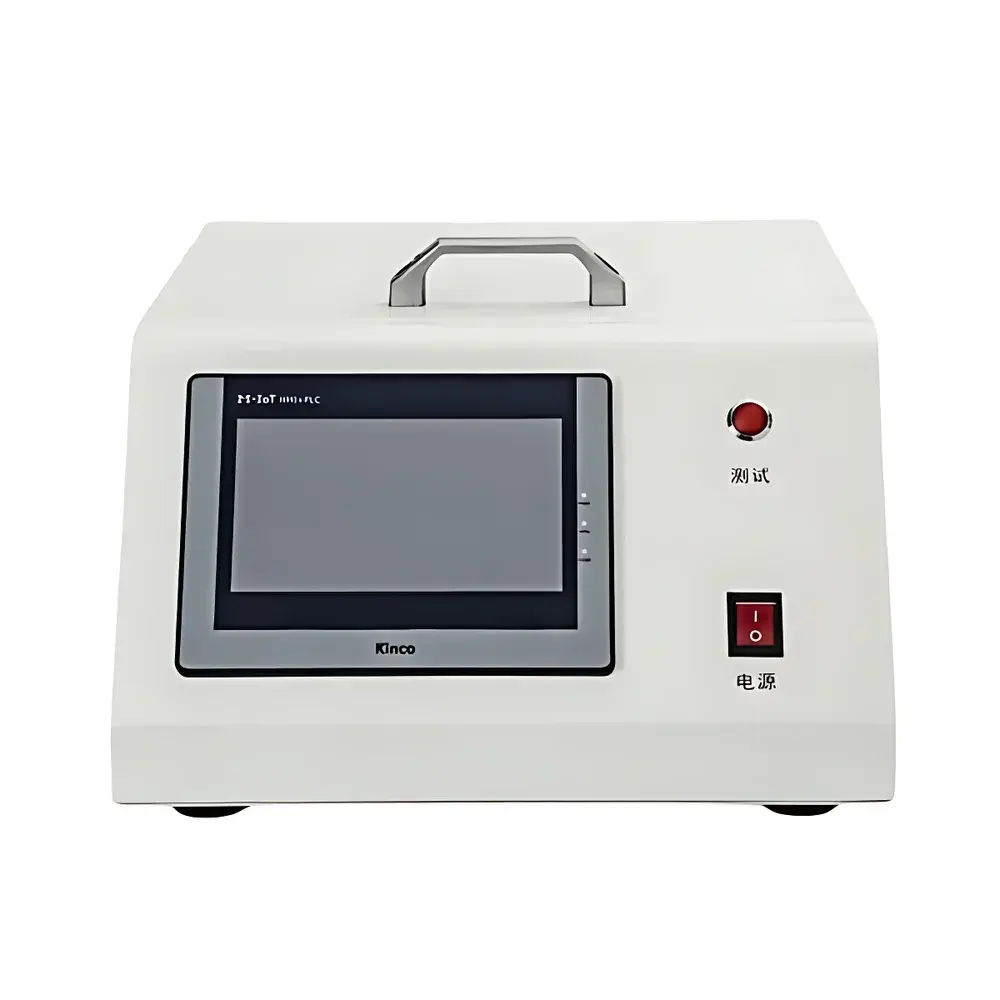
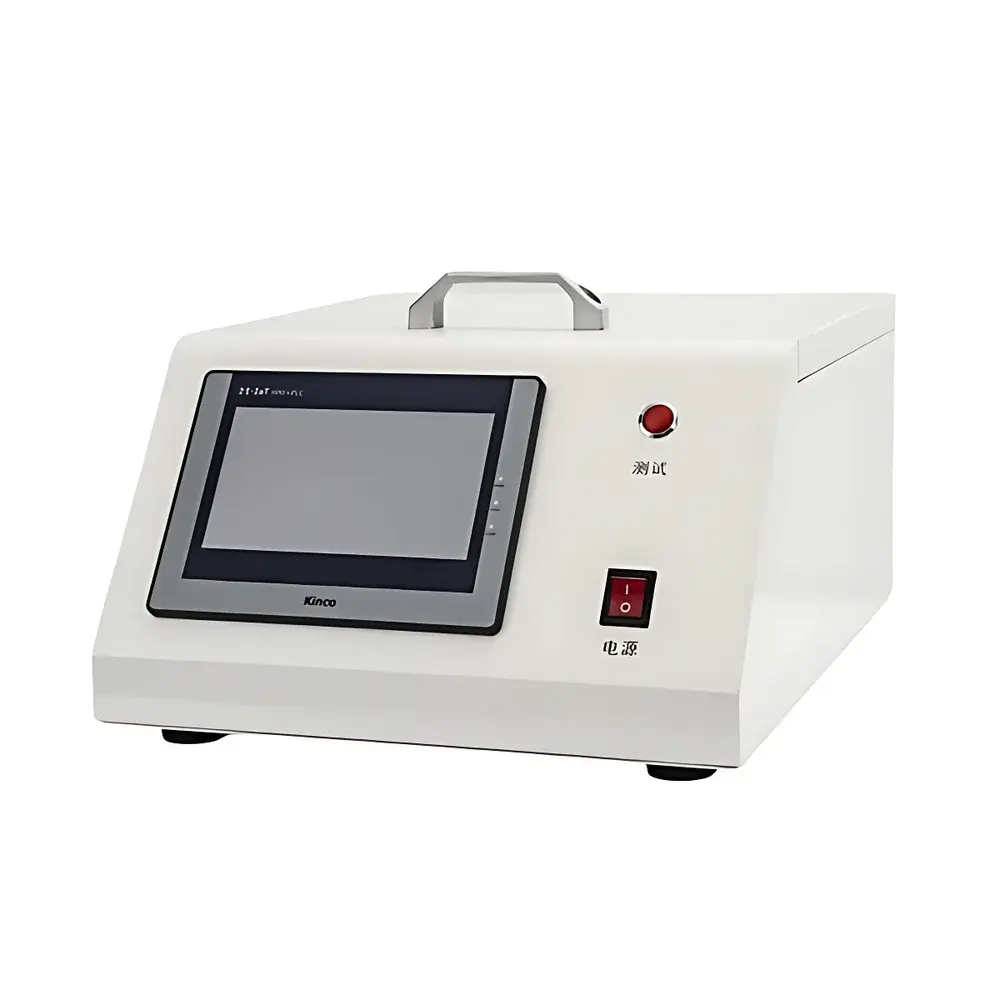
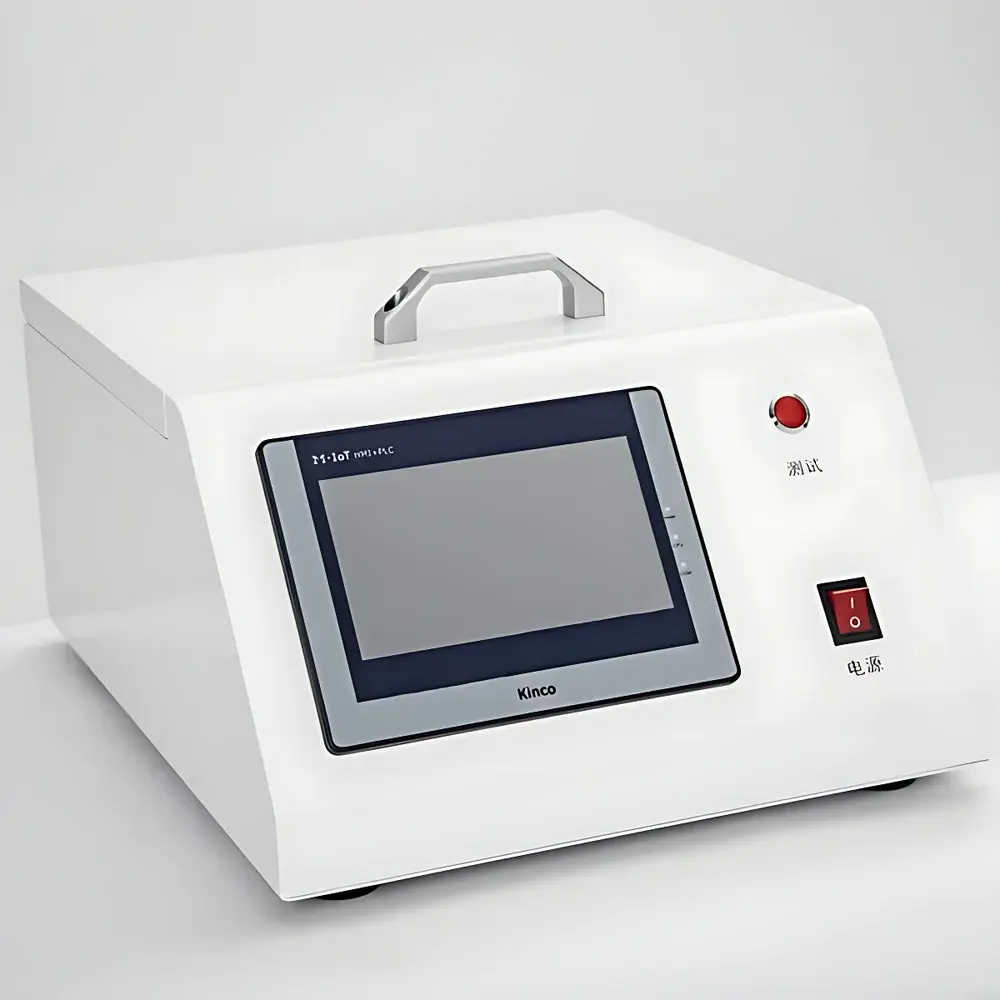
Aerospace ZST-212 High-Resistance Meter for Insulating Materials
| Brand | Aerospace |
|---|---|
| Origin | Beijing, China |
| Model | ZST-212 |
| Measurement Range | 10⁶ Ω to 10¹⁸ Ω |
| Test Voltages | 10 V, 100 V, 250 V, 500 V, 1000 V DC |
| Input Impedance | >10¹⁴ Ω |
| Current Measurement Sensitivity | down to 1 fA |
| Compliance | IEC 60093, IEC 62631-3-1, ASTM D257, GB/T 1410 |
| Electrode Configuration | Tri-electrode system with guard ring |
| Environmental Operating Conditions | 23 ± 2 °C, 50 ± 5 % RH |
| Data Output | Digital LCD display with real-time current/resistance readout |
| Power Supply | AC mains with internal voltage regulation and EMI filtering |
Overview
The Aerospace ZST-212 High-Resistance Meter is a precision instrument engineered for the accurate measurement of extremely high electrical resistance values—spanning from 10⁶ Ω to 10¹⁸ Ω—in solid insulating materials. It operates on the fundamental principle of Ohm’s Law (R = V/I), where a stable, user-selectable DC test voltage (10 V to 1000 V) is applied across the sample, and the resulting ultra-low current—down to the femtoampere (fA) level—is measured via a guarded electrostatic amplifier circuit. Its core architecture integrates a tri-electrode configuration with an active guard ring to eliminate surface leakage currents and parasitic capacitance effects, ensuring metrological integrity in volume and surface resistivity determinations. Designed specifically for rubber, plastic, polymer films, ceramics, and composite insulation systems, the ZST-212 meets the stringent physical and electrical requirements of ISO/IEC 17025-accredited laboratories and industrial QC environments.
Key Features
- Electrostatic-grade input stage with >10¹⁴ Ω input impedance and <1 fA input bias current, minimizing loading error on ultra-high-impedance samples.
- Five programmable DC test voltages (10 V, 100 V, 250 V, 500 V, 1000 V) optimized for material-specific polarization behavior and dielectric strength thresholds.
- Integrated guard-ring circuitry compliant with IEC 60093 methodology, enabling true volume resistivity (ρ) and surface resistivity (σ) separation per ASTM D257 Annex A3.
- Stable, low-noise power supply with multi-stage filtering and internal temperature-compensated voltage reference, reducing drift to <0.05 %/°C over operating range.
- Digital LCD interface with simultaneous display of resistance value, applied voltage, measured current, and elapsed stabilization time—supporting timed measurements up to 600 seconds.
- Robust aluminum-shielded chassis with coaxial guarded cabling and gold-plated tri-electrode terminals to suppress electromagnetic interference (EMI) and triboelectric noise.
Sample Compatibility & Compliance
The ZST-212 is validated for use with standardized geometries defined in IEC 62631-3-1 and GB/T 1410, including disk-shaped specimens (e.g., 100 mm diameter × 1–5 mm thickness), sheet films, and molded elastomeric parts. It supports both two-terminal (for bulk resistance estimation) and three-terminal (guard-enabled) configurations. Electrode materials—including brass with silver paint, conductive rubber, or vacuum-deposited gold—are compatible with its low-contact-resistance input design. All measurements adhere to GLP-aligned documentation protocols: automatic timestamping, operator ID logging (via optional USB keyboard), and pass/fail threshold alerts based on preloaded specification limits. The instrument satisfies essential requirements of ISO/IEC 17025 Clause 5.5.2 for calibration traceability and is supplied with NIST-traceable short-circuit and open-circuit verification certificates.
Software & Data Management
While the ZST-212 operates as a stand-alone benchtop unit, its RS-232 and optional USB-C interface enable direct integration with laboratory information management systems (LIMS) and statistical process control (SPC) platforms. ASCII-formatted data streams include resistance (Ω), resistivity (Ω·cm or Ω/sq), test voltage (V), current (A), measurement duration (s), and environmental metadata (if external温湿度 sensor is connected). Firmware supports configurable averaging (1–10 readings), auto-ranging with overload protection, and compliance-mode presets aligned with ASTM D257 Section 8 (standardized conditioning) and IEC 60093 Clause 6.3 (electrode application protocol). Audit trails—required under FDA 21 CFR Part 11 for regulated environments—can be enabled via third-party middleware; raw data files are generated in CSV format with cryptographic hash verification.
Applications
- Volume resistivity evaluation of silicone rubber gaskets, EPDM seals, and polyimide film substrates used in aerospace wiring harnesses.
- Surface resistivity mapping of antistatic polyethylene packaging films per ISO 18080-2 for pharmaceutical primary packaging validation.
- Quality conformance testing of cross-linked polyethylene (XLPE) cable insulation per IEC 60502-2 Annex B.
- R&D characterization of nanocomposite dielectrics (e.g., BaTiO₃-filled PVDF) where interfacial charge trapping influences long-term insulation performance.
- Failure analysis of printed circuit board (PCB) solder mask contamination via localized surface resistance profiling using point-contact electrodes.
FAQ
What standards does the ZST-212 support for volume and surface resistivity testing?
It fully implements IEC 60093, ASTM D257, and GB/T 1410 methodologies—including electrode geometry definitions, conditioning requirements (23 ± 2 °C / 50 ± 5 % RH), and calculation formulas for ρ and σ.
Can the instrument measure both volume and surface resistance simultaneously?
No—it performs sequential measurements using dedicated electrode arrangements; however, its tri-electrode guard mode isolates volume current paths during volume resistivity tests, eliminating surface conduction artifacts.
Is calibration traceable to national metrology institutes?
Yes—each unit ships with a certificate of calibration traceable to CNAS-accredited labs, with uncertainty budgets reported per ISO/IEC 17025 Annex C for resistance values at 100 V, 500 V, and 1000 V test points.
How does the guard ring improve measurement accuracy?
The guard ring is maintained at the same potential as the measuring electrode, diverting surface leakage currents away from the input amplifier—reducing measurement error by up to two orders of magnitude compared to unguarded configurations.
What is the minimum measurable current and corresponding resistance resolution?
At 1000 V test voltage, the instrument resolves currents ≥1 fA, enabling reliable quantification of resistances up to 10¹⁸ Ω with repeatability better than ±2 % (k=2) under controlled environmental conditions.






