
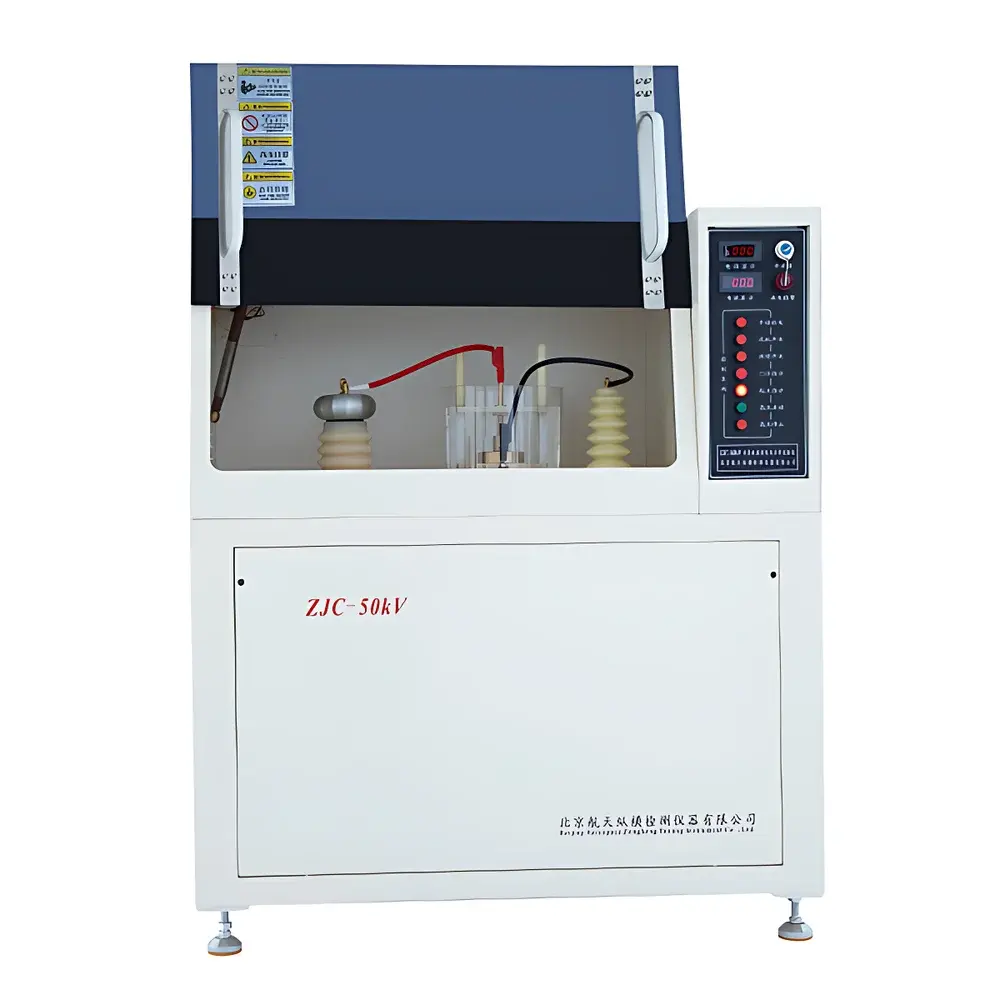
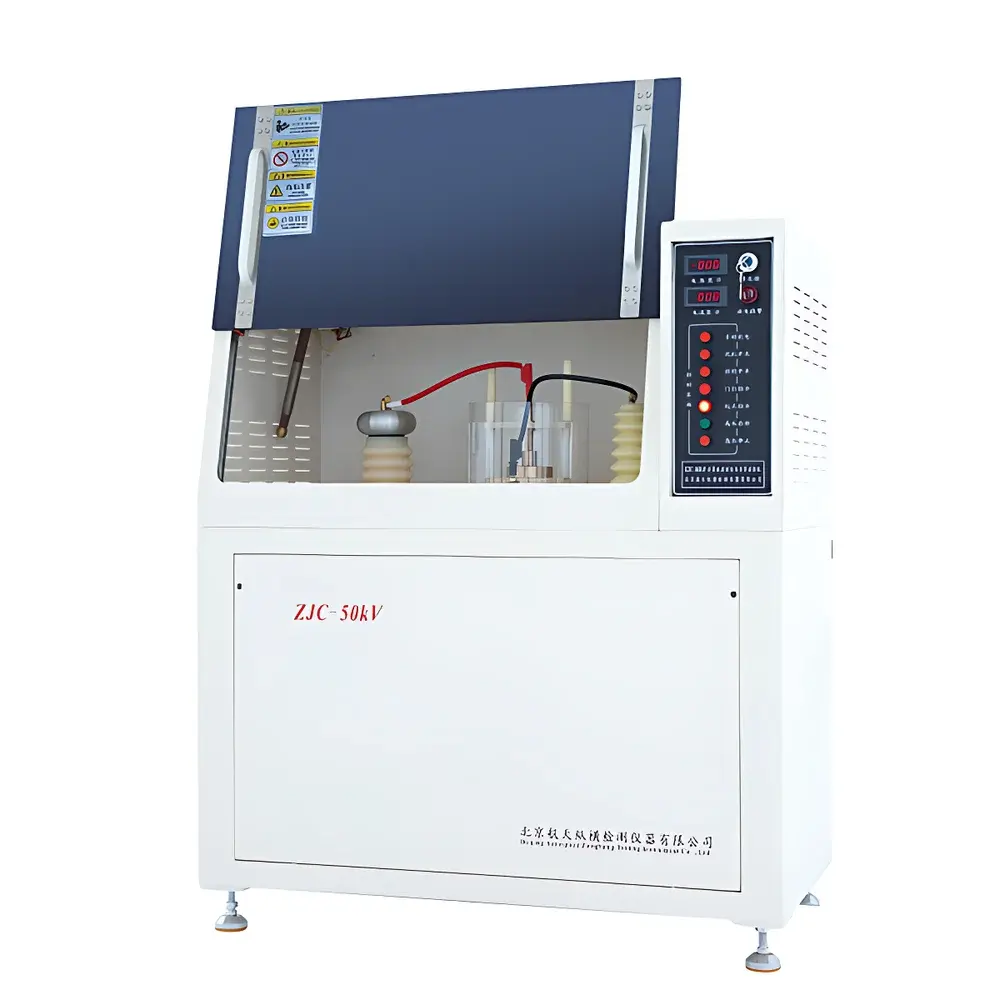
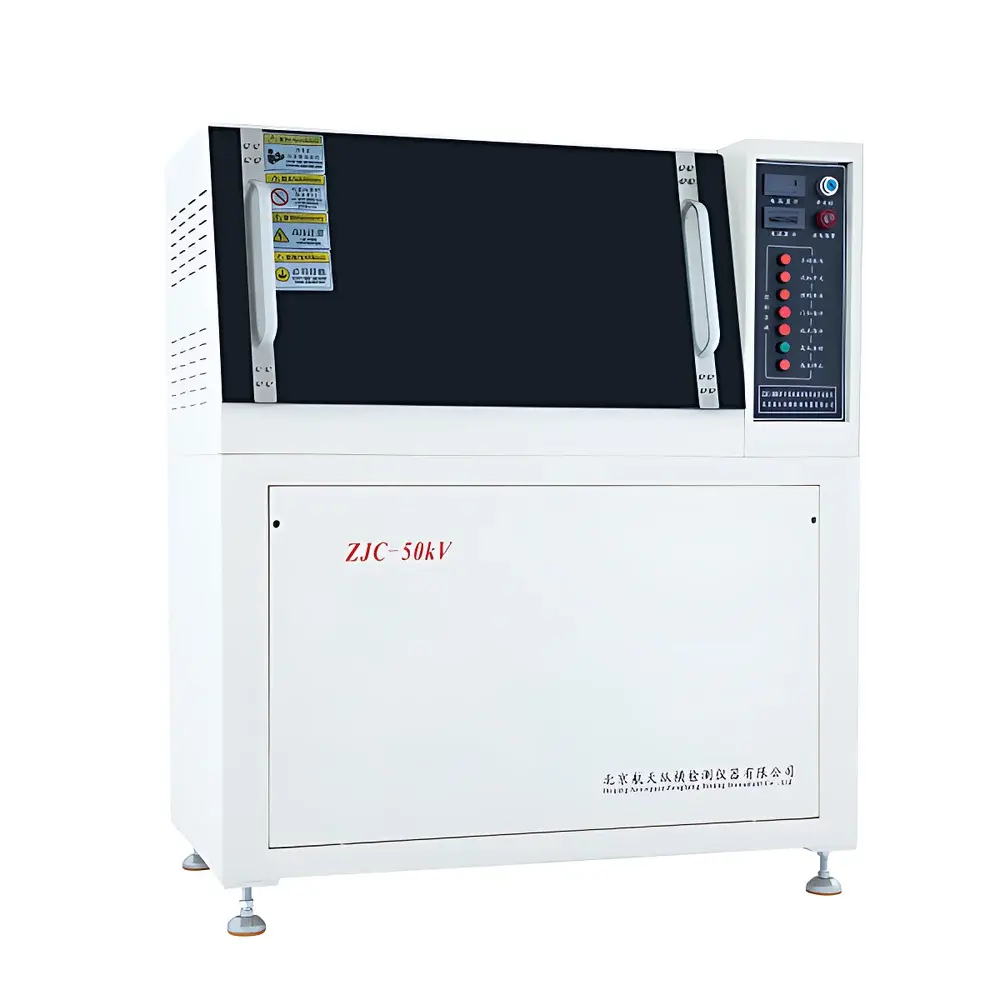
Aerospace ZJC-50kV Dielectric Strength Tester
| Brand | Aerospace |
|---|---|
| Origin | Beijing, China |
| Model | ZJC-50kV |
| Dielectric Breakdown Voltage | 50 kV |
| Compliance | GB/T 1408.1, IEC 60243-1, ASTM D149 |
| Voltage Type | AC/DC selectable |
| Electrode Configuration | Standard spherical/cylindrical electrodes (brass) |
| Safety Enclosure | Interlocked grounded test chamber with emergency stop |
Overview
The Aerospace ZJC-50kV Dielectric Strength Tester is a precision-engineered high-voltage testing system designed to determine the dielectric breakdown strength of solid and liquid insulating materials under controlled laboratory conditions. It operates on the fundamental principle of applying a steadily increasing electric field across a standardized specimen until electrical breakdown occurs—marked by a rapid, irreversible increase in current flow. This event defines the material’s intrinsic dielectric strength (E), calculated as E = U / d, where U is the measured breakdown voltage (in kV) and d is the average thickness of the specimen (in mm), yielding results in kV/mm. The instrument supports both AC (50/60 Hz) and DC voltage modes, enabling simulation of real-world service conditions encountered in power transmission systems, aerospace wiring harnesses, electronic packaging, and high-voltage component qualification.
Key Features
- Stable, digitally regulated high-voltage output up to 50 kV with ≤1% voltage ripple and programmable ramp rates (e.g., 0.1–5.0 kV/s)
- Dual-mode operation: AC (sinusoidal, RMS-controlled) and DC (ripple-free, polarity-selectable) for comprehensive material evaluation
- Interlocked safety enclosure constructed from conductive polycarbonate with electromagnetic shielding, integrated grounding terminals, and hardware-enforced emergency shutdown
- Standardized electrode assemblies compliant with IEC 60243-1: brass spherical (12.5 mm radius) and cylindrical (25 mm diameter) configurations, interchangeable and traceably calibrated
- Real-time monitoring of leakage current (range: 0.1 µA–100 mA) with automatic breakpoint detection and data capture at breakdown onset
- Compliance-ready architecture supporting audit trails, user access levels, and calibration logging per GLP/GMP and ISO/IEC 17025 requirements
Sample Compatibility & Compliance
The ZJC-50kV accommodates rigid and semi-rigid solids (e.g., polymer films, laminates, ceramics, rubber sheets) and liquids (e.g., transformer oils, silicone gels, insulating varnishes) using appropriate sample holders and electrode geometries. Specimen dimensions follow standard protocols: minimum 100 × 100 mm for sheet materials; liquid tests conducted in ASTM D149-compliant oil cups with guard electrodes. Thickness measurement is performed at ≥3 points using calibrated micrometers (resolution ≤1 µm), with averaging enforced in software. The system is fully aligned with major international standards—including GB/T 1408.1–2016 (China), IEC 60243-1:2013 (international), and ASTM D149–22 (USA)—ensuring data acceptability for regulatory submissions, third-party certification (e.g., UL, TÜV), and internal quality control documentation.
Software & Data Management
Bundled PC-based control software provides full test sequence automation: parameter definition (voltage mode, ramp rate, dwell time, pass/fail thresholds), real-time waveform visualization (voltage vs. time, current vs. time), and automatic calculation of dielectric strength per specimen. All raw data—including timestamped voltage/current traces, operator ID, environmental readings (optional external sensor integration), and calibration metadata—are stored in encrypted, non-editable binary files compliant with FDA 21 CFR Part 11 requirements. Export options include CSV, PDF reports (with embedded digital signatures), and XML for LIMS integration. Audit trail functionality logs every user action, parameter change, and system event with immutable timestamps—critical for ISO 17025 accreditation and internal QA audits.
Applications
- Power systems: Dielectric validation of transformer insulation paper, cable jacketing polymers, and SF6 gas barriers
- Aerospace: Qualification of wire enamel coatings, composite radome substrates, and thermal interface materials under high-altitude humidity profiles
- Electronics: Screening of PCB substrate dielectrics (FR-4, polyimide), capacitor dielectric films, and underfill encapsulants
- Automotive EV components: Testing of battery module separators, busbar insulation tapes, and motor winding varnishes per ISO 6722 and SAE J2344
- R&D laboratories: Structure-property correlation studies linking polymer crystallinity, filler dispersion, and breakdown performance
FAQ
What voltage type—AC or DC—should be used for my material?
AC testing replicates service stress in grid-connected equipment (e.g., transformers, switchgear); DC testing is specified for battery systems, HVDC cables, and electrostatic applications. ASTM D149 permits both; selection must align with end-use environment and applicable product standards.
Why do repeated breakdown measurements on identical specimens show variation?
Statistical scatter arises from microstructural heterogeneity (voids, impurities), surface contamination, electrode edge effects, and ambient humidity (>50% RH significantly reduces measured strength). Per IEC 60243-1, ≥5 valid tests are required; outliers beyond ±15% of mean are excluded following Grubbs’ test.
Is calibration traceable to national standards?
Yes. High-voltage sensors are calibrated annually against NIM (National Institute of Metrology, China) or NIST-traceable reference dividers. Certificate includes uncertainty budget (<±1.2% at 50 kV) and is provided with each instrument shipment.



