
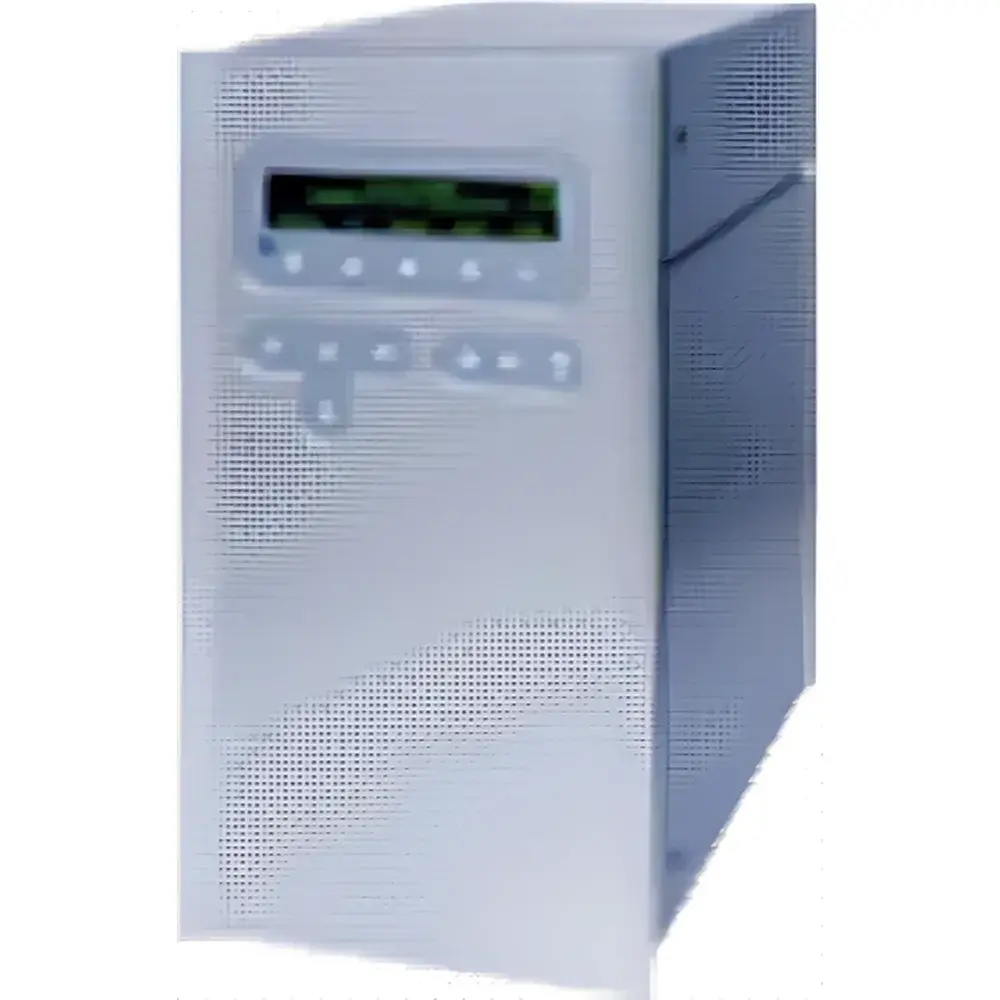
Antec Decade II Electrochemical Detector
| Origin | USA |
|---|---|
| Manufacturer Type | Authorized Distributor |
| Origin Category | Imported |
| Model | DECADE II |
| Pricing | Upon Request |
| Detector Type | Electrochemical Detector (ED) |
Overview
The Antec Decade II Electrochemical Detector is a high-performance, benchtop electrochemical detection system engineered for ultra-trace quantification of electroactive analytes in liquid chromatography (LC) and flow injection analysis (FIA) applications. Based on controlled-potential amperometric and pulsed amperometric detection (PAD) principles, the Decade II operates by applying precise, user-defined potentials to a working electrode immersed in a laminar-flow microcell—enabling selective oxidation or reduction of target species while minimizing interference from non-electroactive matrix components. Its design adheres to fundamental electrochemical detection theory, including diffusion-controlled current response (governed by the Cottrell equation) and Faradaic current amplification under optimized mass transport conditions. With a documented detection limit in the low femtomole (fmol) range for catecholamines and other redox-active compounds, the Decade II is widely deployed in neurochemical research, pharmaceutical impurity profiling, and environmental trace analysis where conventional UV or fluorescence detection lacks sufficient sensitivity or selectivity.
Key Features
- Ultra-low detection limits: Achieves sub-fmol detection sensitivity for electroactive species such as monoamine neurotransmitters, phenolic compounds, carbohydrates, and sulfur-containing metabolites.
- Advanced Dual-Mode Operation: Seamless switching between DC amperometric and pulsed amperometric detection (PAD) modes via software control—enabling optimal signal-to-noise ratio for both stable and passivating analytes.
- Precision Temperature Control: Integrated Peltier-based thermostat maintains cell temperature stability within ±0.015 °C, critical for reproducible faradaic current response and long-term baseline stability.
- Patented Flow Cell Architecture: The low-volume, dual-electrode thin-layer flow cell minimizes electrode fouling through laminar flow dynamics and optimized electrode geometry; includes 4-year limited warranty on cell performance.
- Automatic Diagnostic Function (ADF): Real-time noise spectral analysis identifies optimal working potential and pulse waveform parameters, reducing method development time and enhancing inter-laboratory reproducibility.
- Self-Cleaning Working Electrode Protocol: Built-in electrochemical regeneration sequences (e.g., oxidative cleaning pulses) restore electrode surface activity automatically between injections—preserving calibration integrity over extended run times.
- Modular Expansion Capability: Field-upgradable to dual-cell configuration (e.g., series or parallel arrangement) for tandem detection strategies, redox couple analysis, or internal reference compensation.
Sample Compatibility & Compliance
The Decade II supports aqueous and mixed-aqueous mobile phases compatible with reversed-phase, ion-exchange, and hydrophilic interaction liquid chromatography (HILIC). It interfaces natively with all major LC systems—including Agilent, Waters, Thermo Fisher, and Shimadzu—via standard analog voltage output (0–1 V) and TTL-compatible trigger signals. The detector complies with general laboratory safety standards (IEC 61010-1), electromagnetic compatibility (EN 61326-1), and is routinely validated in GLP-compliant environments. While not inherently 21 CFR Part 11 compliant, its data acquisition software supports audit trail generation, electronic signature integration, and secure user access controls when deployed with validated third-party chromatography data systems (CDS).
Software & Data Management
Control and data acquisition are managed through Antec’s dedicated Decade II Software Suite (v5.x), running on Windows OS platforms. The software provides real-time potential programming, waveform editor for custom PAD methods, baseline correction algorithms, and peak integration using derivative-based retention time alignment. Raw current vs. time data are exported in ASCII or .csv format for post-processing in MATLAB, Python (NumPy/Pandas), or commercial chemometrics packages. All method parameters, calibration curves, and instrument status logs are stored with timestamped metadata—supporting full traceability per ISO/IEC 17025 and FDA guidance on analytical instrument qualification (AIQ).
Applications
- Neurotransmitter profiling in microdialysate and cerebrospinal fluid (e.g., dopamine, serotonin, norepinephrine)
- Carbohydrate analysis in biopharmaceuticals (e.g., glucose, fructose, sialic acid) using alkaline PAD
- Trace-level detection of phenolic antioxidants and degradation products in food and beverage matrices
- Environmental monitoring of catechol, hydroquinone, and chlorophenols in wastewater effluents
- Redox stability assessment of small-molecule drug candidates under forced degradation conditions
- Enzyme kinetics studies involving NAD(P)H-coupled reactions monitored via electrochemical cofactor turnover
FAQ
What types of LC columns are compatible with the Decade II?
The detector is column-agnostic and works with any HPLC/UHPLC column that delivers stable, pulse-free flow—particularly recommended with stainless steel or PEEK-lined columns rated for pH 10–13 in PAD applications.
Is the flow cell replaceable, and what is its typical lifetime?
Yes—the thin-layer flow cell is a field-replaceable consumable; under routine maintenance and ADF-optimized operation, typical service life exceeds 12 months at 24/7 usage in regulated labs.
Can the Decade II be integrated into an automated multi-detector LC system?
Yes—its analog output and digital trigger I/O allow synchronous operation with UV, MS, or CAD detectors; timing synchronization is achieved via external clock signal or software-controlled start/stop commands.
Does the system support quantitative analysis per USP or EP monographs?
While no single USP chapter exclusively governs electrochemical detection, methods developed on the Decade II have been successfully validated per USP , , and ICH Q2(R2) guidelines for specificity, linearity, accuracy, and precision in pharmaceutical QC workflows.



