
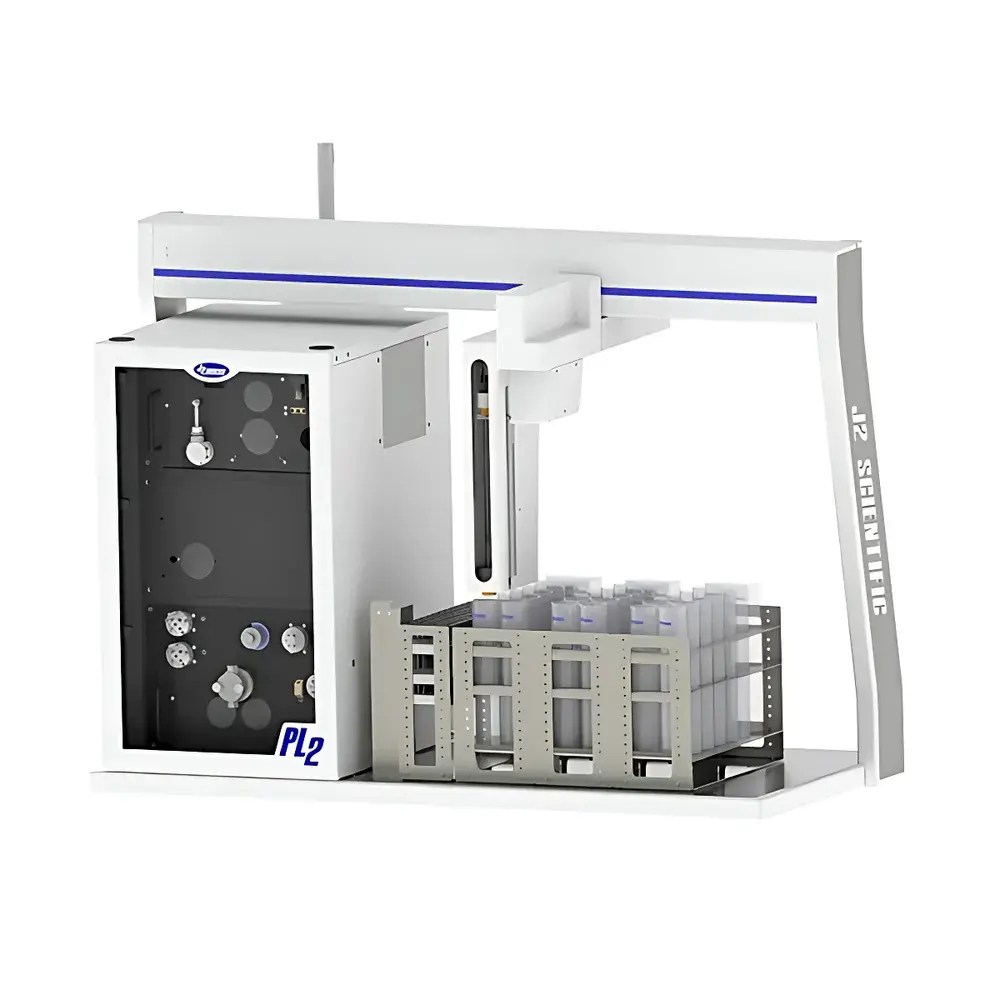
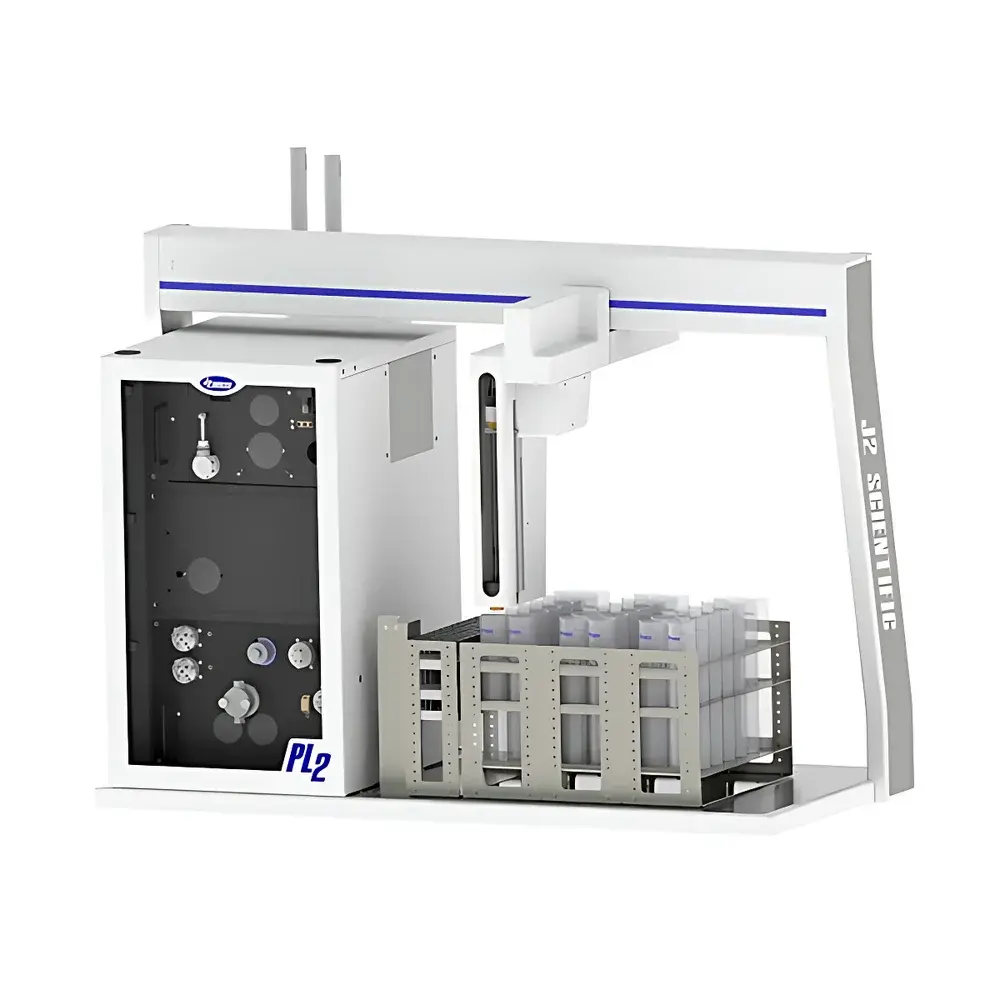
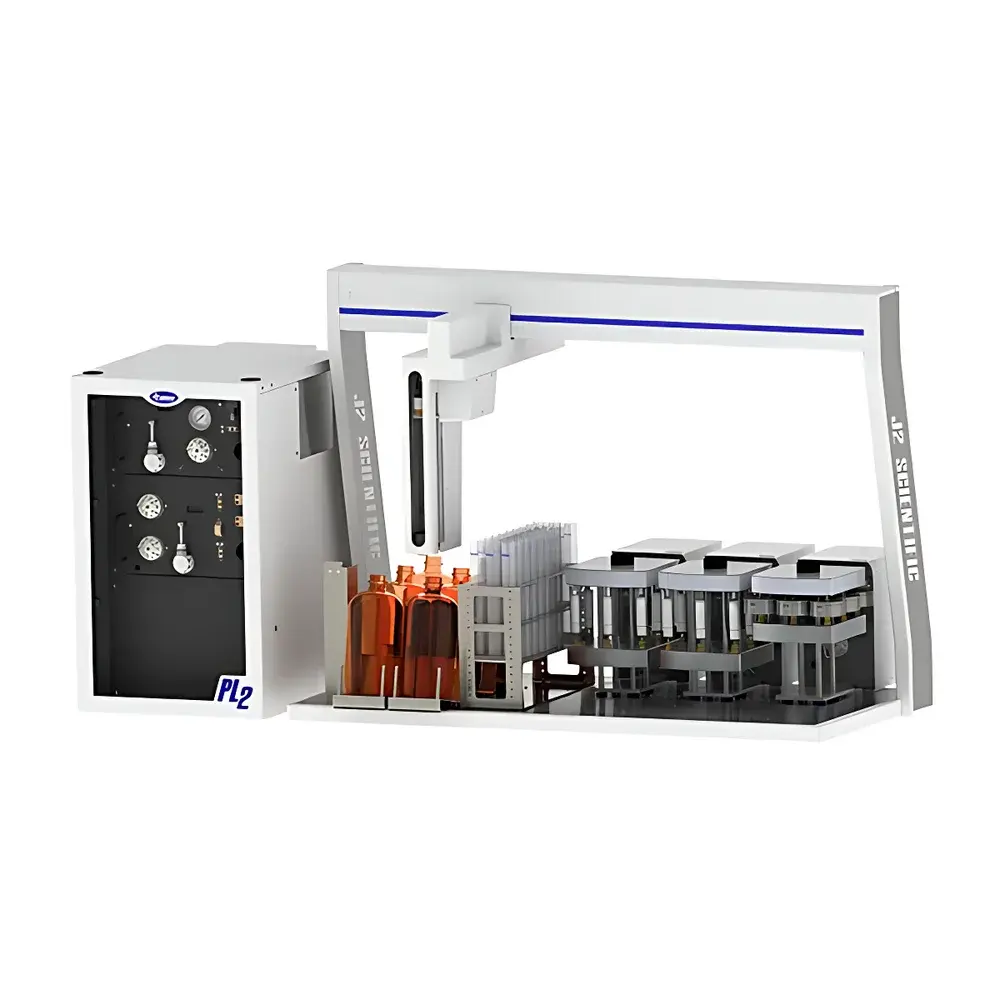
J2 Scientific PrepLinc2 GPC Automated Gel Permeation Chromatography System
| Brand | J2 Scientific |
|---|---|
| Origin | USA |
| Model | PrepLinc2 GPC |
| Flow Rate | 0.01–10.00 mL/min |
| Maximum Pressure | 2500 psi |
| Flow Stability | ±0.5% RSD |
| Auto-sampler Volume Range | 100 µL–10 mL |
| Auto-sampler Capacity | 36 positions |
| Configuration | Integrated dual-piston pump and UV detector |
| Compliance | Designed for GLP/GMP-aligned workflows and ASTM D5297, ISO 11348, USP <621> chromatographic system suitability |
Overview
The J2 Scientific PrepLinc2 GPC is an automated gel permeation chromatography (GPC) system engineered for high-precision matrix cleanup in trace-level environmental, food safety, and agricultural residue analysis. Based on size-exclusion separation principles, the system separates macromolecular interferences—such as lipids, proteins, pigments, and humic substances—from low-molecular-weight analytes (e.g., pesticides, PAHs, PCBs, antioxidants) using calibrated porous gel columns (typically styrene-divinylbenzene copolymer). Unlike conventional offline cleanup methods, the PrepLinc2 GPC integrates sample introduction, column elution, fraction collection, and optional inline solvent evaporation into a single, programmable sequence—minimizing manual handling, reducing carryover risk, and ensuring reproducible recovery across complex biological and environmental matrices.
Key Features
- Integrated dual-piston high-pressure pump and fixed-wavelength UV detector housed within the main chassis—eliminating external tubing connections and reducing system dead volume to <15 µL for improved peak shape and resolution.
- AS4mini autosampler with 36-position vial capacity and direct-needle injection architecture—enabling full-volume delivery (100 µL–10 mL) without loop-based dilution or transfer loss; injection precision maintained at ≤0.5% RSD over 24 h.
- Intelligent column protection module featuring a motorized bypass valve that automatically routes mobile phase around the analytical column during idle or shutdown cycles—maintaining column hydration and preventing bed collapse or phase degradation.
- Programmable gradient elution support (isocratic and binary solvent switching) with real-time pressure monitoring up to 2500 psi—compatible with common GPC solvents including tetrahydrofuran (THF), chloroform, and dichloromethane.
- Onboard solvent management with automatic wash cycles between injections and customizable post-run column regeneration protocols—reducing cross-contamination and extending column lifetime beyond 500 injections under routine use.
Sample Compatibility & Compliance
The PrepLinc2 GPC accommodates crude extracts from solid-phase extraction (SPE), QuEChERS, accelerated solvent extraction (ASE), and liquid-liquid partitioning workflows. It accepts samples dissolved in THF, chloroform, or DCM—common solvents for lipid-rich matrices such as animal tissue, soil, sediment, edible oils, and plant homogenates. The system supports method validation per ICH Q2(R2) guidelines and meets instrumental requirements for regulatory compliance in laboratories adhering to EPA Method 3640A, AOAC Official Method 2007.01, and Chinese National Standards including GB/T 5009.161–2003, GB/T 20772–2006, and GB 5009.32–2016. Its architecture enables audit-ready data generation aligned with FDA 21 CFR Part 11 requirements when paired with compliant LIMS or CDS software.
Software & Data Management
Controlled via J2’s proprietary GPC Navigator™ software (Windows 10/11 compatible), the system provides intuitive method building, real-time chromatogram visualization, fraction triggering logic, and customizable report templates. All acquisition parameters—including flow profile, UV threshold, fraction window, and valve sequencing—are timestamped and stored with digital signatures. Raw data files (.j2d) are structured for seamless import into third-party quantitation platforms (e.g., Thermo Chromeleon, Agilent OpenLab CDS, Waters Empower). Audit trail functionality logs user actions, parameter changes, and system events—supporting GLP audits and internal QA/QC reviews.
Applications
- Removal of co-extracted lipids and sterols prior to GC-MS analysis of organochlorine pesticides in bovine liver and fish tissue.
- Cleanup of soil and sediment extracts prior to LC-MS/MS determination of polycyclic aromatic hydrocarbons (PAHs) and phthalate esters.
- Preparative isolation of antioxidant fractions (e.g., BHA, BHT, TBHQ) from fortified food matrices before HPLC-UV quantification.
- Depletion of chlorophyll and carotenoids from fruit and vegetable extracts prior to multi-residue pesticide screening by GC-QqQ.
- Support of regulatory testing for dyes (e.g., Rhodamine B), acaricides (e.g., binapacryl), and herbicides (e.g., flumetsulam) in imported commodities per SN/T series standards.
FAQ
What types of columns are compatible with the PrepLinc2 GPC?
Standard analytical columns include 7.8 × 300 mm PLgel Mixed-B or OHpak SB-G gel filtration columns (THF- or chloroform-compatible); guard columns and custom-packed columns may be used with appropriate hardware adapters.
Can the system interface directly with GC, LC, or MS instruments?
Yes—the PrepLinc2 GPC outputs fractions into standard 2-mL or 4-mL autosampler vials compatible with Agilent, Thermo, Shimadzu, and Waters instrumentation; optional fraction-to-vial mapping ensures traceability across hybrid workflows.
Is method transfer supported from legacy J2 systems?
All PrepLinc2 GPC methods are backward-compatible with PrepLinc 1 and PrepLinc 2000 platform configurations via software export/import functions and shared calibration databases.
Does the system support unattended overnight operation?
Yes—scheduled start/stop, automatic solvent refill detection, and thermal-stabilized detector housing enable fully autonomous runs for up to 48 hours without intervention.
How is system suitability verified?
Built-in system suitability tests include retention time stability (±0.5% RSD over 5 injections), peak asymmetry assessment (USP tailing factor <2.0), and backpressure consistency checks—automatically logged and reportable.



