
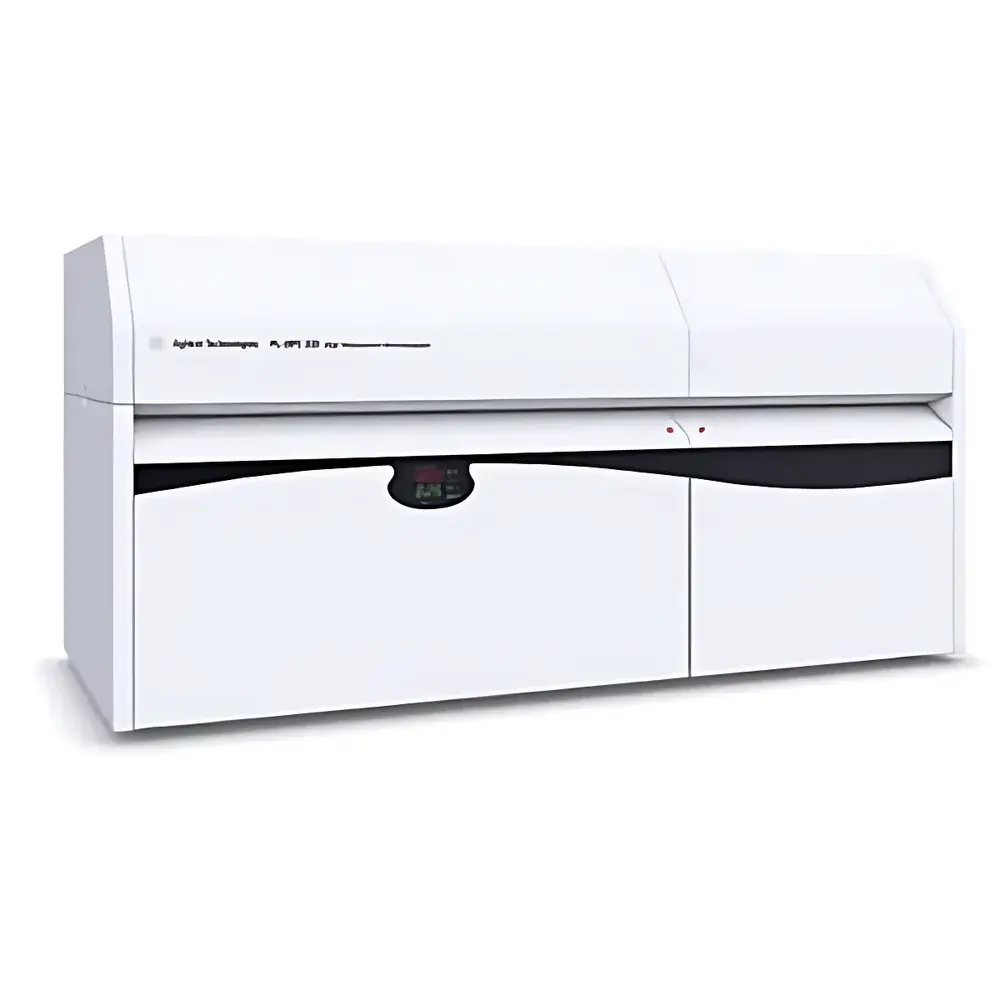
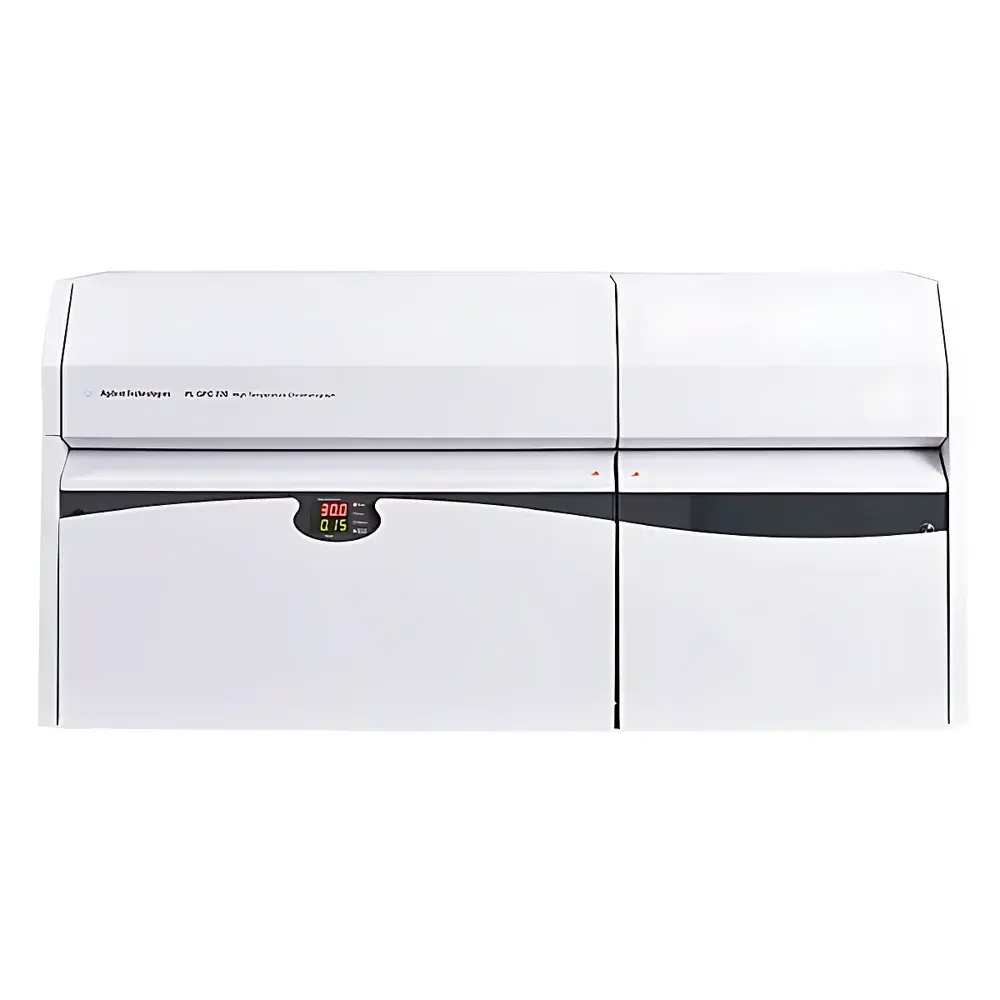
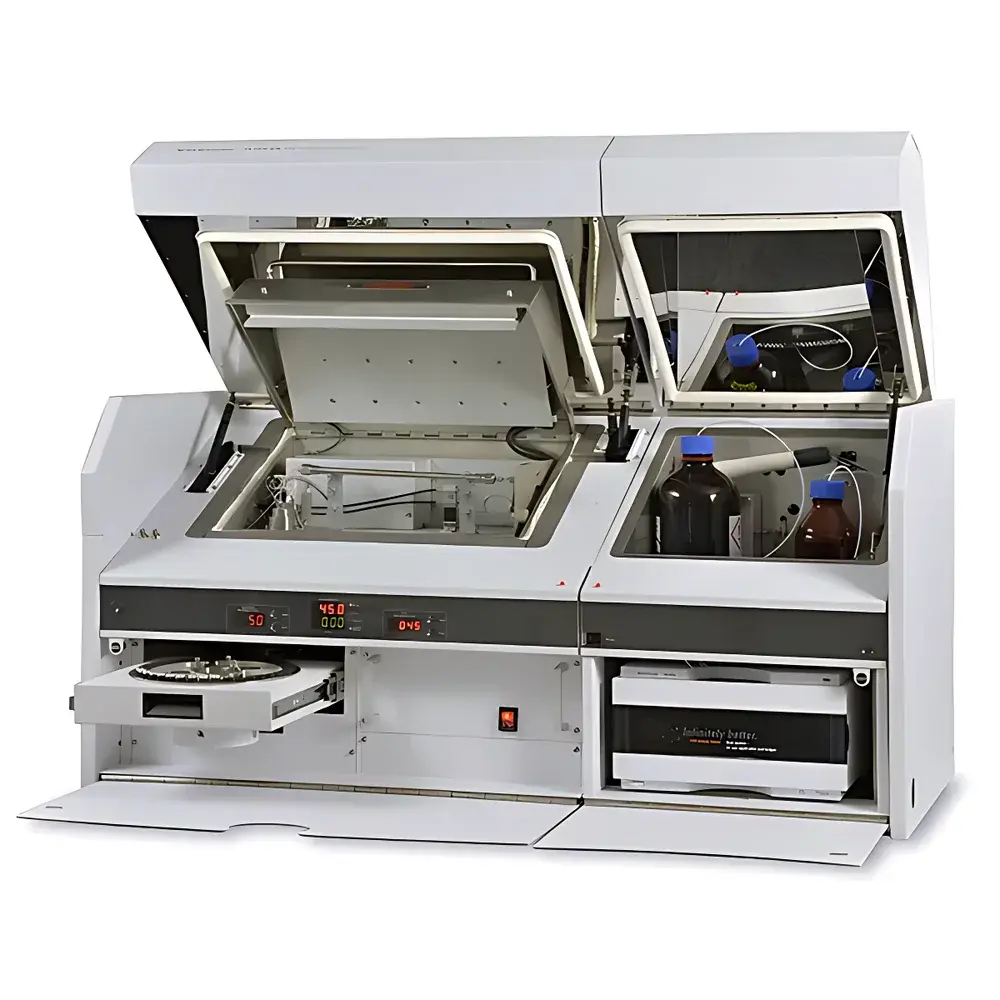
Agilent GPC-220 High-Temperature Gel Permeation Chromatograph
| Brand | Agilent Technologies |
|---|---|
| Origin | United Kingdom |
| Manufacturer Type | Authorized Distributor |
| Origin Category | Imported Instrument |
| Model | GPC 220 |
| Pricing | Available Upon Request |
Overview
The Agilent GPC-220 is a high-temperature gel permeation chromatography (GPC) system engineered for precise, reproducible molecular weight distribution (MWD) analysis of thermally stable and high-melting-point polymers. Operating on the principle of size-exclusion chromatography (SEC), the instrument separates macromolecules in solution based on hydrodynamic volume as they pass through porous packing material—typically cross-linked polystyrene or silica-based columns. Unlike ambient- or low-temperature GPC systems, the GPC-220 maintains column and detector temperatures up to 220 °C, enabling full dissolution and stable elution of polyolefins (e.g., polyethylene, polypropylene), polyesters (e.g., PET, PBT), polyamides (e.g., nylon-6,6), and other engineering thermoplastics that require elevated temperatures for complete solubilization in high-boiling solvents such as 1,2,4-trichlorobenzene (TCB) or o-dichlorobenzene (ODCB). Its robust thermal architecture ensures uniform temperature control across all critical zones—including the solvent delivery module, column oven, autosampler, and detector compartments—minimizing thermal gradients that could compromise retention time stability or peak shape fidelity.
Key Features
- Extended operational temperature range: 30 °C to 220 °C across all fluidic and detection modules, with independent dual-zone column oven control for optimized separation efficiency.
- Quadruple thermal protection system: Includes redundant temperature sensors, hardware-based over-temperature cutoffs, real-time thermal monitoring, and fail-safe shutdown logic to safeguard columns and prevent solvent degradation.
- Heated solvent delivery unit: Maintains mobile phase at ≥30 °C prior to injection, ensuring consistent viscosity, eliminating crystallization of high-melting-point solvents, and reducing baseline drift during long-gradient runs.
- Patented dual-temperature-zone autosampler (SP-260 compatible): Pre-heats samples to near-elution temperature without inducing thermal degradation; sample vials remain thermally isolated until injection.
- Integrated safety subsystems: Solvent vapor sensor, pressure-relief venting, CE-certified electrical enclosure, and automatic leak detection compliant with IEC 61010-1 for laboratory equipment safety.
- Modular detector compatibility: Supports high-sensitivity refractive index (RI), viscometric (capillary or differential), and multi-angle light scattering (MALS) detectors—all temperature-stabilized to 220 °C.
Sample Compatibility & Compliance
The GPC-220 accommodates a broad spectrum of synthetic and natural polymers requiring high-temperature dissolution, including polyolefins, fluoropolymers, aromatic polyethers, and lignin derivatives. It supports common high-boiling solvents such as TCB (b.p. 213 °C), ODCB (b.p. 180 °C), and trichloroethylene (TCE), all handled under inert atmosphere (N₂ or Ar) to suppress oxidative degradation. The system meets CE marking requirements per Directive 2014/30/EU (EMC) and 2014/35/EU (LVD), and its software architecture supports audit trail, electronic signature, and data integrity features aligned with FDA 21 CFR Part 11 and EU Annex 11 for regulated environments. Column hardware complies with ISO 16014-4:2019 for SEC calibration and validation protocols.
Software & Data Management
Control and data acquisition are managed via Agilent’s OpenLab CDS GPC/SEC Software—a validated platform supporting method development, automated calibration, universal calibration (Mark–Houwink parameters), and absolute molecular weight determination when coupled with viscometry or MALS. The software provides real-time temperature profiling, thermal event logging, and deviation alerts tied to hardware safety thresholds. All raw chromatograms, calibration curves, and report outputs are stored in vendor-neutral .cdf format, fully traceable with metadata including instrument configuration, column lot numbers, solvent batch IDs, and operator credentials. Audit trails record every parameter change, injection event, and calibration update with timestamp, user ID, and reason-for-change fields—enabling full GLP/GMP compliance during regulatory inspections.
Applications
- Molecular weight distribution analysis of polyethylene (HDPE, LDPE, LLDPE) and polypropylene grades used in packaging, automotive, and medical applications.
- Branching characterization of ethylene–octene copolymers via triple-detection (RI + viscometer + MALS) at 160 °C in TCB.
- Thermal stability assessment of polyesters during melt processing by comparing MWD shifts before/after extrusion or annealing.
- Quality control of high-performance polymers such as polyetheretherketone (PEEK) and polyphenylene sulfide (PPS) in aerospace and electronics manufacturing.
- Research-grade characterization of biodegradable polyesters (e.g., PLA, PHA) under accelerated dissolution conditions to predict in vivo degradation kinetics.
FAQ
What is the maximum allowable operating temperature for the column oven and detector compartments?
The column oven and all detector modules are rated for continuous operation up to 220 °C, with thermal stability maintained within ±0.1 °C over 24-hour runs.
Can the GPC-220 be integrated with third-party light scattering detectors?
Yes—provided the detector housing and flow cell are rated for ≥220 °C and support analog voltage or digital Ethernet communication compatible with OpenLab CDS.
Is method transfer from ambient-temperature GPC systems supported?
Method translation is feasible using universal calibration principles; however, column selection, solvent choice, and temperature-dependent retention modeling must be re-validated per ISO 16014-2:2019.
Does the system support automated solvent exchange between different high-boiling solvents?
Solvent switching requires manual purging and system equilibration; no integrated multi-solvent selector valve is included in the base configuration.
What documentation is provided for IQ/OQ/PQ qualification?
Agilent supplies a comprehensive qualification protocol package—including test scripts, acceptance criteria, and blank templates—aligned with ASTM D5296 and USP for chromatographic system verification.




