
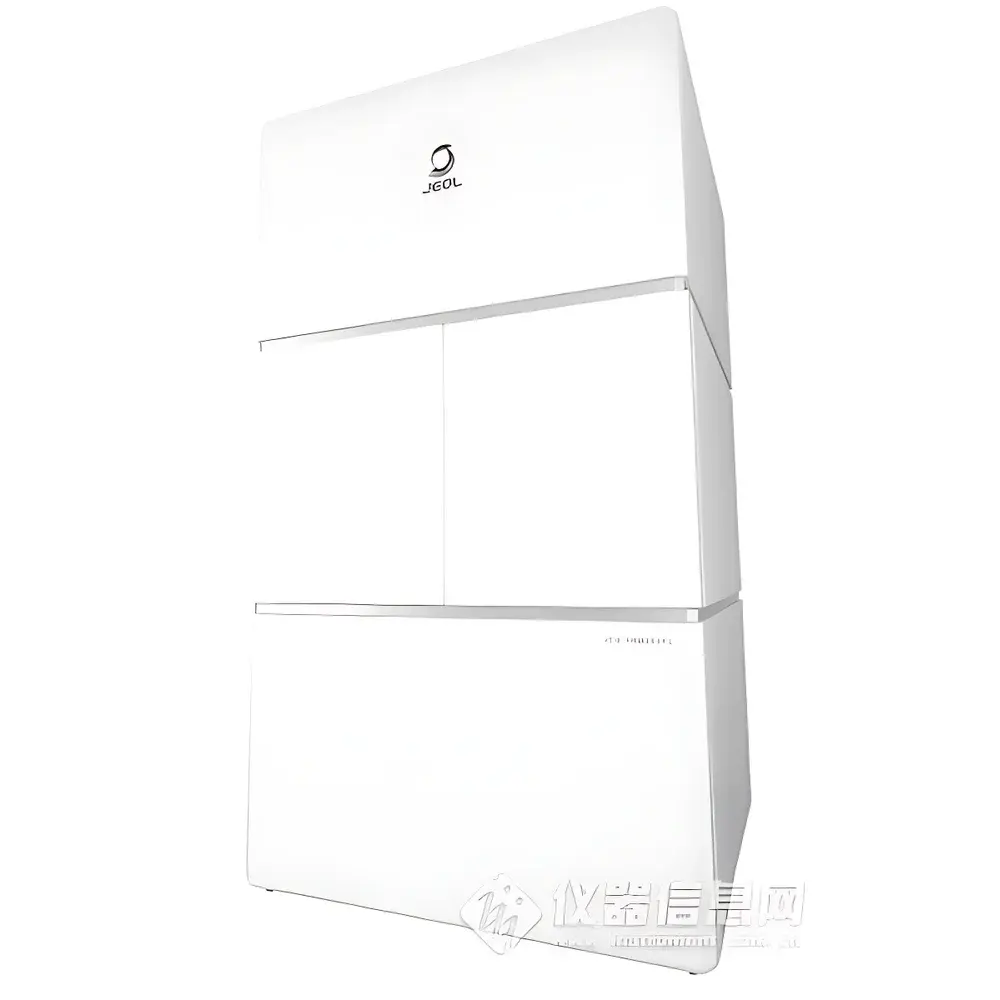
JEOL JEM-ARM300F2 GRAND ARM™2 Cold-FEG Aberration-Corrected Transmission Electron Microscope
| Brand | JEOL |
|---|---|
| Origin | Japan |
| Manufacturer Type | Authorized Distributor |
| Product Origin | Imported |
| Model | JEM-ARM300F2 |
| Price | USD 6.8M (est.) |
| Acceleration Voltage | Up to 300 kV |
| Magnification Range | 100×–2,000,000× |
| Guaranteed HAADF-STEM Resolution | 53 pm (300 kV, with ETA corrector + FHP2 polepiece) |
| EDS Detector | Dual large-area SDD (158 mm² total active area) |
| Solid Angle for EDS | 2.2 sr (with WGP polepiece) |
| Cs Corrector | JEOL 12-Pole Monochromator-Based Spherical Aberration (Cs) Corrector |
| Software | COSMO™ Auto-Aberration Correction Suite |
| Gun Type | Next-Generation Cold Field-Emission Gun (Cold-FEG) |
| Environmental Shielding | Integrated Active Vibration & Acoustic Damping Enclosure |
Overview
The JEOL JEM-ARM300F2 GRAND ARM™2 is a state-of-the-art cold field-emission transmission electron microscope (TEM/STEM) engineered for atomic-resolution imaging and quantitative microanalysis in materials science, catalysis, semiconductor metrology, and advanced battery research. Built upon JEOL’s proprietary GRAND ARM™ platform, the JEM-ARM300F2 integrates a 12-pole spherical aberration (Cs) corrector, next-generation Cold-FEG electron source, and dual high-efficiency silicon drift detectors (SDDs) — enabling simultaneous sub-50 pm spatial resolution and high-fidelity energy-dispersive X-ray spectroscopy (EDS) at both 300 kV and 80 kV operating voltages. Its core architecture follows the principles of coherent convergent-beam electron diffraction (CBED), high-angle annular dark-field (HAADF) STEM imaging, and monochromated probe formation — all optimized for reproducible, artifact-minimized atomic-scale characterization under rigorous GLP and GMP-aligned laboratory conditions.
Key Features
- 12-pole Cs corrector with integrated monochromator: Enables automatic, stable correction of spherical aberration and higher-order lens distortions; validated resolution of ≤53 pm HAADF-STEM at 300 kV (with ETA trajectory correction and FHP2 polepiece).
- Next-generation Cold-FEG source: Delivers ultra-high brightness (>1.5 × 10⁹ A/cm²·sr) and narrow energy spread (<0.3 eV FWHM), ensuring superior coherence and signal-to-noise ratio in phase-contrast TEM and electron holography.
- FHP2 and WGP polepiece options: FHP2 optimizes resolution and analytical efficiency; WGP (6 mm aperture) provides 2.2 sr solid angle for EDS collection and accommodates in situ heating, biasing, and gas/liquid cell holders without compromising optical performance.
- Dual large-area SDD detectors (total 158 mm²): Enable high-count-rate, low-noise elemental mapping with sub-0.1 wt% detection limits; fully compatible with JEOL’s EDS-TEM software suite supporting quantification per ISO 14789 and ASTM E1508 standards.
- COSMO™ automated aberration correction software: Reduces alignment time from hours to minutes via machine-learning-assisted feedback loops; logs full correction history for audit compliance per FDA 21 CFR Part 11 and ISO/IEC 17025 requirements.
- Integrated environmental enclosure: Features active acoustic damping, thermal inertia shielding, and laminar airflow control — certified to meet JEOL’s Class-A stability specification (drift <0.5 nm/min, vibration <0.5 nm RMS over 1–100 Hz).
Sample Compatibility & Compliance
The JEM-ARM300F2 supports standard 3 mm TEM grids, customized microelectromechanical systems (MEMS)-based in situ chips, and sealed liquid/gas cells (e.g., Protochips Atmosphere™, DENSsolutions Climate™). All hardware and software modules comply with IEC 61000-6-2 (EMC immunity), ISO 14644-1 Class 5 cleanroom integration guidelines, and JEOL’s internal qualification protocol for long-term operational stability (≥5,000 h mean time between failures). EDS quantification workflows adhere to ISO 14789:2015 (microanalysis — EDS — quantification procedures) and ASTM E1508-22 (standard guide for quantitative analysis by EDS). Full audit trails, electronic signatures, and role-based access control are embedded within the COSMO™ and EDS-TEM platforms for regulated environments.
Software & Data Management
JEOL’s unified acquisition and analysis environment includes TEM Center™ (real-time image acquisition), EDS-TEM (quantitative spectrum imaging), and COSMO™ (aberration management). All modules operate on a Linux-based RTOS with deterministic latency (<10 µs interrupt response). Raw data is stored in vendor-neutral TIFF/EMD format with embedded metadata (acceleration voltage, aperture settings, detector geometry, calibration timestamps). Integration with third-party platforms (DigitalMicrograph®, HyperSpy, Python-based PyXem) is supported via documented APIs. Data integrity is enforced through SHA-256 checksum validation, automated backup to NAS/SAN infrastructure, and optional encryption-at-rest compliant with NIST SP 800-171.
Applications
The JEM-ARM300F2 serves as a primary tool for atomic-scale defect identification in GaN HEMTs, dopant mapping in FinFET gate stacks, interface chemistry analysis at solid-electrolyte interphases (SEI), and 3D tomographic reconstruction of nanoparticle catalysts. It is routinely deployed in national metrology institutes (e.g., NIST, PTB), semiconductor R&D labs (TSMC, IMEC), and academic centers conducting DOE-funded projects on quantum materials and nuclear fuel cladding. Its dual-voltage capability (300 kV/80 kV) permits comparative studies of beam-sensitive organic-inorganic hybrids while preserving structural fidelity — critical for publications requiring IUCr-compliant structure factor refinement.
FAQ
What is the guaranteed point resolution under HAADF-STEM mode?
53 pm at 300 kV when equipped with the ETA trajectory corrector and FHP2 polepiece — verified using the international standard Si〈110〉 lattice fringe test and reported in JEOL Technical Bulletin TB-ARM300F2-2020.
Is the system compliant with FDA 21 CFR Part 11 for electronic records?
Yes — COSMO™ and EDS-TEM implement full audit trail logging, electronic signatures, and user-access hierarchy aligned with Part 11 Subpart B requirements.
Can the microscope be configured for in situ electrical biasing experiments?
Yes — the WGP polepiece design accommodates commercial in situ biasing holders (e.g., Protochips Electra™) with full EDS/STEM synchronization and real-time current monitoring.
What level of environmental isolation does the enclosure provide?
The integrated enclosure meets JEOL Class-A mechanical stability specifications: vibration isolation >80 dB below 10 Hz, acoustic noise attenuation ≥45 dB(A), and thermal drift suppression to <0.1 °C/h across the column baseplate.
How is EDS quantification validated?
Quantitative accuracy is traceable to NIST SRM 2100a (Fe-Ni alloy) and certified reference materials per ISO 14789 Annex B; detection limits are determined using Poisson statistics and background-subtracted peak integration.





