
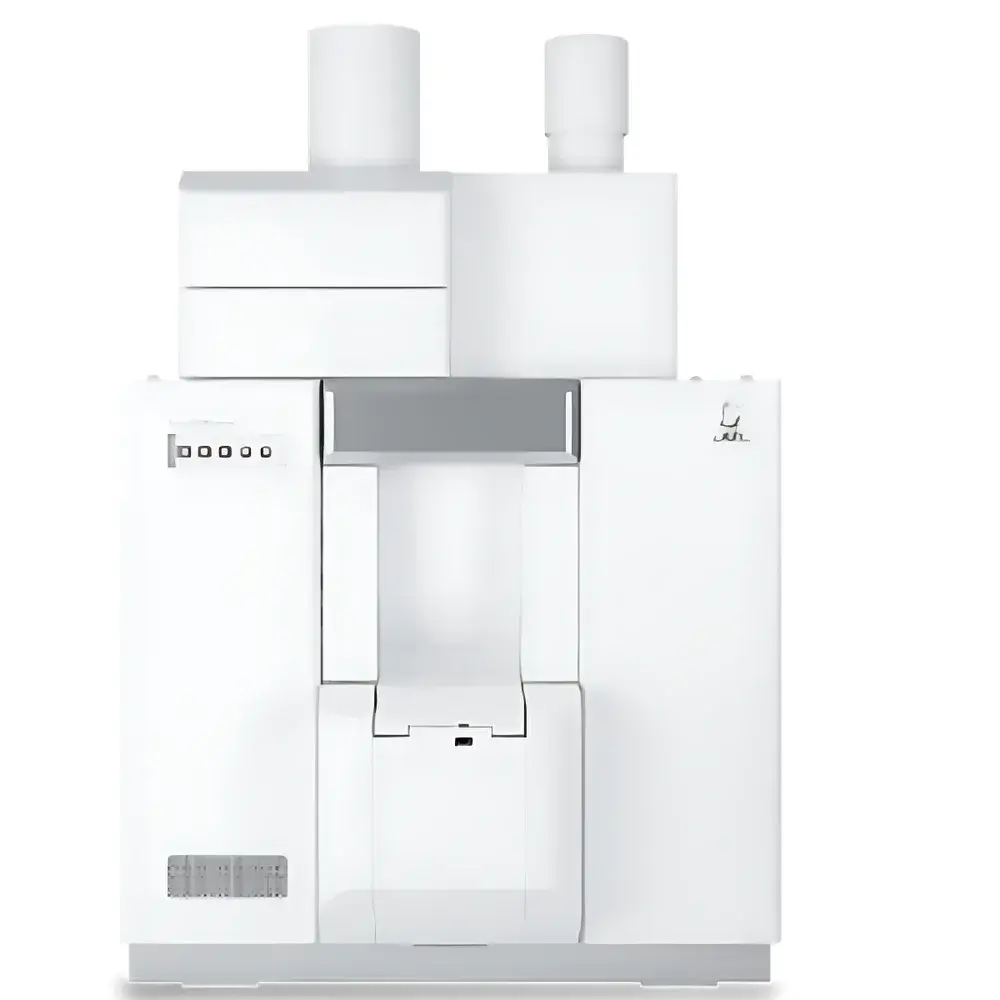
JEOL JMS-S3000 SpiralTOF™-plus 2.0 MALDI Time-of-Flight Mass Spectrometer
| Brand | JEOL |
|---|---|
| Origin | Japan |
| Model | JMS-S3000 |
| Ion Optics | SpiralTOF™-plus 2.0 |
| Operating Modes | TOF (standard), Linear TOF (optional), TOF/TOF (optional) |
| Application Scope | Synthetic polymers, biomacromolecules, materials science |
Overview
The JEOL JMS-S3000 SpiralTOF™-plus 2.0 is a high-performance matrix-assisted laser desorption/ionization time-of-flight mass spectrometer engineered for uncompromising resolution, sensitivity, and dynamic range in the analysis of non-volatile, thermally labile, and high-molecular-weight compounds. At its core lies JEOL’s proprietary SpiralTOF™ ion optical architecture — a multi-turn, spiral trajectory flight path that extends effective ion flight distance without increasing instrument footprint. This design enables sub-1 ppm mass accuracy, resolving power exceeding 50,000 (FWHM at m/z 1,000), and isotopic fidelity critical for polymer dispersity (Đ) determination, intact protein characterization, and synthetic macromolecule sequencing. Unlike conventional linear or reflectron TOF systems, the SpiralTOF™ geometry minimizes space-charge effects and improves ion transmission efficiency across broad m/z ranges — particularly advantageous for heterogeneous samples such as polyethylene glycols, dendrimers, and post-translationally modified peptides.
Key Features
- SpiralTOF™-plus 2.0 ion optics: Second-generation spiral flight tube with optimized electrostatic lensing and active ion gating for enhanced peak capacity and reduced metastable decay.
- High-repetition-rate nitrogen laser (337 nm, up to 1 kHz): Delivers consistent desorption/ionization with adjustable fluence control for reproducible signal generation across diverse matrix-analyte systems.
- Dual-mode detection: Microchannel plate (MCP) detector with fast digitizer (≥ 5 GS/s sampling rate) supports both high-sensitivity single-shot acquisition and high-dynamic-range averaging.
- Modular vacuum architecture: Dual-stage differential pumping system maintains ultra-high vacuum (<1×10⁻⁷ Pa) in the flight region during continuous operation, ensuring long-term mass calibration stability.
- Integrated delayed extraction with sub-nanosecond timing resolution: Compensates for initial kinetic energy spread, improving mass resolution and accuracy for low-charge-state ions.
Sample Compatibility & Compliance
The JMS-S3000 accommodates standard MALDI target plates (96- and 384-well formats) and supports direct coupling with automated sample positioning stages for high-throughput profiling. It is routinely employed for intact mass analysis of proteins (≤ 100 kDa), synthetic polymers (Mw up to 500 kDa), carbohydrate conjugates, and inorganic clusters. Instrument control and data acquisition comply with GLP/GMP-aligned workflows: audit trail logging, user access levels, electronic signature support, and full traceability of acquisition parameters meet requirements under FDA 21 CFR Part 11 when deployed with validated software configurations. Method files adhere to mzML 1.1 format for interoperability with third-party bioinformatics platforms.
Software & Data Management
Control and data processing are performed using JEOL’s MassCenter™ v4.x suite — a Windows-based application supporting real-time spectral preview, automatic baseline correction, deconvolution of multiply charged species, and polymer-specific algorithms for dispersity (Mw/Mn) and end-group analysis. Raw data are stored in vendor-neutral .mzXML or .mzML containers. Batch processing modules enable automated peak detection, mass list generation, and comparative analysis across hundreds of samples. Export functions include CSV, Excel, and XML formats compatible with statistical packages (e.g., R, Python pandas) and LIMS integration via ODBC drivers. Software validation documentation (IQ/OQ/PQ protocols) is available upon request for regulated environments.
Applications
- Synthetic polymer characterization: Precise determination of molecular weight distribution, branching architecture, and end-group identity without chromatographic separation.
- Biomolecular analysis: Intact mass verification of monoclonal antibodies, antibody-drug conjugates (ADCs), and viral capsid proteins; top-down sequencing via TOF/TOF fragmentation (with optional collision cell).
- Materials science: Surface-bound ligand identification on nanoparticles, metal–organic framework (MOF) fragment mapping, and additive analysis in advanced composites.
- Clinical microbiology: Rapid strain-level identification of bacteria and fungi using ribosomal protein fingerprints (MALDI-Biotyper–compatible spectral libraries).
- Quality control: Release testing of heparin sodium, hyaluronic acid, and other USP/EP-defined polysaccharide APIs.
FAQ
What is the typical mass range achievable in linear TOF mode?
Linear mode extends the upper mass limit to ~1 MDa for intact macromolecules, albeit with reduced resolution compared to reflectron or spiral configurations.
Is TOF/TOF fragmentation supported natively?
Yes — with the optional collision-induced dissociation (CID) cell and dual-pulse laser system, MS/MS spectra can be acquired with precursor selection window ≤ 1 Da (FWHM).
How is mass calibration maintained over extended operation?
Internal calibration uses dual-point lock-mass referencing (e.g., angiotensin II + ubiquitin) with real-time drift correction; external calibration is traceable to NIST SRM 1950 metabolites.
Can the instrument interface with robotic sample handlers?
Yes — MassCenter™ supports RS-232 and Ethernet-based communication with common liquid handlers and autosamplers (e.g., Hamilton STAR, Gilson Liquid Handler) via standardized command protocols.
What vacuum pump configuration is used?
A combination of turbomolecular pumps (≥ 300 L/s) backed by dry scroll pumps ensures rapid pump-down (<30 min to operating pressure) and oil-free operation compatible with cleanroom environments.
Related Products






