
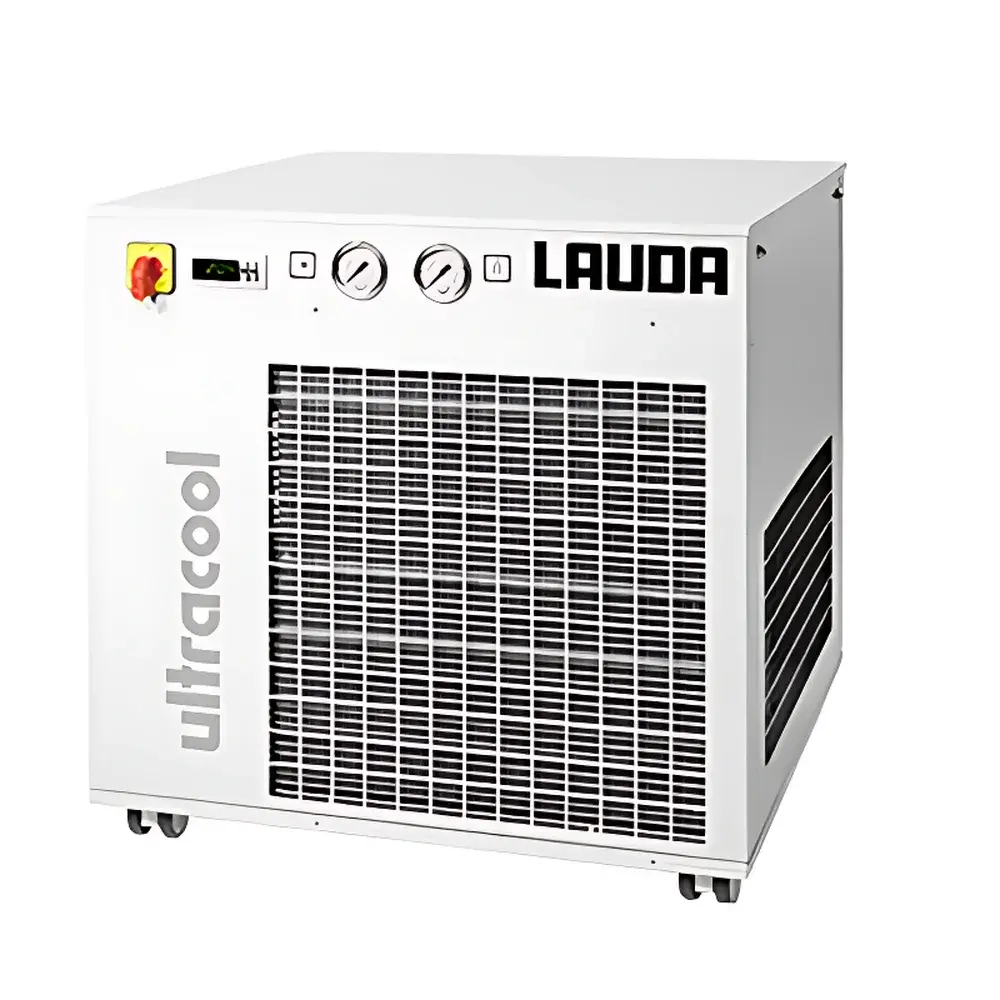
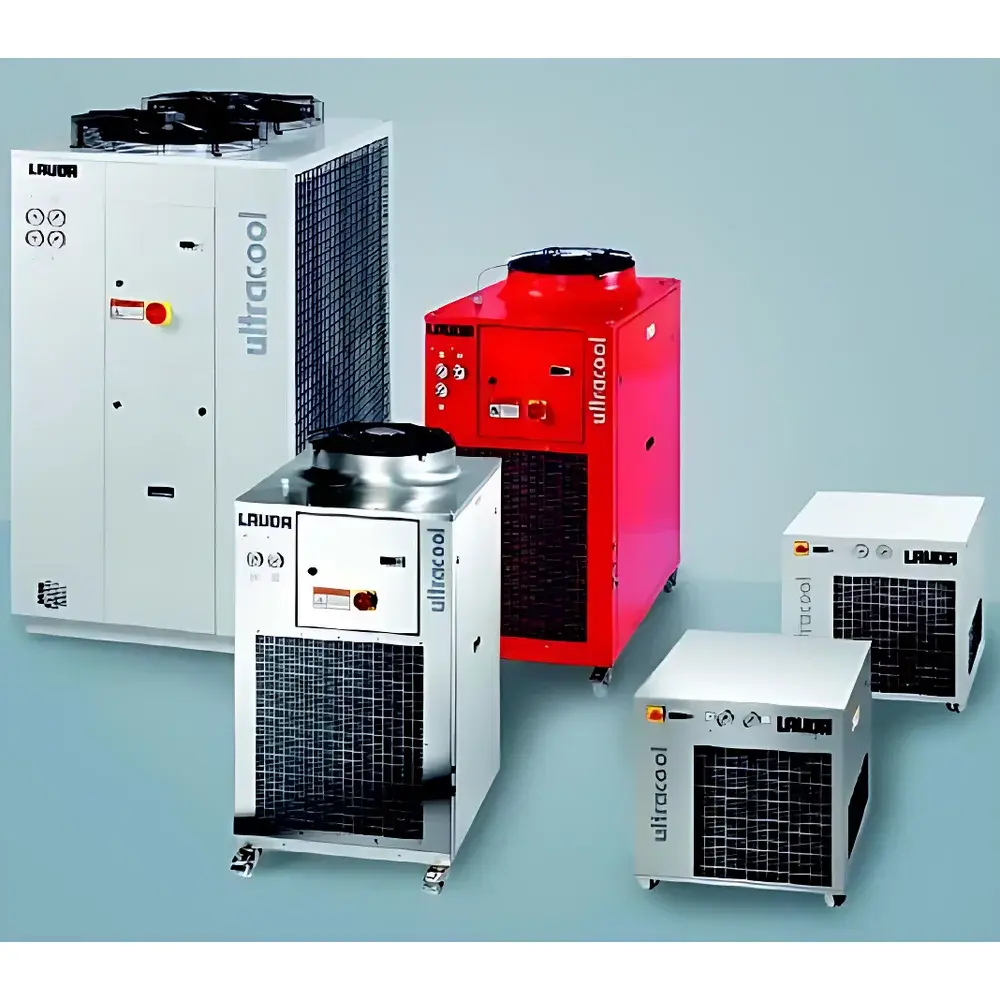
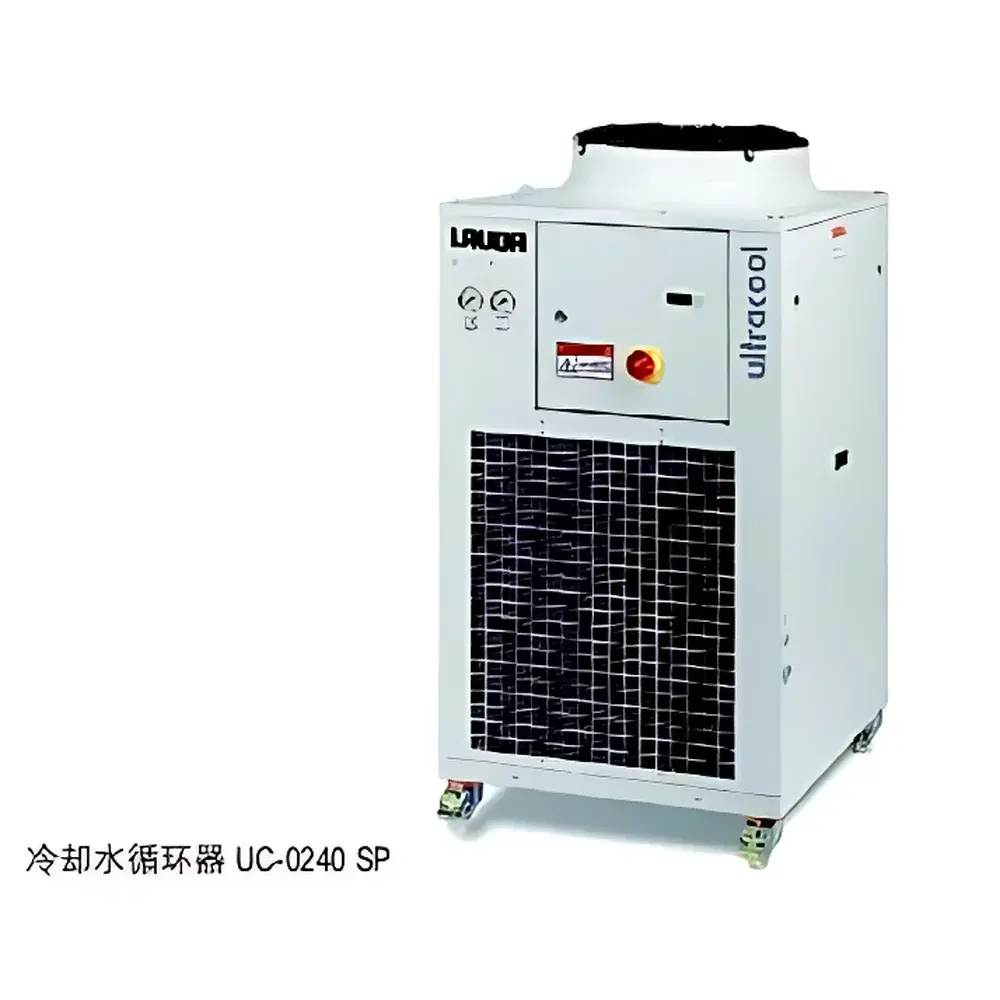
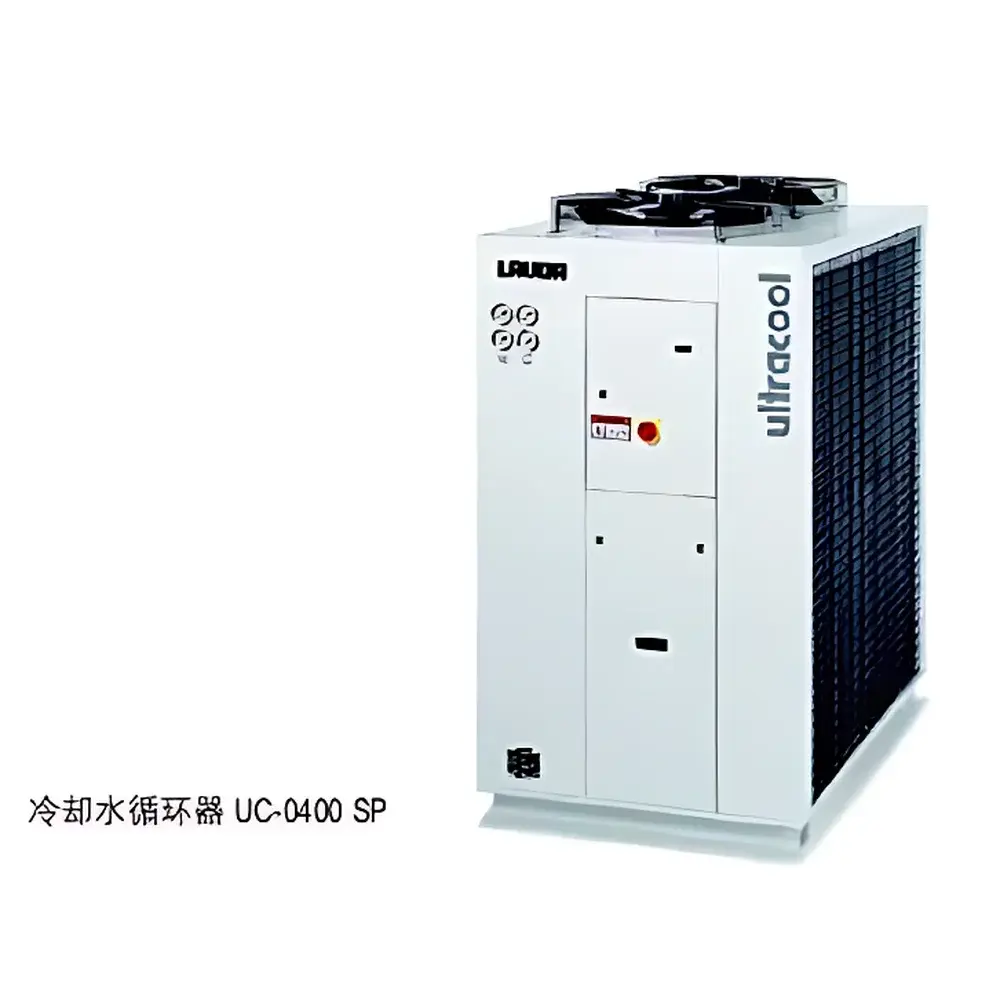
LAUDA Ultracool Recirculating Chiller
| Brand | LAUDA |
|---|---|
| Origin | Germany |
| Model | Ultracool |
| Type | Refrigerated/Heating Recirculating Chiller |
| Circulation Mode | Internal & External |
| Temperature Range | 0–100 °C |
| Temperature Stability | ±0.1 °C (typical, dependent on load and ambient conditions) |
| Refrigerant | Low-GWP hydrofluoroolefin (HFO-1234ze, GWP < 250) |
| Enclosure Rating | IP54 |
| Max Ambient Operating Temperature | 50 °C |
| Construction | Electroplated copper housing with epoxy resin coating |
| Reservoir Material | Insulated polyethylene tank with integrated level switch |
| Heat Exchanger | External plate-type evaporator |
| Pump | High-efficiency stainless steel centrifugal pump with internal bypass |
| Safety Features | Freeze-protection thermostat, pressure monitoring switch, integrated water filter with biostatic additive |
| Optional Configurations | Stainless steel enclosure, casters, external bypass valve, deionized water compatibility, air-cooled or water-cooled condenser variants |
Overview
The LAUDA Ultracool Recirculating Chiller is a precision-engineered temperature control system designed for demanding laboratory and industrial applications requiring stable, reliable, and contamination-resistant coolant circulation. Based on closed-loop refrigeration thermodynamics with secondary heat exchange via an external plate-type evaporator, the Ultracool delivers consistent thermal management across its full operational range of 0–100 °C. Unlike conventional bath-style units, it operates without an integrated immersion bath—instead providing regulated coolant flow to external process equipment such as lasers, analytical instruments, or molding machinery. Its architecture integrates refrigeration, pumping, and fluid conditioning into a single compact footprint, eliminating the need for separate chillers, reservoirs, and filtration stages. All units comply with IEC 61000-6-3 (EMC), IEC 61000-6-2 (immunity), and EN 61000-3-12 (harmonic current emissions), and are CE-marked for use in both indoor and outdoor environments under IP54-rated protection.
Key Features
- Stainless steel centrifugal pump with internal bypass circuit ensures laminar, pulse-free flow and enables precise pressure regulation across variable load conditions.
- External plate-type evaporator decouples refrigeration from the coolant loop—minimizing thermal lag, preventing direct refrigerant exposure to process fluid, and extending service life under aggressive chemical or high-purity requirements.
- Electroplated copper enclosure with dual-layer epoxy resin coating provides exceptional resistance to corrosion, UV degradation, and mechanical abrasion—validated for continuous outdoor deployment at ambient temperatures up to 50 °C.
- Integrated freeze-protection thermostat actively monitors coolant temperature at the heat exchanger outlet, automatically initiating anti-icing protocols before ice nucleation occurs—even during low-flow or idle states.
- Pressure monitoring switch continuously validates system integrity by detecting deviations beyond ±15% of nominal operating pressure—triggering alarm output and safe shutdown if overpressure or vacuum conditions develop.
- Insulated polyethylene reservoir with ultrasonic level sensing and biostatic additive integration inhibits microbial growth while maintaining thermal inertia and minimizing evaporation loss.
- HFO-1234ze refrigerant (GWP = 6) meets EU F-Gas Regulation (EU) No 517/2014 and supports compliance with corporate Scope 1 emissions reporting frameworks.
Sample Compatibility & Compliance
The Ultracool is compatible with deionized water, 30–50% aqueous glycol solutions, and other non-corrosive, low-viscosity heat transfer fluids meeting ISO 8502-9 cleanliness standards. It conforms to GLP-relevant design principles—including auditable setpoint logging, hardware-enforced safety limits, and traceable calibration paths per ISO/IEC 17025. For regulated environments, optional firmware supports FDA 21 CFR Part 11-compliant electronic signatures, audit trails, and role-based access control when integrated with LAUDA’s Pegasus software platform. Units are certified to EN 61000-6-4 (industrial emission limits) and meet UL 61010-1 requirements for electrical safety in laboratory instrumentation.
Software & Data Management
The chiller operates autonomously via its embedded microcontroller but supports bidirectional communication through RS485 (Modbus RTU) or optional Ethernet (TCP/IP). Integration with LAUDA Pegasus v4.x enables centralized monitoring of multiple units, remote setpoint adjustment, real-time trend visualization, and automated report generation (PDF/CSV). All temperature, pressure, flow, and alarm events are timestamped with millisecond resolution and stored locally for ≥30 days—sufficient for routine QC review or regulatory inspection. Historical data export supports ISO/IEC 17025 documentation workflows, including uncertainty propagation analysis for temperature stability validation.
Applications
- Laser systems: Stable cooling for CO₂, fiber, and ultrafast lasers used in cutting, welding, marking, and sorting—maintaining beam quality and diode lifetime.
- Materials processing: Thermal stabilization of injection molding tools, induction heating coils, and die-casting dies to reduce cycle time and improve part dimensional consistency.
- Analytical instrumentation: Precise coolant supply for ICP-MS torch interfaces, HPLC column ovens, and X-ray diffraction sources where thermal drift directly impacts spectral resolution.
- Centralized cooling plants: Modular scalability allows parallel operation of multiple Ultracool units to serve multi-point distribution networks in pilot-scale manufacturing or university core facilities.
- Environmental simulation chambers: Secondary coolant source for humidity control systems and thermal shock test rigs requiring rapid ramp rates and sub-0.2 °C stability.
FAQ
Does the Ultracool require regular refrigerant servicing?
No—hermetically sealed refrigeration circuits are factory-charged and warrantied for 36 months against leakage; no scheduled recharge intervals are specified under normal operating conditions.
Can the unit operate continuously at 100 °C with full load?
Yes—rated for continuous duty across the entire 0–100 °C range when ambient temperature remains ≤50 °C and coolant flow rate meets minimum specifications (≥1.2 L/min at 4 bar differential pressure).
Is deionized water compatible with standard configuration?
Yes—standard wetted materials (316 stainless steel, EPDM seals, polyethylene reservoir) are validated for DI water use; optional platinum RTD sensor and enhanced filtration kit recommended for long-term ultrapure applications.
What safety certifications apply to outdoor installation?
IP54 ingress protection, CE marking per Machinery Directive 2006/42/EC, and compliance with EN 60529 confirm suitability for covered outdoor locations subject to rain, dust, and solar exposure—no additional weatherproof housing required.
How is temperature stability verified during qualification?
Stability is measured per ASTM E742-21 using a calibrated Class A PT100 probe immersed in the return line at steady-state operation; typical deviation is ±0.08 °C over 24 hours under constant load and ambient conditions.



