
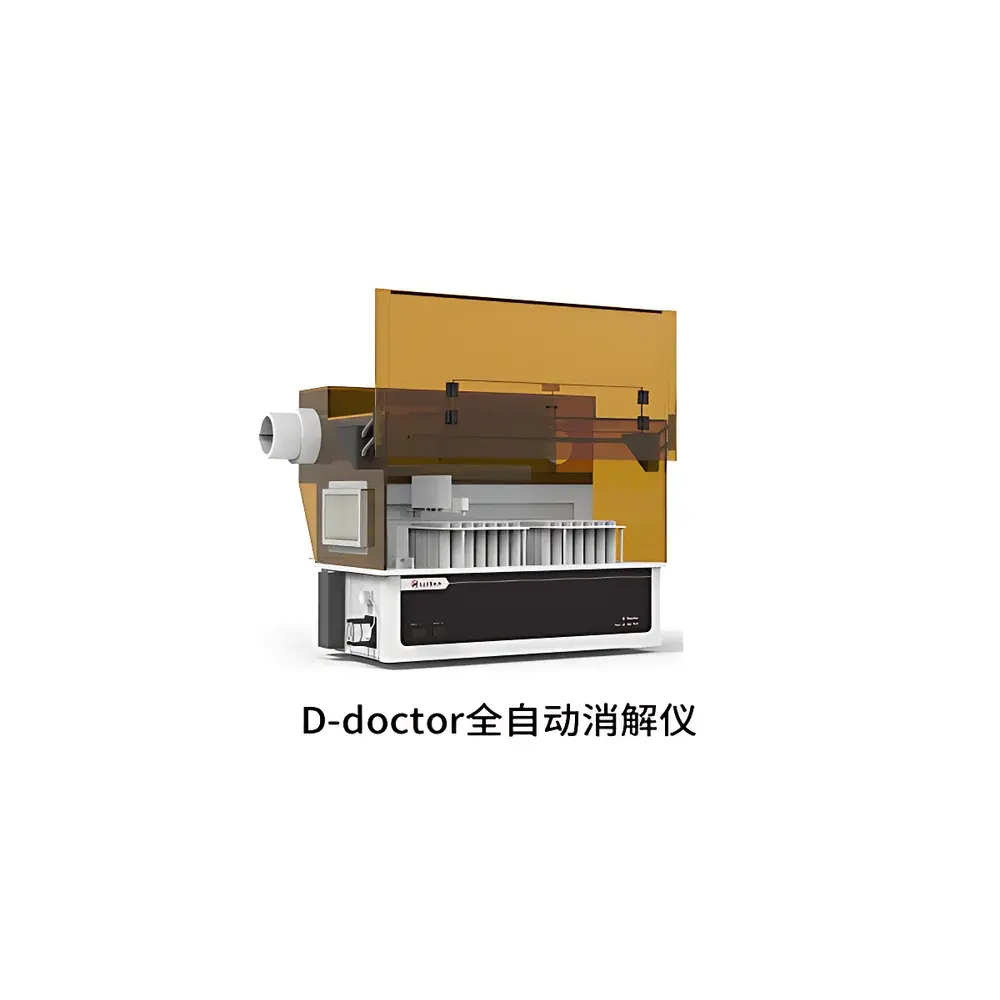
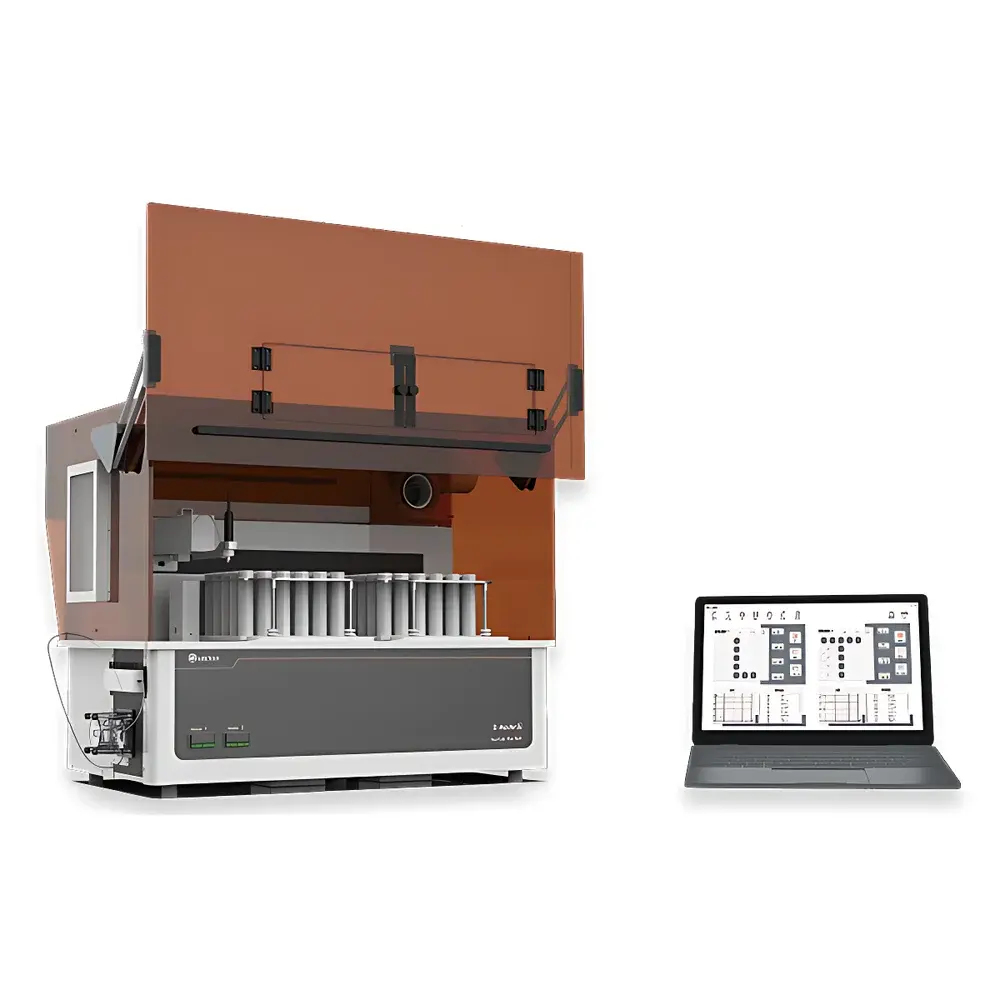
LabTech D-doctor Fully Automated Electric Heating Digestion System
| Brand | LabTech |
|---|---|
| Origin | Beijing, China |
| Manufacturer Type | Direct Manufacturer |
| Instrument Type | Electric Heating Digestion System |
| Automation Level | Fully Automatic |
| Model | D-doctor |
Overview
The LabTech D-doctor Fully Automated Electric Heating Digestion System is an engineered solution for high-throughput, reproducible sample preparation in regulated and research-intensive laboratories. It operates on the principle of controlled electric-heating-assisted acid digestion—applying precisely programmed thermal gradients in sealed or semi-sealed PTFE or quartz vessels to decompose organic matrices and solubilize inorganic analytes. Designed for compliance-critical workflows, the system supports standardized digestion protocols aligned with EPA Method 3050B, ISO 11466, GB/T 5009.11–2014, and other internationally recognized sample preparation standards. Its architecture eliminates manual intervention across all critical steps—from reagent dispensing and vortex-assisted mixing to temperature ramping, hotplate evaporation (‘acid removal’), and final volumetric定容—enabling unattended operation for up to 48 hours per batch.
Key Features
- Fully automated digestion sequence: Integrated robotic arm performs reagent addition (HNO₃, HCl, HF, H₂O₂, etc.), orbital mixing, vertical lift/lower motion, programmable multi-stage heating (up to 220 °C), open-vessel acid removal, and auto-dilution to fixed volume (e.g., 25 mL or 50 mL) with precision syringe pumps.
- 360° rotating robotic arm with optical end-stop positioning: Ensures sub-millimeter repeatability across >10,000 cycles; fully enclosed mechanical compartment prevents acid vapor infiltration and condensate corrosion of stepper motors and linear guides.
- Dual-layer isolation design: Electrical control units are physically segregated from the digestion chamber and ventilation ducts; integrated active fume extraction operates independently at ≥120 m³/h, eliminating dependency on external fume hoods while maintaining Class II biosafety-grade containment.
- Multi-platform remote supervision: Web-based interface accessible via desktop, tablet, or smartphone (iOS/Android); real-time video feed (1080p, H.264 encoded) streams live digestion vessel status with timestamped event logging.
- Intelligent safety interlocks: Includes reagent level monitoring (ultrasonic + weight-sensing redundancy), overtemperature cutoff (dual RTD sensors), door-open detection, pressure-relief valve feedback, and voice alert upon method completion or fault condition.
Sample Compatibility & Compliance
The D-doctor accommodates a broad spectrum of solid and semi-solid matrices—including soils, sediments, plant tissues, food composites, cosmetic powders, pharmaceutical excipients, and biological tissues—using digestion vessels compliant with ASTM D5688 (PTFE-lined) and ISO 17294-2 (quartz). All digestion methods are stored as auditable, version-controlled XML templates supporting GLP/GMP traceability. The system’s data integrity framework satisfies FDA 21 CFR Part 11 requirements through electronic signatures, immutable audit trails, and role-based user permissions (Administrator, Technician, Viewer). Calibration records, maintenance logs, and method validation reports are exportable in PDF/A-1b format for regulatory submission.
Software & Data Management
LabTech DigestControl™ v4.2 software provides intuitive method builder with drag-and-drop step sequencing, real-time graphing of temperature/reagent consumption curves, and automatic report generation (PDF/CSV) containing sample ID, digestion parameters, reagent lot numbers, operator ID, start/end timestamps, and QC flagging. All raw sensor data (temperature, position, pressure, camera feed metadata) are time-synchronized and stored locally on encrypted SSD with optional cloud backup (AWS S3-compatible). Audit trail entries include WHO changed WHAT, WHEN, and WHY—with rollback capability to prior method versions.
Applications
- Environmental labs performing heavy metal analysis (As, Cd, Cr, Pb, Hg) in EPA-regulated soil and sludge samples.
- Food safety testing facilities quantifying mineral nutrients (Ca, Mg, Fe, Zn) and contaminants (Al, Ni) per AOAC 999.10 and ISO 6497.
- Cosmetic QA/QC departments validating elemental impurity profiles per ICH Q3D guidelines.
- Academic research groups conducting metallomics studies requiring >100-sample daily throughput with ≤3% RSD in recovery experiments.
- Reference material producers executing CRM digestion protocols under ISO/IEC 17025-accredited conditions.
FAQ
Does the D-doctor support HF-based digestions for silicate-rich samples?
Yes—vessels are constructed from HF-resistant PFA or quartz, and the reagent handling system includes chemically inert fluoropolymer tubing and ceramic valves rated for 49% hydrofluoric acid.
Can digestion methods be validated for ISO/IEC 17025 accreditation?
Absolutely—the system provides full method documentation, uncertainty budgeting tools, spike recovery tracking, and raw data archiving required for accredited testing laboratories.
Is remote firmware update supported over secure HTTPS?
Yes, updates are delivered via signed OTA packages with SHA-256 verification and require administrator authentication before installation.
What is the maximum number of samples processed per run?
Standard configuration supports 24–40 positions (depending on vessel size); optional dual-zone hotplate enables parallel digestion of two independent sample sets with distinct thermal profiles.
How is data integrity ensured during power interruption?
The system features UPS-triggered graceful shutdown, persistent EEPROM storage for critical state variables, and automatic resumption from last completed step upon power restoration.



