CUBIC INSTRUMENTS CUBIC-LGA Series TDLAS-Based Intrinsically Safe Online Gas Analyzer
| Brand | CUBIC INSTRUMENTS |
|---|---|
| Origin | Hubei, China |
| Manufacturer Type | Authorized Distributor |
| Country of Origin | China |
| Model | CUBIC-LGA Series |
| Price | Upon Request |
| Linearity Error | ±1% F.S. |
| Repeatability | ±1% F.S. |
| Measurement Range Drift | 0–10,000 ppm |
| Response Time | <40 s |
| Explosion Protection Rating | Ex db IIC T6 Gb / Ex tb IIIC T80°C Db |
Overview
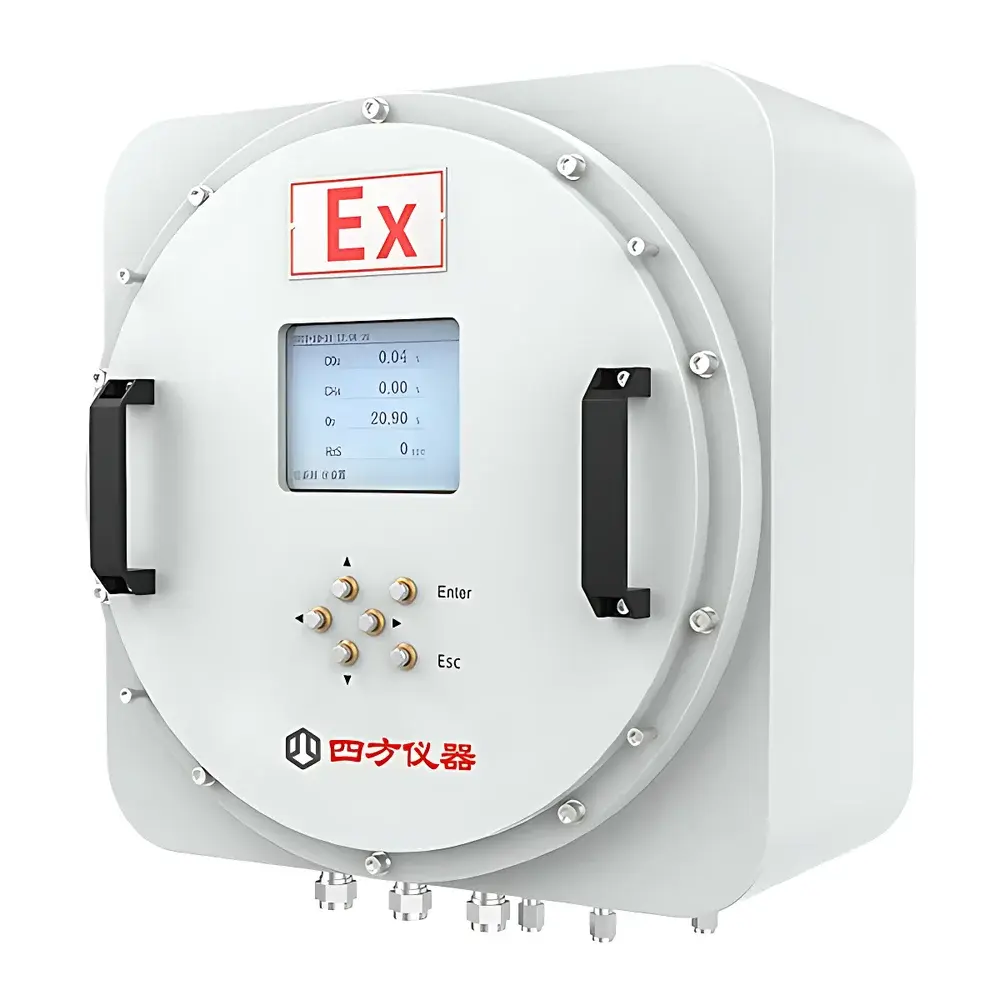
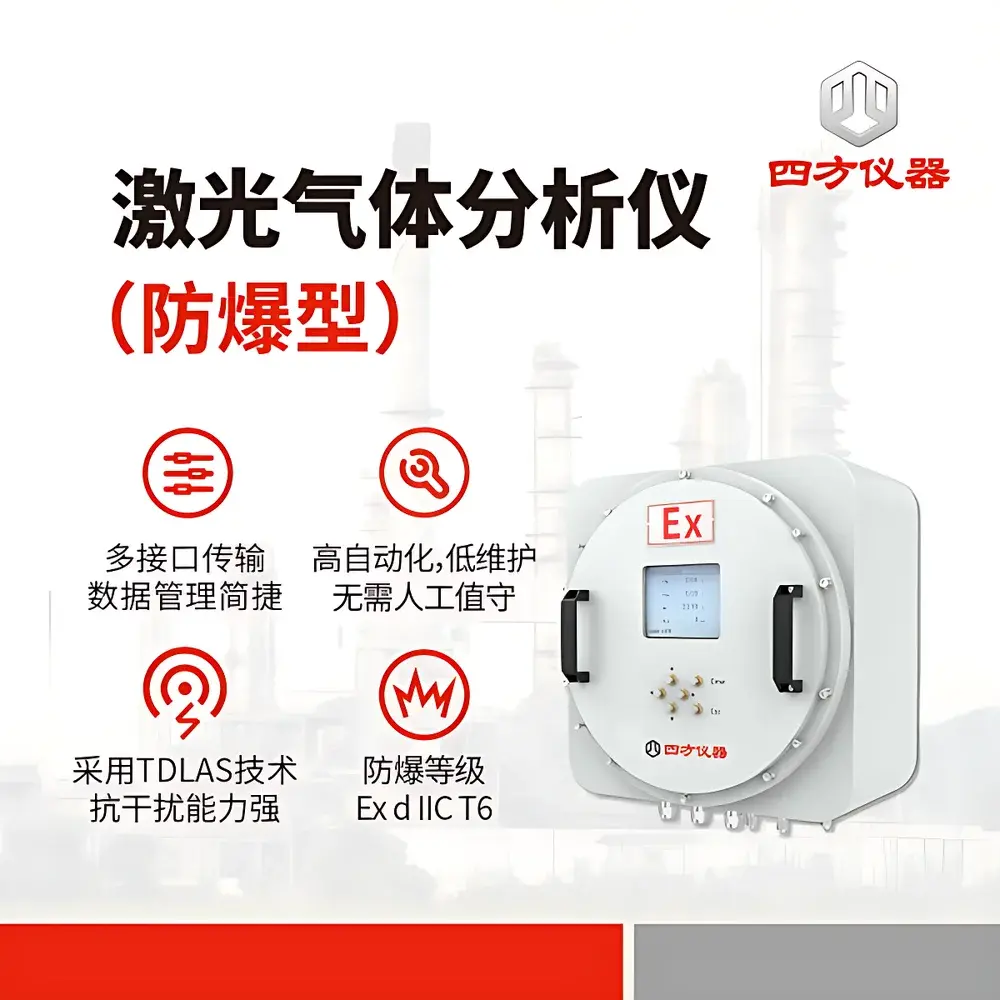
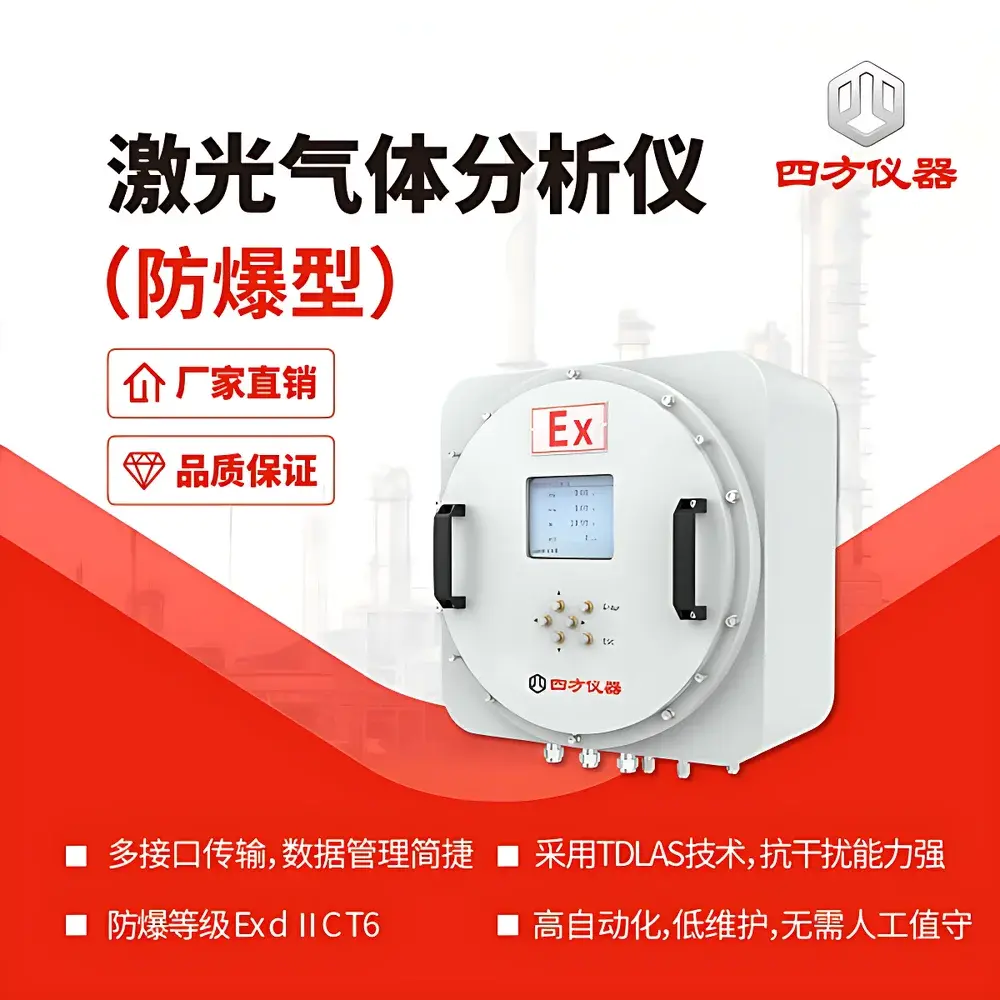
The CUBIC-LGA Series TDLAS-Based Intrinsically Safe Online Gas Analyzer is an industrial-grade, real-time gas monitoring solution engineered for continuous, in-situ measurement of critical process gases—including O₂, CO, CO₂, H₂S, and CH₄—in demanding industrial environments. At its core, the analyzer employs Tunable Diode Laser Absorption Spectroscopy (TDLAS), a physics-based optical technique that leverages wavelength-specific absorption signatures of target gas molecules within the near-infrared (NIR) spectral region. Unlike conventional electrochemical or catalytic bead sensors, TDLAS provides inherent selectivity, eliminating cross-sensitivity to interfering species such as water vapor, particulates, or background hydrocarbons. The system integrates a robust front-end sample conditioning module—comprising heated filtration, condensate removal, and pressure regulation—to ensure stable optical path integrity under high-humidity, high-dust, or high-particulate conditions typical of refinery off-gas streams, biogas ducts, or flare stack emissions. Designed for permanent installation in classified hazardous areas, the CUBIC-LGA complies with international explosion protection standards for both gas (Zone 1/2) and dust (Zone 21/22) environments.
Key Features
- TDLAS optical architecture with dual-wavelength referencing for drift compensation and long-term baseline stability
- Integrated sample conditioning system: heated stainless-steel filter (≤1 µm), thermoelectric cooler (TEC)-based dew point control, and mass flow-regulated sampling at 0.7–1.2 L/min
- Self-diagnostic firmware enabling real-time validation of laser output power, photodetector responsivity, optical alignment status, and internal reference cell integrity
- Air auto-zero function via built-in zero-air pump and calibrated bypass path—eliminating need for external calibration gas cylinders during routine operation
- Dual analog outputs (4–20 mA, isolated) and digital interfaces (RS-485 Modbus RTU, RS-232) supporting integration into DCS, SCADA, and MES platforms
- High-contrast backlit LCD display with local parameter configuration, alarm status indication, and diagnostic log access
Sample Compatibility & Compliance
The CUBIC-LGA is validated for use with process streams containing up to 95% relative humidity (non-condensing), total suspended particulate (TSP) concentrations ≤10 mg/m³, and oil mist content ≤0.1 mg/m³—provided the integrated preconditioning subsystem remains operational. All gas concentration measurements are traceable to NIM (National Institute of Metrology, China)-certified standard gases, diluted in ultra-high-purity nitrogen (≥99.999% N₂). The analyzer meets IEC 60079-0, IEC 60079-1, and IEC 60079-31 for flameproof (Ex db) and dust-ignition-proof (Ex tb) enclosures. It supports compliance with ISO 14064-1 (GHG quantification), EPA Method 3A (O₂/CO), and EN 15267-3 (performance certification for automated measuring systems). Its hardware architecture and firmware design accommodate audit-ready data logging for GLP/GMP-aligned operations where traceability and electronic record integrity are required.
Software & Data Management
Firmware includes embedded data buffering (72-hour rolling memory), configurable alarm thresholds (high/low, rate-of-change), and event-triggered snapshot capture. Communication protocols support secure, timestamped data export via Modbus TCP or ASCII serial framing. Optional CUBIC-DataLink software enables remote configuration, trend visualization, calibration history tracking, and export to CSV or XML for integration with LIMS or enterprise analytics platforms. Audit trail functionality logs all user-initiated actions—including parameter changes, zero/span events, and firmware updates—with operator ID and UTC timestamps, satisfying basic requirements of FDA 21 CFR Part 11 for electronic records in regulated manufacturing environments.
Applications
The CUBIC-LGA serves as a primary or backup analyzer across multiple safety- and efficiency-critical applications: continuous monitoring of methane slip in LNG liquefaction trains; H₂S concentration control in amine sweetening units; oxygen monitoring in inert gas blanketing systems for crude storage tanks; CO detection in syngas purification loops; and landfill gas composition analysis (CH₄/CO₂ ratio) for energy recovery optimization. It is deployed in upstream oil & gas production facilities, downstream refining units, petrochemical crackers, biogas upgrading plants, and municipal waste-to-energy sites—where uninterrupted operation, minimal downtime, and certified hazardous-area suitability are non-negotiable.
FAQ
What gases can the CUBIC-LGA measure simultaneously?
The analyzer is configured for simultaneous, independent measurement of up to five gases: O₂, CO, CO₂, H₂S, and CH₄—each with dedicated laser channels and calibrated response curves.
Is field calibration required after installation?
No routine field calibration is needed. The air auto-zero function and built-in reference cell enable daily verification without external standards. Periodic span checks (every 3–6 months) using certified gas mixtures are recommended per ISO 13843.
Can it operate in ambient temperatures below 0°C?
Yes—the heated sample line and internal thermal management maintain optical head temperature between 30–50°C, enabling reliable operation in ambient ranges from −20°C to +55°C.
Does the system support redundant power input?
Standard configuration includes single-phase AC220V ±10%, 50 Hz. Optional 24 VDC backup input is available for critical uptime scenarios.
How is measurement accuracy affected by pressure fluctuations?
TDLAS inherently compensates for pressure-induced broadening via real-time pressure transducer feedback; all reported concentrations are normalized to standard atmospheric pressure (101.325 kPa) per ISO 10723.
Related Products