
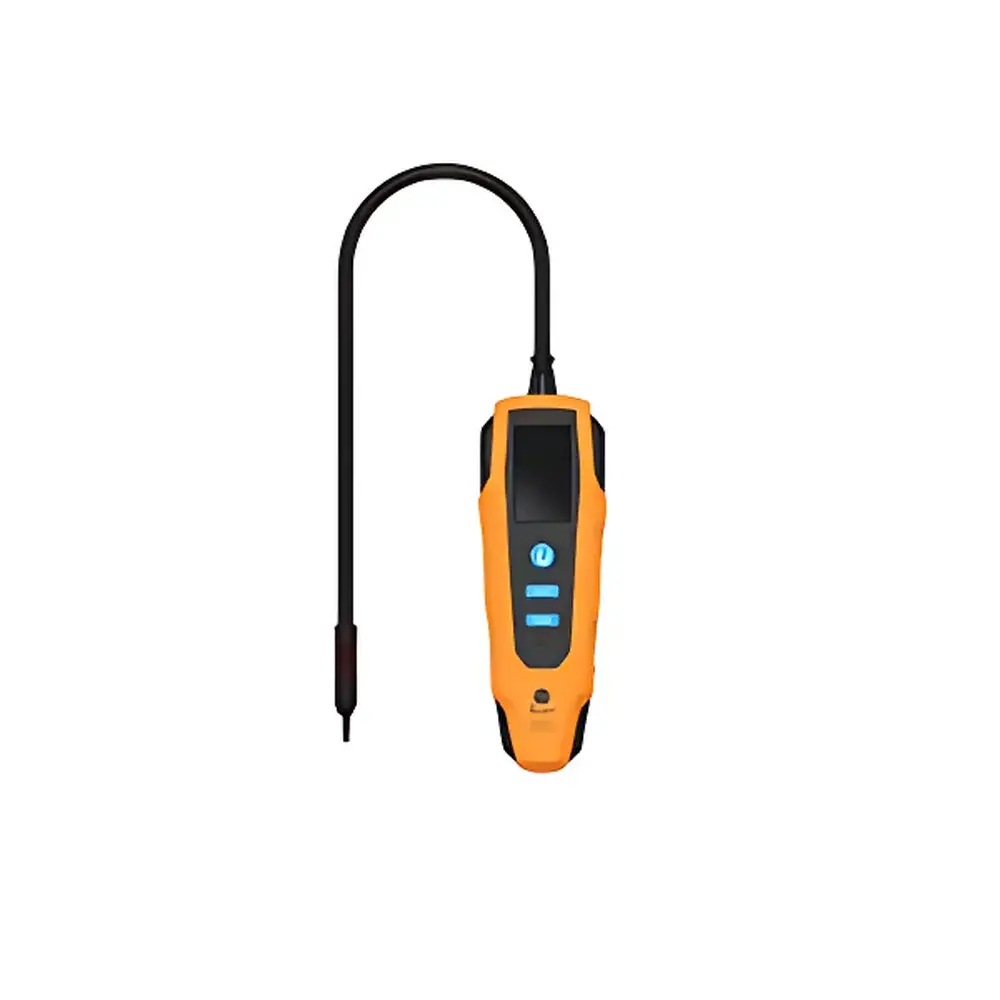
CUBIC INSTRUMENTS AM4210 Handheld Electrolyte Leak Detector
| Brand | CUBIC INSTRUMENTS |
|---|---|
| Origin | Hebei, China |
| Manufacturer Type | Authorized Distributor |
| Country of Origin | China |
| Model | AM4210 |
| Pricing | Available Upon Request |
Overview
The CUBIC INSTRUMENTS AM4210 Handheld Electrolyte Leak Detector is an engineered field instrument designed for rapid, on-site detection and semi-quantitative assessment of volatile organic electrolyte vapors—specifically dimethyl carbonate (DMC), ethyl methyl carbonate (EMC), and ethylene carbonate (EC)—in battery manufacturing, energy storage system (ESS) maintenance, and electric vehicle (EV) service environments. It operates on the principle of non-dispersive infrared (NDIR) spectroscopy, leveraging proprietary infrared absorption bands unique to carbonate-based electrolytes. Unlike catalytic bead or electrochemical sensors, the NDIR architecture delivers inherent selectivity against common interferents (e.g., alcohols, CO₂, humidity fluctuations), ensuring stable baseline performance across variable ambient conditions. The device is purpose-built for routine leak surveys in confined or high-risk zones where early-stage electrolyte vapor release poses fire, corrosion, or thermal runaway risks—prior to visible pooling or pressure drop.
Key Features
- Proprietary NDIR sensor module with patented optical path design, delivering high selectivity for DMC/EMC/EC vapors and long-term signal stability over 10 years
- TFT LCD display with real-time ppm readout, dynamic bar graph visualization, and three-tier leakage severity indication (Low/Medium/High)
- Integrated red LED at goose-neck probe tip for precise spatial localization of leak source during scanning
- Configurable sensitivity modes (High/Medium/Low) and dual zeroing options: automatic baseline drift compensation or manual user-initiated zero
- Robust mechanical design: IP54-rated enclosure resistant to dust ingress and water splashing; operating temperature range 0–40°C, relative humidity ≤75% RH (non-condensing)
- Rechargeable lithium-ion battery with Type-C interface; 8-hour continuous operation per charge; full recharge in ≤3.5 hours
- On-device self-diagnostic routine verifying sensor response, battery health, and optical path integrity prior to each measurement cycle
Sample Compatibility & Compliance
The AM4210 is validated for direct vapor-phase sampling of low-boiling carbonate solvents under ambient industrial conditions. It does not require sample conditioning, pre-concentration, or carrier gas supply. Its detection performance meets the functional requirements outlined in EN 14624:2021 for portable combustible gas detectors used in battery production and maintenance facilities. While not certified to ATEX or IECEx for Zone 0/1 use, it complies with CE marking directives for electromagnetic compatibility (2014/30/EU) and low voltage (2014/35/EU). For quality assurance workflows, the instrument supports GLP-aligned documentation via timestamped screen capture (manual trigger) and maintains internal event logs including power-on time, alarm triggers, and calibration status—enabling traceability in regulated ESS commissioning and OEM service audits.
Software & Data Management
The AM4210 operates as a standalone field tool with no mandatory software dependency. All configuration, zeroing, and alarm thresholds are managed via intuitive physical keypad navigation. Internal memory stores up to 1,000 timestamped measurement events (date/time, ppm value, alarm level, battery status). Data export is enabled through optional USB-C cable connection to a host PC running CUBIC’s free LogView Utility (Windows/macOS), which generates CSV reports compliant with ISO/IEC 17025 record retention guidelines. Audit trail functionality includes firmware version logging and tamper-evident flags for critical parameter changes—supporting FDA 21 CFR Part 11 alignment when integrated into controlled laboratory or production QA systems.
Applications
- Routine leak screening of lithium-ion battery modules, pouch cells, and cylindrical cell housings during assembly, aging, and recycling
- Pre-commissioning verification of electrolyte containment integrity in stationary energy storage racks and BESS enclosures
- Field diagnostics for EV service technicians investigating thermal anomaly root causes in traction battery packs
- Environmental health & safety (EHS) monitoring in solvent handling areas, filling stations, and dry rooms
- Supporting failure analysis labs conducting root cause investigations of cell venting or swelling incidents
FAQ
What electrolyte vapors does the AM4210 detect?
It is optimized for DMC, EMC, and EC—key carbonate solvents used in commercial Li-ion electrolytes—with minimal cross-sensitivity to acetone, ethanol, or ambient CO₂.
Is calibration required before each use?
No. The unit performs automatic baseline stabilization during its <12-second warm-up. Manual zeroing is optional and recommended only after exposure to high-concentration vapors or extreme temperature shifts.
Can the device be used in outdoor or humid environments?
Yes—IP54 rating permits use in non-rain-exposed outdoor settings and high-humidity indoor spaces (<75% RH, non-condensing), though prolonged condensation may affect optical window clarity.
Does the AM4210 meet regulatory requirements for battery plant safety protocols?
It satisfies functional detection criteria referenced in UL 9540A, GB/T 36276, and IEC 62619 for electrolyte vapor monitoring; however, site-specific hazard classification determines whether additional explosion-proof certification is mandated.
How is sensor longevity ensured over the claimed 10-year design life?
The NDIR detector uses sealed, gold-plated optical components and temperature-compensated electronics to minimize drift; no consumable parts or field-replaceable sensors are required within the operational lifespan.
Related Products







