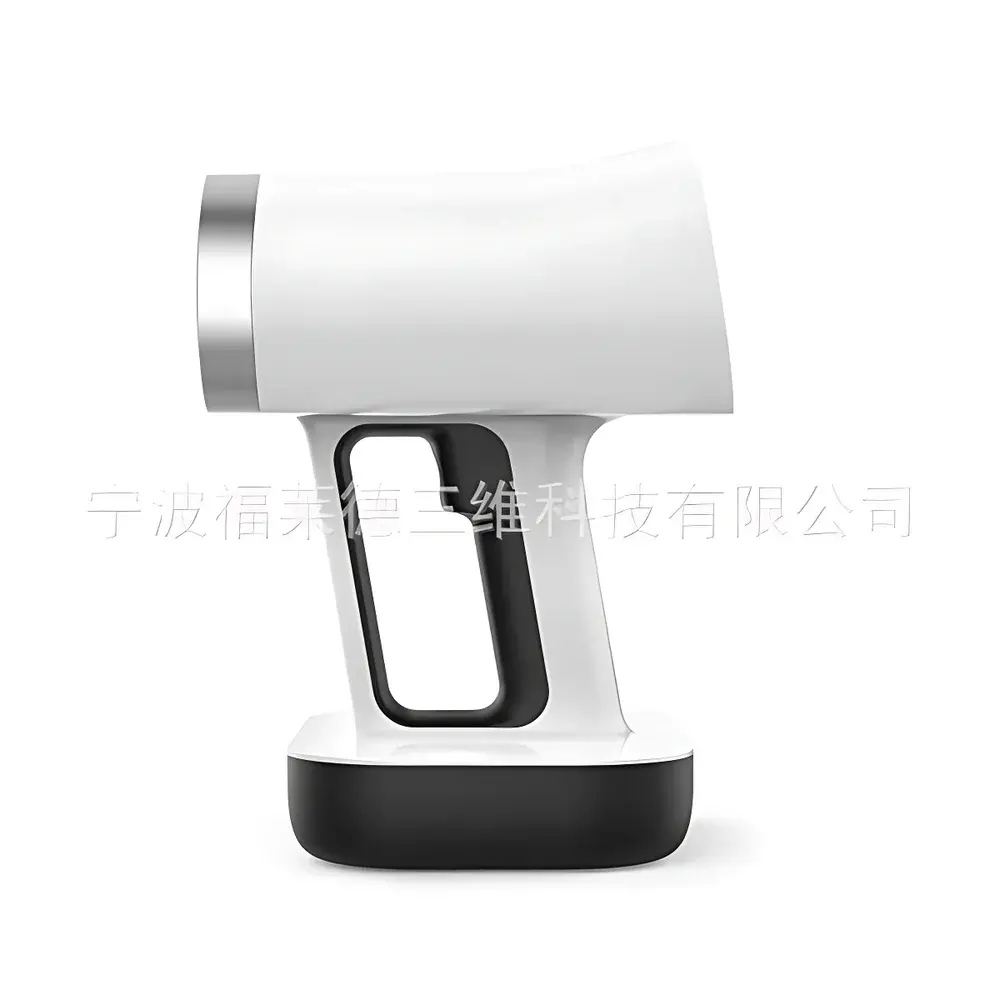
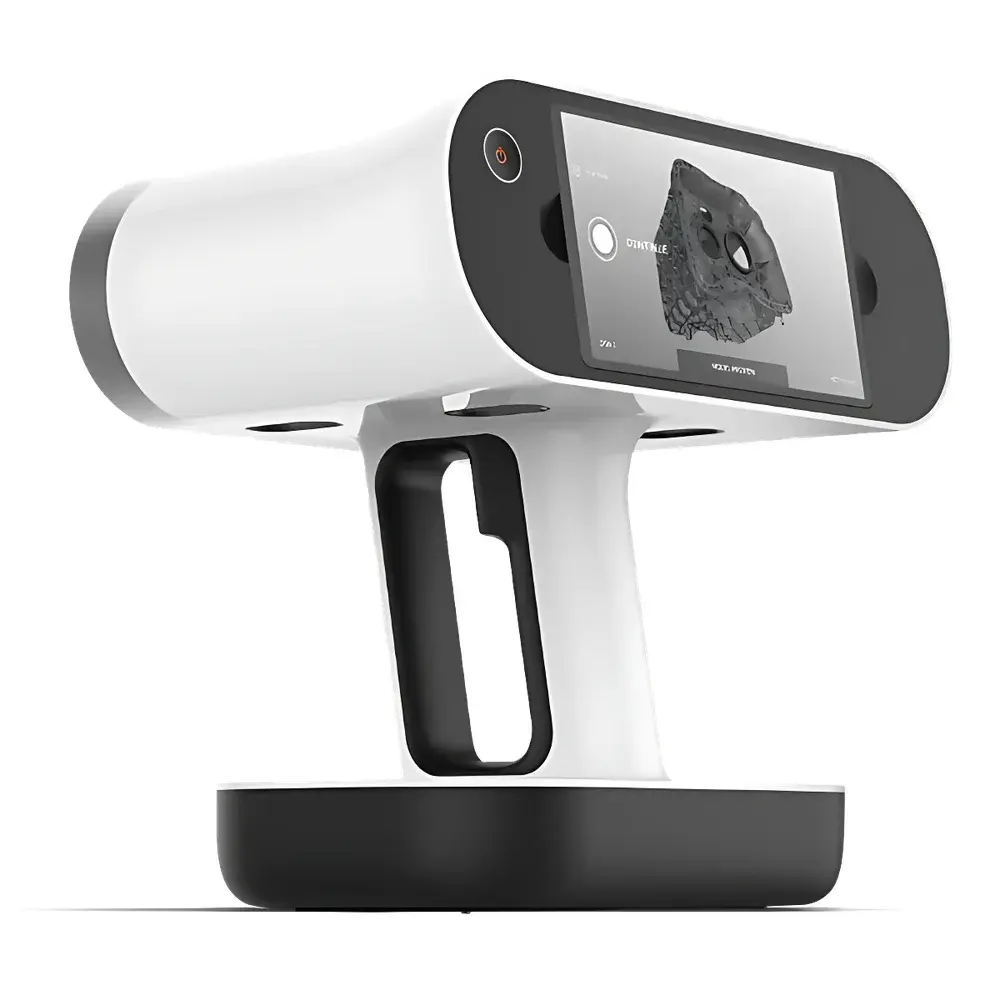
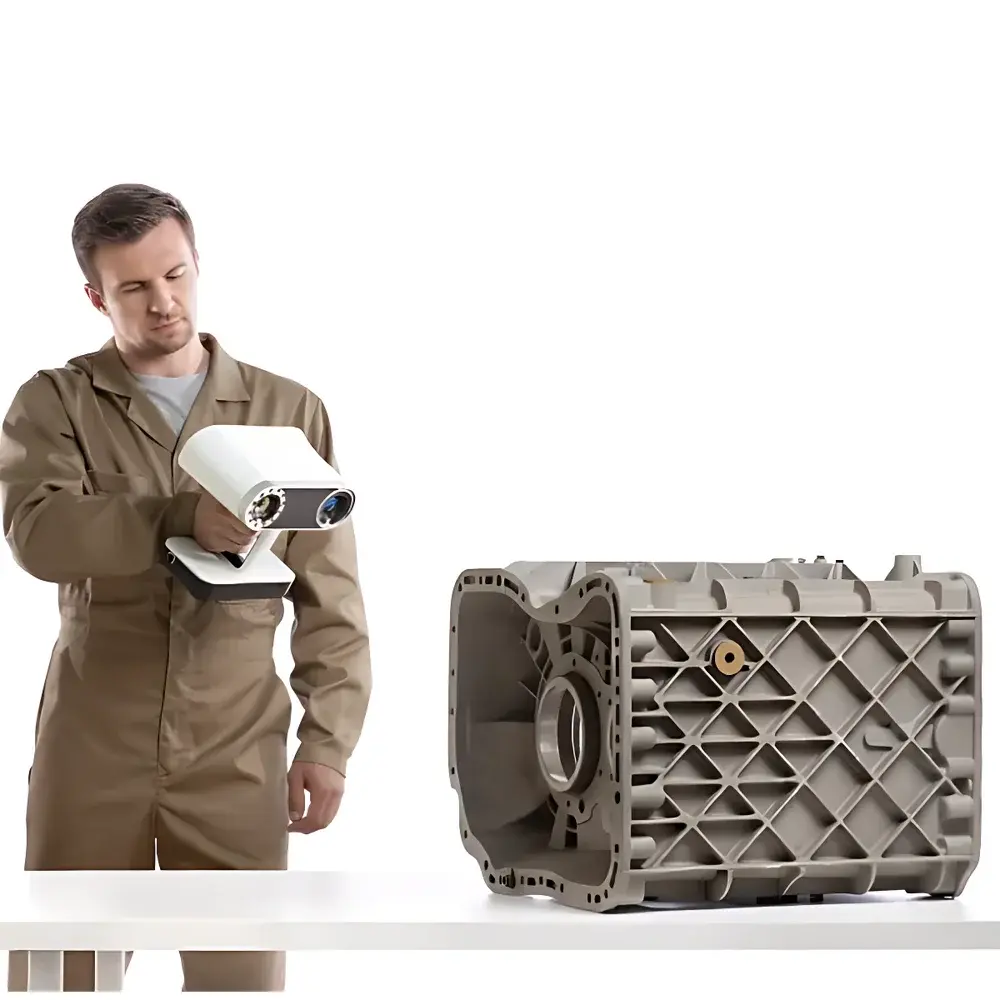
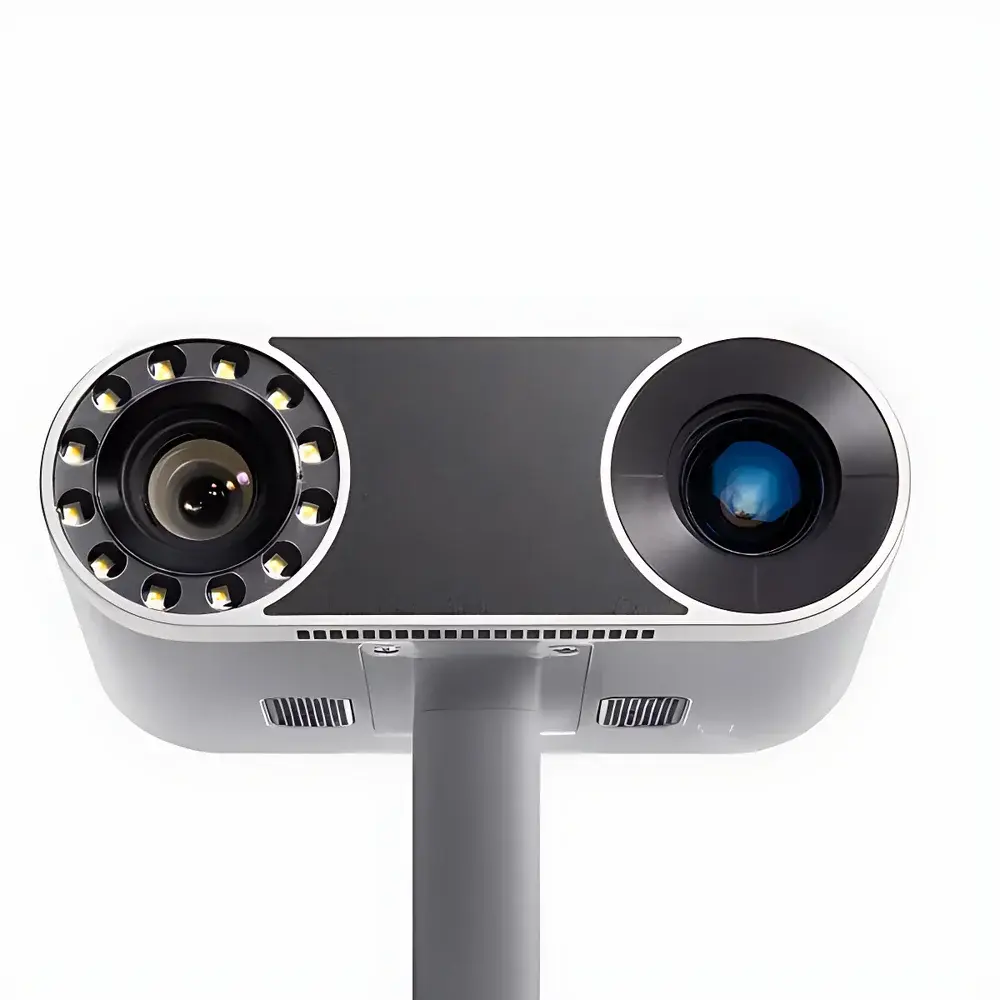
Artec Leo Handheld Wireless Color 3D Scanner
| Brand | Artec |
|---|---|
| Origin | Imported (Non-China) |
| Model | ARTEC LEO |
| Measurement Speed | 60 fps |
| Scan Accuracy | ≤ 0.1 mm |
| Resolution | 0.2 mm |
| Max Scanning Range | 8–10 m |
| Operating System Compatibility | Windows 10/11 |
| Weight | 2.5 kg |
| Onboard Processing | Yes |
| Light Source | Dual VCSEL + White LED Array |
| Texture Capture | Yes |
| Data Acquisition Rate | Up to 4 million points/sec |
| Real-time HD Display | Integrated 5.5" touchscreen |
| Power | Rechargeable internal battery (12 V DC) |
| Connectivity | Wi-Fi, Ethernet, microSD slot |
| Working Distance | 0.35–1.2 m |
| Near-Field FOV | 246 × 153 mm |
| Far-Field FOV | 843 × 527 mm |
| Calibration | Fully onboard, no external targets required |
Overview
The Artec Leo is a professional-grade, fully wireless handheld color 3D scanner engineered for high-fidelity geometric measurement in industrial metrology, reverse engineering, quality control, and digital archiving applications. Unlike traditional structured-light or laser-based scanners requiring external tracking systems or target markers, the Leo employs a proprietary hybrid optical architecture combining dual VCSEL (Vertical-Cavity Surface-Emitting Laser) projectors with a high-density white LED array. This enables markerless, real-time spatial tracking via advanced computer vision algorithms—eliminating the need for adhesive targets, external motion capture rigs, or tethered computing hardware. Its onboard NVIDIA Jetson TX2 processor executes full 3D reconstruction—including alignment, fusion, noise filtering, and texture mapping—in real time, directly on the device. The integrated 5.5-inch HD touchscreen provides immediate visual feedback during acquisition, allowing operators to verify coverage, inspect surface fidelity, and adjust scanning strategy dynamically without post-acquisition latency.
Key Features
- Fully autonomous operation: No PC, no cables, no calibration targets—scan and process entirely on-device.
- Real-time visualization: Live 3D mesh rendering at up to 60 frames per second with color texture overlay on the built-in touchscreen.
- Markerless tracking: Proprietary hybrid geometry + texture tracking engine ensures robust pose estimation across diverse surface finishes, including dark, reflective, or low-texture materials.
- High-speed data acquisition: Captures up to 4 million 3D points per second with sub-millimeter repeatability under controlled environmental conditions.
- Industrial-grade ergonomics: Balanced 2.5 kg form factor with thermal management optimized for extended handheld use; IP52-rated enclosure for dust resistance and limited moisture exposure.
- Flexible deployment: Supports standalone operation via Wi-Fi or direct Ethernet connection; raw scan data stored on removable microSD card (UHS-I compatible).
Sample Compatibility & Compliance
The Artec Leo is validated for non-contact measurement of static or slowly moving objects ranging from small mechanical components (≥50 mm) to large-scale assets such as automotive body panels, architectural elements, or human anatomy. Its working distance range (0.35–1.2 m) and scalable field-of-view support both fine-detail digitization (e.g., turbine blades, dental prostheses) and broad-area capture (e.g., industrial machinery, heritage artifacts). While not certified as a metrology instrument per ISO 10360 or ASME B89.4.10, its performance characteristics align with typical requirements for first-article inspection, CAD comparison, and dimensional validation workflows where traceable NIST-calibrated reference standards are applied externally. Texture capture complies with sRGB color space specifications and supports photogrammetric-grade reflectance consistency across sequential scans.
Software & Data Management
Scanned data is exported in industry-standard formats—including OBJ, STL, PLY, and AOP (Artec’s native project format)—with full color, normals, and confidence maps preserved. When connected to a host workstation running Artec Studio 19+, users gain access to advanced processing tools compliant with GLP/GMP documentation practices: version-controlled project history, audit-trail logging, user-defined QA checkpoints, and export templates conforming to ISO 14644 cleanroom documentation frameworks. The software supports automated deviation analysis against nominal CAD models (STEP, IGES, X_T), generating ASME Y14.5-compliant GD&T reports. All processing steps—including smoothing, hole-filling, simplification, and coordinate system registration—are fully scriptable via Python API, enabling integration into automated metrology pipelines.
Applications
- Manufacturing & Quality Assurance: First-article inspection, tool wear monitoring, weld seam profiling, and as-built vs. as-designed validation.
- Healthcare & Biomechanics: Prosthetic socket digitization, orthopedic implant design, craniofacial reconstruction planning, and gait analysis pre-processing.
- Cultural Heritage & Forensics: Non-invasive artifact documentation, crime scene reconstruction, and paleontological specimen preservation.
- Automotive & Aerospace: Rapid prototyping verification, interior trim fit-checking, and composite layup conformity assessment.
- Education & Research: Teaching 3D metrology principles, computational geometry validation, and multi-sensor data fusion experiments.
FAQ
Does the Artec Leo require external calibration equipment?
No. The scanner performs full self-calibration on startup using internal reference patterns and inertial measurement unit (IMU) data. No external calibration plates or targets are necessary.
Can it scan highly reflective or black surfaces without spray?
Yes—within operational limits. The dual VCSEL system enhances contrast on low-reflectivity surfaces, while adaptive exposure control mitigates saturation on specular materials. For optimal results on challenging surfaces, ambient light control and moderate scanning speed adjustments are recommended.
Is the device suitable for ISO/IEC 17025-accredited laboratories?
While the Leo itself is not a certified metrology standard, it may be incorporated into accredited measurement processes when used with documented uncertainty budgets, traceable reference artifacts, and validated SOPs aligned with ISO/IEC 17025 clause 6.4.2 (Equipment).
What is the expected battery life during continuous scanning?
Approximately 4–6 hours depending on ambient temperature, screen brightness, and processing load. Hot-swappable battery modules support uninterrupted field operation.
Does Artec Studio support FDA 21 CFR Part 11 compliance?
Yes—when deployed in validated environments with electronic signature configuration, role-based access controls, and audit trail retention enabled per organizational SOPs.