
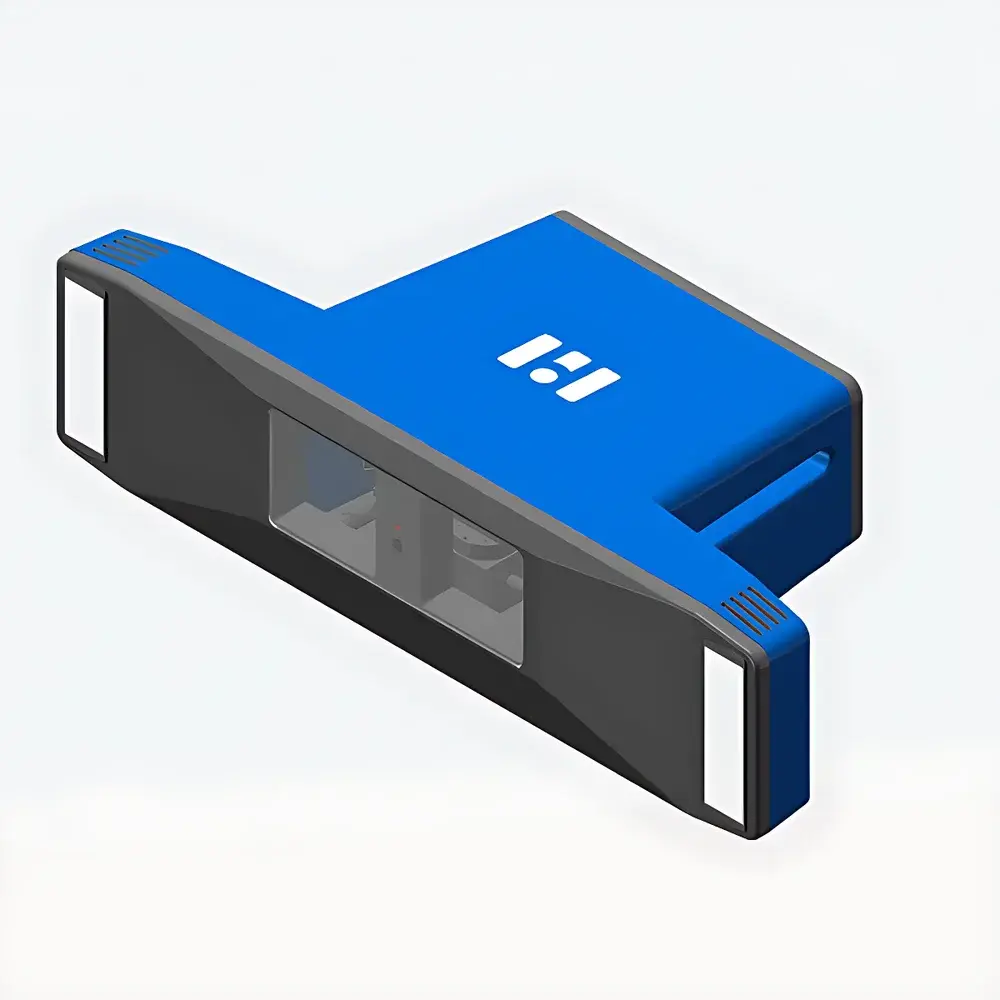
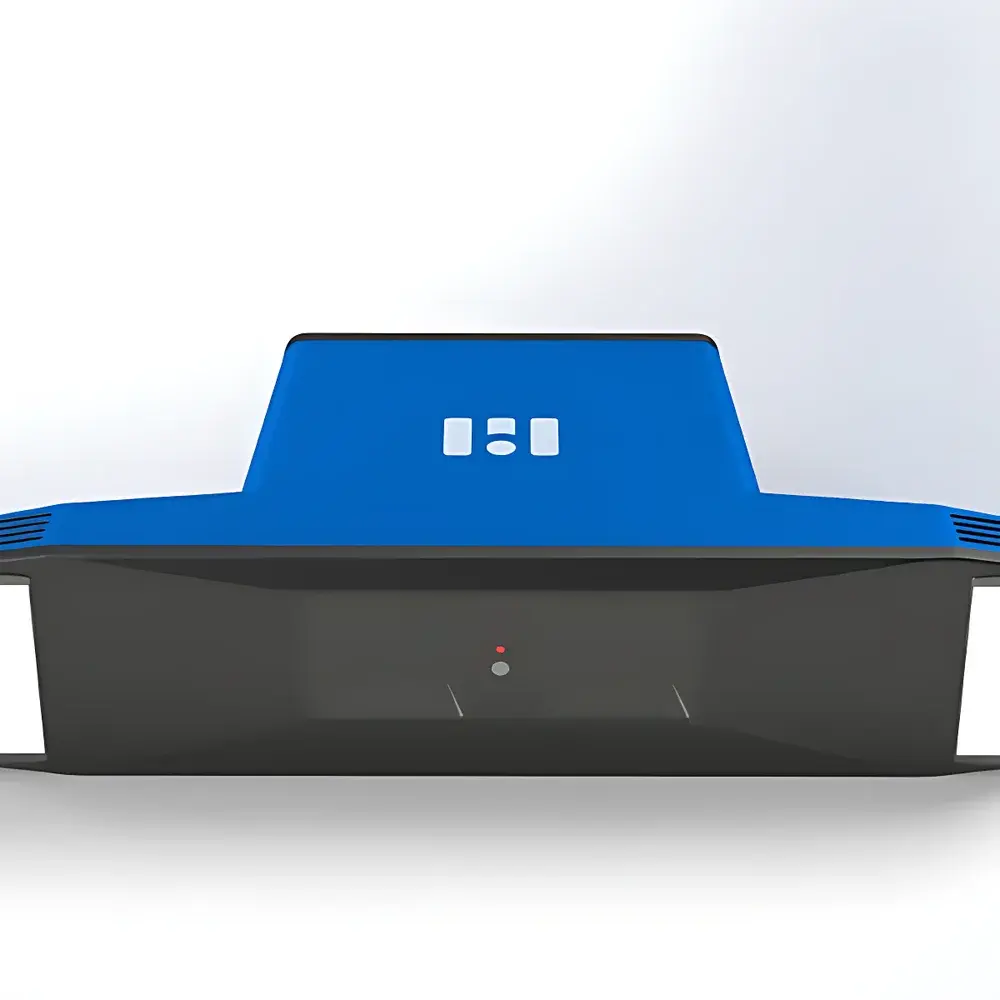
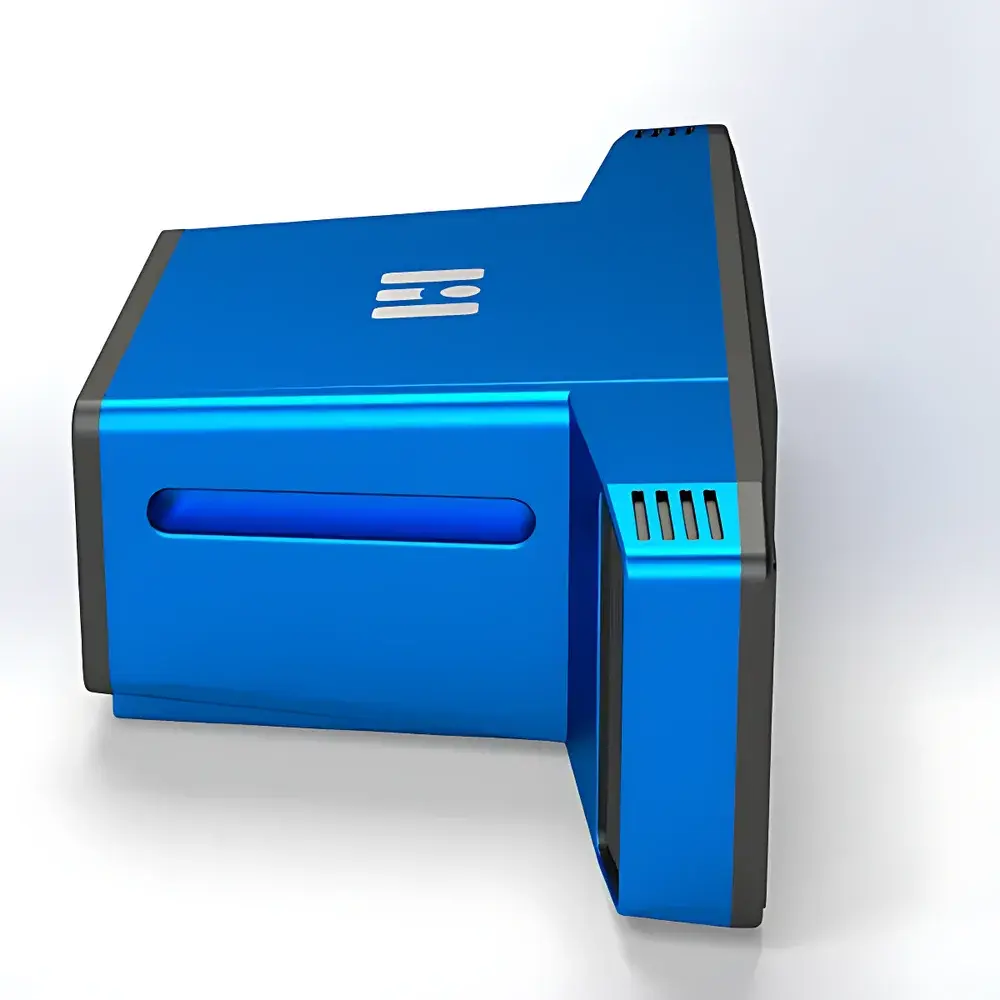
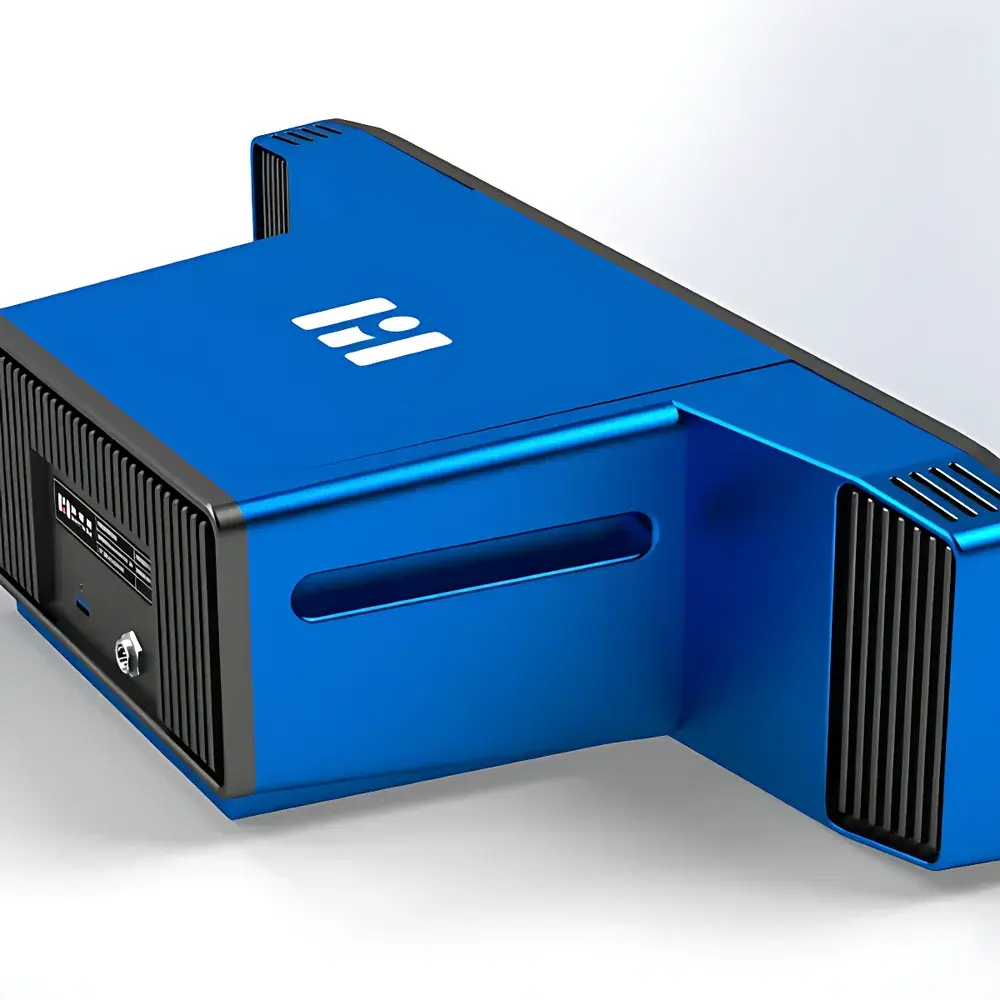
Haytham Blue Box1200-32 Monocular Digital Image Correlation (DIC) 3D Full-Field Strain Measurement System
| Brand | Haytham |
|---|---|
| Model | Blue Box1200-32 |
| Origin | Guangdong, China |
| Type | Domestic |
| Supplier Type | Authorized Distributor |
| Pricing | Upon Request |
Overview
The Haytham Blue Box1200-32 is a monocular digital image correlation (DIC) system engineered for high-fidelity, non-contact 3D full-field strain and displacement measurement under static, quasi-static, and dynamic mechanical loading conditions. Unlike stereo-DIC systems requiring dual synchronized cameras, this monocular configuration leverages advanced single-view geometric reconstruction algorithms—combined with calibrated out-of-plane motion compensation—to deliver quantitative 3D deformation fields from a single high-resolution CMOS sensor. The system operates on the core principle of tracking sub-pixel intensity patterns across sequential images captured during deformation; spatial gradients in speckle texture are correlated via iterative Newton-Raphson optimization to compute displacement vectors, from which strain tensors (εxx, εyy, εxy, γyz, γxz) are derived numerically. Designed for integration into materials testing frames, thermal chambers, and vibration shakers, the Blue Box1200-32 supports real-time monitoring at up to 32 fps (full resolution), enabling robust characterization of localized yielding, crack propagation onset, and thermo-mechanical coupling in structural components.
Key Features
- Monocular 3D DIC architecture with integrated depth-sensing calibration routine for accurate out-of-plane displacement recovery without secondary camera or laser triangulation hardware
- High-speed imaging capability: up to 32 frames per second at native 12 MP resolution (4096 × 3072 pixels), optimized for transient deformation capture
- Real-time strain mapping engine with configurable ROI selection, sub-pixel registration accuracy (<0.01 pixel RMS), and on-the-fly strain tensor calculation
- Thermal resilience: validated operation up to 650 °C when paired with optional high-temperature lens housing and quartz viewport-compatible illumination
- Modular synchronization interface supporting TTL triggers from universal testing machines (UTMs), servo-hydraulic actuators, and data acquisition systems (e.g., National Instruments PXI, Dewesoft)
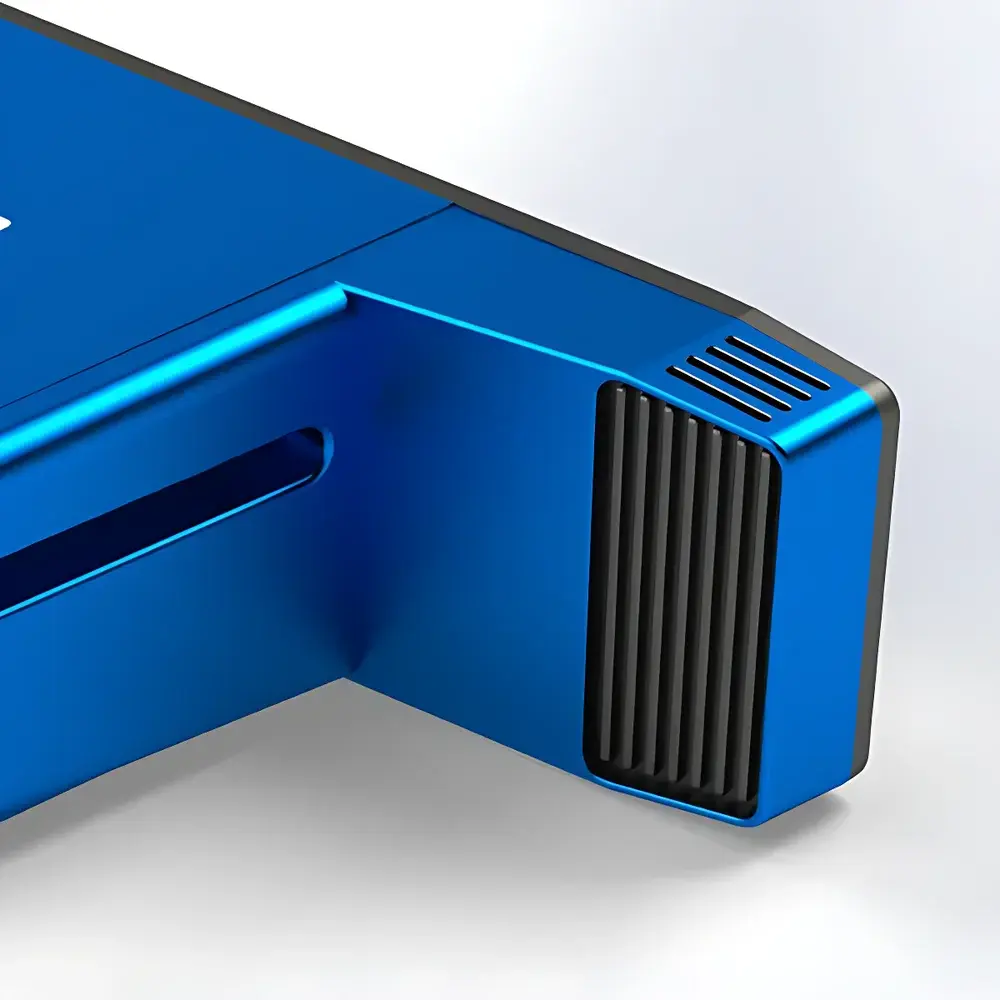
- Ruggedized aluminum enclosure rated IP52 for industrial lab environments; fanless thermal management for low-vibration imaging
Sample Compatibility & Compliance
The Blue Box1200-32 accommodates specimens ranging from miniature coupons (≥5 mm field-of-view) to large-scale aerospace structures (up to 2 m × 1.5 m FOV with telecentric optics). Compatible surface preparation includes stochastic spray-on speckle patterns (grain size 5–50 µm), electrochemical etching, and laser-induced periodic surface structures (LIPSS). The system meets essential requirements for ISO/IEC 17025-accredited laboratories: raw image timestamps are embedded with UTC-synchronized metadata; all processing parameters—including subset size, step size, interpolation kernel, and convergence criteria—are logged immutably. While not FDA-certified as a medical device, its data export format (HDF5 + JSON sidecar) supports traceability in GLP/GMP-aligned workflows, including audit trails for parameter changes and user authentication logs when deployed on Windows 10/11 LTSB platforms.
Software & Data Management
Control and analysis are performed using Haytham DICStudio v4.2—a dedicated, license-managed application built on Qt and OpenCV. The software provides batch processing pipelines, scripting support via Python API (PyDIC), and native export to industry-standard formats: CSV (displacement/strain tables), VTK (3D vector fields), and MATLAB .mat (for custom post-processing). All measurement sessions generate FAIR-compliant datasets: each HDF5 file contains raw images, calibration matrices, speckle quality metrics (contrast-to-noise ratio, entropy), and uncertainty estimates per node based on local correlation confidence. DICStudio supports 21 CFR Part 11-compliant electronic signatures when configured with Windows Active Directory integration and role-based access control (RBAC), making it suitable for regulated R&D and quality assurance applications in aerospace and rail sectors.
Applications
- Aerospace component validation: Real-time strain mapping of titanium alloy airframe skins during elevated-temperature tensile testing (650 °C) to quantify creep-strain partitioning and microstructural damage evolution
- Rotating machinery fatigue analysis: Synchronized DIC acquisition on turbine blade or propeller sections under cyclic loading, correlating surface strain hotspots with acoustic emission events
- Rail infrastructure integrity assessment: Dual-system synchronized tracking of rail joint displacement under simulated train axle loads, resolving differential settlement and weld fatigue zones
- Thermo-mechanical coupling in composites: Simultaneous infrared thermography and DIC acquisition to correlate evolving temperature gradients with heterogeneous strain development in carbon fiber laminates
- Automotive HMI durability testing: Quantifying micro-deformation and interfacial slip in HVAC control panels subjected to modal vibration sweeps (10–200 Hz), benchmarked against contact-based LVDT and strain gauge references
- Validation metrology: Cross-calibration against tactile displacement sensors (e.g., dial indicators ±0.001 mm accuracy) and foil strain gauges (GF = 2.08, tolerance ±0.5%) for uncertainty budgeting in ISO 13528 interlaboratory studies
FAQ
How does monocular DIC achieve 3D measurements without a second camera?
It employs a calibrated reference plane and controlled out-of-plane motion constraints—often enforced by fixture geometry or active focus tracking—to decouple depth ambiguity. Depth is recovered via perspective projection modeling and iterative residual minimization across the deformation sequence.
Can the system operate inside environmental chambers?
Yes—when equipped with an optional fused silica viewport, high-temperature lens mount, and LED ring illuminator with thermal stability <±0.1% over 650 °C, the system maintains optical alignment and image fidelity within ASTM E2925-compliant thermal enclosures.
What is the typical measurement uncertainty for in-plane strain?
Under optimal speckle contrast (>40 dB) and illumination uniformity (±3%), the standard uncertainty (k=2) for εxx/εyy is ≤50 µε for subsets ≥32×32 pixels, as verified per ISO/IEC 17025 internal validation protocols.
Is third-party software integration supported?
Yes—DICStudio provides a documented RESTful API and Python SDK for bidirectional data exchange with MATLAB, LabVIEW, and MTS TestSuite, enabling closed-loop control and automated reporting pipelines.
Does the system comply with aerospace data traceability standards?
All exported datasets include embedded SHA-256 hashes, UTC timestamps, instrument ID, operator credentials, and processing provenance metadata—fully compatible with AS9100D clause 8.5.2 requirements for measurement traceability and configuration control.
Related Products



