
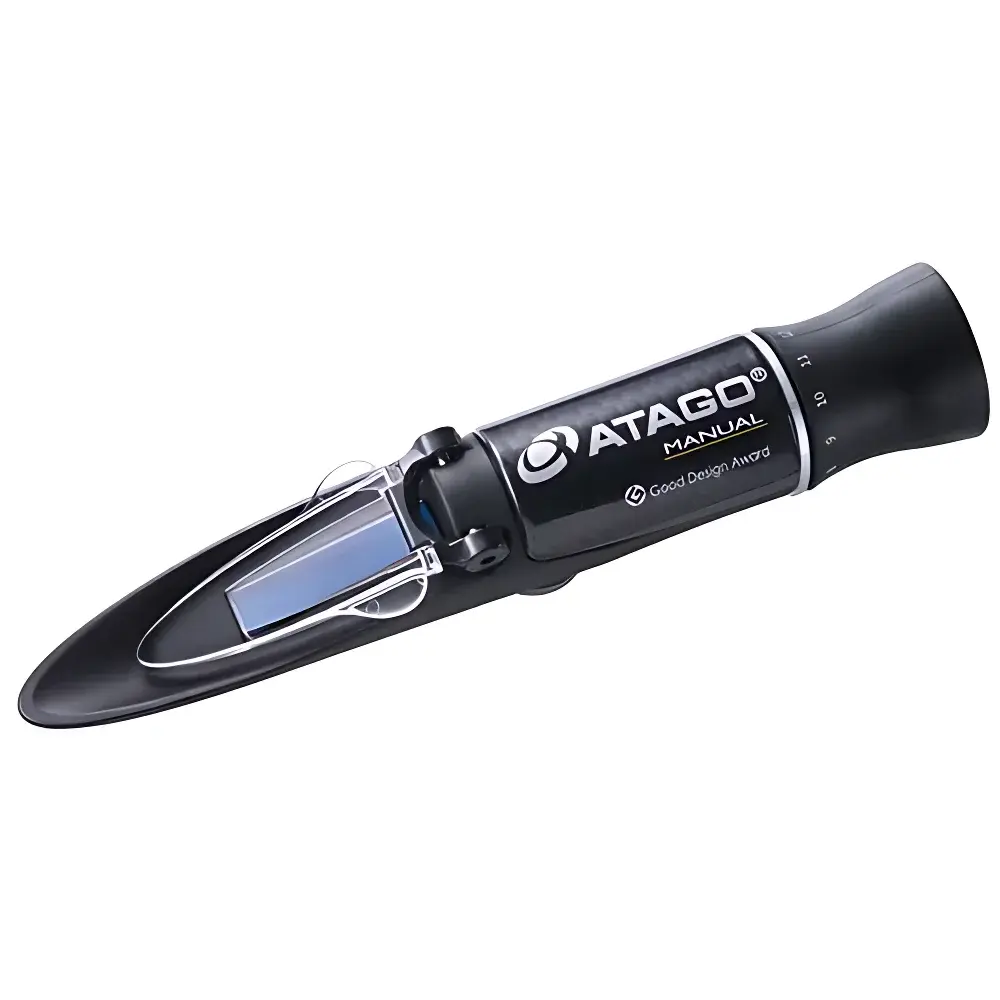
ATAGO MASTER-BC Battery Electrolyte & Antifreeze Handheld Refractometer
| Brand | ATAGO |
|---|---|
| Origin | Japan |
| Model | MASTER-BC |
| Product Type | Handheld Refractometer |
| Temperature Control | Yes |
| Digital Display | Yes |
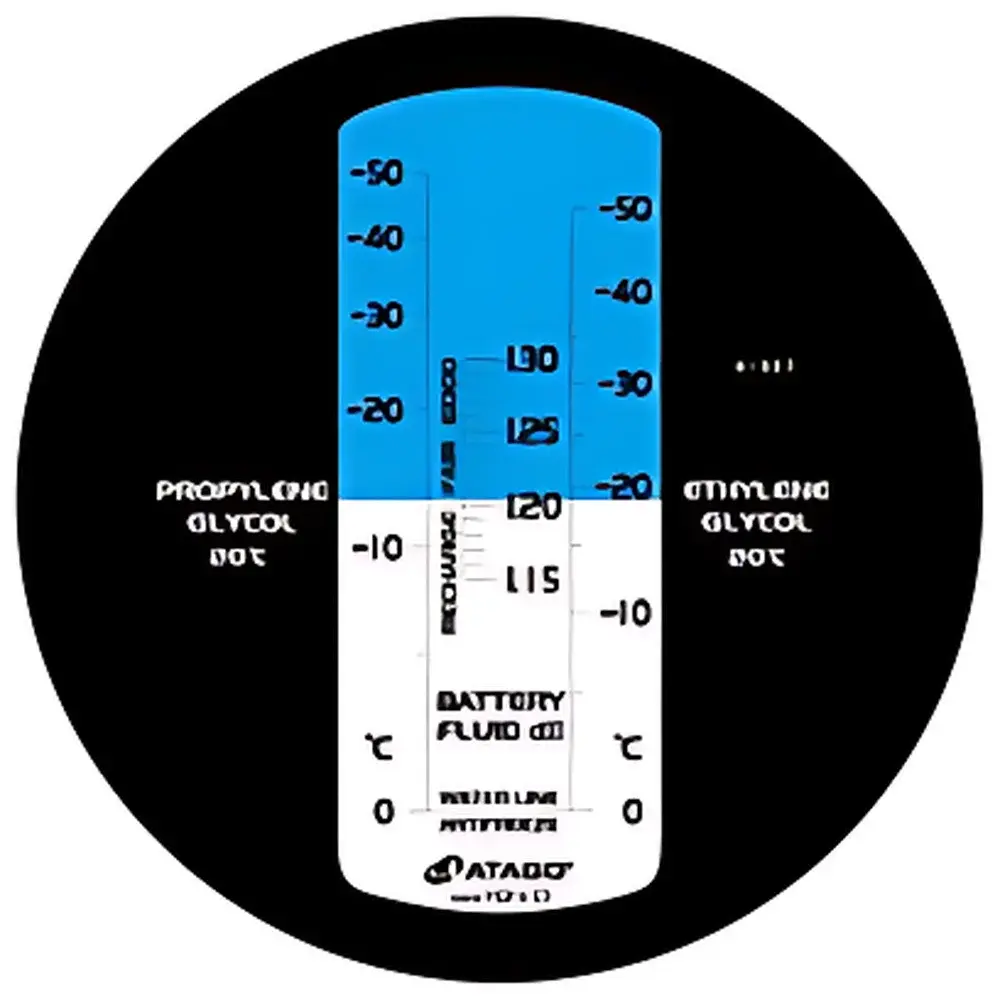
| Measurement Range | Freezing Point (Ethylene Glycol): 0 to –50 °C |
| Freezing Point (Propylene Glycol) | 0 to –50 °C |
| Battery Electrolyte Specific Gravity (d₂₀/₂₀) | 1.150–1.300 |
| Minimum Scale Division | 5 °C (for glycols), 0.01 (for electrolyte) |
| Dimensions | 3.2 × 3.4 × 16.8 cm |
| Weight | 90 g (instrument only) |
Overview
The ATAGO MASTER-BC is a precision-engineered handheld refractometer designed specifically for field and workshop use in automotive, industrial maintenance, and renewable energy applications. It operates on the principle of critical angle refraction—measuring the refractive index of liquid samples to determine either freezing point depression (for ethylene and propylene glycol-based coolants) or specific gravity (for lead-acid battery electrolytes). Unlike generic refractometers, the MASTER-BC integrates dual calibrated optical scales optimized for two distinct measurement modes: one for coolant freeze protection assessment and another for battery state-of-charge evaluation. Its optical system features temperature-compensated prisms and a high-contrast reticle, enabling reliable readings without external calibration under ambient conditions ranging from 10 to 35 °C. The device conforms to JIS Z 8806 (Japanese Industrial Standard for refractometers) and supports traceable verification using certified reference standards.
Key Features
- Optically coupled dual-scale eyepiece with simultaneous readout for glycol freezing point (°C) and battery electrolyte specific gravity (d₂₀/₂₀)
- Integrated automatic temperature compensation (ATC) mechanism covering 10–35 °C, minimizing manual correction errors
- Corrosion-resistant housing constructed from polypropylene and stainless steel components—engineered for repeated exposure to sulfuric acid, ethylene glycol, and road salt solutions
- Digital display option available via optional ATAGO RS-232 interface module (sold separately), enabling data logging and PC integration
- Compact ergonomic form factor (3.2 × 3.4 × 16.8 cm; 90 g) with non-slip rubberized grip for one-handed operation in confined engine bays or solar thermal system enclosures
- No-battery mechanical design ensures continuous functionality without power dependency or drift from battery voltage fluctuations
Sample Compatibility & Compliance
The MASTER-BC is validated for direct measurement of aqueous solutions containing ethylene glycol (EG), propylene glycol (PG), and sulfuric acid (H₂SO₄) within defined concentration ranges corresponding to the stated freezing point and specific gravity spans. It is not intended for use with organic solvents, oils, or highly viscous fluids (>100 mPa·s). For quality control environments operating under GLP or ISO/IEC 17025 frameworks, the instrument supports documented calibration using NIST-traceable glycol standard solutions (e.g., ASTM D1120 reference materials) and certified electrolyte reference standards (e.g., DIN 43539-5). While the device itself does not require regulatory certification, its measurement outputs are routinely accepted in OEM service documentation (e.g., SAE J1222, IEC 62485-2) for battery health verification and coolant system integrity audits.
Software & Data Management
As a purely optical-mechanical instrument, the MASTER-BC requires no embedded firmware or onboard software. However, when paired with ATAGO’s optional digital interface kit (Model DIGI-MASTER), users gain access to PC-based data acquisition via RS-232 serial protocol. This configuration enables timestamped measurement export to CSV files, batch reporting, and integration into LIMS platforms compliant with FDA 21 CFR Part 11 requirements—provided audit trail functionality is implemented at the host system level. Calibration records, operator IDs, and environmental metadata (e.g., ambient temperature at time of measurement) can be appended during post-processing to satisfy internal QA documentation protocols.
Applications
- Routine inspection of starter battery electrolyte concentration in automotive, marine, and off-grid photovoltaic systems to assess charge status and detect sulfation onset
- Verification of antifreeze mixture ratios in vehicle cooling systems prior to winter operation—ensuring compliance with manufacturer-specified freeze protection thresholds
- Field monitoring of heat transfer fluid composition in solar thermal collector loops and district heating networks utilizing PG-based secondary circuits
- Preventive maintenance screening of forklift and UPS battery banks in logistics and data center facilities
- Technical support diagnostics during roadside assistance interventions where rapid electrolyte assessment informs battery replacement decisions
FAQ
Does the MASTER-BC require periodic recalibration?
Yes—ATAGO recommends verification against certified reference fluids at least once per shift in high-volume service environments, or before each day’s first measurement in low-frequency use. Calibration is performed manually using the included screwdriver-adjustable calibration screw.
Can this refractometer measure methanol-based windshield washer fluid?
No—the optical scale and ATC curve are optimized exclusively for ethylene glycol, propylene glycol, and sulfuric acid aqueous solutions. Methanol exhibits different refractive index–concentration behavior and will yield inaccurate freezing point estimates.
Is the prism surface resistant to battery acid splashes?
Yes—the sapphire-coated prism and surrounding stainless-steel sample well are rated for intermittent contact with 30–40% w/w H₂SO₄ at room temperature. Prolonged immersion or exposure to heated acid is not recommended.
What is the measurement uncertainty for electrolyte specific gravity?
When used per ATAGO’s operational guidelines (sample temperature 20 ± 2 °C, proper prism cleaning, and adequate sample volume), the expanded uncertainty (k=2) is ±0.003 d₂₀/₂₀.
Does the device meet IP rating requirements for shop floor use?
It carries no formal IP rating, but its sealed optical path and gasketed eyepiece prevent ingress of dust and incidental water spray—making it suitable for typical automotive workshop conditions per ISO 14644-1 Class 8 environments.



