
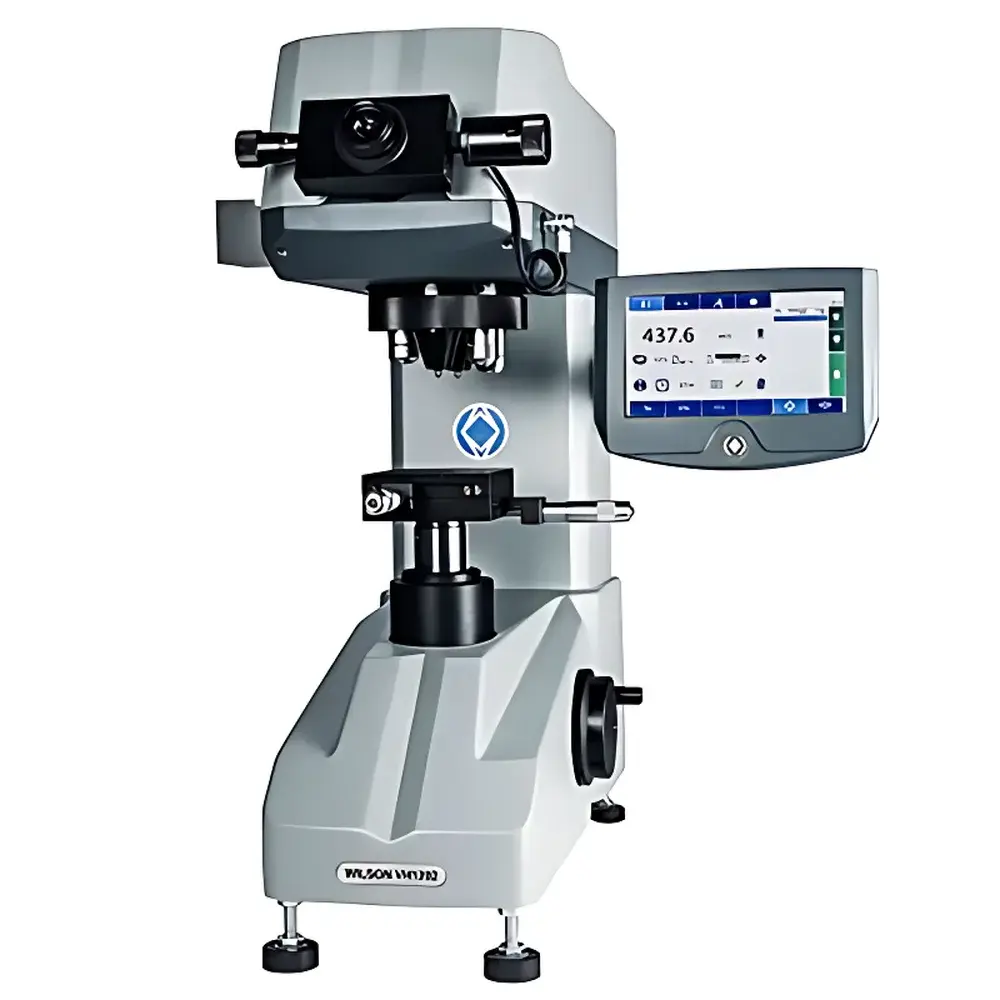
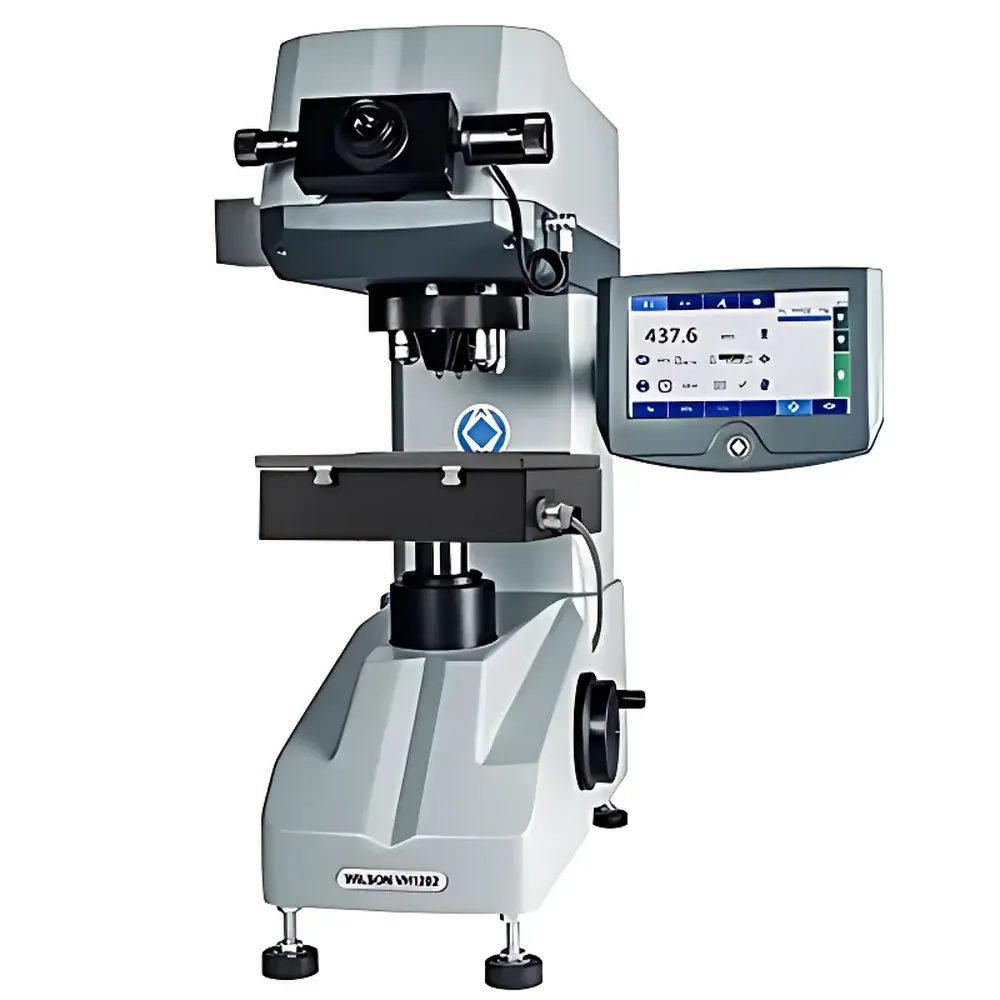
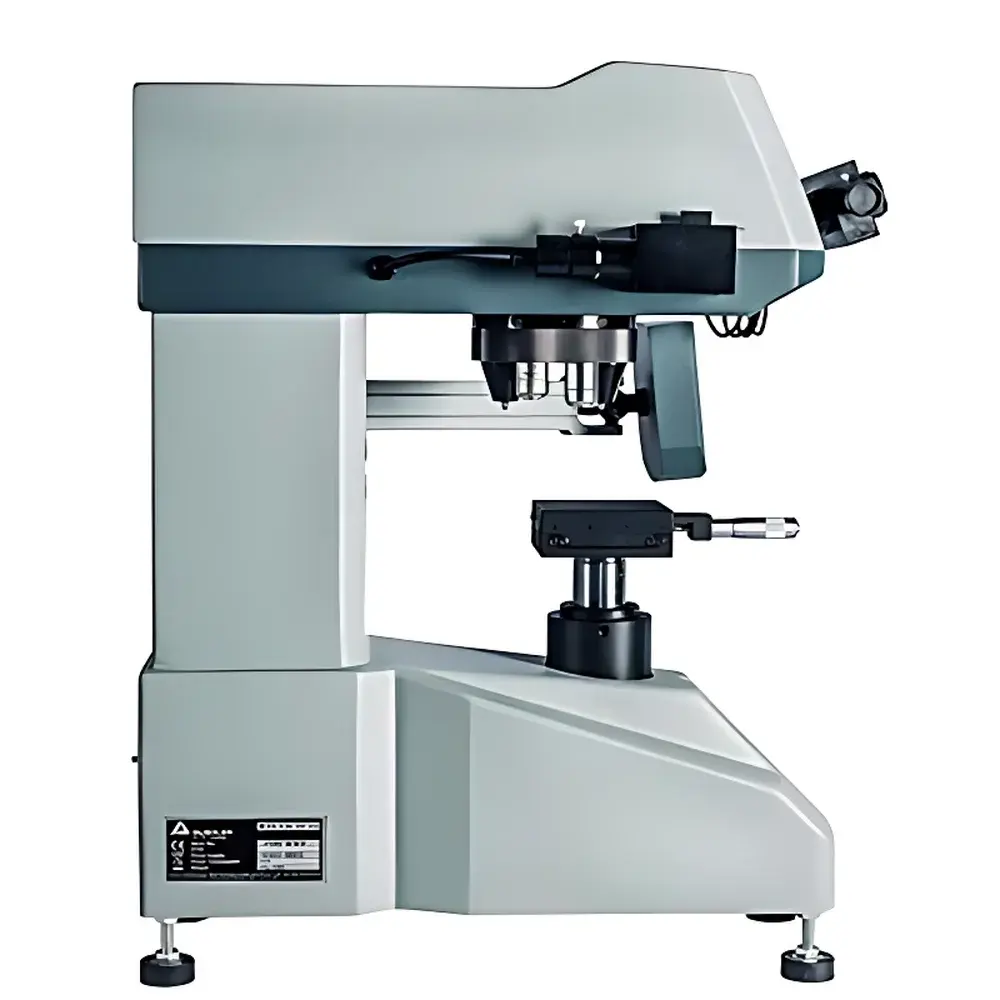
Wilson VH1102 & VH1202 Vickers/Knoop Microhardness Testers
| Brand | Wilson Hardness |
|---|---|
| Origin | USA |
| Manufacturer Type | Original Equipment Manufacturer (OEM) |
| Origin Category | Imported |
| Model | VH1102 / VH1202 |
| Price Range | USD $25,000 – $100,000 |
| Instrument Type | Vickers/Knoop Microhardness Tester |
| Measurement Range | HV 0.01–HV 2 / HK 0.01–HK 2 |
| Total Test Load | 0.01–2 kgf (10–2000 gf) |
| Specimen Height Clearance | 95 mm |
| Depth Clearance | 175 mm |
| Turret Positions | 4-position (VH1102) / 6-position (VH1202) |
| Objective Lenses | 5×, 10×, 50×, optional 100× (up to 1000× total magnification) |
| Display | 7″ color touchscreen LCD with USB interface |
| Load Selection | 9 pre-programmed automatic load steps |
| Compliance | ISO 6507-1, ASTM E384, ASTM E92 |
Overview
The Wilson® VH1102 and VH1202 are fully integrated microhardness testing systems engineered for high-precision Vickers (HV) and Knoop (HK) hardness measurements on metallic, ceramic, thin-film, and composite materials. Based on the principle of indentation metrology—where a precisely shaped diamond indenter (pyramidal for Vickers, rhombic for Knoop) is applied under controlled static load—the instruments measure diagonal lengths of residual impressions using calibrated optical microscopy. The resulting hardness value is calculated from the applied load and projected surface area of the impression, conforming strictly to the fundamental definitions in ISO 6507-1 and ASTM E384. Designed for laboratory, quality control, and R&D environments, these testers deliver repeatable sub-micron resolution in diagonal measurement, traceable calibration paths, and robust mechanical architecture optimized for long-term dimensional stability.
Key Features
- Motor-driven, low-noise turret system enabling seamless, programmable switching between indenters and objectives during automated test cycles—no manual intervention required.
- Configurable turret options: VH1102 features a 4-position turret (1 indenter + 2 objectives); VH1202 offers a 6-position turret (2 indenters + 3 long-working-distance objectives), supporting dual-scale testing and rapid method switching.
- Long-working-distance (LWD) objectives minimize risk of objective–specimen or indenter–specimen collision—critical for fragile coatings, polished cross-sections, and elevated sample topography.
- Seven-inch full-color capacitive touchscreen interface with intuitive icon-based navigation; supports multi-language UI, real-time load profile visualization, and on-device data review.
- Automated load selection across nine discrete steps (10–2000 gf), eliminating mechanical load-selector dials and reducing operator-induced variability.
- Integrated HD digital camera and LED illumination system synchronized with auto-focus module for consistent image acquisition—essential for reproducible diagonal measurement.
Sample Compatibility & Compliance
The VH1102/VH1202 accommodates specimens up to 95 mm in height and 175 mm in depth—suitable for bulk metallographic mounts, coated wafers, turbine blade sections, and additively manufactured components. Both models comply with international standards governing microhardness testing methodology, including ISO 6507-1 (Vickers hardness), ASTM E384 (Knoop and Vickers microindentation), and ASTM E92 (Vickers macrohardness). The system architecture supports GLP/GMP-aligned workflows: audit trails for user actions, timestamped test records, and password-protected method libraries ensure regulatory readiness for FDA 21 CFR Part 11–governed environments. Calibration verification follows NIST-traceable reference blocks (e.g., Wilson Standard Hardness Blocks certified per ISO 6507-3).
Software & Data Management
Controlled via Wilson DiaMet™ software (v5.0+), the system enables three operational modes: Basic (manual stage positioning + semi-automated measurement), Semi-Automatic (motorized XY stage + auto-diagonal detection for case depth CHD/NHT analysis), and Fully Automatic (integrated autofocus + stage scanning + batch measurement of >100 indents per run). DiaMet provides ISO/ASTM-compliant reporting templates, statistical process control (SPC) charts, histogram generation, and export to CSV, PDF, or XML formats. All measurement metadata—including load, dwell time, objective used, environmental temperature, and operator ID—is embedded in each result file. Software validation documentation (IQ/OQ/PQ protocols) and electronic signature support are available for regulated laboratories.
Applications
- Case depth profiling (CHD) of carburized, nitrided, or induction-hardened steel components.
- Thin-film hardness evaluation (e.g., PVD/CVD coatings, thermal barrier layers, semiconductor metallization).
- Grain-level hardness mapping in polycrystalline alloys and weld heat-affected zones (HAZ).
- Quality assurance of medical device implants (titanium alloys, CoCr, stainless steels) per ASTM F2624.
- Failure analysis of brittle fracture origins in ceramics and intermetallics.
- Research-grade indentation size effect (ISE) studies requiring precise low-load (<50 gf) repeatability.
FAQ
What standards does the Wilson VH1102/VH1202 comply with for microhardness testing?
The system meets ISO 6507-1 (Vickers), ASTM E384 (Knoop and Vickers microhardness), and ASTM E92 (macro-Vickers), with full traceability to NIST-certified reference materials.
Can the instrument perform both Vickers and Knoop tests without hardware reconfiguration?
Yes—both models accept interchangeable Vickers and Knoop indenters; the VH1202’s dual-indenter turret allows immediate switching within a single test sequence.
Is the DiaMet software compliant with FDA 21 CFR Part 11 requirements?
DiaMet v5.2+ includes electronic signatures, audit trail logging, role-based access control, and secure data archiving—fully validated for Part 11 compliance upon installation and configuration.
What is the minimum measurable diagonal length supported at 1000× magnification?
With the optional 100× LWD objective and calibrated pixel scaling, the system resolves diagonals ≥0.5 µm with ≤±0.5% measurement uncertainty (per ISO 6507-2 repeatability criteria).
Does the system support automated case depth (CHD) calculation per ISO 2639?
Yes—DiaMet includes built-in CHD algorithms per ISO 2639 Annex A, generating hardness gradient curves, inflection point detection, and statistical confidence intervals for transition zone boundaries.



