
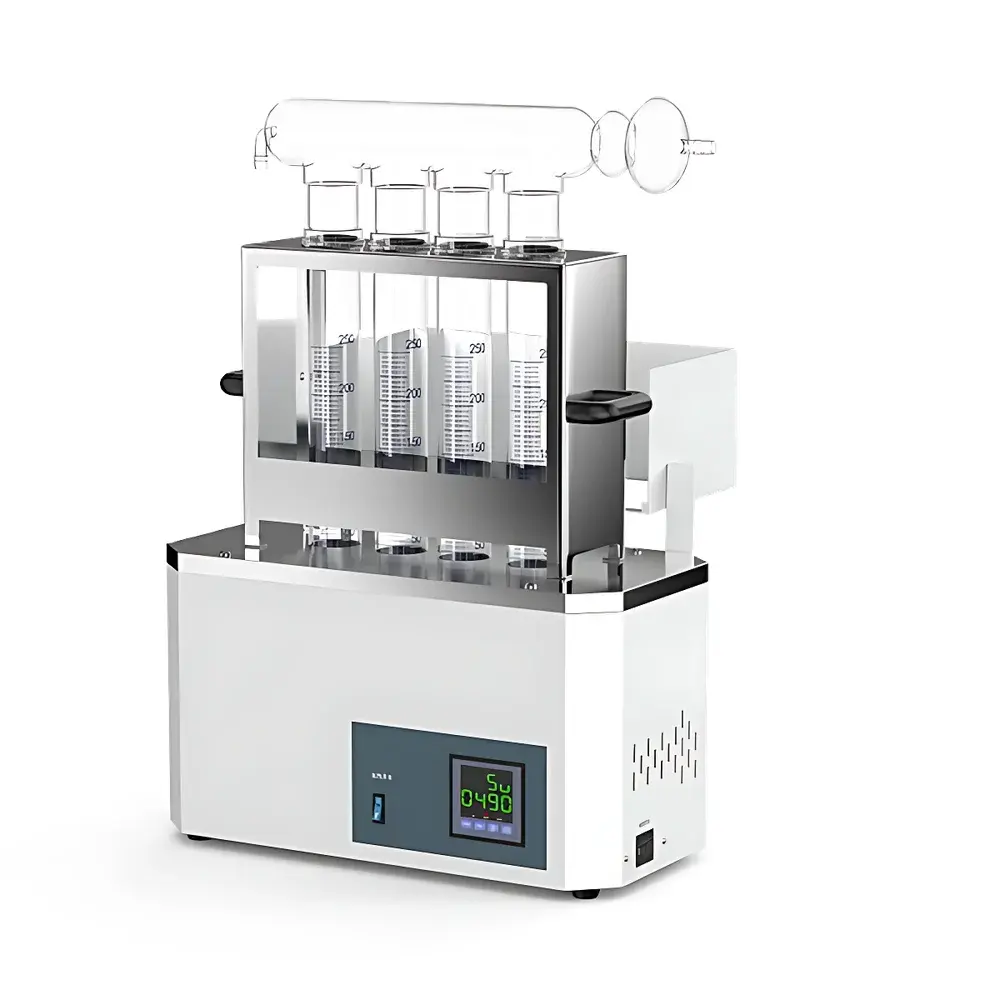
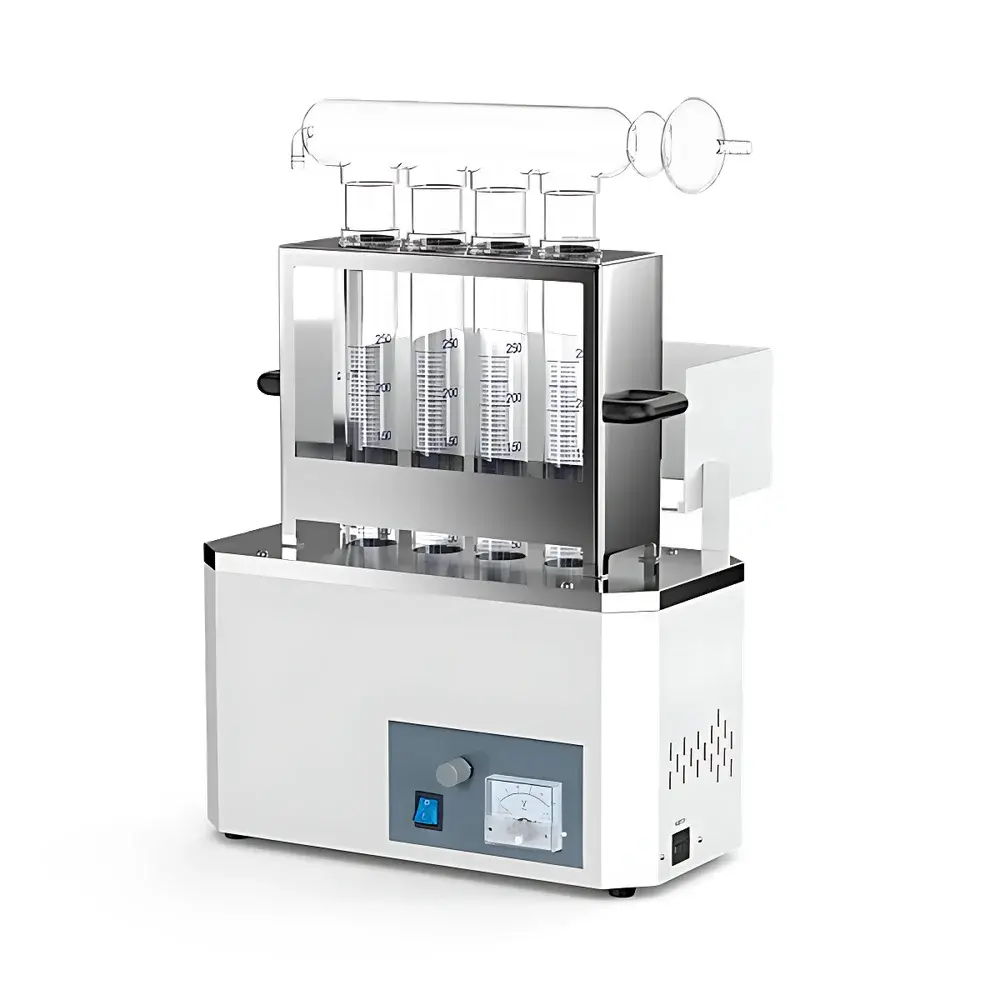
LICHEN KDF Series Digestion Furnace for Kjeldahl Nitrogen Analyzers
| Brand | LICHEN |
|---|---|
| Origin | Shanghai, China |
| Manufacturer Type | Direct Manufacturer |
| Region | Domestic (China) |
| Model | KDF Series |
| Price Range | USD 410 – 1,120 |
| Power Input | AC 220 V / 50 Hz |
| Heating Method | Infrared Quartz Tube |
| Temperature Range | RT to 530 °C |
| Temperature Control Accuracy | ±1 °C (PID models) |
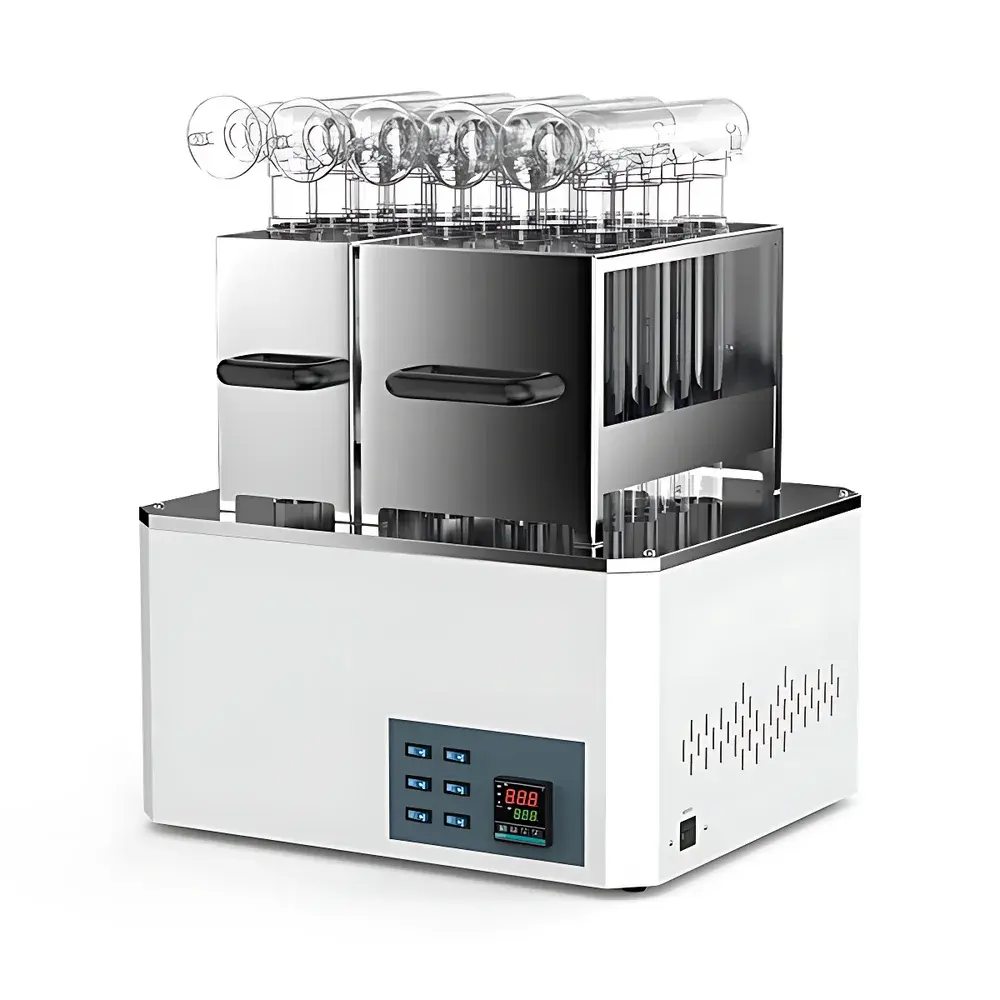
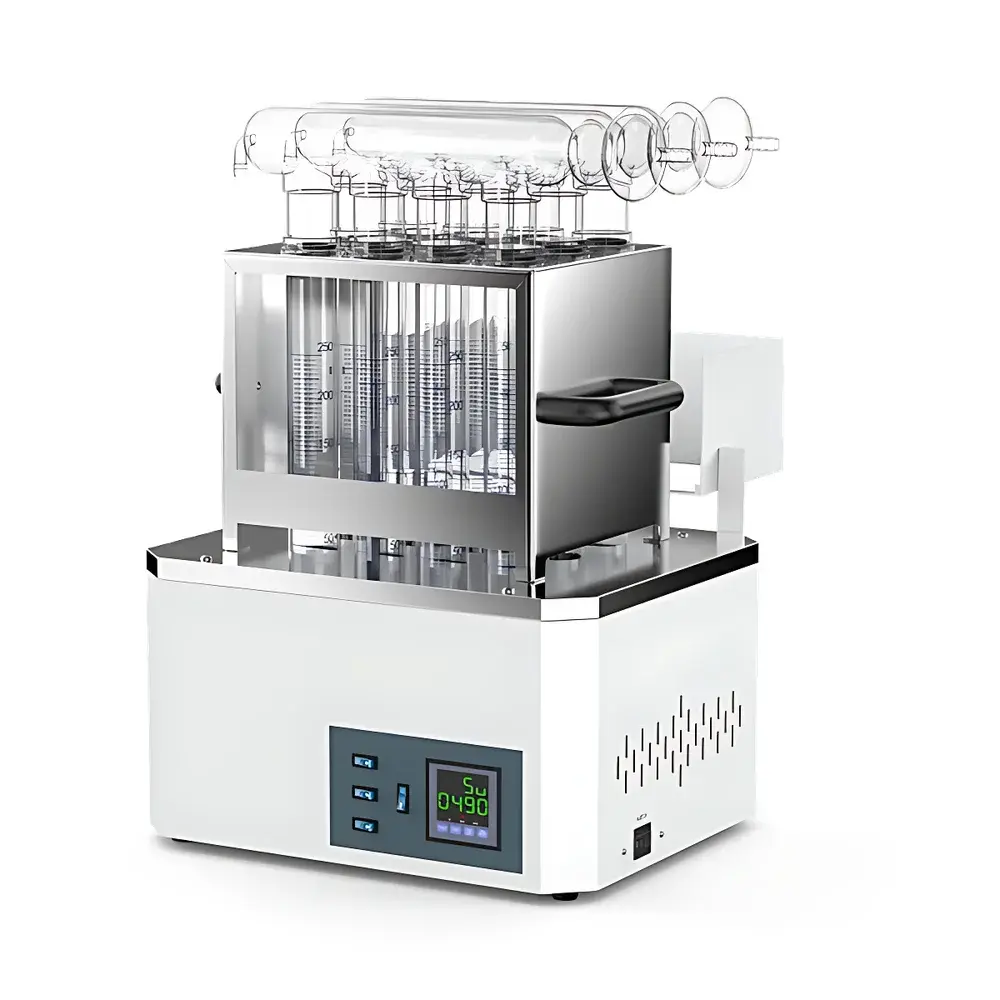
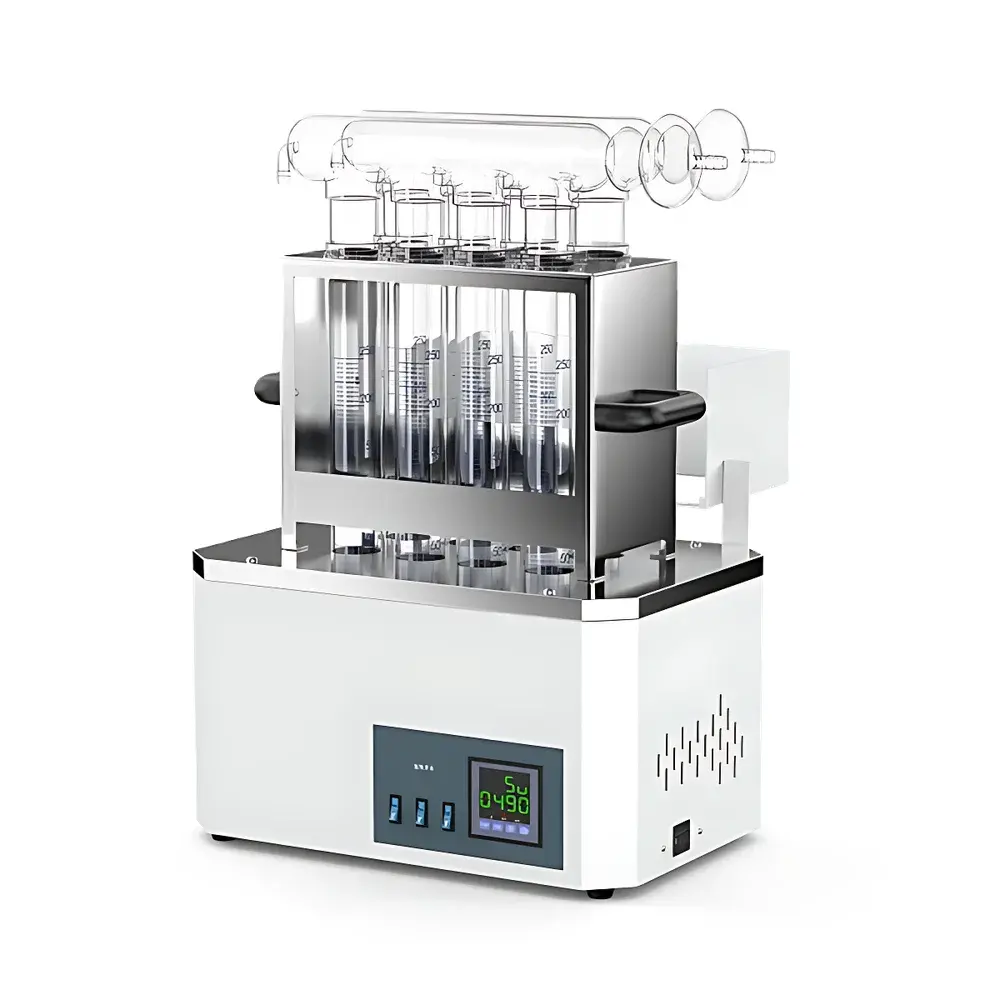
| Available Configurations | 4-, 8-, 12-, and 20-position |
| Digestion Tube Capacity | 300 mL |
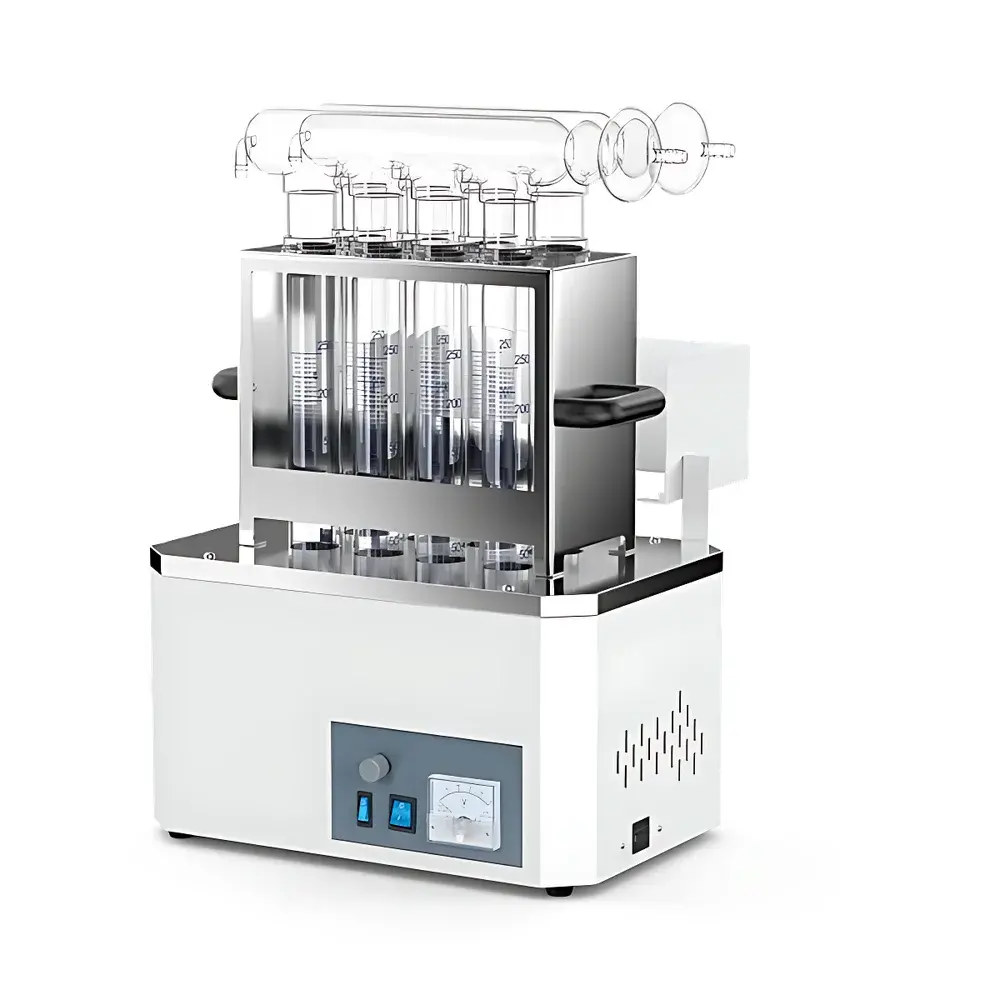
| Cooling Rack Design | Integrated (4/8-hole), Modular (12/20-hole) |
| Construction | Stainless Steel Work Surface & Base Plate, Fluorosilicone Seals, Bakelite Handles |
| Safety Features | Exhaust Collection Tube with Water-Aspirated Venting |
| Compliance | Designed for ISO 5983, AOAC 984.13, and ASTM D5142-compliant Kjeldahl sample preparation |
Overview
The LICHEN KDF Series Digestion Furnace is a dedicated high-efficiency sample digestion system engineered for Kjeldahl nitrogen analysis workflows. It serves as the critical front-end digestion module in tandem with LICHEN or third-party Kjeldahl distillation units, enabling complete mineralization of organic nitrogen compounds into ammonium sulfate under controlled acidic oxidative conditions. The furnace employs infrared quartz tube heating within a vertical well-type chamber architecture—optimized to deliver uniform radial heat distribution and rapid thermal transfer to digestion tubes. This design ensures reproducible digestion kinetics across all positions, minimizing inter-sample variability and supporting GLP-aligned laboratory practices. Built-in exhaust collection tubing interfaces with water aspirators to actively evacuate corrosive fumes (e.g., SO3, NOx, HBr) generated during sulfuric acid–catalyzed digestion, thereby maintaining ambient air quality and operator safety per OSHA 1910.1200 and IARC Group 1 exposure guidelines.
Key Features
- Independent on/off switching per heating zone—enables selective operation for partial-load runs or method-specific ramp profiles.
- Well-type cavity geometry with optimized reflectivity enhances thermal efficiency and reduces energy consumption by up to 18% compared to conventional coil-heated furnaces.
- Fluorosilicone gasket seals at digestion tube–exhaust manifold junctions resist concentrated H2SO4, HClO4, and bromine vapor—ensuring long-term integrity under aggressive digest conditions.
- Electropolished stainless steel work surface and reinforced base plate withstand repeated thermal cycling and accidental acid splashes without pitting or warping.
- Cooling rack configurations are application-optimized: integrated aluminum racks (KDF-04/KDF-08) support rapid post-digestion quenching; modular stainless steel racks (KDF-12D/KDF-20D) allow flexible staging and parallel handling of cooled tubes.
- Dual control platforms: non-PID models (KDF-04/KDF-08) use thyristor-based voltage regulation for basic temperature setting; PID-equipped variants (KDF-04D through KDF-20D) feature LED digital displays, real-time setpoint tracking, auto-hold function, and programmable ramp-soak cycles (except KDF-20D).
- Ergonomic bakelite handles remain below 45 °C during continuous operation—eliminating thermal injury risk during tube insertion/removal.
- Calibrated 300-mL digestion tubes include molded volume graduations (10–300 mL, ±2% accuracy), facilitating precise reagent addition and volume monitoring without secondary glassware.
Sample Compatibility & Compliance
The KDF Series accommodates standard 300-mL Kjeldahl digestion tubes (borosilicate glass, Class A tolerance) and is validated for use with AOAC Official Method 984.13 (crude protein in feed), ISO 5983-1:2009 (animal feeding stuffs), and ASTM D5142-22 (coal and coke). Its consistent 530 °C maximum operating temperature supports complete oxidation of recalcitrant matrices—including cereal grains, dairy powders, soil organics, and polymer composites—without tube deformation or seal degradation. All electrical components meet CE low-voltage directive (2014/35/EU) and EMC standards (2014/30/EU). Exhaust management design aligns with ISO 15195:2018 requirements for closed-system fume handling in accredited testing laboratories.
Software & Data Management
While the KDF Series operates as a standalone hardware unit, PID-enabled models (KDF-04D to KDF-12D) generate time-stamped temperature log data via internal EEPROM—accessible through optional RS-232 interface for integration into LIMS or ELN systems. Audit trails comply with FDA 21 CFR Part 11 when paired with validated instrument drivers and electronic signature protocols. No proprietary software is required; raw temperature vs. time datasets export as CSV for statistical process control (SPC) analysis using JMP, Minitab, or Python-based SciPy pipelines.
Applications
- Routine determination of total Kjeldahl nitrogen (TKN) in environmental water and wastewater samples (EPA 351.2, ISO 11261).
- Crude protein quantification in agricultural commodities, pet food, and aquaculture feeds per AOAC and FAMI-QS standards.
- Validation of nitrogen content in pharmaceutical excipients and active ingredients under USP & Ph. Eur. general chapters <281> and 2.5.27.
- Method development for high-fat or high-fiber samples requiring extended digestion times and multi-step catalyst addition.
- Teaching laboratories performing standardized chemistry curricula aligned with ACS Guidelines for Undergraduate Chemistry Programs.
FAQ
What digestion tube specifications are supported?
Standard 300-mL borosilicate Kjeldahl tubes with conical bottom and ground-glass joint—compatible with LICHEN, Buchi, Gerhardt, and FOSS digestion accessories.
Is the exhaust system compatible with centralized lab fume hoods?
Yes—the water-aspirated exhaust port accepts standard 10-mm ID PVC or PTFE tubing; adapters for 1/4″ NPT or DIN 12550 connections are available upon request.
Can the KDF-20D be retrofitted with timer functionality?
No—hardware-level omission of timing circuitry in KDF-20D precludes firmware upgrades; select KDF-12D for full timer + PID capability in high-throughput configurations.
Does the furnace require calibration certification?
Per ISO/IEC 17025:2017 Clause 6.4.10, users must perform initial temperature uniformity mapping (per ASTM E220) and annual verification using NIST-traceable thermocouples; factory calibration certificates are optional add-ons.
What maintenance intervals are recommended?
Quartz tube inspection every 500 operating hours; fluorosilicone seal replacement every 12 months or after 200 digest cycles involving perchloric acid.



