
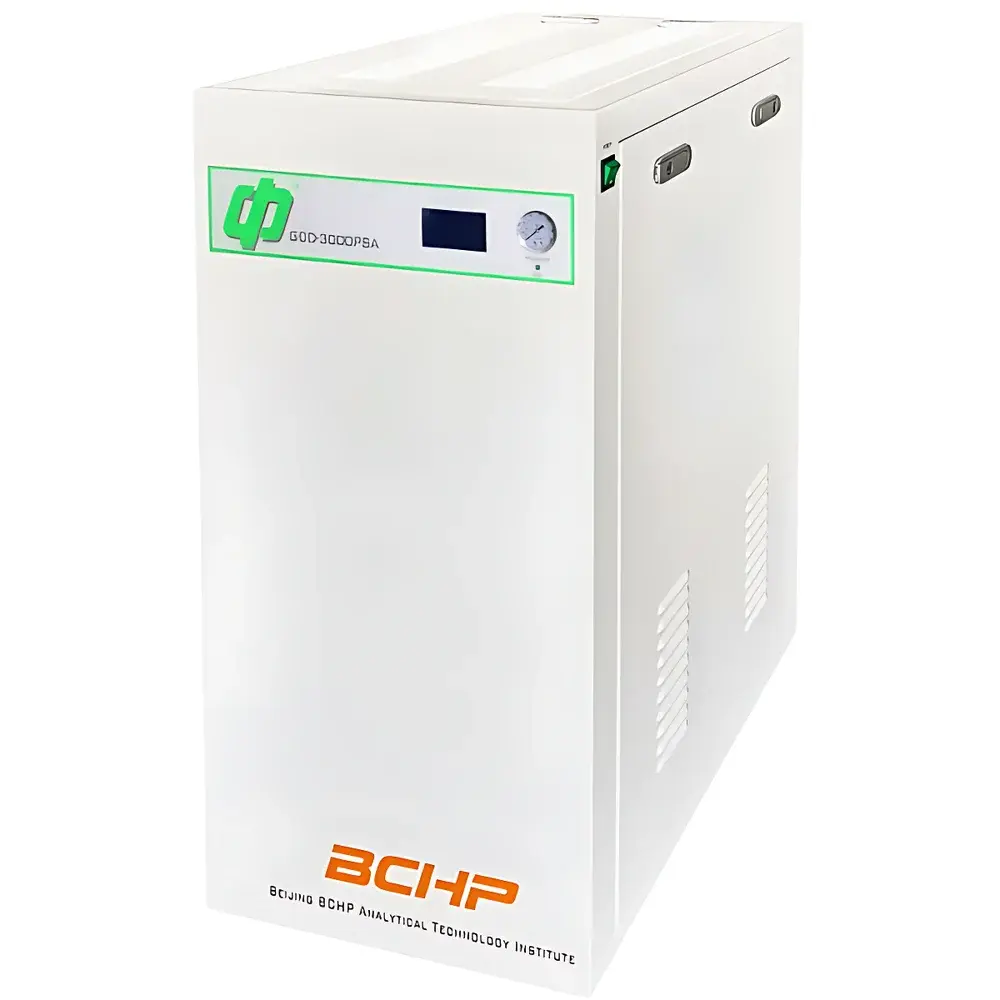
Zhonghuipu GCD-3000PSA Hydrogen Generator
| Brand | Zhonghuipu |
|---|---|
| Origin | Beijing, China |
| Manufacturer Type | Direct Manufacturer |
| Product Category | Domestic |
| Model | GCD-3000PSA |
| Hydrogen Generation Principle | Alkaline Electrolysis |
| Output Flow Rate | 0–3000 mL/min |
| Output Pressure | 0–0.4 MPa |
| Hydrogen Purity | 99.999% |
| Power Consumption | 1500 W |
| Dimensions (W×D×H) | 600 × 450 × 950 mm |
| Net Weight | 73 kg |
| Operating Temperature | 1–40 °C |
| Relative Humidity | ≤85% RH |
| Pressure Stability | <0.001 MPa |
| Input Voltage | 220 V ±10% |
Overview
The Zhonghuipu GCD-3000PSA Hydrogen Generator is a laboratory-grade, on-demand hydrogen source engineered for continuous, stable supply to analytical instruments—primarily gas chromatographs (GC), GC–MS systems, and other hydrogen-dependent detectors such as flame ionization detectors (FID) and thermal conductivity detectors (TCD). It employs alkaline electrolysis of deionized water to generate high-purity hydrogen gas, eliminating reliance on high-pressure cylinders and associated logistical, safety, and regulatory burdens. The system integrates a dual-stage purification architecture: first, catalytic recombination of residual oxygen with trace hydrogen; second, pressure-swing adsorption (PSA) using imported molecular sieve media to achieve ≥99.999% H₂ purity (≤1 ppm O₂, ≤1 ppm H₂O, ≤0.1 ppm total hydrocarbons). This level of purity meets ASTM D7217–22 specifications for carrier and fuel gas in chromatographic applications and complies with ICH Q5A and USP requirements for inert gas quality in pharmaceutical QC labs.
Key Features
- Stable, adjustable hydrogen output from 0 to 3000 mL/min at pressures up to 0.4 MPa (4 bar), with pressure stability maintained within ±0.001 MPa under dynamic load conditions.
- Integrated auto-fill electrolyte reservoir with low-level sensing and precision solenoid-controlled补水 (water replenishment), ensuring uninterrupted operation without manual intervention.
- Dual-layer safety architecture: over-liquid protection circuitry prevents electrolyte overflow into gas lines; real-time monitoring of cell temperature, pressure, and gas purity triggers automatic shutdown if thresholds are exceeded.
- Energy-efficient alkaline electrolyzer stack rated at 1500 W maximum input power, optimized for sustained operation at ambient temperatures between 1–40 °C and relative humidity ≤85% RH.
- Compact footprint (600 × 450 × 950 mm) and robust steel chassis (73 kg net weight) support benchtop or floor-standing installation in regulated laboratory environments.
Sample Compatibility & Compliance
The GCD-3000PSA is designed exclusively for generating hydrogen from deionized water (≥1 MΩ·cm resistivity) and is not intended for solvent or mixed-gas feedstocks. Its output is compatible with all standard GC inlet configurations—including split/splitless, PTV, and cold-on-column—and supports multi-instrument manifold distribution when paired with optional pressure-regulated distribution panels. The unit conforms to IEC 61010–1:2010 for electrical safety in laboratory equipment and incorporates fail-safe interlocks aligned with ISO/IEC 17025:2017 clause 6.4.2 (environmental monitoring and hazard control). Hydrogen purity certification reports (per ISO 8573–1 Class 1:2:1 for particulates, water, and oil) are available upon request for GLP/GMP audit documentation.
Software & Data Management
While the GCD-3000PSA operates via front-panel digital interface (LED display + membrane keypad) without embedded firmware or network connectivity, it supports full integration into lab-wide monitoring systems via dry-contact relay outputs (start/stop, fault alarm, low-water alert) and analog 4–20 mA pressure feedback signal. All operational parameters—including runtime hours, cumulative gas volume, and fault event logs—are stored in non-volatile memory and accessible via USB diagnostic port for traceability during FDA 21 CFR Part 11-compliant workflows. Audit trail functionality enables timestamped recording of operator actions and system state changes, satisfying ALCOA+ data integrity principles.
Applications
- Primary hydrogen carrier gas for capillary GC and GC–MS in environmental, petrochemical, food safety, and forensic laboratories.
- Fuel gas supply for FID, HID, and NPD detectors requiring consistent stoichiometric combustion ratios.
- On-site hydrogen generation for portable GC systems deployed in field testing or mobile labs where cylinder transport is impractical.
- Backup or redundancy source in centralized gas supply networks serving multiple GC workstations in core analytical facilities.
- Research-scale hydrogen delivery for catalysis studies, hydride generation AAS, and electrochemical cell purging where ultra-high purity and low particulate content are critical.
FAQ
What type of water is required for optimal performance?
Deionized water with resistivity ≥1 MΩ·cm and total organic carbon (TOC) <50 ppb is mandatory. Tap water, distilled water, or reverse-osmosis-only water will cause rapid electrode fouling and void warranty coverage.
Can the generator be used in an unventilated room?
No. Per OSHA 1910.103 and NFPA 55, hydrogen generators must be installed in well-ventilated areas with minimum air exchange rates of 6 ACH and equipped with dedicated hydrogen gas detectors (0–2% LEL range) connected to local alarm and forced ventilation systems.
Is routine maintenance required beyond electrolyte top-up?
Yes. PSA columns require regeneration every 12–18 months depending on usage intensity and inlet water quality; electrolyzer stack inspection and gasket replacement are recommended every 36 months per preventive maintenance schedule.
Does the unit meet FDA 21 CFR Part 11 requirements for electronic records?
The device itself does not store or transmit electronic records independently; however, its analog/digital I/O interfaces enable full traceability when integrated with validated LIMS or chromatography data systems that implement Part 11 controls.
What is the expected service life of the electrolyzer stack?
Under normal operating conditions (≤80% max flow rating, proper water quality, ambient temperature control), the alkaline electrolyzer stack maintains ≥95% of nominal output capacity for ≥10,000 operating hours, equivalent to approximately 5 years of typical lab usage (8 h/day, 250 days/year).
Related Products



