
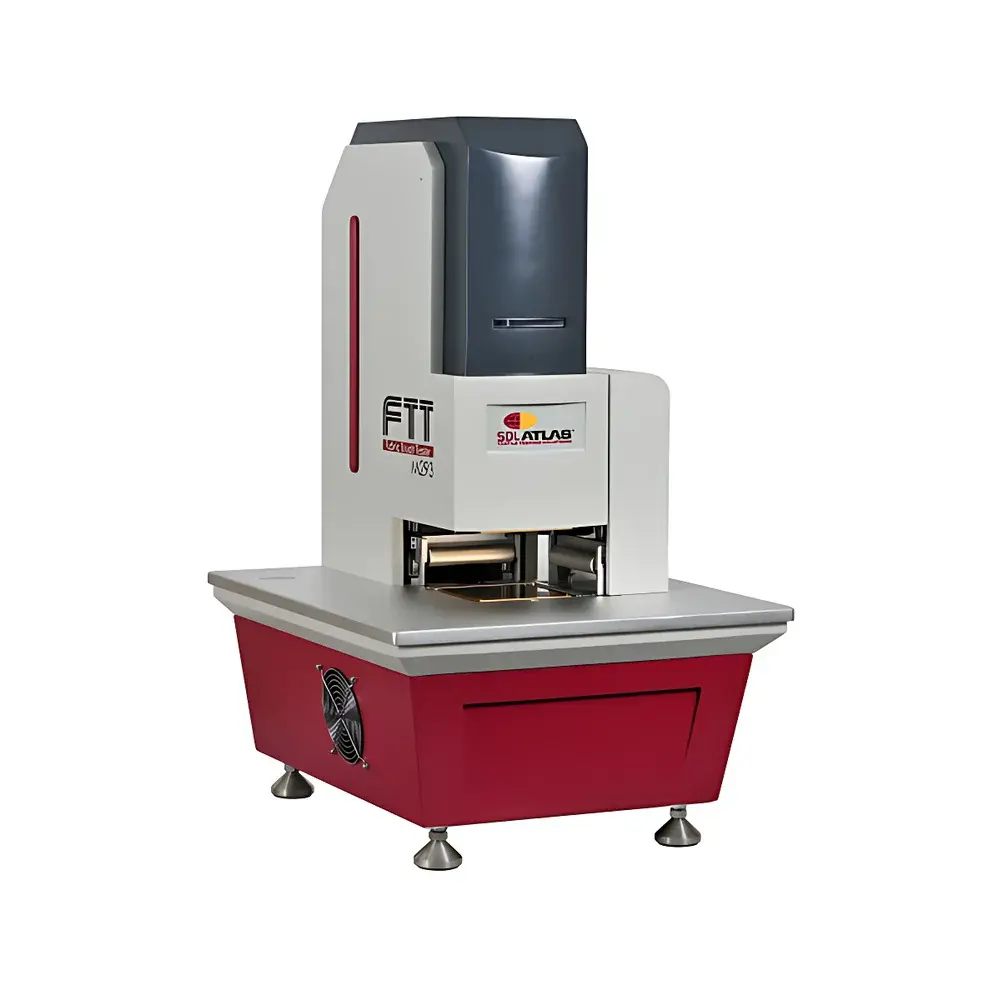
FTT Fabric Touch Tester M293 by SDL Atlas
| Brand | SDL Atlas |
|---|---|
| Origin | Shenzhen, China |
| Manufacturer Type | Original Equipment Manufacturer (OEM) |
| Country of Origin | China |
| Model | M293 |
| Pricing | Available upon Request |
Overview
The FTT Fabric Touch Tester M293 is an integrated mechanical and surface property characterization instrument engineered for objective, quantitative assessment of fabric hand—defined as the composite tactile perception arising from mechanical, thermal, and surface interactions between skin and textile. Based on multi-axis dynamic contact mechanics and calibrated thermomechanical transduction, the system applies controlled normal and lateral forces while simultaneously measuring displacement, resistance, temperature response, and surface topography-derived parameters. Unlike subjective panel-based evaluation or single-parameter instruments (e.g., bending testers or friction meters), the M293 executes a standardized 5-minute test cycle that captures 18 independent indices—nine per fabric face (front/back)—across six physical domains: thickness, compressibility, bending rigidity, surface roughness, coefficient of friction, and thermal effusivity. These indices are mathematically synthesized into Primary Sensory Indices (PSI), enabling traceable, repeatable quantification of smoothness, softness, warmth/coolness, and overall hand value—critical for R&D, quality assurance, and cross-supply-chain specification alignment in global apparel, technical textiles, and home furnishing sectors.
Key Features
- Single-cycle, multi-modal measurement protocol delivering 18 standardized fabric hand indices in under 5 minutes
- Dual-face evaluation capability: independent quantification of front and back surfaces—including warp- and weft-directional bending and friction data
- Modular sensor architecture integrating precision load cells (±0.05 mN resolution), capacitive displacement sensors (±0.1 µm), Peltier-based thermal actuators (±0.1°C control), and optical surface profiling modules
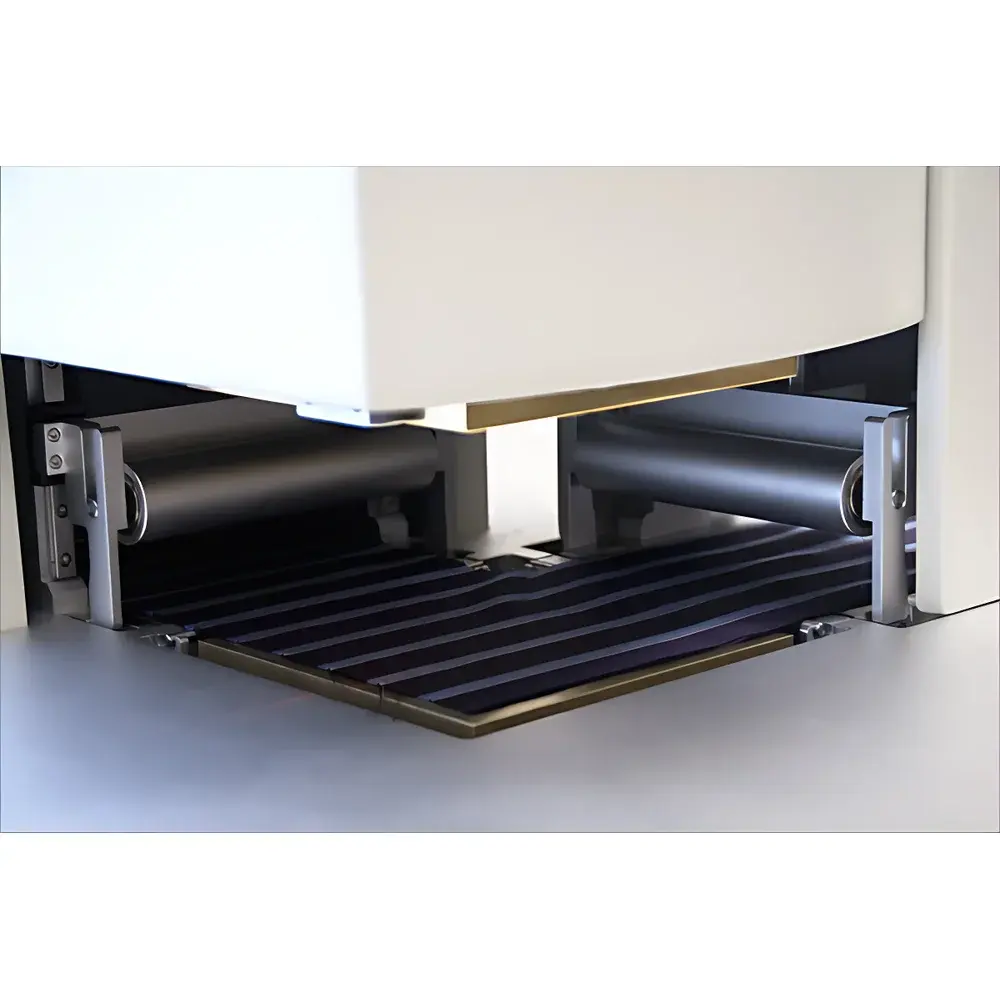
- L-shaped sample holder enabling simultaneous measurement of edge compression and planar surface properties without repositioning
- ISO 20217-compliant test methodology for fabric hand evaluation; aligned with ASTM D1388 (stiffness), ASTM D3776 (mass per unit area), and ISO 9073-2 (thickness) for traceable correlation
- Calibration-certified transducers with NIST-traceable documentation; annual recalibration supported via SDL Atlas service network
Sample Compatibility & Compliance
The M293 accommodates woven, knitted, nonwoven, and laminated fabrics ranging from ultra-lightweight silks (≥20 g/m²) to heavy-duty technical textiles (≤1200 g/m²) and thicknesses up to 8 mm. Sample dimensions: 150 mm × 150 mm (minimum), with optional fixtures for narrow-width tapes and elastic substrates. All test protocols comply with GLP principles: full audit trail logging, user access controls, electronic signatures, and 21 CFR Part 11–ready software configuration. Data export formats include CSV, XML, and PDF reports compliant with internal QA documentation standards and third-party certification bodies (e.g., OEKO-TEX®, bluesign®).
Software & Data Management
Bundled FTT Analysis Suite v4.2 provides real-time visualization, statistical process control (SPC), and comparative analytics. Radar charts overlay PSI profiles across multiple samples, highlighting deviations in key sensory dimensions. Users define custom PSI upper/lower specification limits aligned with brand hand standards or customer requirements; automated pass/fail flags trigger QA alerts. Historical datasets are indexed by batch, lot, supplier, and tester ID. Raw sensor time-series data (force vs. displacement, thermal decay curves, friction coefficient waveforms) are stored in open HDF5 format for external modeling (e.g., ML-based hand prediction). Audit logs record all parameter changes, test executions, and report generations—fully compliant with ISO/IEC 17025 laboratory accreditation requirements.
Applications
- Objective hand benchmarking during fiber selection, yarn development, and finishing optimization
- Supplier qualification and incoming material verification against pre-agreed PSI thresholds
- Correlation studies linking instrumental hand metrics to consumer perception scores (e.g., QDA, CATA)
- Root-cause analysis of hand-related customer complaints (e.g., perceived stiffness post-wash, loss of softness after coating)
- Regulatory dossier support for medical textiles (ISO 10993-5 cytotoxicity screening correlates with surface energy indices) and flame-retardant fabrics (thermal effusivity changes indicate FR chemical migration)
- Integration into digital twin workflows for predictive virtual prototyping of fabric performance
FAQ
Does the M293 require reference standards for calibration?
Yes—annual calibration uses traceable reference fabrics certified by SDL Atlas’ UK-based metrology lab (UKAS ISO/IEC 17025 accredited). Optional daily verification kits include certified polyester and cotton standards.
Can PSI values be correlated with human sensory panel results?
Published peer-reviewed studies (e.g., Textile Research Journal, Vol. 92, 2022) demonstrate r² ≥ 0.87 between M293-derived softness index and average panel softness score across 42 commercial fabrics.
Is the system compatible with LIMS or ERP platforms?
Native API supports RESTful integration with major LIMS (LabWare, Thermo Fisher SampleManager) and ERP (SAP QM, Oracle Quality) systems via TLS 1.2-secured endpoints.
What maintenance is required beyond calibration?
Quarterly mechanical inspection of actuator rails and optical path cleaning; no consumables required. Firmware updates delivered automatically via secure OTA channel.
How is operator training delivered?
SDL Atlas provides on-site installation commissioning, 2-day hands-on operator certification, and annual refresher webinars—all documented per ISO 9001 competency records.






