
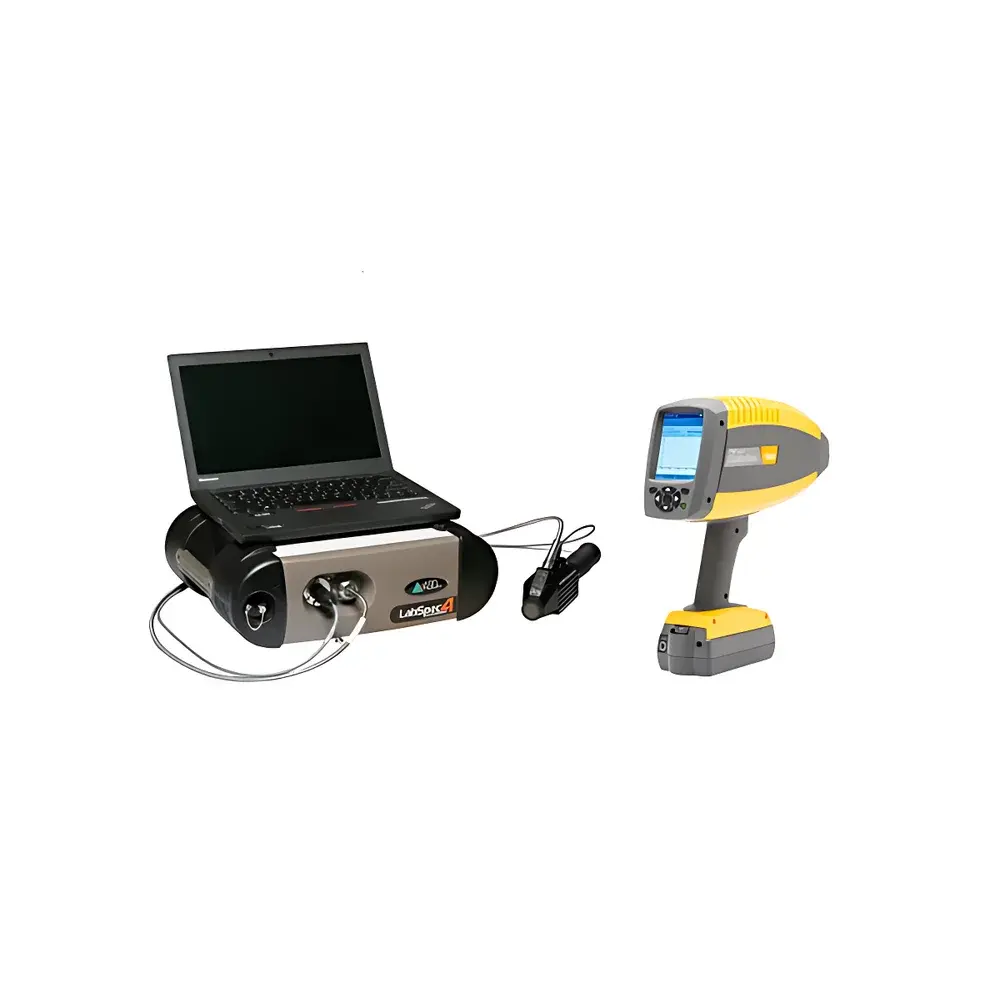
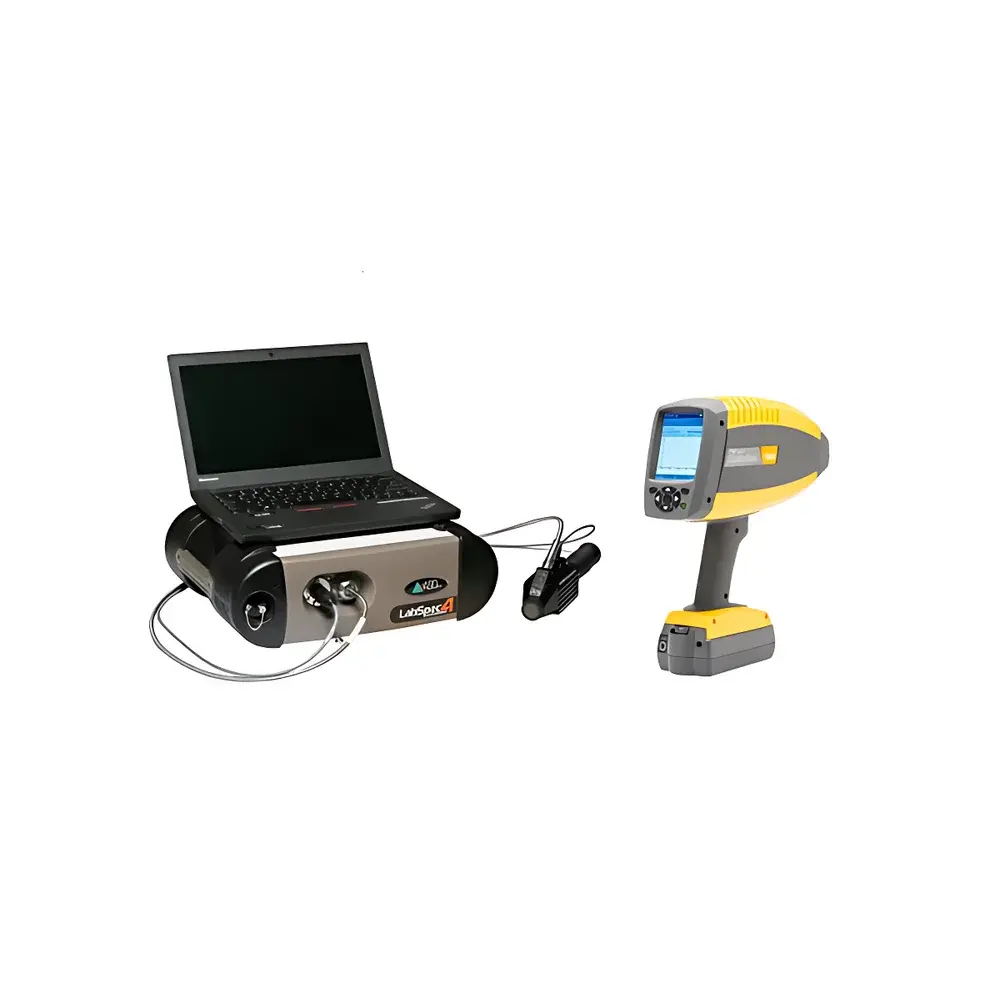
Malvern Panalytical TerraSpec HALO Handheld Mineral Analyzer
| Origin | USA |
|---|---|
| Manufacturer Type | Authorized Distributor |
| Origin Category | Imported |
| Model | TerraSpec HALO |
| Instrument Type | Portable |
| Operating Principle | Grating-based Scanning NIR Spectrometer |
| Wavelength Range | 350–2500 nm |
| Scan Rate | 100 spectra per second |
| Spectral Sampling Interval | 1 nm |
| Measurement Modes | Diffuse Reflectance, Specular Reflectance, Transmission |
| Chemometrics Software | Indico Pro |
Overview
The Malvern Panalytical TerraSpec HALO Handheld Mineral Analyzer is a field-deployable, full-range near-infrared (NIR) spectrometer engineered for rapid, non-destructive mineral identification in geological exploration and industrial materials assessment. Based on grating-scanning optical architecture, the HALO delivers high-fidelity spectral data across the ultraviolet–visible–near-infrared (UV-Vis-NIR) region (350–2500 nm), enabling robust detection of fundamental vibrational overtones and combination bands associated with hydroxyl, carbonate, sulfate, phosphate, and silicate functional groups. Its real-time spectral acquisition—up to 100 scans per second with 1 nm data sampling resolution—supports immediate on-device mineral matching without requiring external computing resources. Designed for operation in harsh field environments—including open-pit mines, remote outcrops, and cultural heritage sites—the HALO integrates ruggedized housing, integrated GPS geotagging, and voice annotation capability to ensure traceable, auditable, and contextually rich spectral records aligned with GLP-compliant workflows.
Key Features
- Integrated full-spectrum scanning optics covering 350–2500 nm with <1 nm spectral sampling resolution and calibrated photometric stability
- Real-time mineral identification engine powered by proprietary iterative spectral subtraction algorithm, capable of resolving up to seven co-occurring minerals in a single measurement
- Built-in spectral library containing >700 reference spectra from >150 validated mineral species, curated from USGS, university research archives, and international geological repositories
- User-expandable library architecture supporting import of custom reference spectra with metadata tagging (e.g., sample origin, preparation method, instrument calibration state)
- On-device mineral grading display indicating crystallinity index, hydration state, or alteration grade—providing contextual geological interpretation beyond simple phase identification
- Ruggedized IP54-rated enclosure with ergonomic trigger-actuated measurement interface, extended battery life (>8 hours continuous operation), and MIL-STD-810G compliant shock/vibration resistance
Sample Compatibility & Compliance
The HALO supports direct analysis of unprepared solid samples via contact or standoff diffuse reflectance, as well as transmission measurements for thin-sectioned or translucent materials. It accommodates heterogeneous natural matrices including weathered rock surfaces, drill core fragments, ceramic shards, and pigment layers in artworks. All spectral acquisitions comply with ASTM E1421–22 (Standard Practice for Describing and Measuring Performance of Fourier Transform Near-Infrared (FT-NIR) Spectrometers) and ISO 18357:2016 (Geological spectroscopy — Requirements for portable NIR instrumentation). Data files embed EXIF-style metadata (GPS coordinates, timestamp, operator ID, ambient light conditions) to support audit trails required under ISO/IEC 17025 and FDA 21 CFR Part 11 when used in regulated QA/QC environments.
Software & Data Management
Spectral acquisition and preliminary mineral identification occur natively on the HALO’s embedded Linux-based OS using Indico Pro chemometrics software. Post-acquisition data transfer occurs via USB-C or Wi-Fi to Halo Manager desktop application (Windows 10/11), which enables advanced multivariate analysis—including PCA, PLS regression, and hierarchical cluster mapping—across large sample sets. Halo Manager supports batch processing, spectral normalization (e.g., SNV, MSC), outlier detection, and report generation conforming to ASTM D7709–19 (Standard Guide for NIR Spectroscopic Data Handling). All processed results are exportable in CSV, XML, and ASTM E2927-compliant .spc formats, ensuring interoperability with LIMS and enterprise analytics platforms.
Applications
- Field-based lithological mapping and alteration zoning during early-stage mineral exploration
- Rapid screening of drill core and chip samples for clay mineralogy (e.g., kaolinite vs. smectite ratio), iron oxide phases, and hydrothermal indicators (e.g., alunite, jarosite)
- Cultural heritage analysis: pigment identification in frescoes, provenance determination of ceramics and terracotta artifacts
- Industrial raw material QC: verification of clay composition in brick manufacturing, limestone purity in cement feedstock, or talc grade in cosmetics-grade powders
- Geothermal reservoir characterization via detection of argillic and propylitic alteration minerals in surface seeps and fumarolic deposits
FAQ
Does the HALO require external calibration standards for routine field use?
No—each unit ships with factory-applied wavelength and photometric calibration verified against NIST-traceable standards. Field recalibration is optional and supported via user-supplied reference tiles (e.g., Spectralon®) through the built-in calibration wizard.
Can the spectral library be updated or extended by end users?
Yes—Halo Manager allows secure import of custom reference spectra with full metadata capture, including acquisition parameters, sample description, and analyst signature, maintaining version-controlled library integrity.
Is the HALO suitable for regulatory reporting in mining environmental compliance?
When operated within documented SOPs and paired with Halo Manager’s audit-log functionality, HALO-generated reports meet evidentiary requirements for ISO 14001 environmental monitoring and EPA Method 600/R-93/116 spectral screening protocols.
What is the typical measurement repeatability for mineral quantification?
Under controlled laboratory conditions, relative standard deviation (RSD) for major-phase mineral abundance estimates is ≤5% for homogeneous samples; field RSD increases to ≤12% depending on surface roughness, moisture content, and illumination uniformity.
How does the iterative spectral subtraction algorithm differ from conventional library search methods?
Unlike single-match correlation techniques, HALO’s algorithm sequentially identifies and mathematically removes dominant spectral contributions before re-analyzing residuals—enabling deconvolution of overlapping mineral signatures common in polyphase geological materials.





