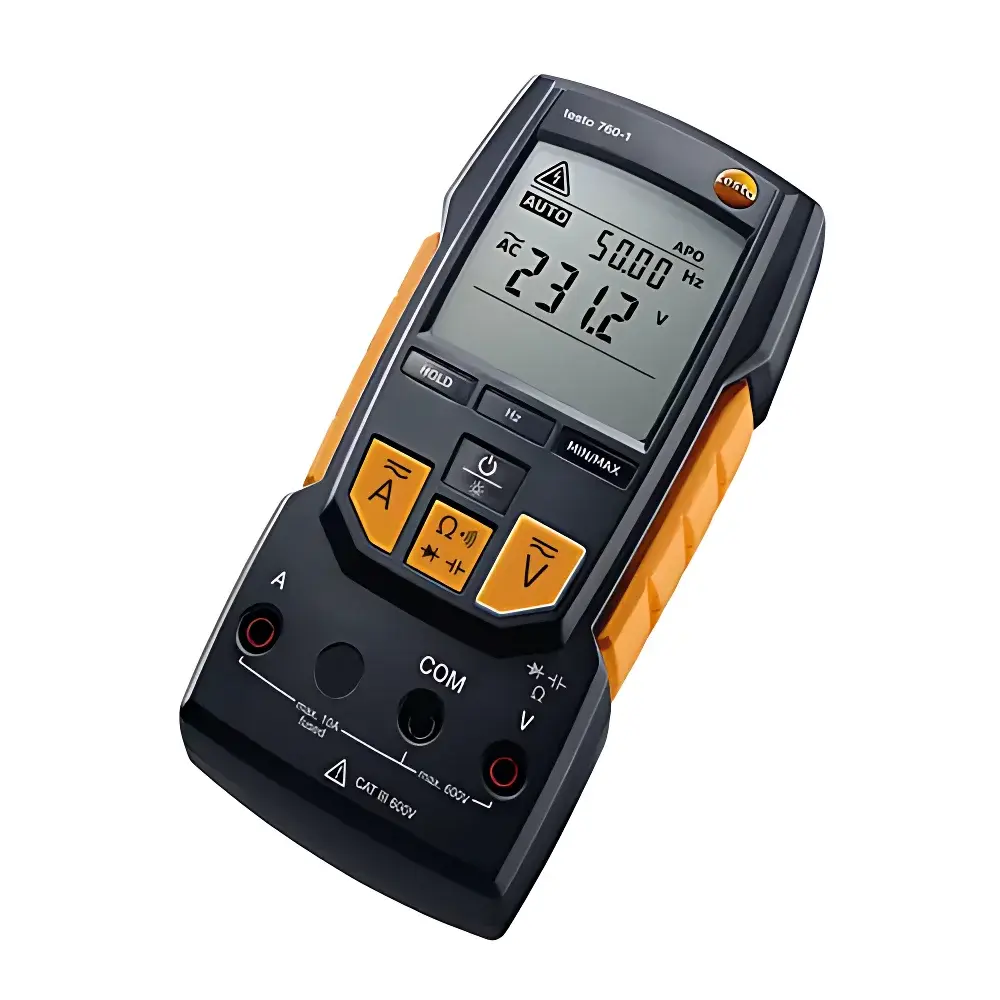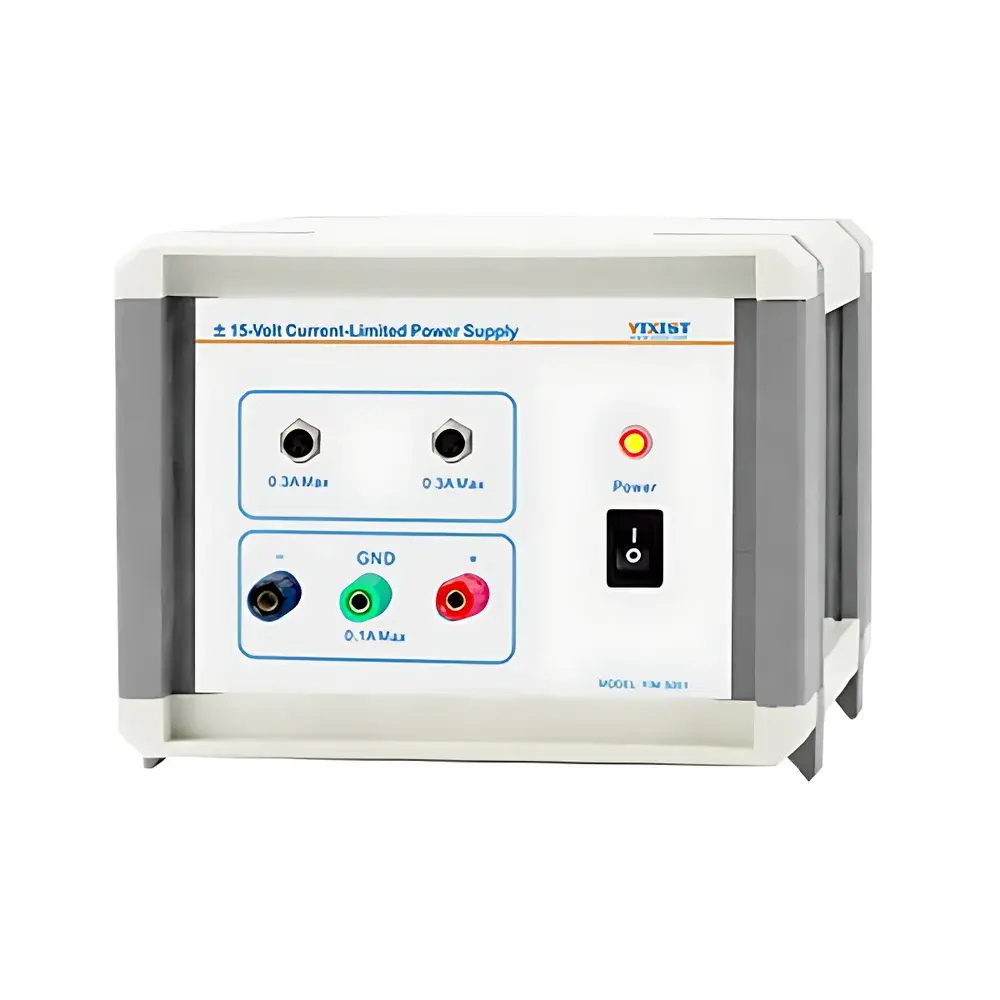
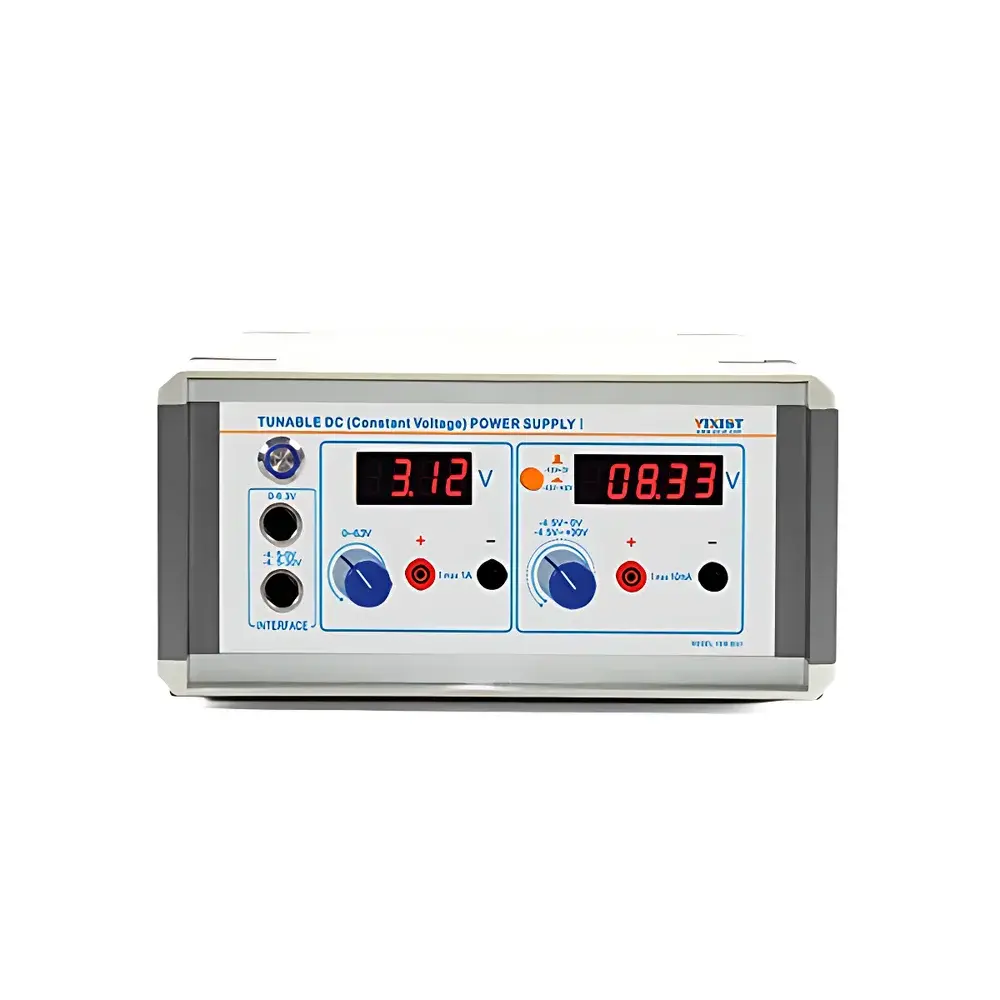
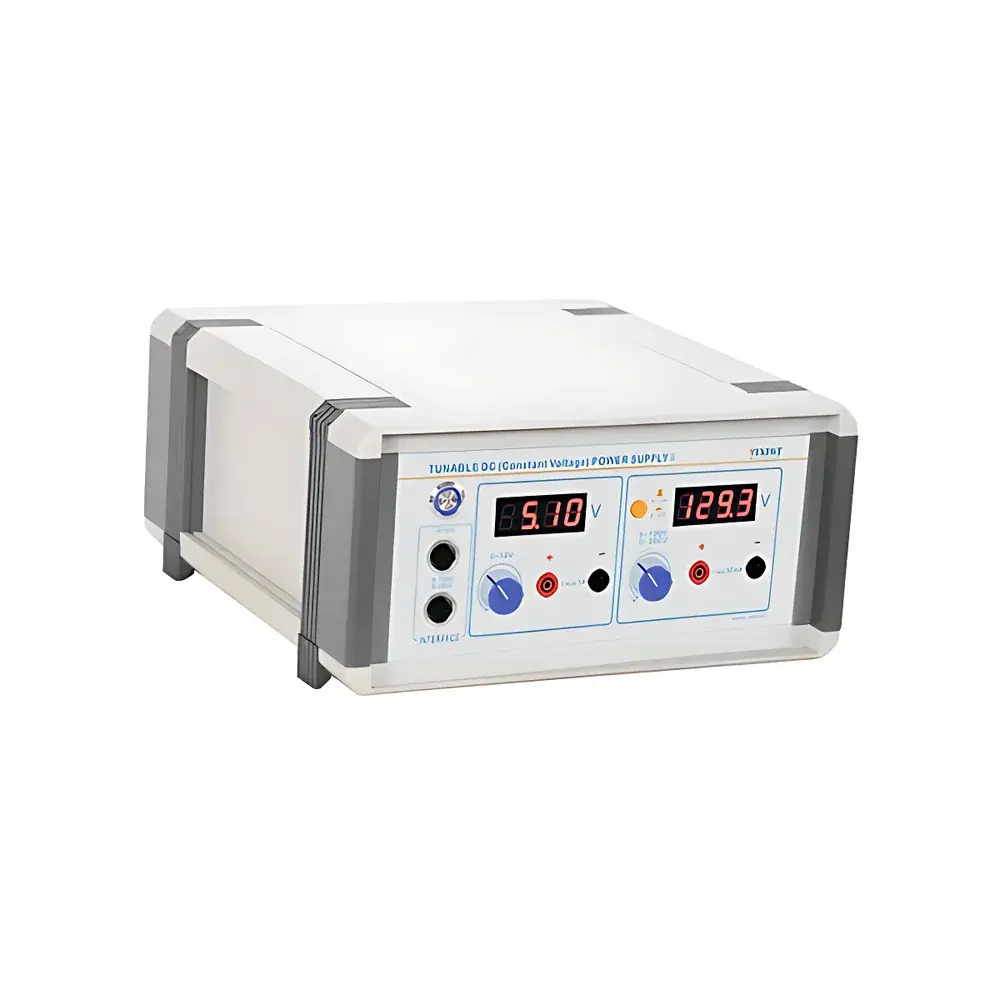
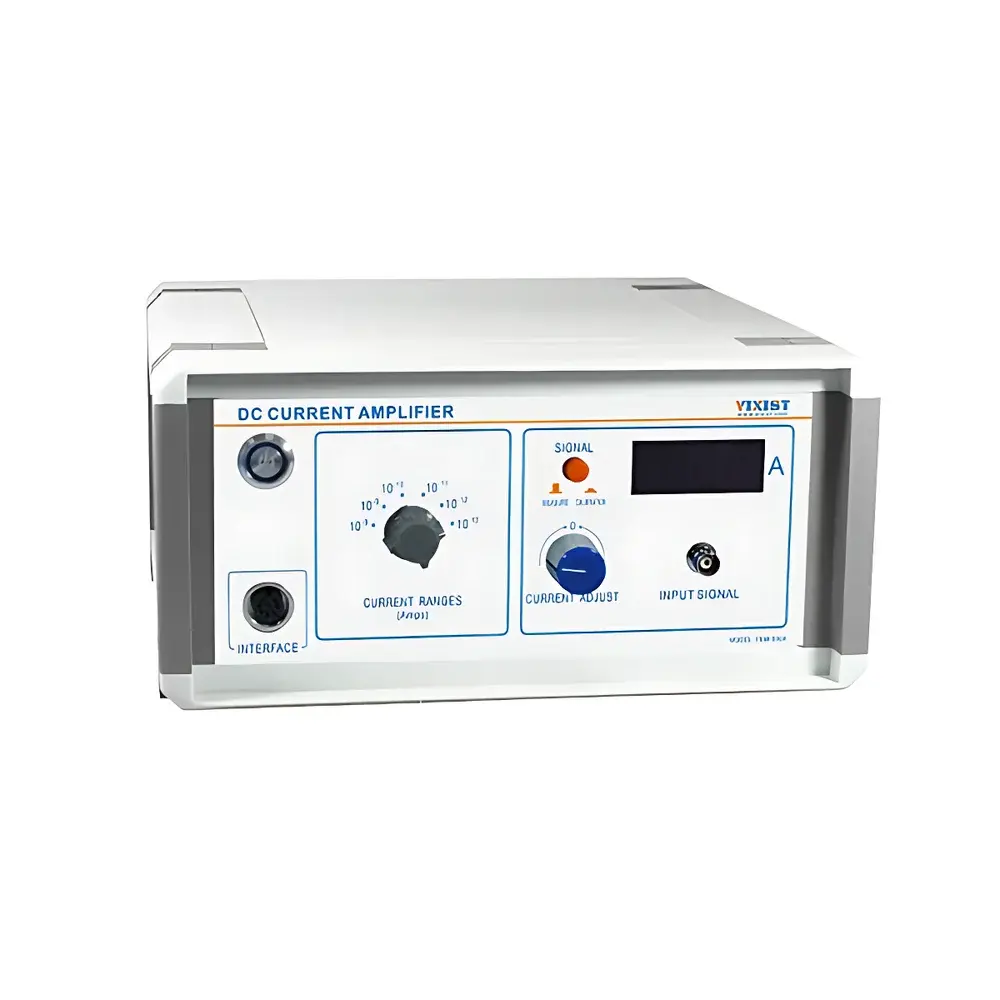
YIXIST YEL-3055 Triple-Output ±15V Current-Limited DC Power Supply
| Brand | YIXIST |
|---|---|
| Model | YEL-3055 / YEL-3001 / YEL-3002 / YEL-3004 |
| Output Voltage | ±15 V ±3% (YEL-3055) |
| Ripple | < 1 mV<sub>RMS</sub> (YEL-3055) |
| Recovery Time | < 100 µs (YEL-3055) |
| Temperature Coefficient | < 300 ppm/°C (YEL-3055) |
| Max Output Current | 0.3 A / 0.1 A per channel (YEL-3055) |
| Adjustable Voltage Ranges | 0–6.3 V / −4.5–0 V or −4.5–30 V (YEL-3001) |
| Current Measurement Range | 10<sup>−8</sup> A to 10<sup>−13</sup> A (YEL-3004) |
| Input Voltage Range | 100–240 VAC |
| Zero Drift | ≤0.2% (YEL-3004) |
Overview
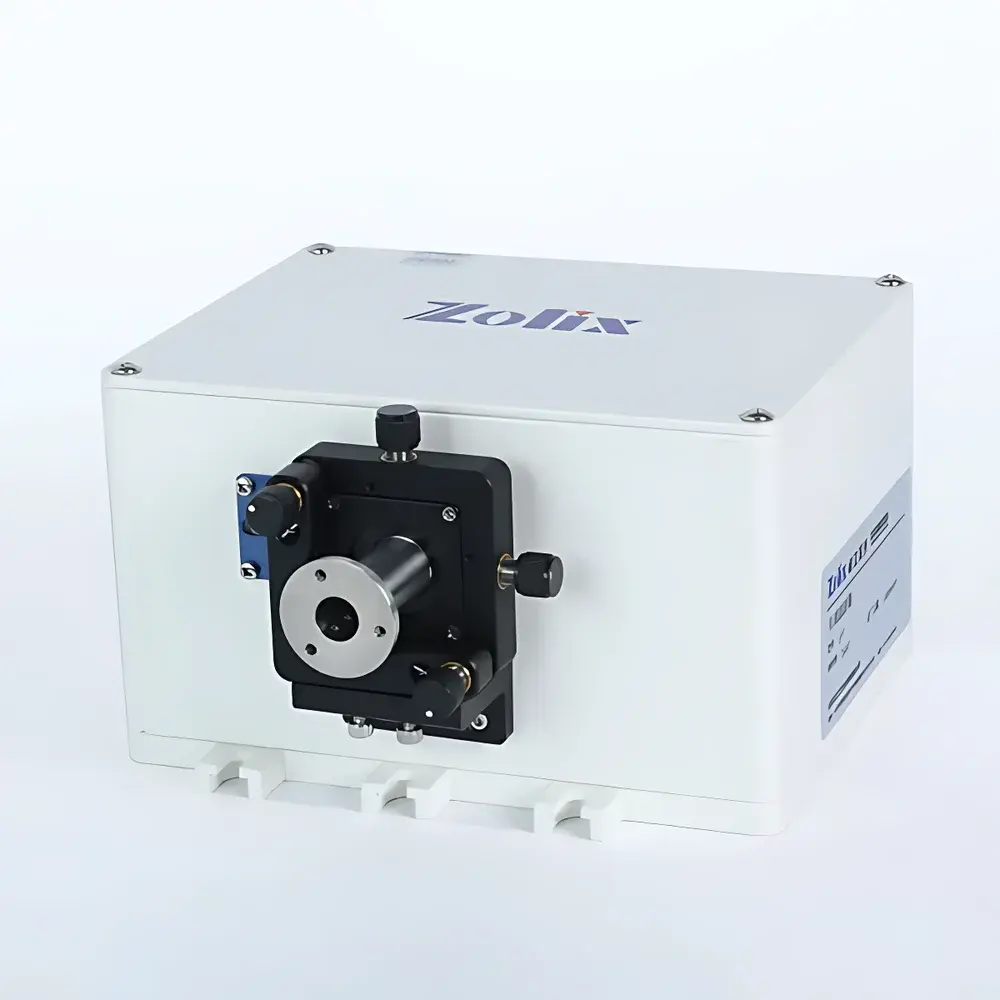
The YIXIST YEL-3055 is a precision triple-output, current-limited DC power supply engineered for laboratory-grade stability and protection-critical applications in analog circuit development, sensor biasing, and low-noise instrumentation testing. Its core architecture implements independent electronic current limiting across all three isolated ±15 V outputs—two via shielded Pico micro connectors and one via 4 mm banana terminals—enabling simultaneous powering of sensitive op-amp circuits, transducer interfaces, and reference subsystems without cross-channel interference. Unlike conventional constant-voltage supplies, the YEL-3055 employs fast-response current foldback logic: when load current exceeds preset thresholds (0.1 A or 0.3 A per channel), output voltage collapses within <100 µs to limit instantaneous power dissipation and prevent thermal runaway in connected DUTs. This behavior conforms to IEC 61000-4-5 surge immunity design principles and supports robust prototyping under fault conditions. The YEL-3001 and YEL-3002 variants extend functionality with dual-range adjustable voltage sources featuring data acquisition interfaces for automated calibration workflows; the YEL-3004 serves as a dedicated picoammeter-grade microcurrent amplifier optimized for ultra-low-current characterization in semiconductor leakage testing, electrochemical impedance spectroscopy, and photodetector dark-current analysis.
Key Features
- Triple isolated ±15 V outputs with independent current limiting (YEL-3055)
- Shielded Pico micro connectors (2 channels) and 4 mm banana terminals (1 channel) for EMI-suppressed signal integrity
- Fast transient recovery (<100 µs) and low ripple (<1 mVRMS) ensuring stable bias for high-gain amplifiers
- Universal AC input (100–240 VAC, 50/60 Hz) with active power factor correction
- Dual-mode voltage regulation: fixed ±15 V (YEL-3055), continuously adjustable 0–6.3 V / −4.5–0 V or −4.5–30 V (YEL-3001), and 0–12 V / 0–100 V or 0–200 V (YEL-3002)
- Integrated data acquisition interface (RS-232 or USB-C, model-dependent) supporting SCPI command sets for LabVIEW, Python, and MATLAB integration
- Microcurrent amplification with 10−13 A resolution, <0.2% zero drift, and 15 V maximum input compliance (YEL-3004)
Sample Compatibility & Compliance
The YEL-series supports diverse electronic test scenarios including operational amplifier characterization, MEMS sensor excitation, photodiode reverse-biasing, and leakage current mapping of PCB assemblies. All models comply with CE marking requirements under Directive 2014/30/EU (EMC) and 2014/35/EU (LVD). The YEL-3055’s shielded interconnect system meets EN 61326-1 Class B specifications for laboratory equipment emissions. When used with calibrated reference loads and traceable multimeters, the series supports ISO/IEC 17025-compliant verification protocols. Output stability and temperature coefficient (<300 ppm/°C) enable use in environments where ambient fluctuations exceed ±5 °C without recalibration—suitable for shared lab infrastructure and teaching laboratories adhering to IEEE 1139-2008 uncertainty budgeting practices.
Software & Data Management
Each YEL model includes firmware-upgradable embedded controllers supporting standard SCPI-1999 command syntax. The YEL-3001 and YEL-3002 integrate UART-to-USB bridges enabling direct instrument control via Python’s PyVISA or MATLAB Instrument Control Toolbox. Logged voltage/current/time datasets are exportable in CSV format with timestamped metadata. Audit trails—including parameter changes, overcurrent events, and firmware version history—are retained in non-volatile memory and accessible via serial query commands, satisfying basic GLP documentation requirements for academic and industrial R&D labs. No proprietary drivers are required; native CDC ACM class support ensures plug-and-play operation on Windows, macOS, and Linux.
Applications
- Biasing precision analog front-ends in data acquisition systems
- Powering low-noise preamplifiers for cryogenic sensors and SQUID arrays
- Calibrating current shunts and Hall-effect transducers
- Characterizing reverse leakage currents in SiC and GaN power devices
- Supplying dual-rail voltages for op-amp-based filter banks and active filters
- Providing programmable excitation sources in automated component testers (e.g., LCR meters, curve tracers)
- Enabling picoampere-level current measurement in surface science experiments involving Kelvin probes and field emission microscopy
FAQ
Does the YEL-3055 support remote sensing (4-wire Kelvin connection)?
No—the YEL-3055 uses local sense architecture. For applications requiring load-regulation accuracy better than ±0.1%, external feedback loops with operational amplifiers are recommended.
Can the YEL-3004 be used with floating inputs or grounded shields?
Yes—the YEL-3004 features fully differential input stage with >100 dB CMRR at 60 Hz and supports both single-ended and true differential measurement configurations.
Is firmware update capability available for all models?
Yes—firmware updates are delivered via ASCII text files transferred over serial interface; full update logs are stored in device memory for traceability.
What safety certifications apply to the YEL-series?
All units carry CE, RoHS, and REACH declarations. High-voltage variants (YEL-3002, up to 200 V) meet UL 61010-1 Third Edition creepage/clearance requirements for Measurement Category II installations.
How is current limiting configured on the YEL-3055?
Limit thresholds are set via front-panel potentiometers per channel; no software configuration is required. Each channel includes LED indicators for normal operation, current-limit activation, and fault lockout.