
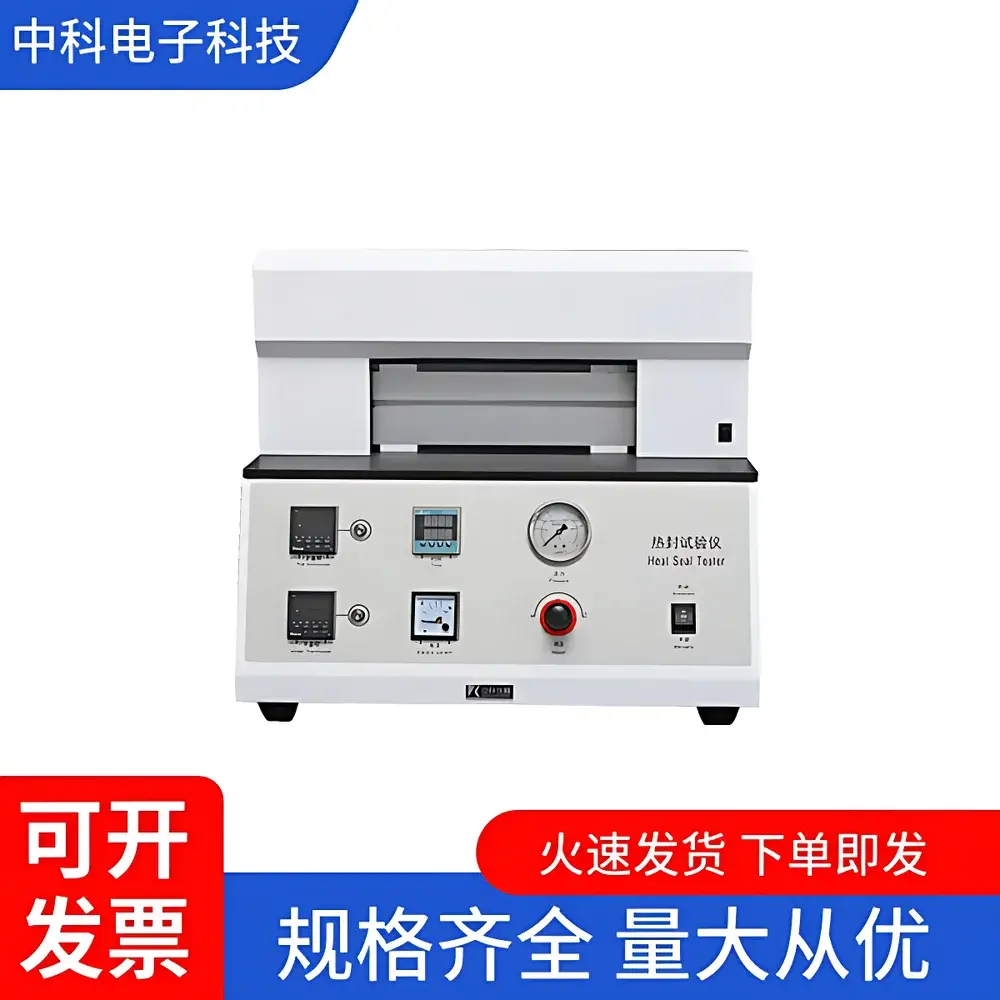
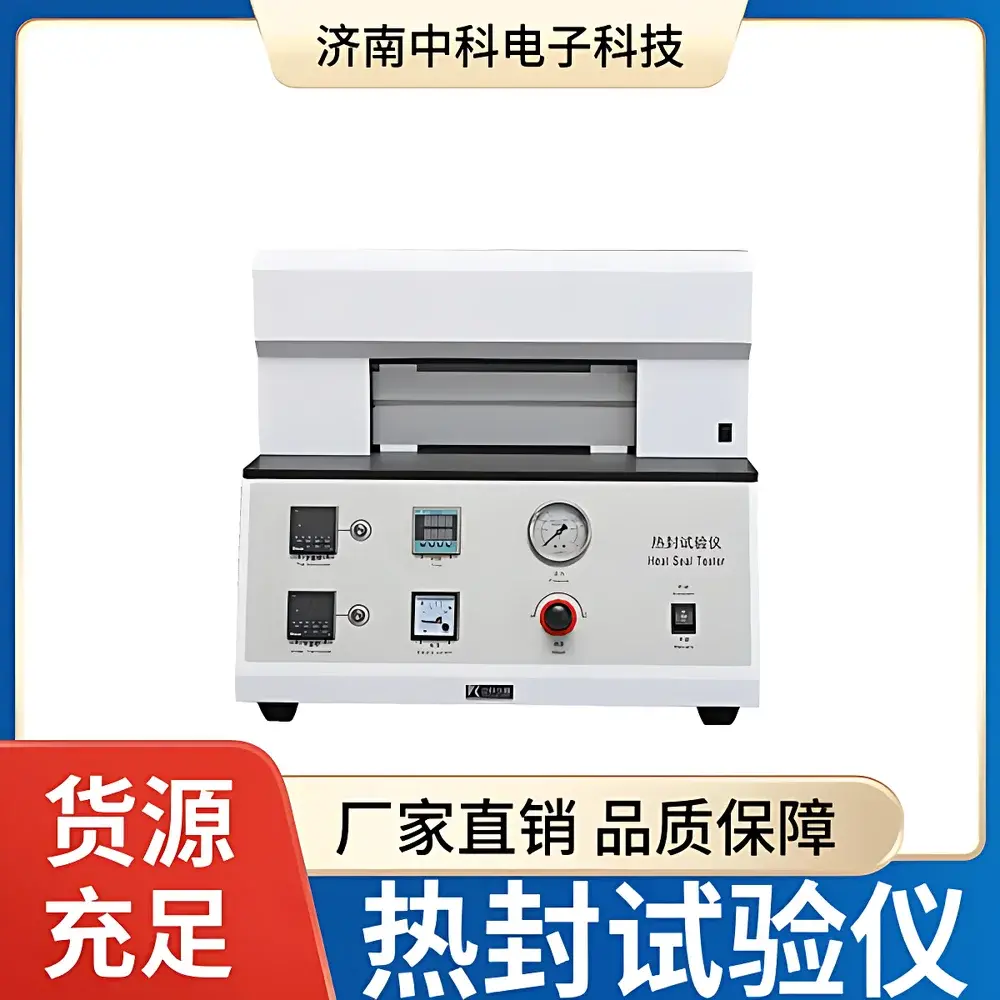
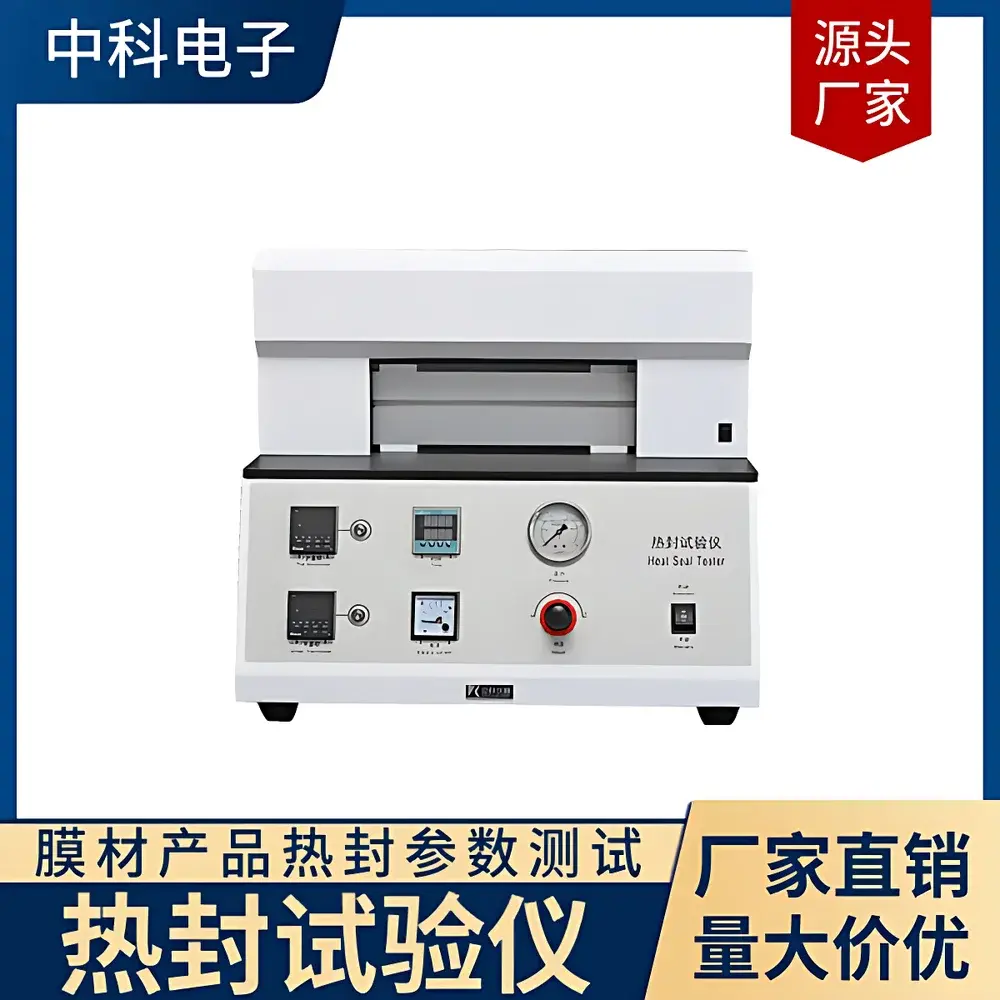
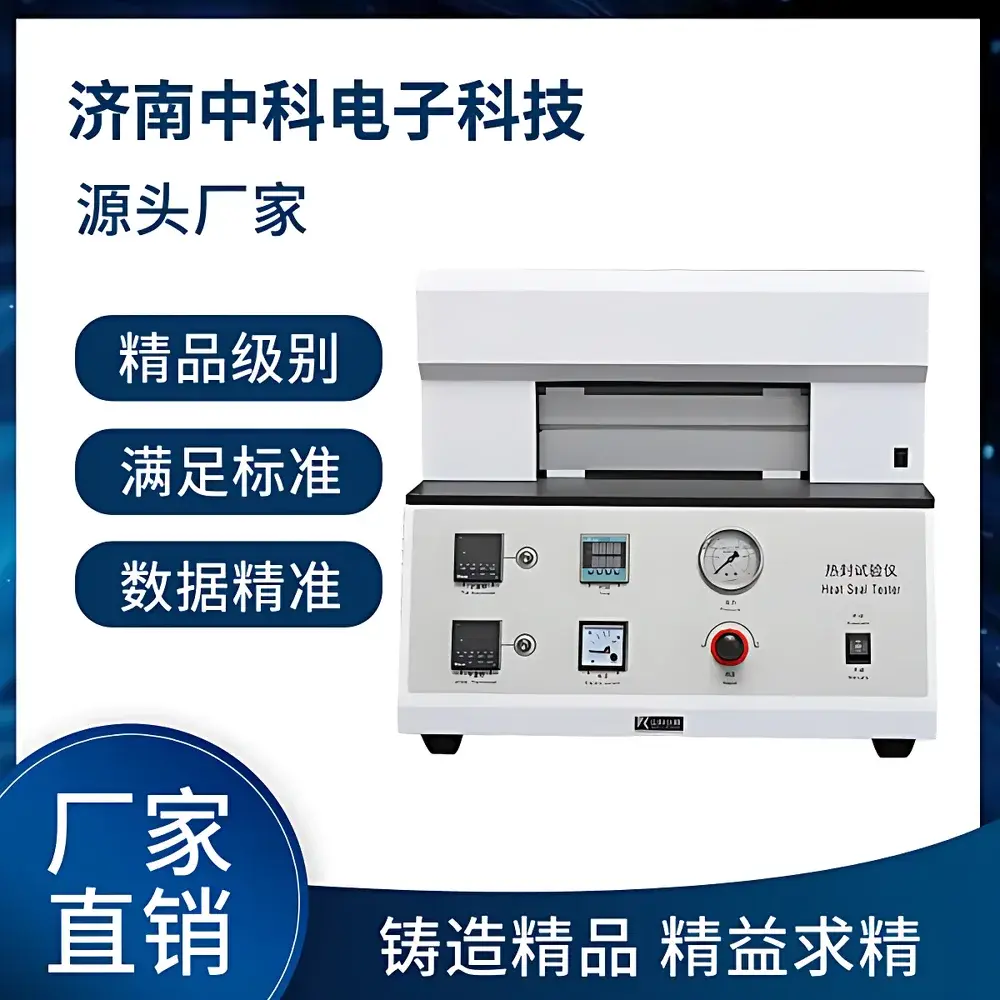
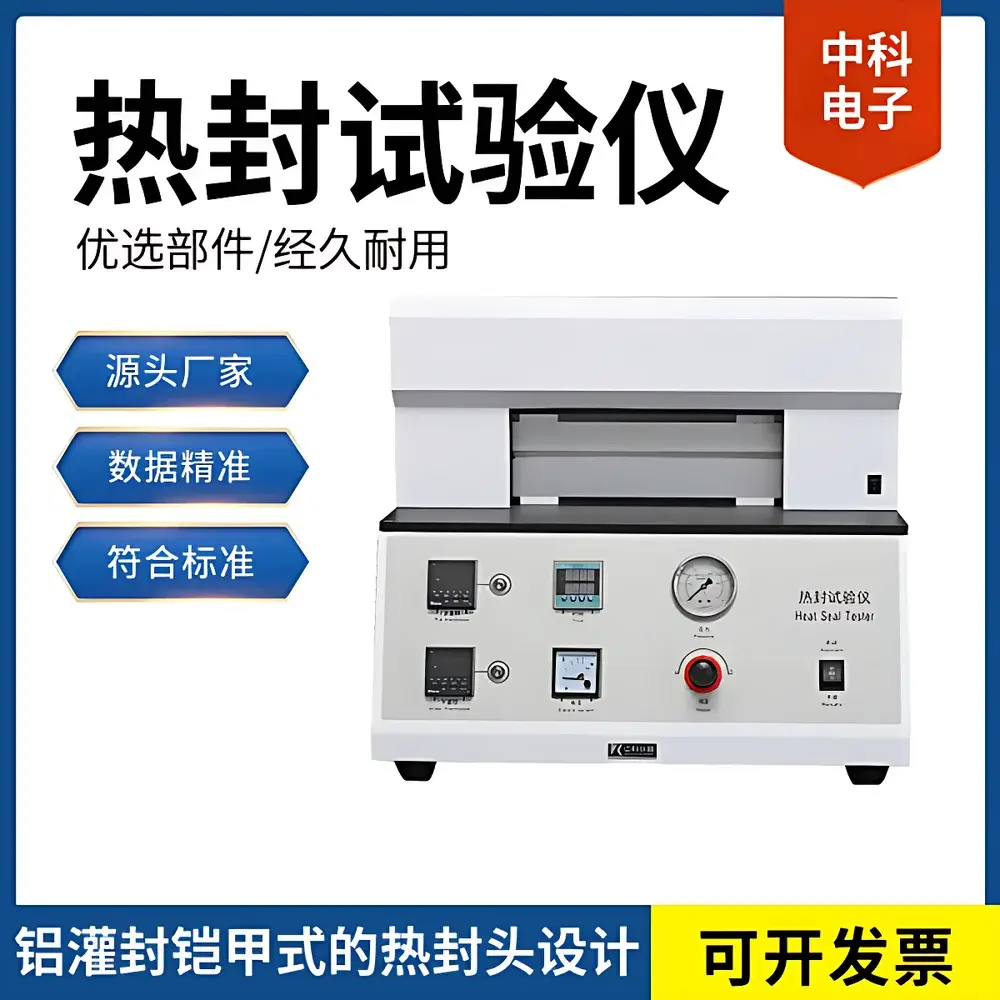
ZK Electronics HST-T01 Heat Sealing Tester for Aluminum-Coated Films and Plastic Packaging Bags
| Brand | ZK Electronics |
|---|---|
| Model | HST-T01 |
| Origin | Shandong, China |
| Manufacturer | ZK Electronics Co., Ltd. |
| Type | Benchtop Pneumatic Heat Sealing Tester |
| Temperature Range | Ambient to 250 °C |
| Sealing Pressure | 50–700 kPa |
| Sealing Time | 0.01–99.99 s |
| Temperature Control Accuracy | ±1 °C |
| Sealing Area | 300 mm × 10 mm (customizable) |
| Heating Configuration | Dual-zone independent heating (top & bottom jaws) |
| Operating Modes | Manual & Automatic |
| Air Supply Requirement | ≤0.7 MPa, Φ6 mm polyurethane tubing |
| Power | AC 220 V, 50 Hz |
| Dimensions (L×W×H) | 550 × 330 × 460 mm |
| Net Weight | ~30 kg |
Overview
The ZK Electronics HST-T01 Heat Sealing Tester is a precision-engineered benchtop instrument designed for quantitative evaluation of heat seal integrity in flexible packaging materials—including aluminum-coated polyester (PET-Al), metallized polypropylene (MPET), laminated pouch films, coextruded structures, and coated papers. It operates on the principle of controlled thermal compression sealing: a specimen is placed between two thermostatically regulated sealing jaws, subjected to precisely defined temperature, pressure, and dwell time, and then evaluated for seal strength, continuity, and visual defect formation. This method directly replicates industrial vertical/horizontal form-fill-seal (FFS) and impulse sealing processes, enabling laboratories to establish validated, reproducible sealing parameters prior to production scale-up. The instrument complies with fundamental thermomechanical principles governing polymer chain mobility, interfacial diffusion, and melt fusion at the seal interface—critical factors influencing seal initiation temperature, hot tack development, and ultimate peel resistance.
Key Features
- Dual-zone independent PID temperature control for top and bottom sealing jaws—enabling asymmetric thermal profiling to simulate real-world sealing conditions where film layers exhibit differing melting points and thermal conductivities.
- Aluminum-clad armored sealing head with integrated cartridge heaters and high-density thermal insulation—ensuring uniform surface temperature distribution across the full 300 mm sealing length (±0.8 °C deviation measured per ASTM F2029 Annex A).
- Bottom-mounted dual-pneumatic cylinder synchronization circuit—minimizing dynamic pressure drift during thermal expansion and maintaining constant force application throughout the sealing cycle.
- Digital real-time display of all active parameters (temperature, pressure, time, cycle count) with non-volatile memory for up to 200 test protocols.
- Configurable sealing area geometry—including standard 300 mm × 10 mm and optional custom widths (e.g., 50 mm, 100 mm) or stepped-profile jaws for multi-lane validation.
- Modular electrical architecture using industrial-grade components from TE Connectivity, Omron, and Honeywell—supporting long-term operational stability under continuous QC laboratory duty cycles.
- Integrated dual axial fans with directional airflow channels—reducing jaw cooldown time by >40% compared to passive dissipation, enabling high-throughput testing without thermal carryover error.
Sample Compatibility & Compliance
The HST-T01 accommodates single-layer and multilayer flexible substrates ranging from 20 µm polyester to 250 µm laminated barrier structures. It supports common packaging formats including stand-up pouches, sachets, medical blister lidding, and pharmaceutical foil seals. Test methodology adheres to internationally recognized standards: QB/T 2358 (China’s national standard for plastic film heat seal strength), ASTM F2029 (Standard Test Method for Measuring Heat Seal Strength of Thermoplastic Polymer-Based Flexible Barrier Materials), and YBB 00122003 (Chinese Pharmacopoeia supplement for packaging material heat seal validation). While not a GLP-certified system out-of-the-box, its parameter traceability, manual/automatic mode audit logs, and stable thermal-mechanical performance make it suitable for preliminary process qualification and internal specification development aligned with ISO 11607-2 and FDA guidance on packaging validation.
Software & Data Management
The HST-T01 operates via embedded firmware with no external PC dependency. All test configurations—including ramp rates, hold profiles, and pass/fail thresholds—are stored locally in EEPROM with timestamped execution records. Optional RS-232 or USB-to-serial interface enables integration with LIMS or custom QA databases for automated report generation (CSV/Excel export). Though not compliant with 21 CFR Part 11 electronic signature requirements natively, the device supports procedural controls such as operator ID entry, protocol locking, and printed hardcopy output via connected label printers—facilitating alignment with GMP documentation practices during packaging process validation (PPQ) activities.
Applications
- Optimization of sealing parameters for aluminum-metallized films used in snack, coffee, and pharmaceutical packaging—where thermal sensitivity of the Al layer demands precise upper-temperature limits to prevent delamination.
- Comparative evaluation of hot tack curves across resin blends (e.g., LDPE vs. ionomer sealants) under variable dwell times.
- Root-cause analysis of seal failures—cold seals, channel leaks, or brittle fracture—by isolating effects of temperature gradient, pressure distribution, or film orientation (machine vs. transverse direction).
- Supplier qualification testing per ASTM F88 for incoming roll stock verification prior to converting operations.
- Accelerated aging studies correlating initial seal strength with post-sterilization (EO or gamma) integrity retention in medical device pouches.
FAQ
What pneumatic supply specifications are required?
A clean, dry compressed air source delivering ≤0.7 MPa (100 psi) through a Φ6 mm polyurethane tube is mandatory. An inline 5 µm filter-regulator-lubricator (FRL) unit is recommended to ensure consistent cylinder actuation and extend solenoid valve service life.
Can the HST-T01 perform hot tack testing?
Yes—the instrument supports programmable “seal-and-peel” sequences with adjustable separation speed and angle, enabling hot tack measurement per ASTM F1921 when paired with a compatible tensile tester (e.g., ZwickRoell or Instron with peel fixture).
Is calibration traceable to national standards?
Temperature sensors are factory-calibrated against NIST-traceable reference thermocouples; pressure transducers are certified to ISO/IEC 17025-accredited labs. Users receive a calibration certificate with each shipment, valid for 12 months under normal operating conditions.
How is thermal uniformity verified across the sealing bar?
Uniformity is confirmed using ASTM E220-compliant thermocouple mapping—nine-point grid measurements at 50 °C, 120 °C, and 200 °C show maximum deviation ≤±0.8 °C across the 300 mm length.
Does the system support IQ/OQ documentation packages?
ZK Electronics provides a configurable User Requirements Specification (URS) template and Factory Acceptance Test (FAT) protocol upon request—intended for use with third-party validation consultants performing installation and operational qualification per GAMP 5 guidelines.





