
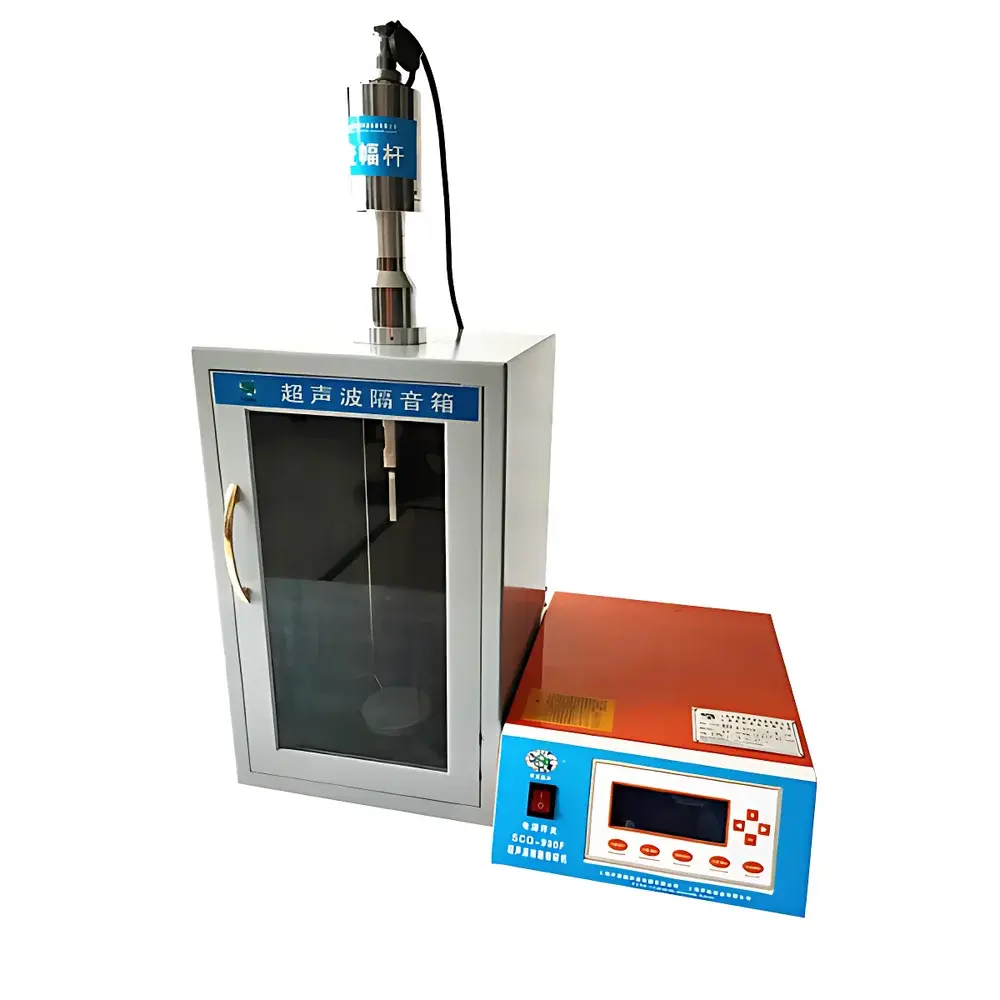
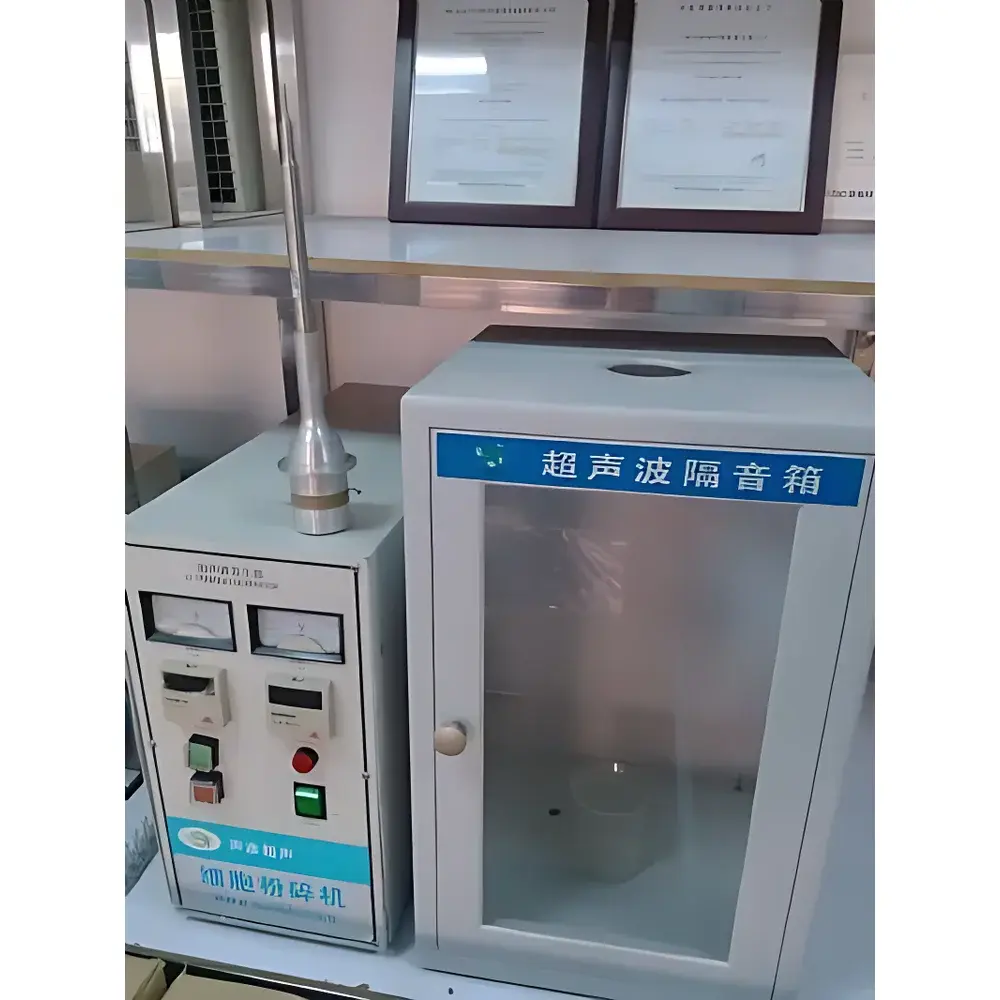
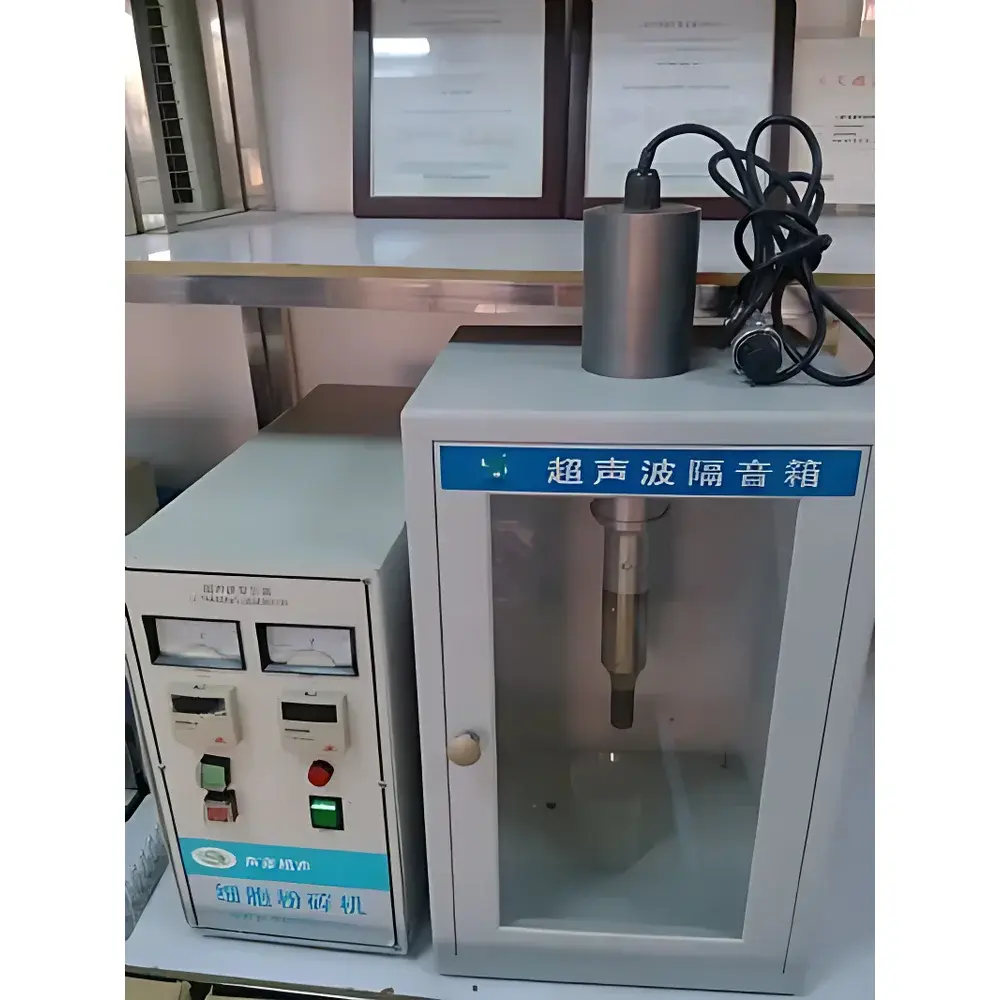
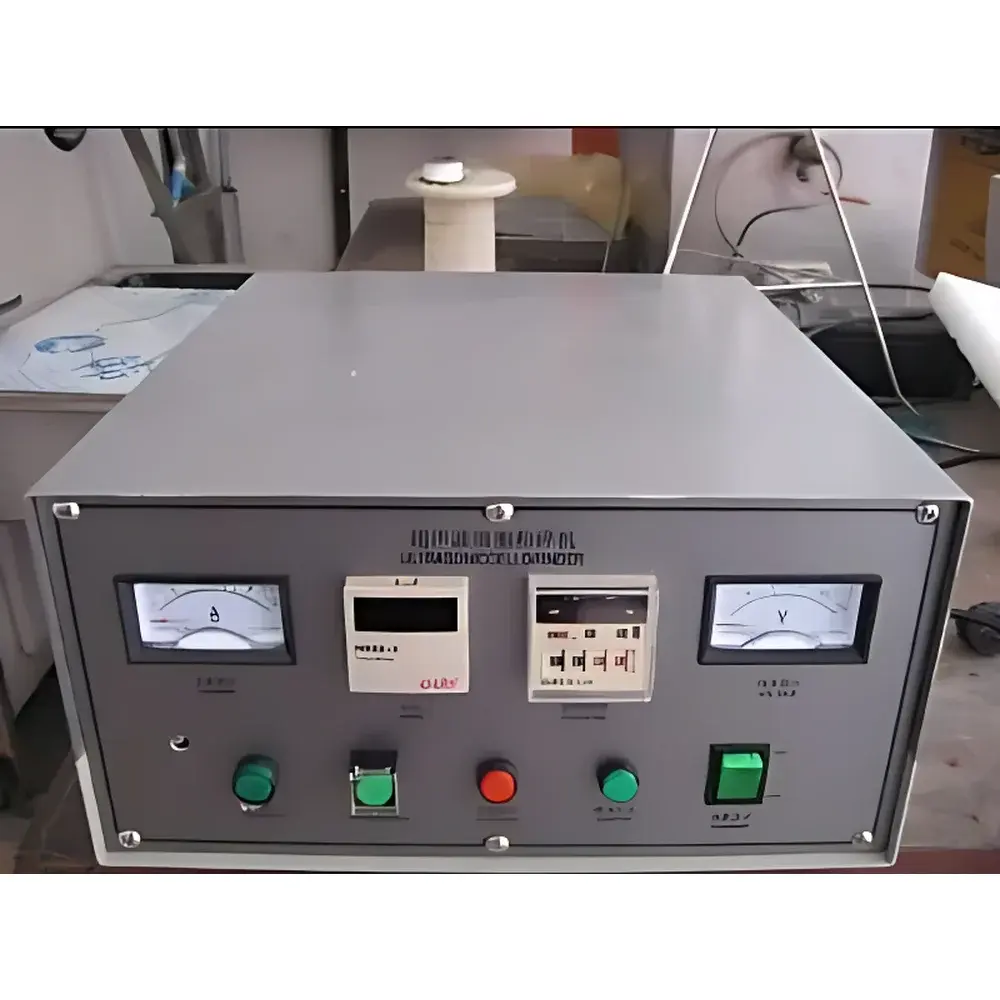
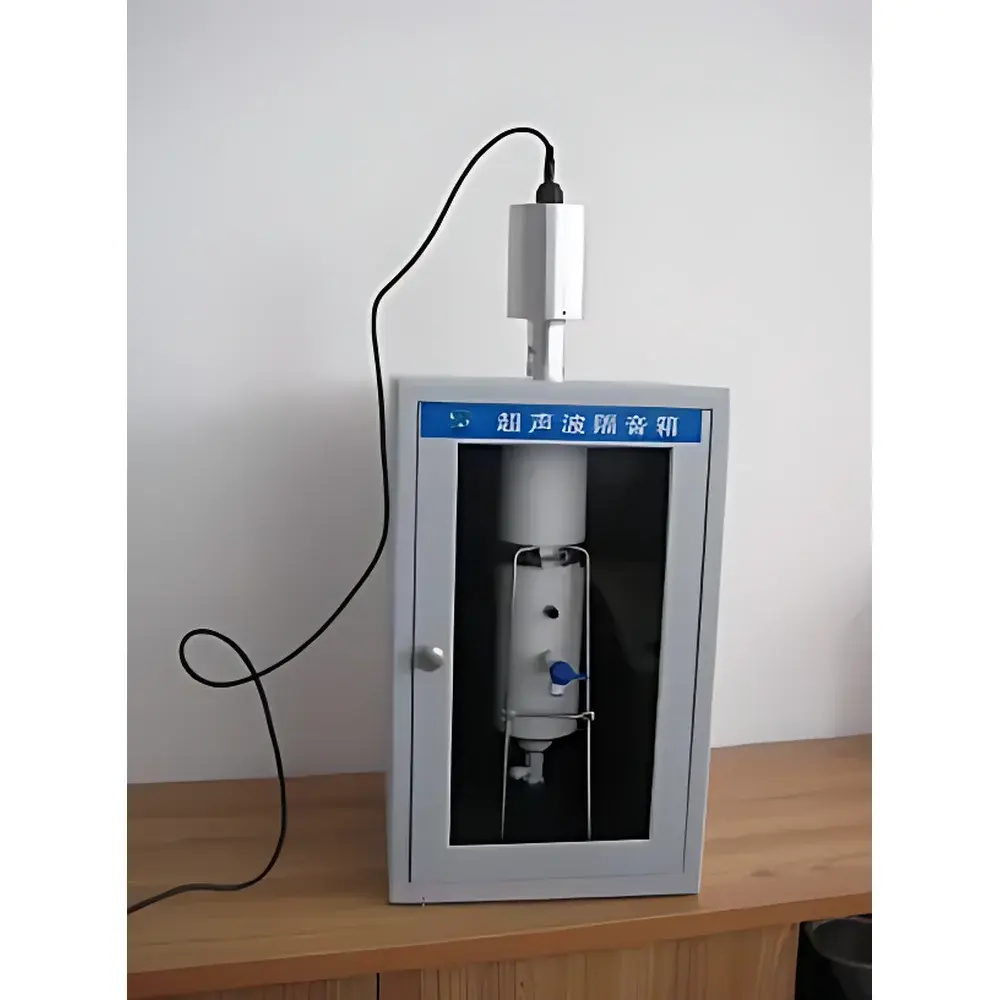
SYC Sycs SCQ-1000F Ultrasonic Cell Disruptor
| Brand | SYC (Sycs) |
|---|---|
| Origin | Shanghai, China |
| Manufacturer Type | Authorized Distributor |
| Country of Origin | China |
| Model | SCQ-1000F |
| Instrument Type | Ultrasonic Cell Disruptor |
| Ultrasonic Power Output | 1000 W |
| Operating Frequency | 20 kHz or 25 kHz (selectable) |
| Temperature Range | Ambient |
| Sample Volume Capacity | 0.5–1000 mL |
| Sample Throughput | Up to 500 samples per batch |
| Timer Range | 1 s – 9 h 59 min 59 s (programmable in 1-s increments) |
| Probe Tip Diameters Available | 5, 8, 10, 15, 20, 25, 30 mm (user-selectable) |
| Input Voltage | 220 V AC ±10% |
| Protection Features | Overvoltage, overcurrent, and output short-circuit protection |
| Display | Digital LCD with real-time power and current monitoring |
| Control Architecture | Microprocessor-based with IGBT power stage |
| Sweep Frequency Function | Enabled for uniform energy distribution |
| Warranty | 12 months for main unit |
Overview
The SYC SCQ-1000F Ultrasonic Cell Disruptor is a high-intensity, benchtop ultrasonic homogenizer engineered for reproducible mechanical lysis of biological cells, tissues, and subcellular structures. It operates on the principle of acoustic cavitation—where high-frequency sound waves generate transient microbubbles in liquid media that collapse violently, producing localized shear forces, shockwaves, and extreme temperature gradients sufficient to disrupt cell membranes and organelles. Designed for laboratory-scale applications in molecular biology, microbiology, biochemistry, and biopharmaceutical development, the SCQ-1000F delivers precise, controllable energy input across a broad sample volume range (0.5–1000 mL), making it suitable for both low-volume nucleic acid extraction and larger-scale protein solubilization protocols.
Key Features
- 1000 W nominal ultrasonic power output with digitally regulated amplitude control—enabling consistent energy delivery across variable sample viscosities and volumes.
- Selectable operating frequency (20 kHz or 25 kHz) optimized for different cell types: 20 kHz provides higher cavitation intensity for robust microbial or plant cell walls; 25 kHz offers finer energy dispersion for mammalian or sensitive primary cells.
- Modular sonotrode system with seven interchangeable probe tip diameters (5–30 mm), allowing users to match probe geometry to vessel size, sample volume, and desired energy density (W/cm²).
- Precision programmable timer (1 s–9 h 59 min 59 s) with second-level resolution—supporting unattended operation while minimizing thermal accumulation during extended sonication cycles.
- Integrated digital LCD display showing real-time RMS current draw and output power percentage—critical for method transfer, SOP documentation, and troubleshooting.
- Advanced IGBT-based power amplifier architecture with microprocessor feedback control, delivering >15% higher effective acoustic output compared to legacy transformer-driven systems, with improved thermal stability and reduced harmonic distortion.
- Comprehensive safety circuitry including overvoltage, overcurrent, and output short-circuit protection—ensuring operational reliability and instrument longevity under demanding usage conditions.
- Frequency sweep mode actively modulates the driving signal across a narrow bandwidth to prevent standing wave formation and promote uniform cavitation throughout the sample, enhancing reproducibility in heterogeneous suspensions.
Sample Compatibility & Compliance
The SCQ-1000F accommodates diverse biological matrices—including bacterial cultures (E. coli, Bacillus spp.), yeast (S. cerevisiae), mammalian cell lines (HEK293, CHO), plant tissue homogenates, and frozen lysates—when used with appropriate cooling protocols (e.g., ice-water bath or chilled jacketed vessels). Its design conforms to general laboratory equipment safety standards (IEC 61010-1) and electromagnetic compatibility requirements (EN 61326-1). While not certified for GMP manufacturing environments, the device supports GLP-compliant workflows through its traceable timer function, power logging capability (via optional RS232/USB interface), and adherence to standardized sonication parameters referenced in ISO 11348-3 (toxicity testing), USP (particulate matter), and ASTM E2698 (ultrasonic cleaning validation methodologies).
Software & Data Management
The SCQ-1000F operates as a standalone instrument with embedded firmware controlling all core functions. Optional PC connectivity via RS232 or USB enables remote parameter configuration, real-time power/current logging, and export of time-stamped operation records in CSV format—facilitating audit-ready documentation for quality assurance and regulatory submissions. When integrated into automated lab platforms, the device responds to TTL-triggered start/stop commands and reports status codes (e.g., fault flags, completion signals) compatible with LabVIEW, Python PySerial, or custom LIMS interfaces. All user-defined protocols—including probe type, power level, duration, and frequency selection—are stored in non-volatile memory with password-protected access to ensure method integrity across multiple operators.
Applications
- Nucleic acid isolation: Efficient release of genomic DNA, plasmid DNA, and total RNA from Gram-negative/positive bacteria, fungi, and cultured eukaryotic cells.
- Protein extraction and solubilization: Preparation of native or denatured lysates for SDS-PAGE, Western blotting, ELISA, and mass spectrometry workflows.
- Nanoparticle dispersion: Homogenization of liposomes, polymeric micelles, and exosome suspensions for drug delivery research.
- Chromatin shearing: Controlled fragmentation of crosslinked chromatin for ChIP-seq library preparation (when coupled with optimized buffer and cooling).
- Virus inactivation studies: Physical disruption of enveloped and non-enveloped viral particles for vaccine development and biosafety assessment.
- Enzyme activation/inhibition assays: Rapid mixing and structural perturbation of enzyme–substrate complexes under defined acoustic energy input.
FAQ
What is the recommended duty cycle to avoid sample overheating?
For most biological samples, a 5–10 s ON / 10–30 s OFF pulse regimen is advised. Continuous operation beyond 60 s without active cooling may elevate temperature >10°C above ambient—use ice baths or recirculating chillers for thermosensitive applications.
Can the SCQ-1000F be used for continuous-flow processing?
No—it is designed exclusively for batch-mode sonication in sealed or open vessels. For continuous processing, consider industrial-grade flow-through ultrasonicators with integrated heat exchangers.
How often should the sonotrode tip be inspected or replaced?
Inspect visually before each use for pitting, erosion, or cracking. Replace probes after ~200–500 hours of cumulative operation—or sooner if amplitude drops >20% at full power, indicating fatigue-induced impedance mismatch.
Is calibration traceable to national standards?
Acoustic power output is factory-calibrated using calorimetric methods per ASTM E2810. Certificate of Conformance (CoC) is provided; NIST-traceable calibration services are available upon request.
Does the instrument support FDA 21 CFR Part 11 compliance?
Out-of-the-box, it does not include electronic signature or audit trail functionality. However, when paired with validated third-party data acquisition software meeting Part 11 requirements, it can be incorporated into compliant workflows.





