
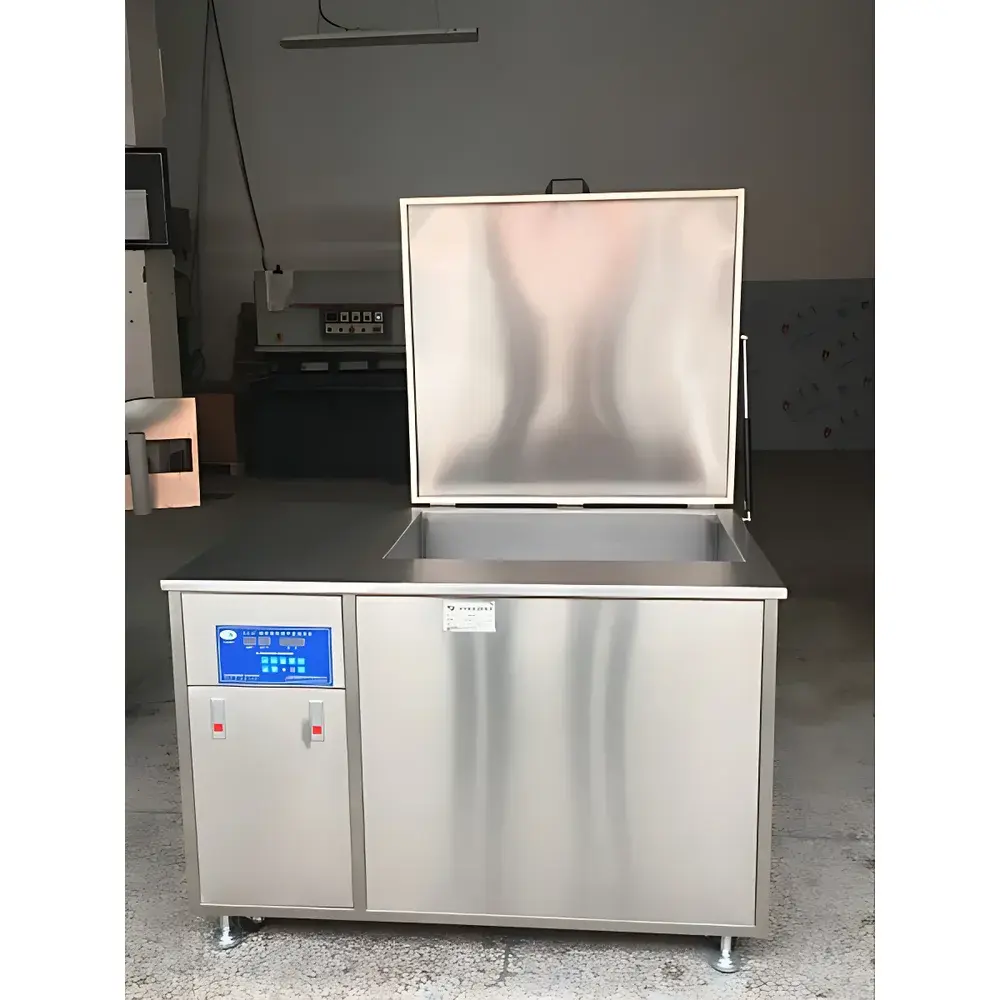
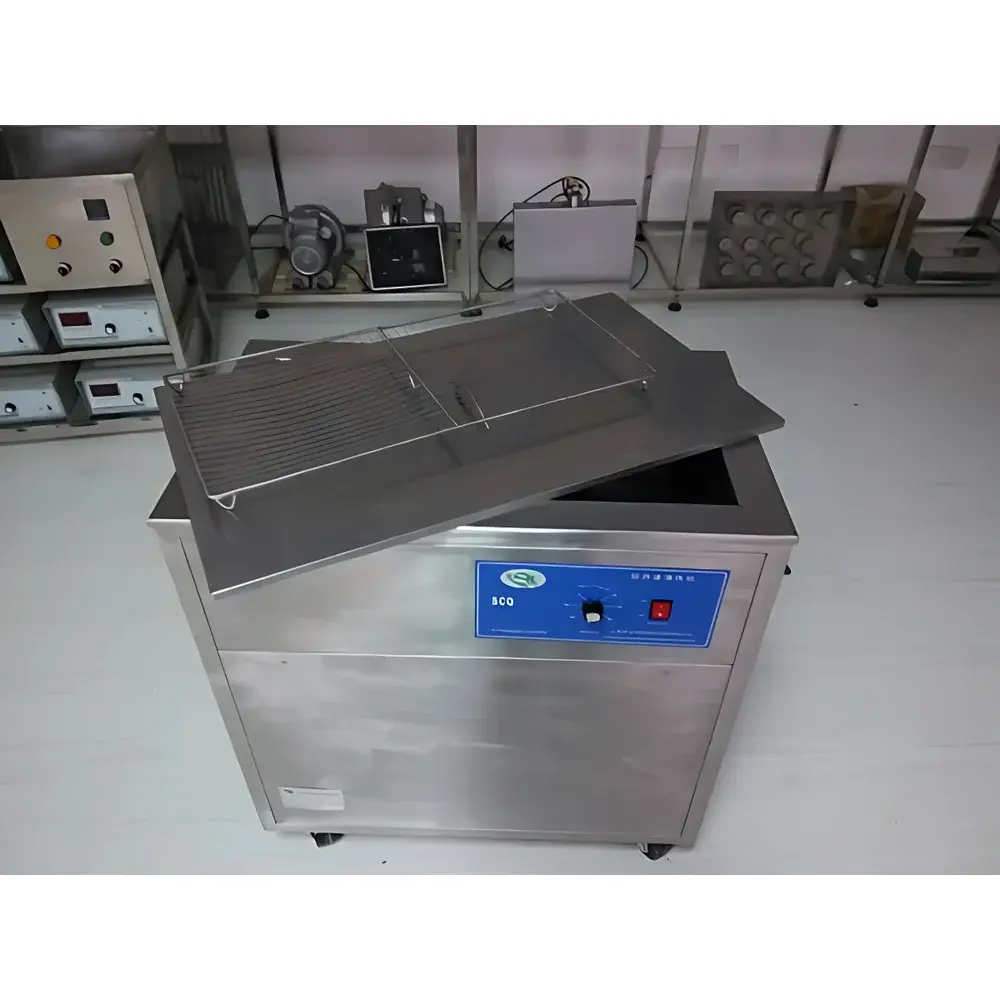
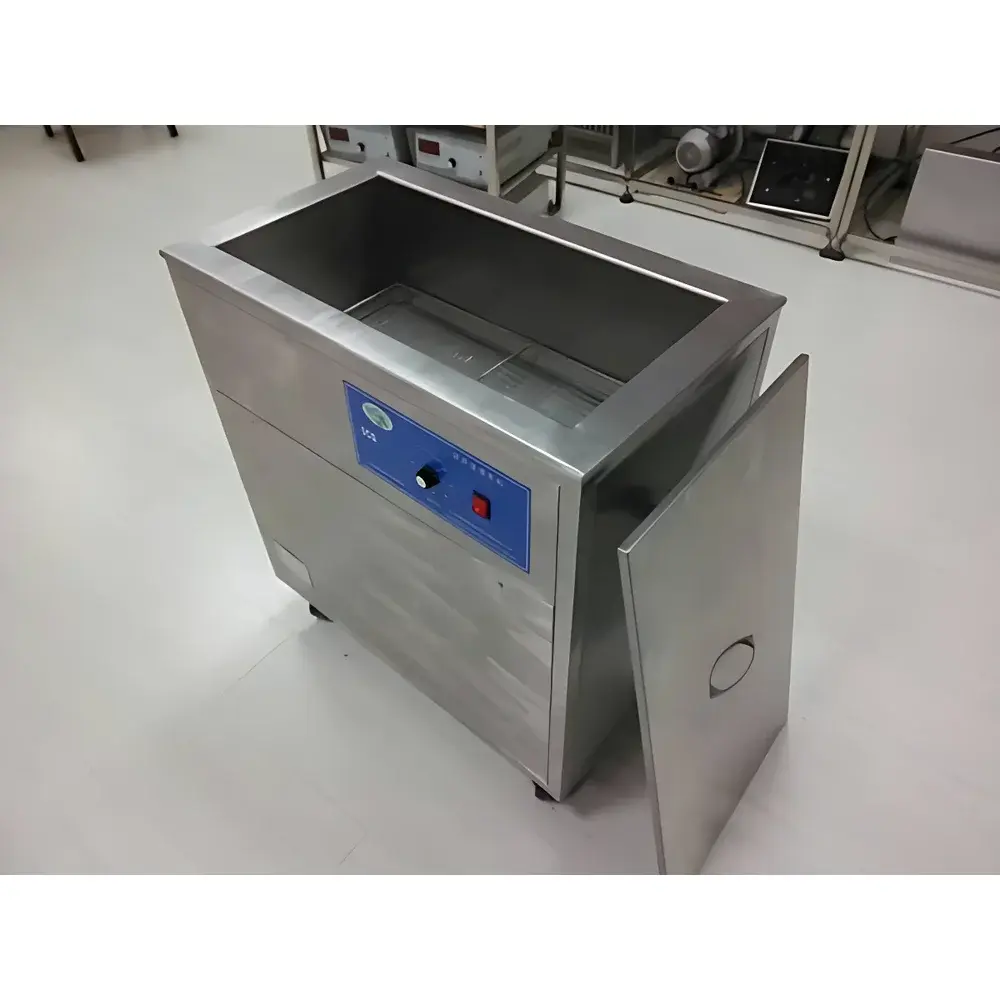
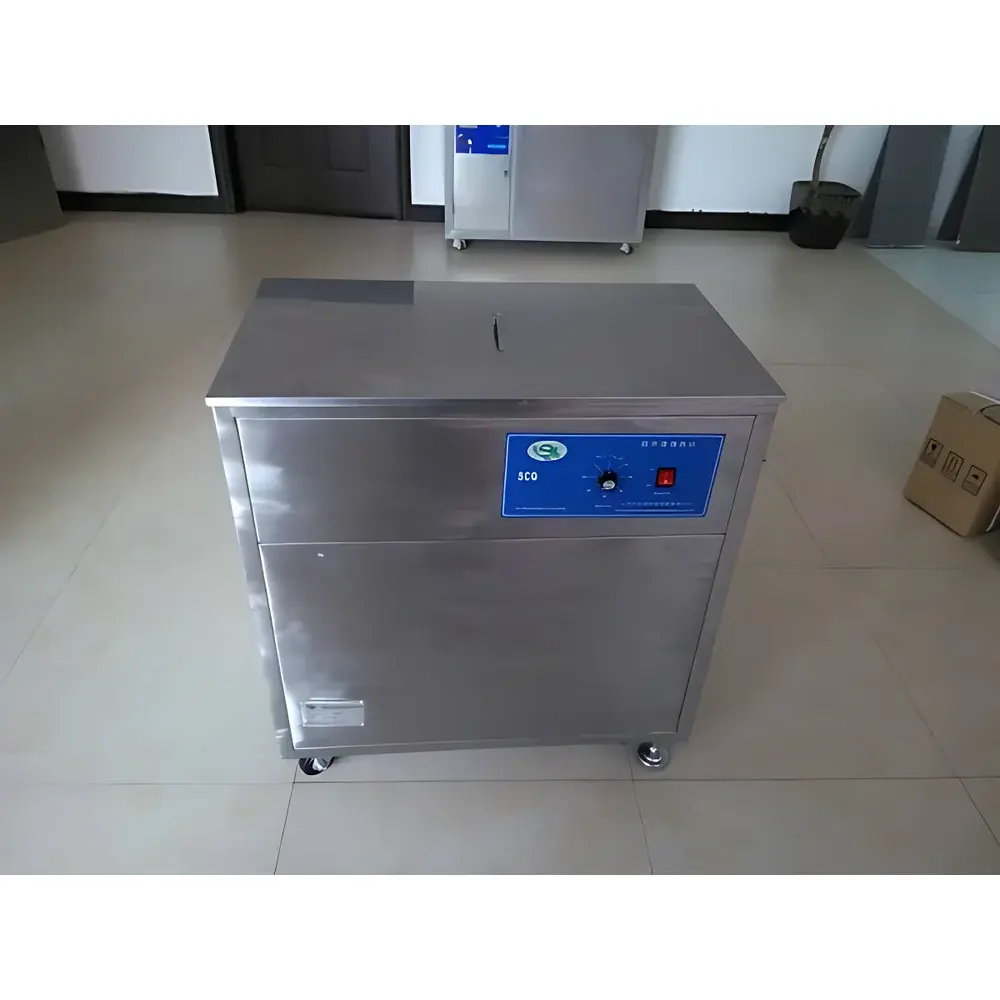
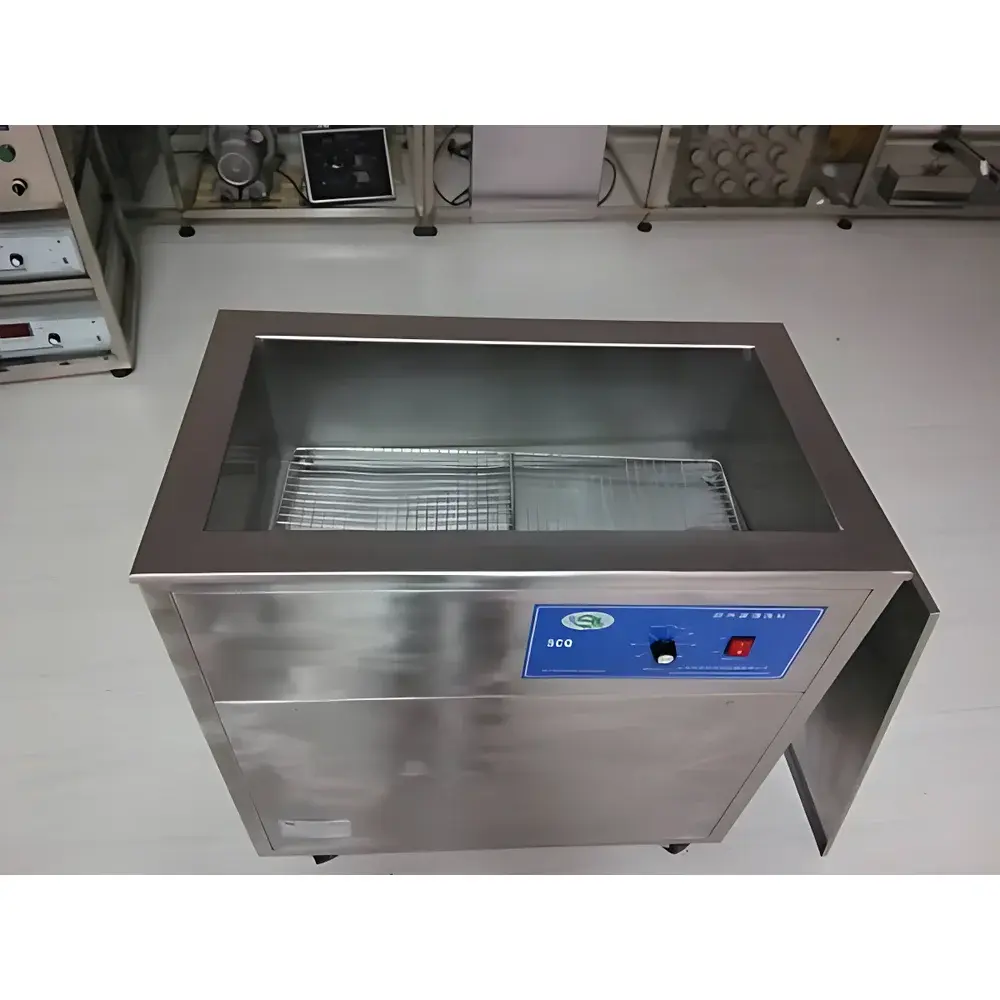
SYCEN SCQ-9200E Benchtop Ultrasonic Cleaner for Optical Components and Precision Labware
| Brand | SYCEN Ultrasonics |
|---|---|
| Origin | Shanghai, China |
| Model | SCQ-9200E |
| Capacity | 36 L |
| Internal Tank Dimensions | 600 × 300 × 200 mm |
| Ultrasonic Frequency | Dual-frequency selectable (25 kHz / 40 kHz) |
| Ultrasonic Power Output | 800 W (adjustable 10–100%) |
| Heating Power | 1200 W |
| Temperature Range | Ambient to 100 °C |
| Timer Range | 1–600 min |
| Lid | Sound-dampening cover included |
| Drain Valve | Manual |
| Basket & Rack | SUS304 stainless steel |
| Safety Features | Overheat protection, overload protection, dry-run alarm (for tanks ≥10 L) |
| Compliance | Designed per IEC 61000-6-3 (EMC), GB/T 14710 (Chinese environmental testing standard) |
Overview
The SYCEN SCQ-9200E is a high-capacity, dual-frequency benchtop ultrasonic cleaner engineered for laboratories and precision manufacturing environments requiring reproducible, residue-free cleaning of delicate optical components—including lenses, prisms, mirrors, and coated substrates—as well as glassware, surgical instruments, semiconductor wafers, and microfluidic devices. It operates on the principle of cavitation-induced acoustic streaming: high-frequency sound waves (25 kHz or 40 kHz) generate controlled microbubbles in aqueous or solvent-based cleaning media; their implosive collapse delivers localized mechanical energy sufficient to dislodge submicron particulates, organic films, polishing residues, and adsorbed biomolecules without surface abrasion or thermal degradation. The unit’s 36 L tank volume supports batch processing of large-format optics or multiple small parts simultaneously, while its dual-frequency capability enables process optimization—lower frequencies (25 kHz) deliver higher shear force for robust contaminant removal from machined surfaces, whereas higher frequencies (40 kHz) provide finer resolution for fragile, nano-coated, or microstructured optics.
Key Features
- Dual-frequency generator with user-selectable 25 kHz / 40 kHz operation for application-specific cleaning efficacy
- 800 W ultrasonic power output, continuously adjustable from 10% to 100% to prevent damage to sensitive optics or thin-film coatings
- Integrated 1200 W heating system with precise digital temperature control (ambient to 100 °C), enabling temperature-assisted degreasing and detergent activation
- Programmable timer (1–600 minutes) with automatic shutdown and audible alert for unattended operation
- SUS304 stainless steel tank, basket, and rack—corrosion-resistant and compliant with ISO 15223-1 labeling requirements for medical device cleaning validation
- Sound-dampening lid reduces operational noise to ≤65 dB(A) at 1 m distance, meeting laboratory ambient noise guidelines (ISO 140-3)
- Comprehensive safety architecture: overheat protection, current overload cutoff, and dry-run alarm (activated when liquid level falls below transducer array)
- EMC-compliant design per IEC 61000-6-3, suitable for shared lab environments with sensitive instrumentation
Sample Compatibility & Compliance
The SCQ-9200E accommodates a broad range of sample geometries and material classes: plano-convex and aspheric lenses (up to Ø200 mm), fused silica windows, AR/HR-coated substrates, borosilicate glass cuvettes, quartz NMR tubes, stainless steel surgical forceps, and silicon wafers. Its cleaning performance is validated for use with common aqueous alkaline detergents (e.g., Alconox®, Liquinox®), ethanol/water mixtures, and low-surface-tension solvents compatible with ultrasonic cavitation. While not certified as a medical device sterilizer, the unit supports cleaning steps aligned with ISO 15883-1 (washer-disinfectors) and AAMI ST37 (ultrasonic cleaning of reusable medical devices). For GMP-regulated labs, optional audit-trail logging (via external USB data logger) can support FDA 21 CFR Part 11 compliance when integrated into documented cleaning SOPs.
Software & Data Management
The SCQ-9200E features an embedded microcontroller with a backlit LCD interface supporting real-time display of frequency mode, power level, set temperature, elapsed time, and active safety status. No proprietary software is required for basic operation; however, the unit includes a TTL-level RS232 port (optional adapter) for integration into centralized lab automation systems. When paired with third-party data acquisition software (e.g., LabVIEW™ or Python-based PySerial scripts), users may log timestamped parameter sets for IQ/OQ/PQ documentation, batch traceability, and CAPA-driven process refinement. All firmware updates are delivered via secure USB flash drive—no internet connectivity required—ensuring air-gapped deployment in regulated environments.
Applications
- Optical manufacturing: Removal of cerium oxide slurry, pitch residue, and fingerprint oils from lens blanks prior to coating
- Pharmaceutical QC labs: Cleaning of HPLC vials, autosampler needles, and dissolution apparatus components per USP
- Microelectronics: Pre-bond cleaning of MEMS wafers and ceramic substrates to eliminate organic outgassing precursors
- Academic research: Decontamination of TEM grids, AFM cantilevers, and microfluidic chips prior to surface characterization
- Hospital central sterile supply departments (CSSD): Preliminary cleaning of endoscopes, laparoscopic instruments, and dental handpieces before steam sterilization
- Materials science: Degassing of nanoparticle suspensions and solvent exchange in sol-gel synthesis protocols
FAQ
Is the SCQ-9200E suitable for cleaning anti-reflective coated optics without delamination risk?
Yes—when operated at 40 kHz with ≤40% power and aqueous neutral pH detergent at ≤45 °C, the unit has demonstrated no measurable coating adhesion loss on MgF₂, TiO₂/SiO₂ multilayer stacks per ISO 9211-3 testing.
Can the unit be validated for ISO 13485 quality management systems?
Yes—the mechanical design, material certifications (SUS304 mill test reports), and repeatable parameter control enable inclusion in cleaning validation protocols; full qualification requires user-performed PQ studies per ISO 13485 Annex C.
Does the drain valve support connection to floor drainage or waste solvent recovery systems?
The manual ball valve features a standard 1/2″ BSP female thread, compatible with laboratory-grade PVC or PTFE-lined drainage tubing; solvent compatibility must be verified per cleaning agent SDS.
What maintenance intervals are recommended for sustained cavitation efficiency?
Transducer performance verification (cavitation intensity mapping per ASTM E1579) is advised every 6 months; tank descaling with 5% citric acid solution is recommended after every 200 operating hours in hard-water regions.



