Titanium (Ti) Wire – Hefei Kejing High-Purity Instrument Component
| Brand | Hefei Kejing |
|---|---|
| Origin | Anhui, China |
| Manufacturer Type | Authorized Distributor |
| Origin Classification | Domestic |
| Model | Ti Wire |
| Pricing | Upon Request |
| Diameter Range | 0.01–2.0 mm |
| Purity | 99.99% (4N) |
| Packaging | Class 1000 Cleanroom Environment, Sealed in Class 100 Cleanroom Bags with Aluminum Foil Lining |
Overview
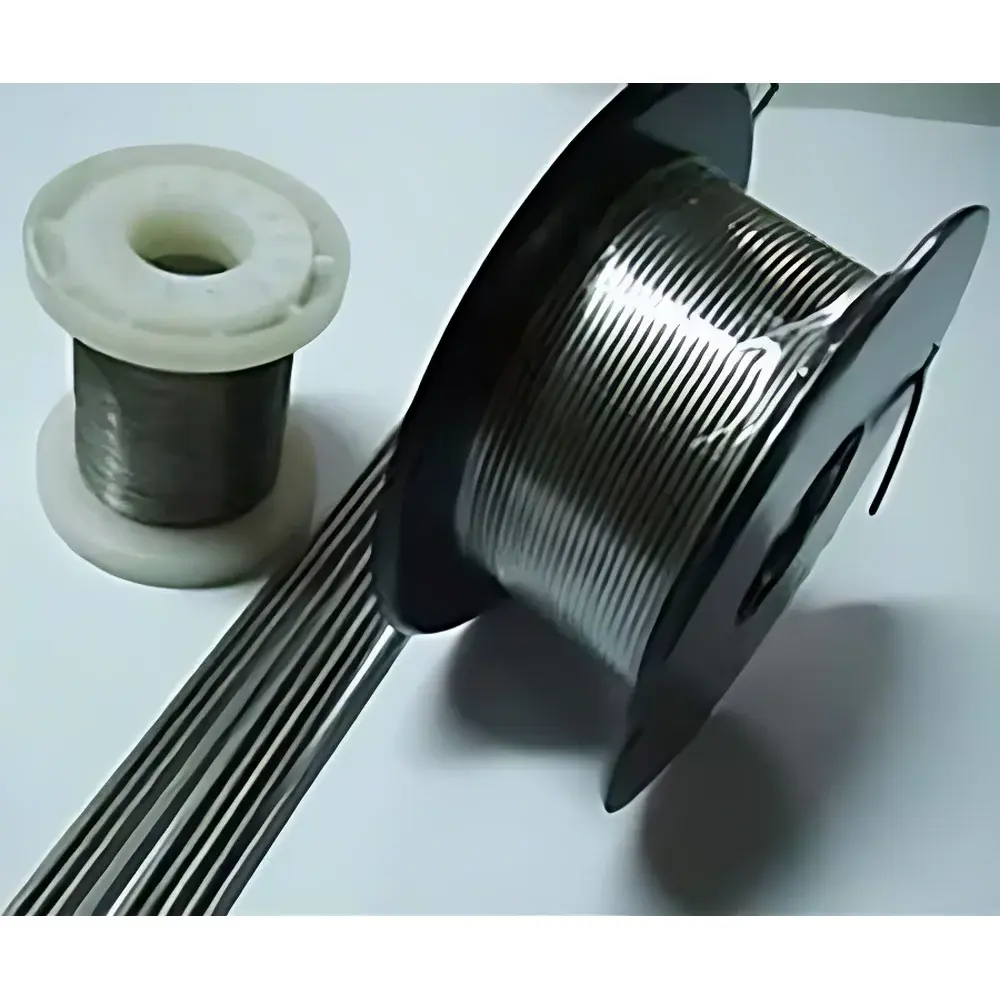
Titanium (Ti) wire is a high-performance elemental component widely employed in scientific instrumentation, vacuum systems, thin-film deposition setups, and high-temperature sensor fabrication. As a critical raw material for sputtering targets, resistance heating elements, thermocouple leads, and microelectrode substrates, Ti wire leverages the intrinsic advantages of titanium—including exceptional corrosion resistance in oxidizing environments, high strength-to-density ratio, biocompatibility, and excellent thermal stability up to 600 °C in air. This particular grade conforms to 4N (99.99% pure) metallurgical specifications, minimizing trace metallic impurities (e.g., Fe, Ni, O, C, N) that could compromise performance in ultra-high-vacuum (UHV) or semiconductor-grade applications. Manufactured under controlled cleanroom conditions, it meets stringent particulate and surface contamination requirements essential for analytical instrument assembly and calibration reference construction.
Key Features
- Ultra-high purity: Certified 4N (99.99%) titanium, compliant with ASTM B265 Grade 1 specifications for oxygen, iron, and interstitial content control.
- Precision-drawn dimensional consistency: Diameter tolerance maintained within ±0.002 mm across the full 0.01–2.0 mm range, enabling reproducible electrical resistivity and mechanical behavior in metrology-critical assemblies.
- Controlled surface integrity: Cold-drawn and annealed in inert atmosphere to preserve low surface oxide thickness (<5 nm), ensuring stable contact resistance and minimal outgassing in vacuum-compatible instrument modules.
- Traceability and documentation: Each spool includes lot-specific Certificate of Analysis (CoA) reporting ICP-MS quantification of ≤10 ppm total metallic impurities and residual gas analysis (RGA) data per ASTM E1557.
- ESD-safe packaging: Supplied in double-bagged, static-dissipative Class 100 cleanroom polyethylene pouches, overwrapped with aluminum foil and sealed under nitrogen purge—fully compatible with ISO 14644-1 Class 5 (Class 100) handling protocols.
Sample Compatibility & Compliance
This Ti wire is engineered for integration into instrumentation requiring non-magnetic, chemically inert conductors or structural supports. It exhibits compatibility with common thin-film processing techniques including electron-beam evaporation, magnetron sputtering, and chemical vapor deposition (CVD). Its low magnetic susceptibility (χ ≈ +1.8×10⁻⁴) ensures negligible interference in NMR probe assemblies and mass spectrometer ion optics. The product complies with RoHS Directive 2011/65/EU and REACH Annex XVII restrictions on hazardous substances. For regulated laboratory environments, it supports GLP/GMP documentation workflows through batch-level traceability and audit-ready CoA records. While not a finished measuring device, its material certification aligns with ISO/IEC 17025 clause 5.6.3 requirements for reference materials used in instrument calibration and validation.
Software & Data Management
As a passive physical component, Ti wire does not incorporate embedded firmware or digital interfaces. However, its associated quality documentation—including CoA, RGA spectra, and tensile test reports—is delivered in standardized PDF/A-1b format, fully searchable and metadata-tagged for integration into LIMS (Laboratory Information Management Systems) or QMS (Quality Management Systems) such as LabWare LIMS or MasterControl. Batch identifiers are encoded in GS1-128 linear barcodes affixed to primary packaging, enabling automated inventory reconciliation and chain-of-custody logging in accordance with FDA 21 CFR Part 11 electronic record retention standards.
Applications
- Heating filaments and crucibles in high-vacuum electron microscopy sample stages and thermal desorption units.
- Substrate wires for electrochemical biosensor development and impedance spectroscopy reference electrodes.
- Feedstock material for laser-induced breakdown spectroscopy (LIBS) calibration standards and spark-source mass spectrometry (SSMS) reference samples.
- Support structures in cryogenic dilution refrigerators where low thermal conductivity and non-magnetic properties are mandatory.
- Core material for in-situ TEM heating holders requiring sub-100 nm diameter precision and atomic-layer oxide uniformity.
FAQ
Is this Ti wire suitable for UHV applications (≤1×10⁻⁹ mbar)?
Yes—surface oxide thickness and outgassing rates are validated per ASTM E1014, with total pressure rise <1×10⁻¹¹ mbar·L/s·cm² after 24-hr bakeout at 250 °C.
Can custom diameters outside the 0.01–2.0 mm range be supplied?
Yes—Hefei Kejing offers bespoke drawing services down to 5 µm and up to 5.0 mm, subject to minimum order quantity and extended lead time.
Do you provide spooling on conductive reels for ESD-sensitive cleanrooms?
Yes—custom reel options include anodized aluminum with carbon-loaded polymer flanges meeting ANSI/ESD S20.20 requirements.
Are tensile strength and elongation data available per lot?
Yes—mechanical property reports include yield strength (≥170 MPa), ultimate tensile strength (≥240 MPa), and elongation at break (≥20%), measured per ASTM E8M.
What is the maximum recommended operating temperature in inert atmosphere?
Continuous service up to 850 °C in argon or helium; short-term exposure up to 1000 °C is permissible with controlled ramp rates and post-annealing verification.