
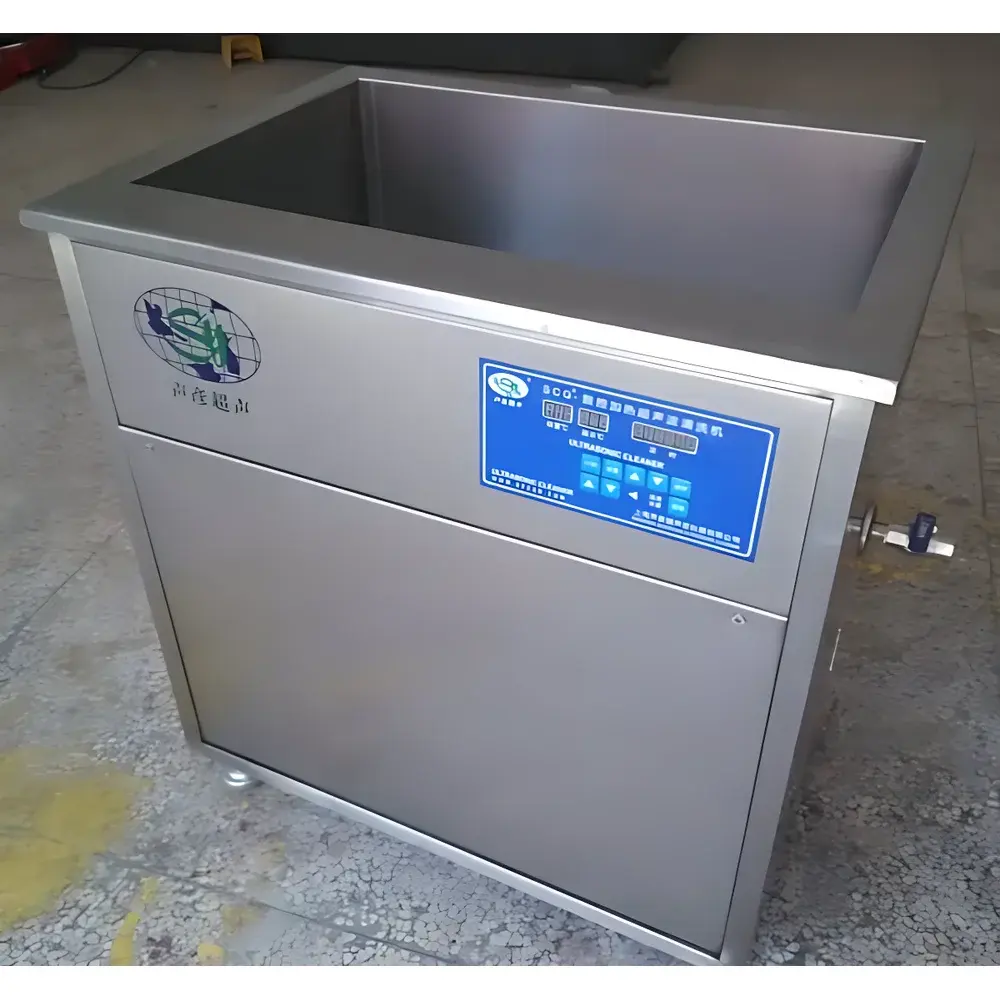
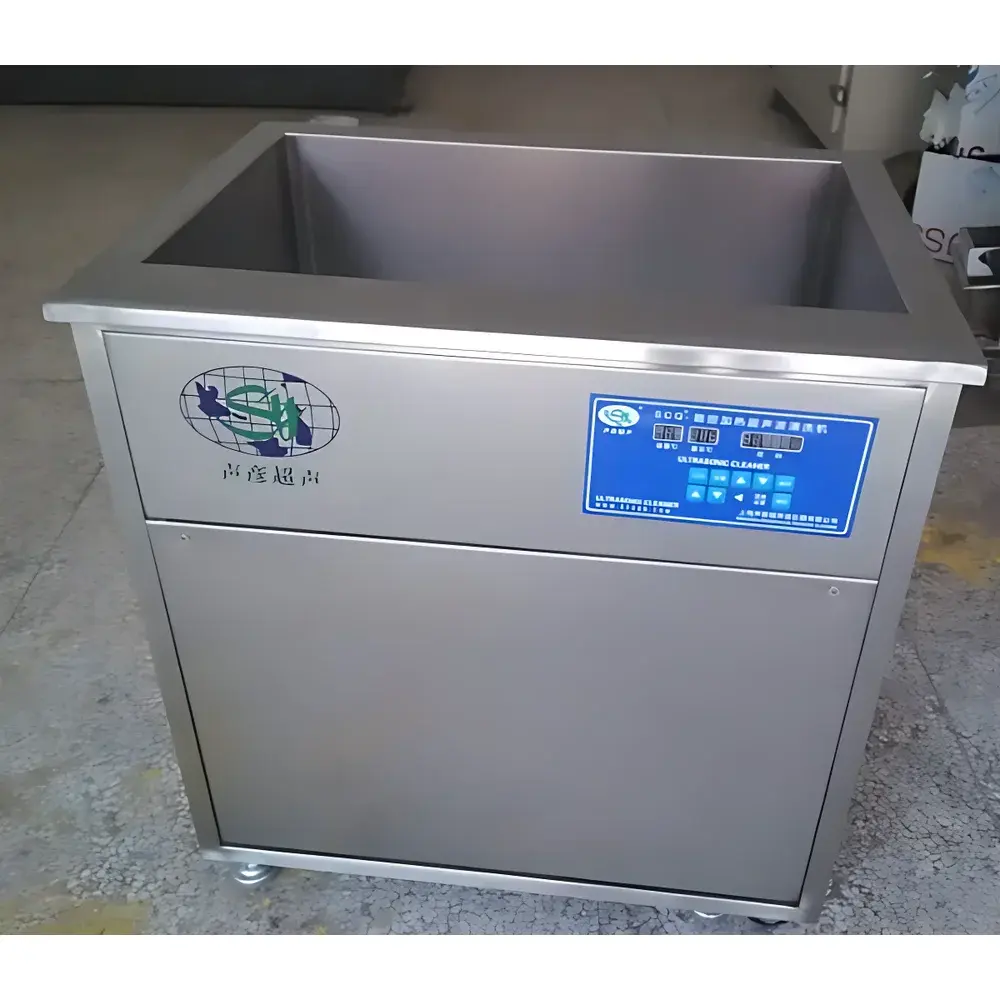
Lucky SCQ-1000D Dual-Frequency Ultrasonic Cleaner (54 L Capacity)
| Brand | Lucky (Sycs) |
|---|---|
| Origin | Shanghai, China |
| Model | SCQ-1000D |
| Capacity | 54 L |
| Ultrasonic Frequencies | 35 kHz / 40 kHz / 60 kHz (selectable dual-frequency mode) |
| Total Ultrasonic Power | 1000 W |
| Timer Range | 1–60 min (adjustable) |
| Lid with Acoustic Damping | Yes |
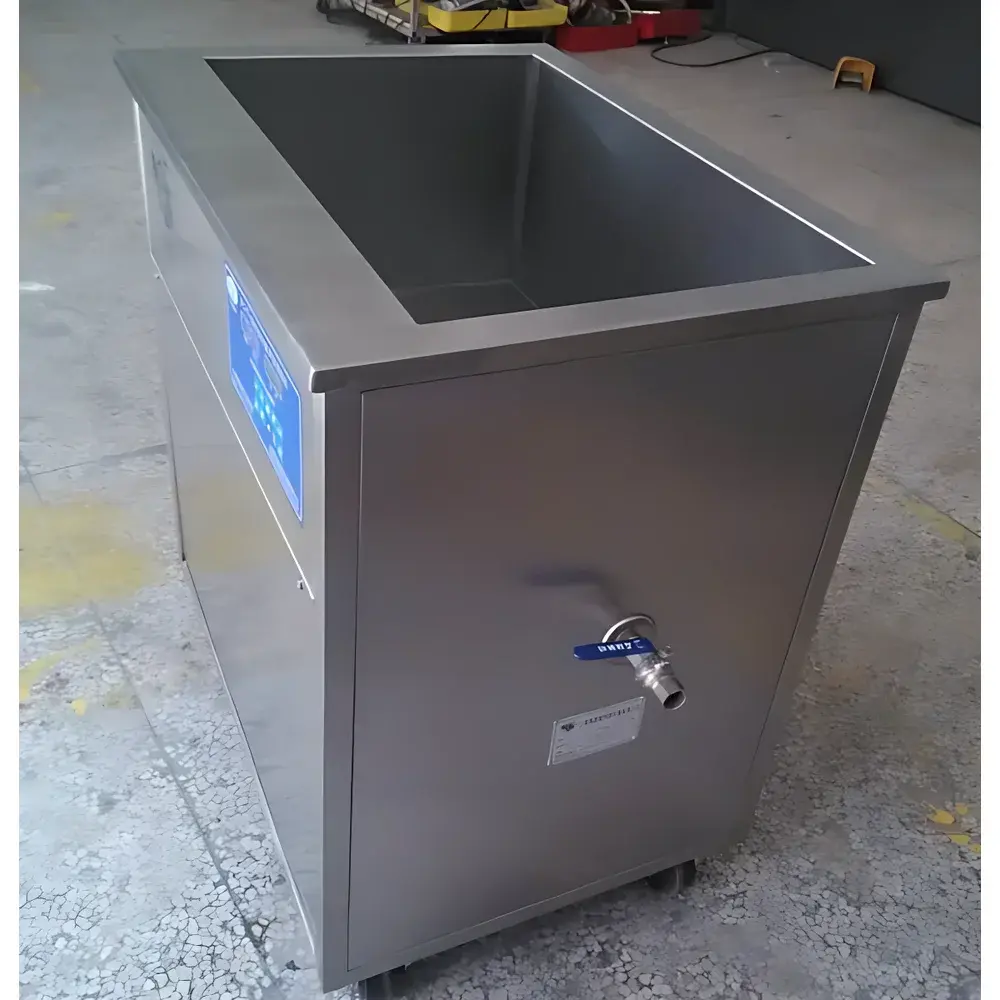
| Manual Fill/Drain | Yes |
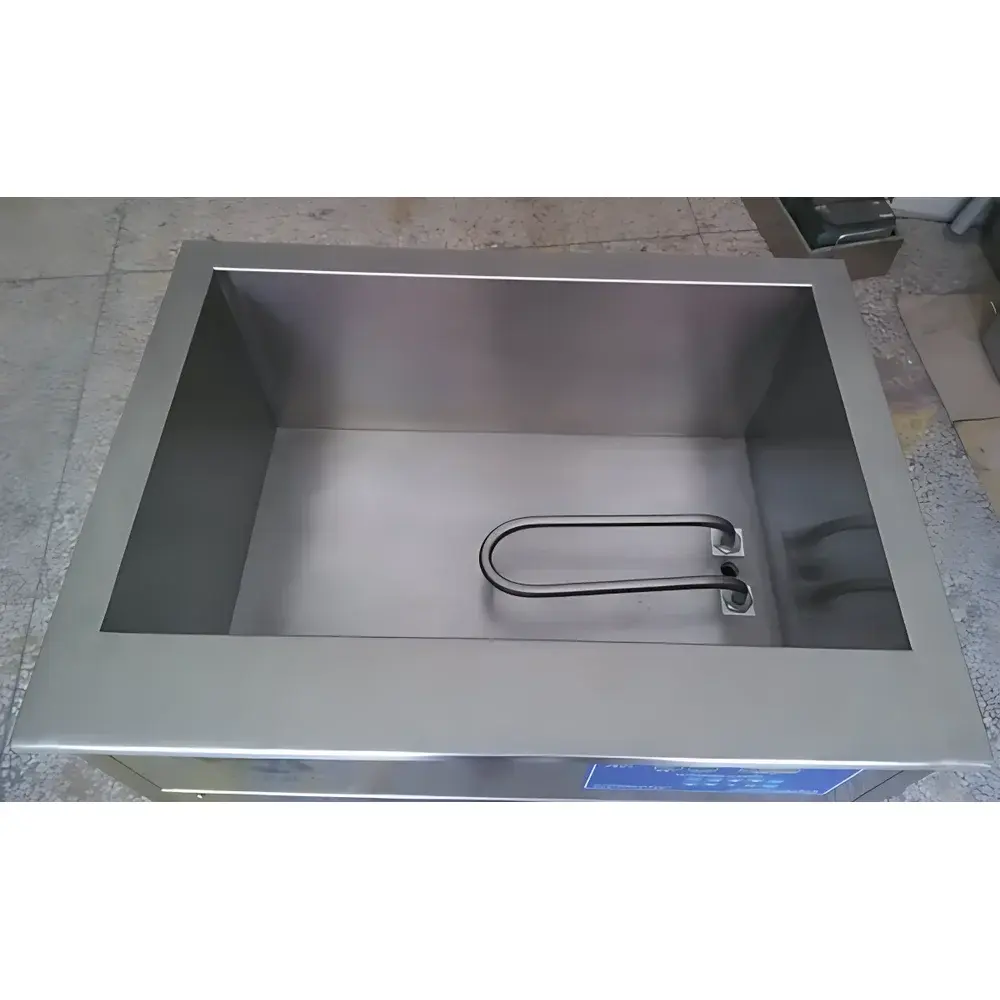
| Internal Tank Dimensions | 600 × 300 × 300 mm |
| Power Supply | 220 V, 50 Hz |
| Construction | Stainless Steel 304 Tank & Housing |
| Compliance | CE-marked design principles, compatible with ISO 13485-aligned lab workflows |
Overview
The Lucky SCQ-1000D is a benchtop dual-frequency ultrasonic cleaner engineered for precision cleaning of delicate and complex components in research laboratories, quality control environments, and industrial maintenance settings. It operates on the principle of acoustic cavitation—generating controlled micro-bubbles in liquid media that collapse with localized energy release, enabling mechanical removal of particulate contaminants, oils, oxides, and organic residues from surfaces, crevices, blind holes, and microstructured geometries. Unlike single-frequency units, the SCQ-1000D supports selectable dual-frequency operation (e.g., 35 kHz + 40 kHz or 40 kHz + 60 kHz), allowing users to optimize cleaning efficacy across diverse material classes: lower frequencies (35–40 kHz) deliver higher cavitation intensity suitable for robust metal parts and heavy contamination, while higher frequencies (60 kHz) provide finer, more uniform energy distribution ideal for fragile optics, semiconductor wafers, and MEMS devices. Its 54 L stainless steel tank (600 × 300 × 300 mm) accommodates large fixtures, multi-part batches, or stacked racks without compromising field homogeneity.
Key Features
- Robust 304 stainless steel construction—tank, housing, and lid—resistant to aqueous and mild solvent-based cleaning solutions, ensuring long-term corrosion resistance and compliance with laboratory hygiene standards.
- Dual-frequency generator architecture with independent transducer excitation control, supporting three standard frequency pairings (35/40 kHz, 40/60 kHz, or 35/60 kHz) to match substrate geometry and contaminant type.
- 1000 W total ultrasonic output distributed across multiple high-efficiency piezoelectric transducers mounted on the tank bottom, delivering uniform energy density across the full working volume.
- Precision digital timer (1–60 min) with automatic shutdown and audible end-of-cycle signal—calibrated to ±1% accuracy over full range per IEC 61000-4-30 guidelines.
- Integrated acoustic damping lid with ergonomic latch mechanism—reduces airborne noise to ≤65 dB(A) at 1 m distance and minimizes solvent evaporation during extended cycles.
- Manual fill/drain system with threaded outlet port (G1/2″) and removable stainless steel mesh basket for part support and sediment retention.
Sample Compatibility & Compliance
The SCQ-1000D is validated for use with water, aqueous alkaline or acidic detergents, and low-volatility solvents (e.g., isopropanol, ethanol, terpenes) commonly employed in ISO 14644 cleanroom-compatible cleaning protocols. It supports cleaning of glassware (vials, cuvettes, optical cells), stainless steel surgical instruments (per ASTM F1877-22), silicon wafers (≤200 mm diameter), precision optics (lenses, prisms, filters), printed circuit boards (PCBs), and automotive fuel system components (injectors, valves). While not certified to FDA 21 CFR Part 11 or EU Annex 11 out-of-the-box, its operational parameters—including non-volatile timer logs, fixed power output, and absence of network connectivity—facilitate integration into GLP/GMP-compliant workflows when paired with external documentation systems. The unit conforms to IEC 61000-6-3 (EMC emissions) and IEC 61000-6-2 (immunity) standards.
Software & Data Management
The SCQ-1000D is a standalone analog-digital hybrid instrument with no embedded firmware, cloud interface, or data export capability—intentionally designed for reliability, electromagnetic resilience, and audit-ready simplicity. All operating parameters are set via front-panel membrane switches and displayed on a 4-digit LED screen. No software installation, driver dependencies, or cybersecurity updates are required. For regulated environments, users may document cycle parameters (time, frequency selection, bath temperature via external probe) manually or integrate the unit into electronic lab notebooks (ELNs) using time-stamped photographic or video records. Optional accessories include calibrated PT100 immersion thermometers (±0.5 °C) and ultrasonic intensity mapping kits (per ASTM E1552-20) for periodic performance verification.
Applications
This system is routinely deployed in university physics and materials science labs for sample preparation prior to SEM, XRD, or AFM analysis; in pharmaceutical QC labs for cleaning HPLC vials and autosampler components; in electronics manufacturing for post-solder flux removal from SMT assemblies; and in medical device reprocessing centers for pre-sterilization decontamination of reusable laparoscopic tools. Its dual-frequency flexibility enables method development for challenging applications such as carbon deposit removal from diesel injector nozzles (using 35 kHz), biofilm disruption on titanium implants (60 kHz in enzymatic buffer), or nanoparticle dispersion stabilization in colloidal synthesis protocols.
FAQ
Is the ultrasonic power adjustable?
No—the unit delivers a fixed 1000 W output optimized for consistent cavitation density across the tank volume.
Can the unit operate continuously beyond 60 minutes?
Yes, though manual reset is required after each 60-minute cycle; continuous unattended operation is not recommended per IEC 60335-1 safety guidelines.
What cleaning solutions are compatible?
Aqueous detergents (pH 4–10), alcohols, and hydrocarbon solvents with flash points >60 °C; avoid halogenated solvents unless using explosion-proof variants.
Does it support heating?
No—temperature control is not integrated; external heated baths or recirculating chillers may be used if thermal assistance is required.
Is calibration certification included?
Factory calibration report (cavitation intensity mapping at center point) is provided; third-party ISO/IEC 17025 calibration is available upon request.



