
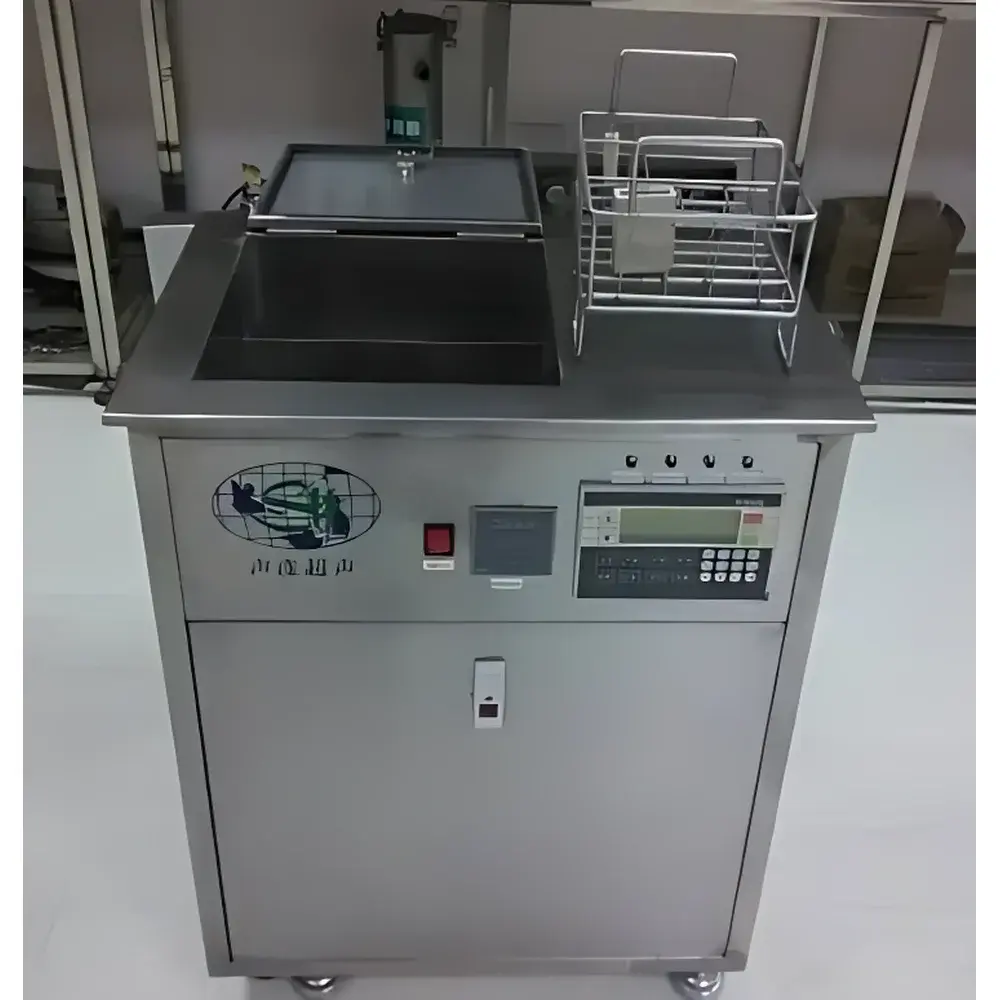
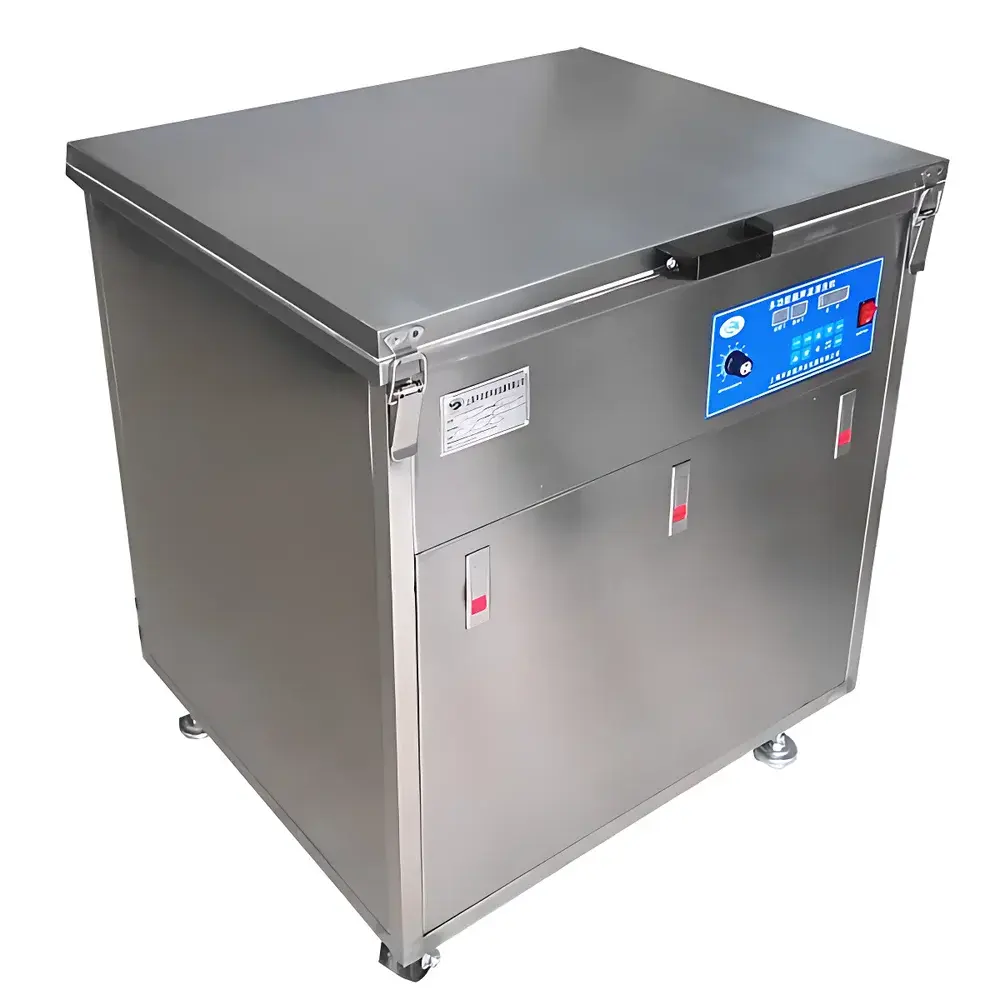
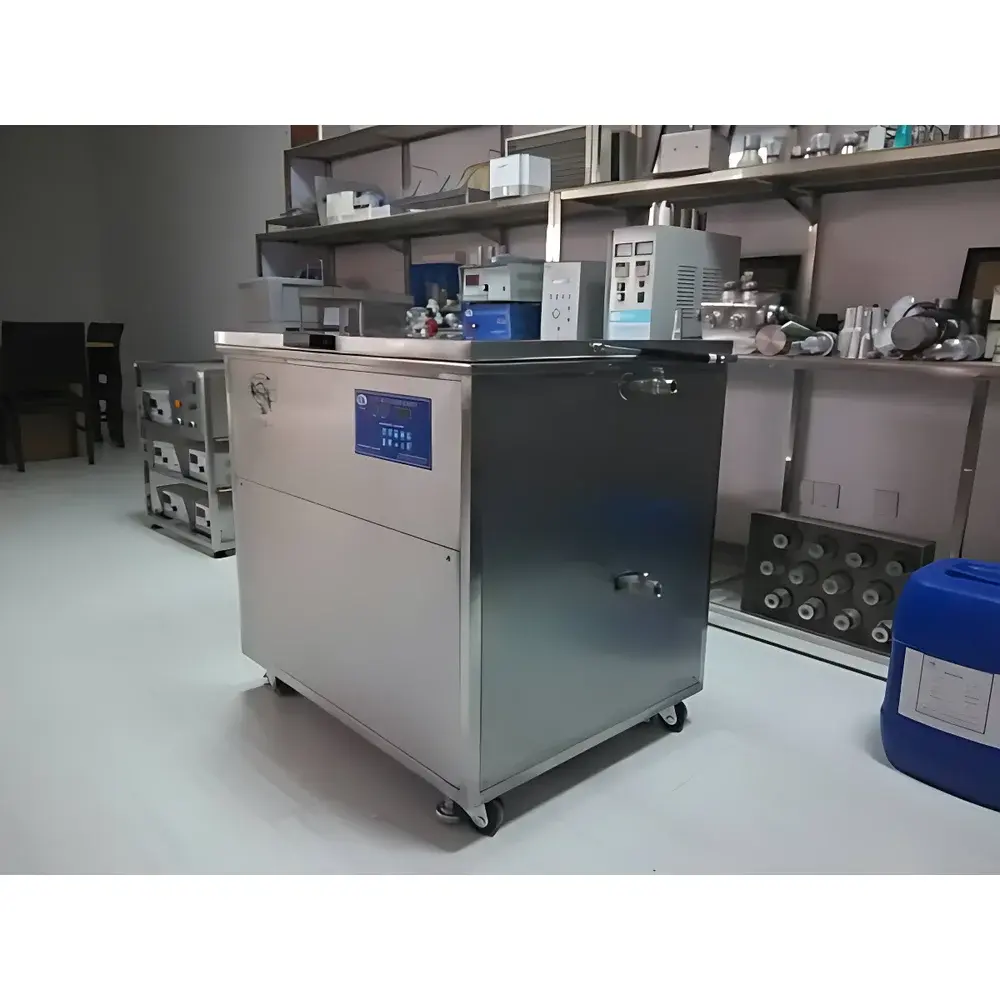
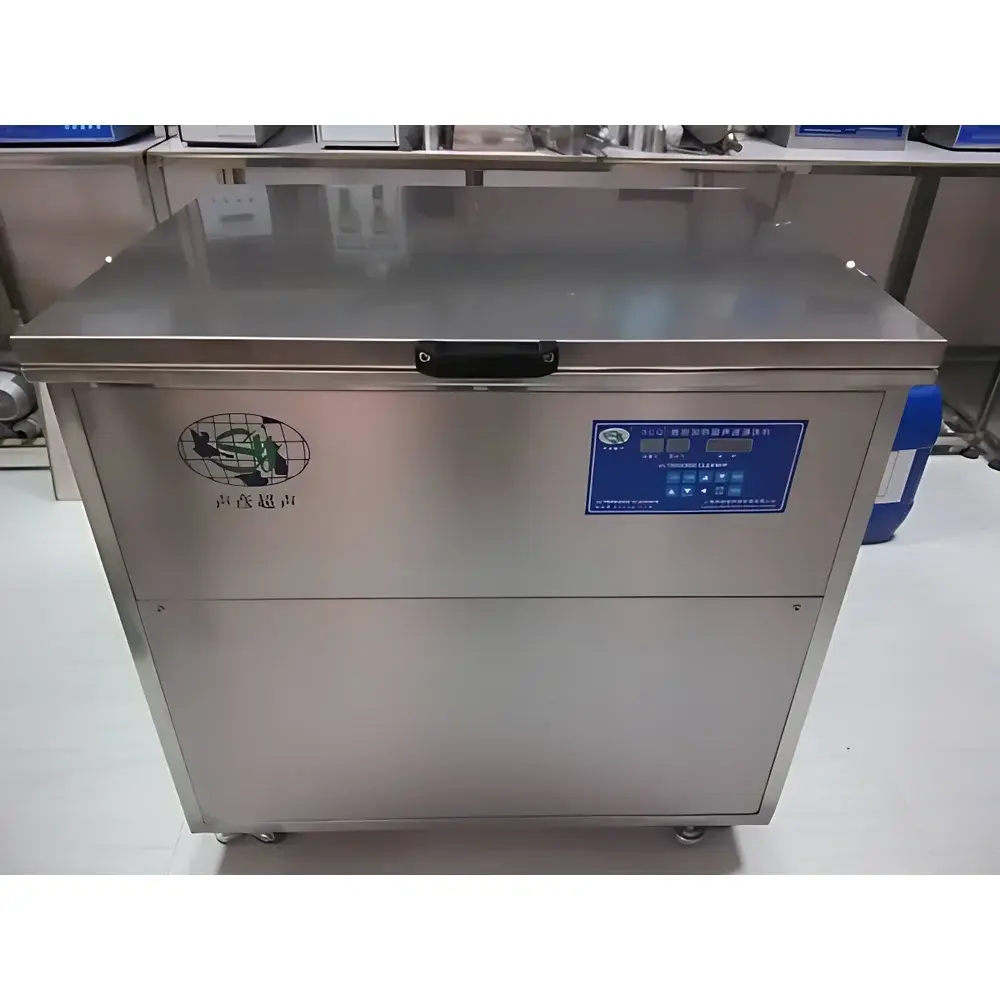
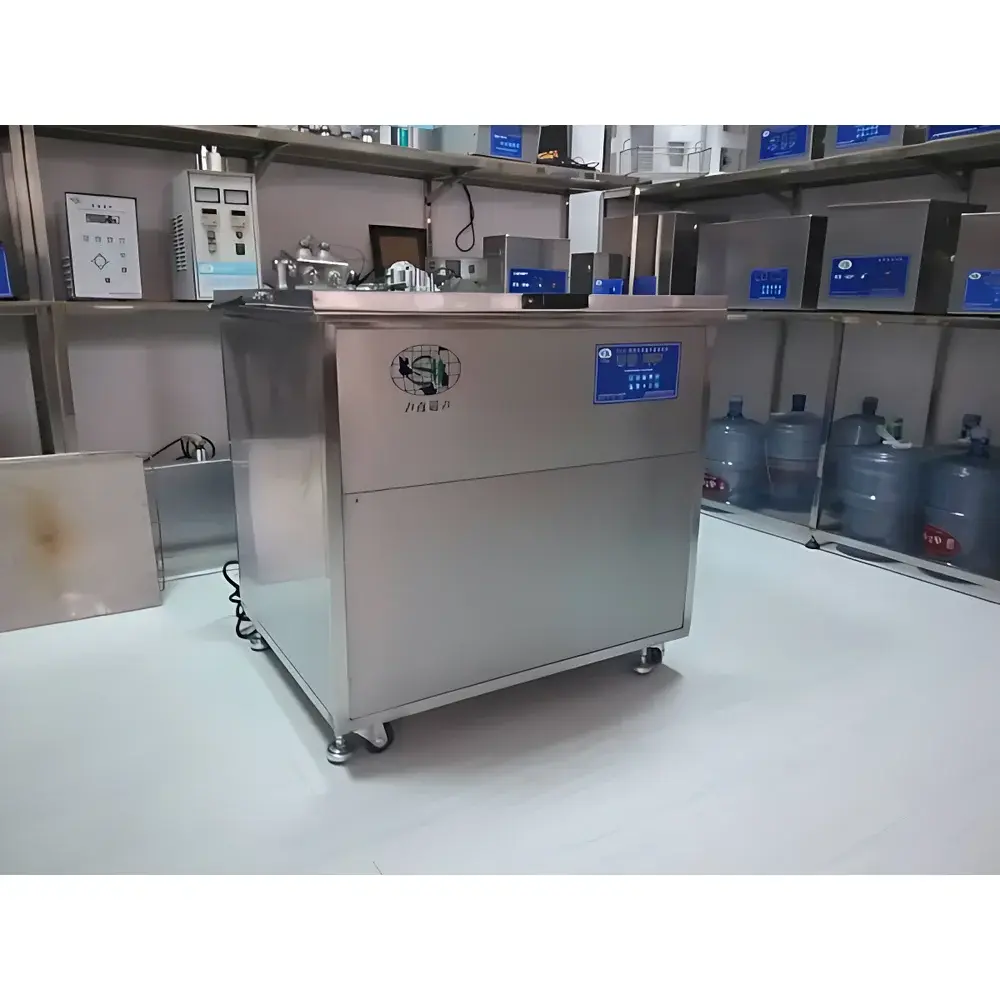
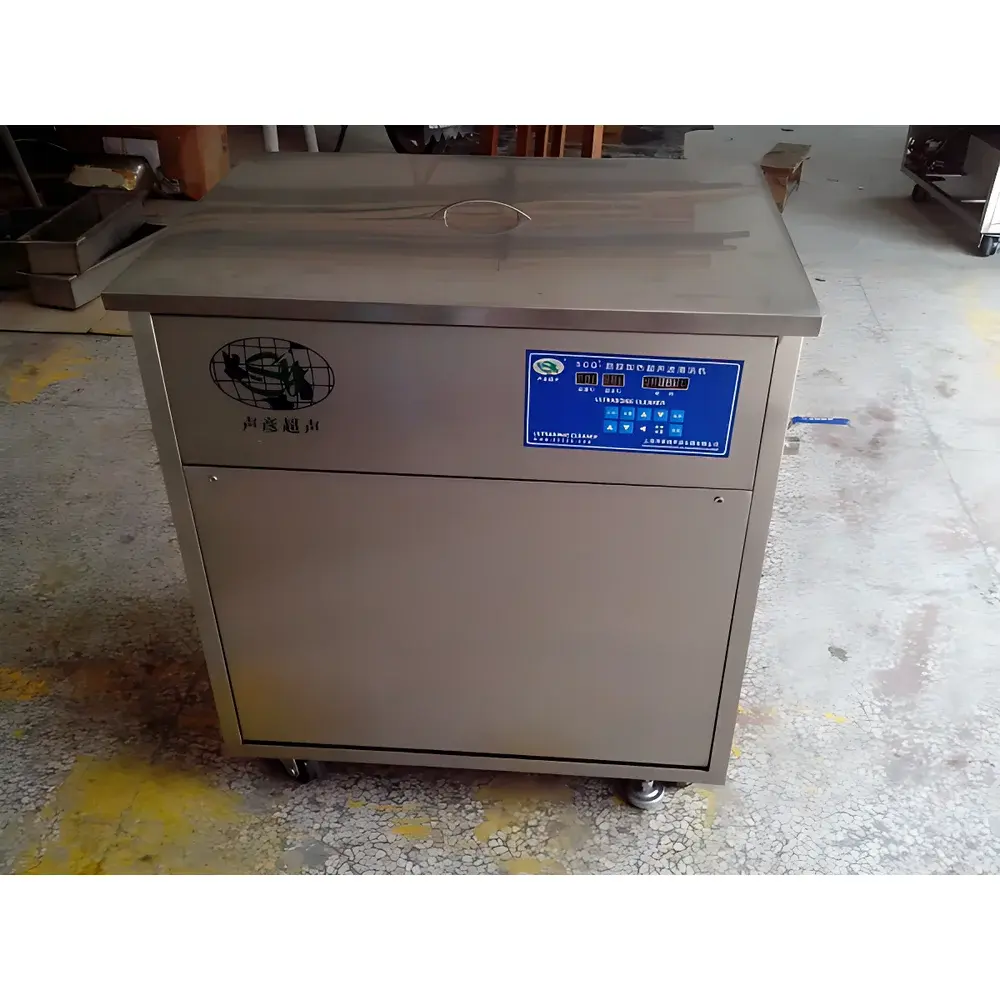
SYC Sycs SCQ-1000B 54L Digital Ultrasonic Cleaner with Heating and Frequency Selection
| Brand | SYC Sycs |
|---|---|
| Origin | Shanghai, China |
| Model | SCQ-1000B |
| Tank Capacity | 54 L |
| Ultrasonic Frequencies | 25 / 28 / 40 / 60 / 80 kHz (selectable) |
| Ultrasonic Power Output | 1000 W |
| Power Adjustment Range | 10–100% |
| Heating Function | Yes |
| Temperature Control Range | Ambient to 80 °C |
| Timer Range | 1–600 min |
| Lid Type | Sound-dampening cover included |
| Drainage | Manual valve |
| Instrument Type | General-purpose laboratory ultrasonic cleaner |
Overview
The SYC Sycs SCQ-1000B is a benchtop digital ultrasonic cleaner engineered for reproducible, high-efficiency cleaning of precision laboratory components, glassware, optical elements, semiconductor wafers, and medical instruments. It operates on the principle of acoustic cavitation: high-frequency sound waves (25–80 kHz) generate microscopic vacuum bubbles in the cleaning solvent; their controlled collapse releases localized energy sufficient to dislodge particulate contamination, organic residues, and thin oxide layers without mechanical abrasion. The 54 L tank volume—defined by internal dimensions of 600 × 300 × 300 mm—supports large-format samples or batch processing of multiple items simultaneously. Integrated heating (up to 80 °C) enhances solvent activity and accelerates removal of waxy, viscous, or thermally sensitive contaminants, while digital microprocessor control ensures stable frequency selection, precise power modulation, and repeatable thermal/timing profiles across daily operation cycles.
Key Features
- Five selectable ultrasonic frequencies (25, 28, 40, 60, and 80 kHz) optimized for diverse sample geometries and contaminant types—lower frequencies (25–40 kHz) deliver higher cavitation intensity for robust particulates; higher frequencies (60–80 kHz) provide finer, gentler cleaning for delicate surfaces and microstructures.
- 1000 W ultrasonic transducer output with continuous 10–100% power adjustment, enabling process optimization for fragile substrates (e.g., MEMS devices) or heavily soiled fixtures (e.g., filtration housings).
- Digital PID temperature controller maintaining ±2 °C accuracy across the full 0–80 °C range, with real-time display and automatic cut-off to prevent solvent boiling or thermal degradation.
- Precision timer (1–600 minutes) with auto-shutdown and audible alert—critical for adherence to validated cleaning SOPs in GLP and GMP environments.
- Integrated sound-dampening lid reduces ambient noise to <55 dB(A) at 1 m distance, improving lab ergonomics and compliance with occupational health guidelines (OSHA 29 CFR 1910.95).
- Stainless steel 304 tank construction with reinforced bottom transducer mounting, corrosion-resistant hardware, and manual drain valve for safe, residue-free solvent exchange.
Sample Compatibility & Compliance
The SCQ-1000B accommodates a broad spectrum of laboratory and industrial specimens: volumetric flasks, chromatography columns, pipette tips, surgical forceps, endoscope components, printed circuit boards (PCBs), and ceramic substrates. Its open architecture supports custom baskets, wire racks, and immersion fixtures. While not certified as a medical device sterilizer, the unit meets general requirements for pre-sterilization cleaning per ISO 15883-1 and AAMI ST79:2017 Annex D. For regulated quality systems, its digital logging capability (via optional RS232/USB interface) supports audit-ready documentation aligned with FDA 21 CFR Part 11 when paired with compliant software. All electrical design conforms to IEC 61010-1 safety standards for laboratory equipment.
Software & Data Management
The SCQ-1000B features an embedded digital controller with LED display and membrane keypad—no external PC required for routine operation. Optional communication modules (RS232 or USB) enable remote parameter setting, real-time monitoring, and timestamped event logging—including start/stop times, set temperature, actual temperature profile, frequency selection, and power level. Exported CSV logs are compatible with LIMS integration and electronic batch record (EBR) systems. Firmware updates are performed via USB stick, ensuring long-term maintainability without hardware replacement. Audit trail functionality—recording user ID, parameter changes, and system alerts—is available through SYC’s LabControl Suite v3.2 (sold separately), supporting ALCOA+ data integrity principles.
Applications
- Research Laboratories: Cleaning NMR tubes, cuvettes, and quartz crystal microbalance (QCM) sensors prior to surface characterization (XPS, AFM).
- Pharmaceutical QC: Removing residual active pharmaceutical ingredients (APIs) from HPLC vials, syringe filters, and dissolution apparatus parts—validated per USP and .
- Electronics Manufacturing: Degreasing solder paste residues and flux from PCB assemblies prior to AOI inspection or conformal coating.
- Medical Device Reprocessing: Pre-cleaning of reusable laparoscopic instruments and dental handpieces in accordance with AAMI TIR30 and ISO 17664.
- Materials Science: Surface preparation of metal coupons before electrochemical testing or adhesion studies.
FAQ
Is the SCQ-1000B suitable for cleaning delicate optics or MEMS devices?
Yes—frequency selection (especially 60–80 kHz) combined with low-power operation (10–30%) minimizes surface pitting and acoustic streaming damage. Use deionized water or low-surface-tension solvents (e.g., isopropanol) for optimal results.
Can the unit be operated continuously for extended cleaning cycles?
The system includes thermal overload protection and duty-cycle monitoring. Continuous operation beyond 3 hours requires ≥30-minute cooldown intervals to preserve transducer longevity and maintain stable cavitation efficiency.
Does it support validation protocols for regulated environments?
While the base unit lacks built-in IQ/OQ documentation, SYC provides a Validation Support Package—including test protocols, calibration templates, and traceable sensor certificates—for IQ/OQ execution under ISO/IEC 17025-accredited labs.
What maintenance is required for long-term reliability?
Monthly inspection of tank integrity, transducer coupling gel (if applicable), and drain valve seal; annual verification of temperature sensor accuracy using NIST-traceable reference thermometers.



